• 文献检索
  • 文档翻译
  • 深度研究
  • 学术资讯
  • Suppr Zotero 插件Zotero 插件
  • 邀请有礼
  • 套餐&价格
  • 历史记录
应用&插件
Suppr Zotero 插件Zotero 插件浏览器插件Mac 客户端Windows 客户端微信小程序
定价
高级版会员购买积分包购买API积分包
服务
文献检索文档翻译深度研究API 文档MCP 服务
关于我们
关于 Suppr公司介绍联系我们用户协议隐私条款
关注我们

Suppr 超能文献

核心技术专利:CN118964589B侵权必究
粤ICP备2023148730 号-1Suppr @ 2026

文献检索

告别复杂PubMed语法,用中文像聊天一样搜索,搜遍4000万医学文献。AI智能推荐,让科研检索更轻松。

立即免费搜索

文件翻译

保留排版,准确专业,支持PDF/Word/PPT等文件格式,支持 12+语言互译。

免费翻译文档

深度研究

AI帮你快速写综述,25分钟生成高质量综述,智能提取关键信息,辅助科研写作。

立即免费体验

机械通气治疗 COVID-19 患者应用吸入性肺血管扩张剂不能改善气体交换:一项回顾性队列研究。

Inhaled pulmonary vasodilators are not associated with improved gas exchange in mechanically ventilated patients with COVID-19: A retrospective cohort study.

机构信息

New York University Langone Health, 550 1(st) Ave, New York, NY 10016, United States of America.

New York University Langone Health, 550 1(st) Ave, New York, NY 10016, United States of America.

出版信息

J Crit Care. 2022 Jun;69:153990. doi: 10.1016/j.jcrc.2022.153990. Epub 2022 Feb 16.

DOI:10.1016/j.jcrc.2022.153990
PMID:35180636
原文链接:https://pmc.ncbi.nlm.nih.gov/articles/PMC8847100/
Abstract

PURPOSE

Measure the effect of inhaled pulmonary vasodilators on gas exchange in mechanically ventilated patients with COVID-19.

METHODS

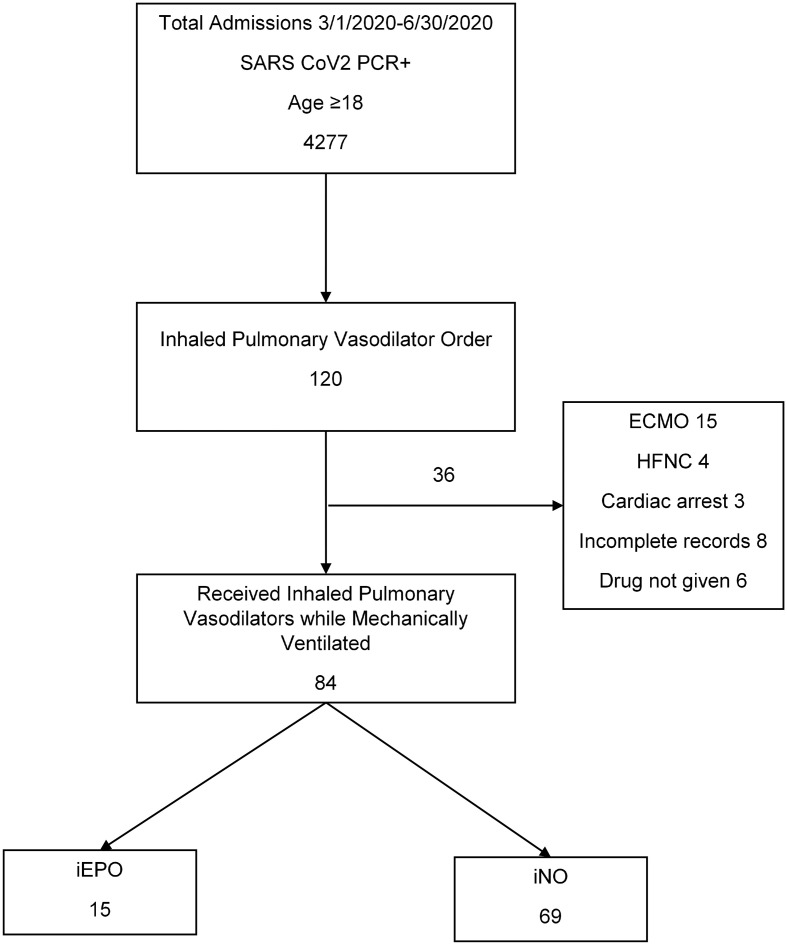
A retrospective observational cohort study at three New York University Hospitals was performed including eighty-four mechanically ventilated SARS Cov-2 nasopharyngeal PCR positive patients, sixty nine treated with inhaled nitric oxide (iNO) and fifteen with inhaled epoprostenol (iEPO). The primary outcomes were change in PO:FO ratio, oxygenation Index (OI), and ventilatory ratio (VR) after initiation of inhaled pulmonary vasodilators.

RESULTS

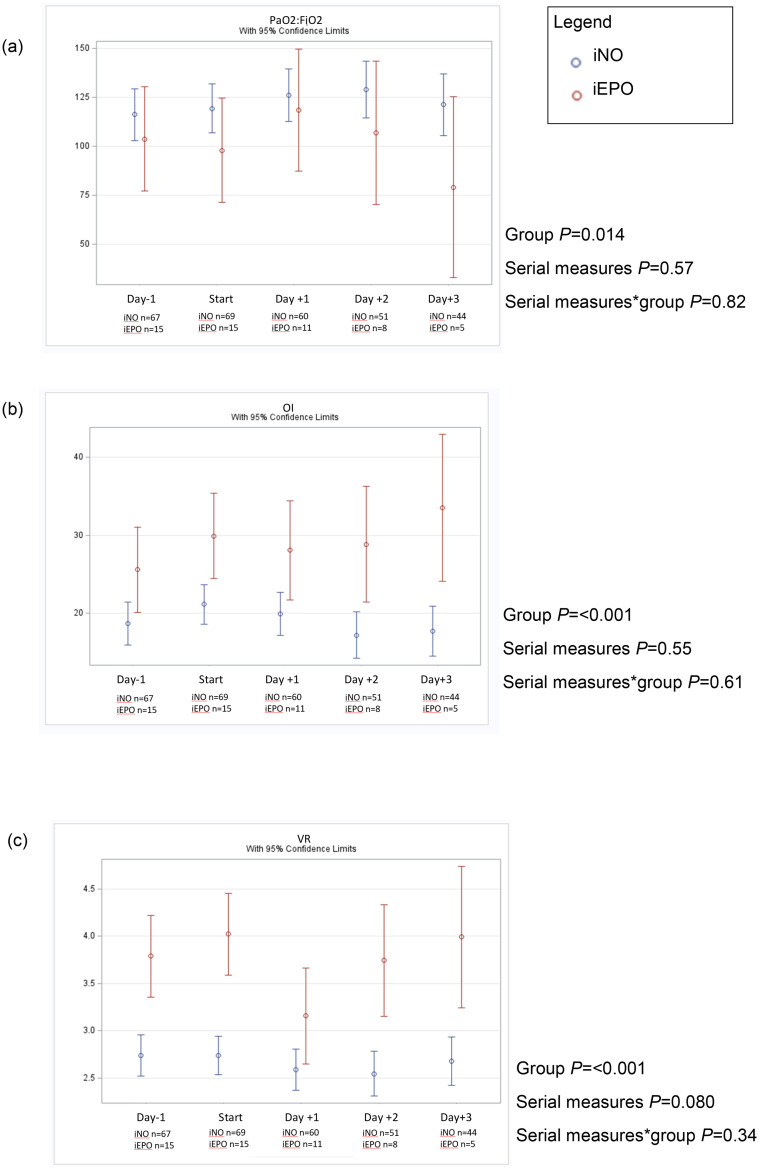
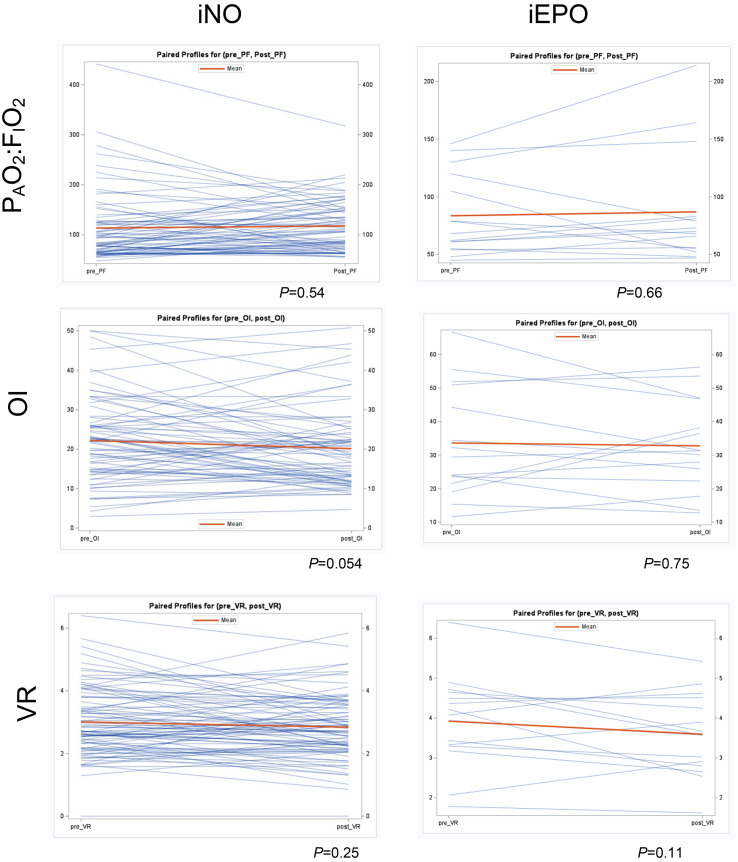
There was no significant change in PO:FOratio after initiation of iNO (mean - 4.1, 95% CI -17.3-9.0, P = 0.54) or iEPO (mean - 3.4, 95% CI -19.7-12.9, P = 0.66), in OI after initiation of iNO (mean 2.1, 95% CI-0.04-4.2, P = 0.054) or iEPO (mean - 3.4, 95% CI -19.7-12.9, P = 0.75), or in VR after initiation of iNO (mean 0.17, 95% CI -0.03-0.36, P = 0.25) or iEPO (mean 0.33, 95% CI -0.0847-0.74, P = 0.11). PO:FO, OI and VR did not significantly change over a five day period starting the day prior to drug initiation in patients who received either iNO or iEPO assessed with a fixed effects model.

CONCLUSION

Inhaled pulmonary vasodilators were not associated with significant improvement in gas exchange in mechanically ventilated patients with COVID-19.

摘要

目的

测量吸入性肺血管扩张剂对 COVID-19 机械通气患者气体交换的影响。

方法

在纽约大学的三家医院进行了一项回顾性观察性队列研究,共纳入 84 例 SARS Cov-2 鼻咽 PCR 阳性、机械通气的患者,其中 69 例接受吸入一氧化氮(iNO)治疗,15 例接受吸入前列环素(iEPO)治疗。主要结局为吸入性肺血管扩张剂治疗开始后 PO:FO 比值、氧合指数(OI)和通气比(VR)的变化。

结果

iNO 治疗开始后 PO:FOratio 无显著变化(平均 -4.1,95%CI-17.3-9.0,P=0.54)或 iEPO(平均-3.4,95%CI-19.7-12.9,P=0.66),iNO 治疗开始后 OI 变化(平均 2.1,95%CI-0.04-4.2,P=0.054)或 iEPO(平均-3.4,95%CI-19.7-12.9,P=0.75),或 iNO 治疗开始后 VR 变化(平均 0.17,95%CI-0.03-0.36,P=0.25)或 iEPO(平均 0.33,95%CI-0.0847-0.74,P=0.11)。在接受 iNO 或 iEPO 治疗的患者中,使用固定效应模型评估,在药物治疗开始前一天开始的五天内,PO:FO、OI 和 VR 没有显著变化。

结论

吸入性肺血管扩张剂与 COVID-19 机械通气患者气体交换的显著改善无关。
https://cdn.ncbi.nlm.nih.gov/pmc/blobs/ea6a/8847100/d06dea7a0c79/gr3_lrg.jpg
https://cdn.ncbi.nlm.nih.gov/pmc/blobs/ea6a/8847100/d58c35551576/gr1_lrg.jpg
https://cdn.ncbi.nlm.nih.gov/pmc/blobs/ea6a/8847100/9a33c0cb8db5/gr2_lrg.jpg
https://cdn.ncbi.nlm.nih.gov/pmc/blobs/ea6a/8847100/d06dea7a0c79/gr3_lrg.jpg
https://cdn.ncbi.nlm.nih.gov/pmc/blobs/ea6a/8847100/d58c35551576/gr1_lrg.jpg
https://cdn.ncbi.nlm.nih.gov/pmc/blobs/ea6a/8847100/9a33c0cb8db5/gr2_lrg.jpg
https://cdn.ncbi.nlm.nih.gov/pmc/blobs/ea6a/8847100/d06dea7a0c79/gr3_lrg.jpg

相似文献

1
Inhaled pulmonary vasodilators are not associated with improved gas exchange in mechanically ventilated patients with COVID-19: A retrospective cohort study.机械通气治疗 COVID-19 患者应用吸入性肺血管扩张剂不能改善气体交换:一项回顾性队列研究。
J Crit Care. 2022 Jun;69:153990. doi: 10.1016/j.jcrc.2022.153990. Epub 2022 Feb 16.
2
Nitric oxide versus epoprostenol for refractory hypoxemia in Covid-19.硝酸酯类与依前列醇治疗新冠肺炎难治性低氧血症的比较。
PLoS One. 2022 Jun 27;17(6):e0270646. doi: 10.1371/journal.pone.0270646. eCollection 2022.
3
Responsiveness of Inhaled Epoprostenol in Respiratory Failure due to COVID-19.COVID-19 所致呼吸衰竭患者吸入依前列醇的反应性。
J Intensive Care Med. 2021 Mar;36(3):327-333. doi: 10.1177/0885066620976525. Epub 2020 Nov 25.
4
Inhaled epoprostenol vs inhaled nitric oxide for refractory hypoxemia in critically ill patients.吸入前列环素与吸入一氧化氮治疗危重症患者难治性低氧血症。
J Crit Care. 2013 Oct;28(5):844-8. doi: 10.1016/j.jcrc.2013.03.006. Epub 2013 May 14.
5
A Comparison of Inhaled Nitric Oxide Versus Inhaled Epoprostenol for Acute Pulmonary Hypertension Following Cardiac Surgery.吸入一氧化氮与吸入依前列醇治疗心脏手术后急性肺动脉高压的比较
Ann Pharmacother. 2016 Jan;50(1):22-6. doi: 10.1177/1060028015608865. Epub 2015 Oct 5.
6
Comparison of Fixed-Dose Inhaled Epoprostenol and Inhaled Nitric Oxide for Acute Respiratory Distress Syndrome in Critically Ill Adults.固定剂量吸入依前列醇与吸入一氧化氮治疗重症成人急性呼吸窘迫综合征的比较
J Intensive Care Med. 2021 Apr;36(4):466-476. doi: 10.1177/0885066620906800. Epub 2020 Mar 5.
7
Evaluation of Continuous Inhaled Epoprostenol in the Treatment of Acute Respiratory Distress Syndrome, Including Patients With SARS-CoV-2 Infection.评估连续吸入依前列醇治疗急性呼吸窘迫综合征,包括 SARS-CoV-2 感染患者。
Ann Pharmacother. 2022 Oct;56(10):1093-1099. doi: 10.1177/10600280211069182. Epub 2022 Jan 13.
8
Inhaled Epoprostenol Compared With Nitric Oxide for Right Ventricular Support After Major Cardiac Surgery.吸入性依前列醇与一氧化氮在心脏大手术后对右心室支持的比较。
Circulation. 2023 Oct 24;148(17):1316-1329. doi: 10.1161/CIRCULATIONAHA.122.062464. Epub 2023 Jul 4.
9
The role of inhaled prostacyclin in treating acute respiratory distress syndrome.吸入性前列环素在治疗急性呼吸窘迫综合征中的作用。
Ther Adv Respir Dis. 2015 Dec;9(6):302-12. doi: 10.1177/1753465815599345. Epub 2015 Aug 20.
10
Noninferiority of Inhaled Epoprostenol to Inhaled Nitric Oxide for the Treatment of ARDS.吸入依前列醇与吸入一氧化氮治疗急性呼吸窘迫综合征的非劣效性
Ann Pharmacother. 2015 Oct;49(10):1105-12. doi: 10.1177/1060028015595642. Epub 2015 Jul 17.

引用本文的文献

1
Unraveling the impact of nitric oxide, almitrine, and their combination in COVID-19 (at the edge of sepsis) patients: a systematic review.解析一氧化氮、阿米三嗪及其联合用药对新冠肺炎(处于脓毒症边缘)患者的影响:一项系统评价
Front Pharmacol. 2024 Jan 22;14:1172447. doi: 10.3389/fphar.2023.1172447. eCollection 2023.
2
The Potential Role of Nitric Oxide as a Therapeutic Agent against SARS-CoV-2 Infection.一氧化氮作为治疗 SARS-CoV-2 感染的潜在药物的作用。
Int J Mol Sci. 2023 Dec 5;24(24):17162. doi: 10.3390/ijms242417162.
3
Lessons Learned in Mechanical Ventilation/Oxygen Support in Coronavirus Disease 2019.

本文引用的文献

1
Lung distribution of gas and blood volume in critically ill COVID-19 patients: a quantitative dual-energy computed tomography study.危重症 COVID-19 患者的肺部气体和血容量分布:一项定量双能 CT 研究。
Crit Care. 2021 Jun 21;25(1):214. doi: 10.1186/s13054-021-03610-9.
2
Effects of inhaled nitric oxide in COVID-19-induced ARDS - Is it worthwhile?吸入一氧化氮治疗 COVID-19 诱导的 ARDS 的效果如何——是否值得?
Acta Anaesthesiol Scand. 2021 May;65(5):629-632. doi: 10.1111/aas.13757. Epub 2020 Dec 20.
3
Responsiveness of Inhaled Epoprostenol in Respiratory Failure due to COVID-19.
在 2019 冠状病毒病机械通气/氧支持方面的经验教训。
Clin Chest Med. 2023 Jun;44(2):321-333. doi: 10.1016/j.ccm.2022.11.010. Epub 2022 Nov 22.
4
Inhaled Nitric Oxide in Acute Respiratory Distress Syndrome Subsets: Rationale and Clinical Applications.吸入一氧化氮治疗急性呼吸窘迫综合征亚组患者:原理与临床应用。
J Aerosol Med Pulm Drug Deliv. 2023 Jun;36(3):112-126. doi: 10.1089/jamp.2022.0058. Epub 2023 Apr 20.
5
Inhaled Nitric Oxide for Clinical Management of COVID-19: A Systematic Review and Meta-Analysis.吸入一氧化氮治疗 COVID-19 的临床管理:系统评价和荟萃分析。
Int J Environ Res Public Health. 2022 Oct 6;19(19):12803. doi: 10.3390/ijerph191912803.
6
A Comparison of Inhaled Epoprostenol in Patients With Acute Respiratory Distress Syndrome and COVID-19-Associated Acute Respiratory Distress Syndrome.吸入依前列醇治疗急性呼吸窘迫综合征和新型冠状病毒肺炎相关急性呼吸窘迫综合征患者的比较
Cureus. 2022 Aug 22;14(8):e28274. doi: 10.7759/cureus.28274. eCollection 2022 Aug.
7
Inhaled Pulmonary Vasodilators in COVID-19 Infection: A Systematic Review and Meta-Analysis.COVID-19 感染中的吸入性肺血管扩张剂:系统评价和荟萃分析。
J Intensive Care Med. 2022 Oct;37(10):1370-1382. doi: 10.1177/08850666221118271. Epub 2022 Aug 2.
8
More questions than answers for the use of inhaled nitric oxide in COVID-19.关于 COVID-19 中吸入一氧化氮的应用,问题多于答案。
Nitric Oxide. 2022 Jul 1;124:39-48. doi: 10.1016/j.niox.2022.05.001. Epub 2022 May 6.
COVID-19 所致呼吸衰竭患者吸入依前列醇的反应性。
J Intensive Care Med. 2021 Mar;36(3):327-333. doi: 10.1177/0885066620976525. Epub 2020 Nov 25.
4
Vascular neutrophilic inflammation and immunothrombosis distinguish severe COVID-19 from influenza pneumonia.血管中性粒细胞炎症和免疫血栓形成将重症 COVID-19 与流感肺炎区分开来。
J Thromb Haemost. 2021 Feb;19(2):574-581. doi: 10.1111/jth.15179. Epub 2020 Dec 20.
5
Inhaled nitric oxide for critically ill Covid-19 patients: a prospective study.吸入一氧化氮治疗重症新冠患者:一项前瞻性研究。
Crit Care. 2020 Nov 12;24(1):645. doi: 10.1186/s13054-020-03371-x.
6
Inhaled nitric oxide minimally improves oxygenation in COVID-19 related acute respiratory distress syndrome.吸入一氧化氮对新型冠状病毒肺炎相关急性呼吸窘迫综合征患者的氧合改善作用甚微。
Br J Anaesth. 2021 Jan;126(1):e44-e46. doi: 10.1016/j.bja.2020.10.011. Epub 2020 Oct 14.
7
Evaluation of the Efficacy and Safety of Inhaled Epoprostenol and Inhaled Nitric Oxide for Refractory Hypoxemia in Patients With Coronavirus Disease 2019.吸入依前列醇和吸入一氧化氮治疗新型冠状病毒肺炎难治性低氧血症的疗效和安全性评估
Crit Care Explor. 2020 Oct 19;2(10):e0259. doi: 10.1097/CCE.0000000000000259. eCollection 2020 Oct.
8
COVID-19 pneumonia: microvascular disease revealed on pulmonary dual-energy computed tomography angiography.新型冠状病毒肺炎:肺部双能计算机断层扫描血管造影显示的微血管疾病
Quant Imaging Med Surg. 2020 Sep;10(9):1852-1862. doi: 10.21037/qims-20-708.
9
Extensive pulmonary perfusion defects compatible with microthrombosis and thromboembolic disease in severe Covid-19 pneumonia.在重症新型冠状病毒肺炎中,广泛的肺部灌注缺损与微血栓形成和血栓栓塞性疾病相符。
Thromb Res. 2020 Dec;196:135-137. doi: 10.1016/j.thromres.2020.08.026. Epub 2020 Aug 22.
10
Pulmonary Angiopathy in Severe COVID-19: Physiologic, Imaging, and Hematologic Observations.严重 COVID-19 中的肺血管病:生理学、影像学和血液学观察。
Am J Respir Crit Care Med. 2020 Sep 1;202(5):690-699. doi: 10.1164/rccm.202004-1412OC.