Research Center of Traditional Korean Medicine, Wonkwang University, 460, Iksan-daero, Sin-dong, Iksan, 54538, Jeollabuk-do, Republic of Korea.
Acupuncture and Meridian Science Research Center, College of Korean Medicine, Kyung Hee University, Seoul, 02447, Republic of Korea.
Sci Rep. 2022 Feb 18;12(1):2852. doi: 10.1038/s41598-022-06811-6.
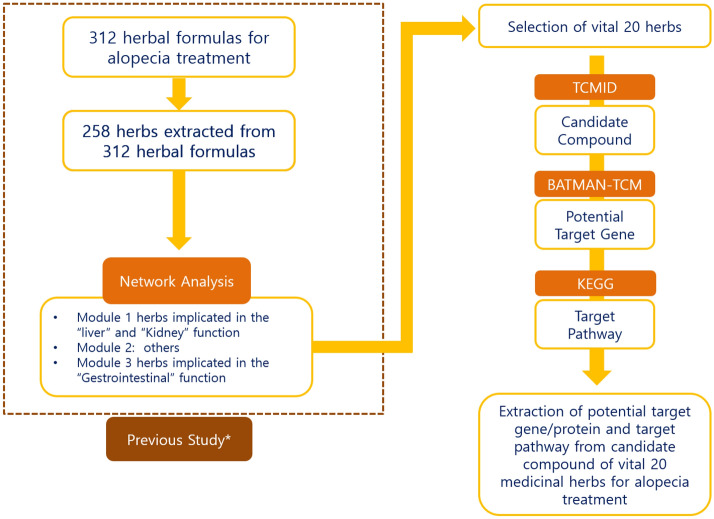
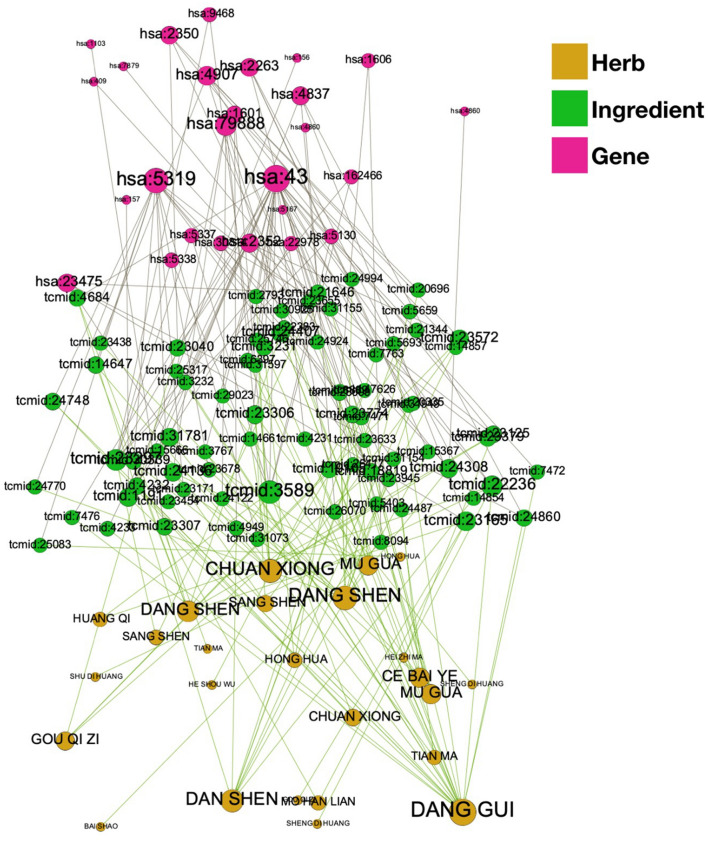
Hair loss is one of the most common skin problems experienced by more than half of the world's population. In East Asia, medicinal herbs have been used widely in clinical practice to treat hair loss. Recent studies, including systematic literature reviews, indicate that medicinal herbs may demonstrate potential effects for hair loss treatment. In a previous study, we identified medical herbs used frequently for alopecia treatment. Herein, we explored the potential novel therapeutic mechanisms of 20 vital medicinal herbs for alopecia treatment that could distinguish them from known mechanisms of conventional drugs using network pharmacology analysis methods. We determined the herb-ingredient-target protein networks and ingredient-associated protein (gene)-associated pathway networks and calculated the weighted degree centrality to define the strength of the connections. Data showed that 20 vital medicinal herbs could exert therapeutic effects on alopecia mainly mediated via regulation of various target genes and proteins, including acetylcholinesterase (AChE), phospholipase A2 (PLA2) subtypes, ecto-5-nucleotidase (NTE5), folate receptor (FR), nicotinamide N-methyltransferase (NNMT), and quinolinate phosphoribosyltransferase (QPRT). Findings regarding target genes/proteins and pathways of medicinal herbs associated with alopecia treatment offer insights for further research to better understand the pathogenesis and therapeutic mechanism of medicinal herbs for alopecia treatment with traditional herbal medicine.
脱发是全球一半以上人口都经历过的最常见皮肤问题之一。在东亚,草药已广泛用于临床实践以治疗脱发。包括系统文献综述在内的最近研究表明,草药可能对脱发治疗具有潜在的效果。在之前的一项研究中,我们确定了常用于治疗脱发的草药。在此,我们使用网络药理学分析方法,探索了 20 种用于脱发治疗的重要草药的潜在新型治疗机制,这些机制可将它们与传统药物的已知机制区分开来。我们确定了草药-成分-靶蛋白网络和成分相关蛋白(基因)-相关途径网络,并计算了加权度中心性,以定义连接的强度。数据表明,20 种重要草药可以通过调节各种靶基因和蛋白质(包括乙酰胆碱酯酶(AChE)、磷脂酶 A2(PLA2)亚型、外核苷酸酶 5(NTE5)、叶酸受体(FR)、烟酰胺 N-甲基转移酶(NNMT)和喹啉酸磷酸核糖基转移酶(QPRT))来发挥对脱发的治疗作用。与脱发治疗相关的草药的靶基因/蛋白和途径的发现,为进一步研究提供了思路,有助于更好地理解草药治疗脱发的发病机制和治疗机制。