Department of Life Science, Research Institute for Natural Sciences, Hanyang University, Seoul, 04763, Republic of Korea.
Department of Food and Nutrition, College of Human Ecology, Hanyang University, Seoul, 04763, Republic of Korea.
Microb Cell Fact. 2022 Feb 19;21(1):27. doi: 10.1186/s12934-021-01736-7.
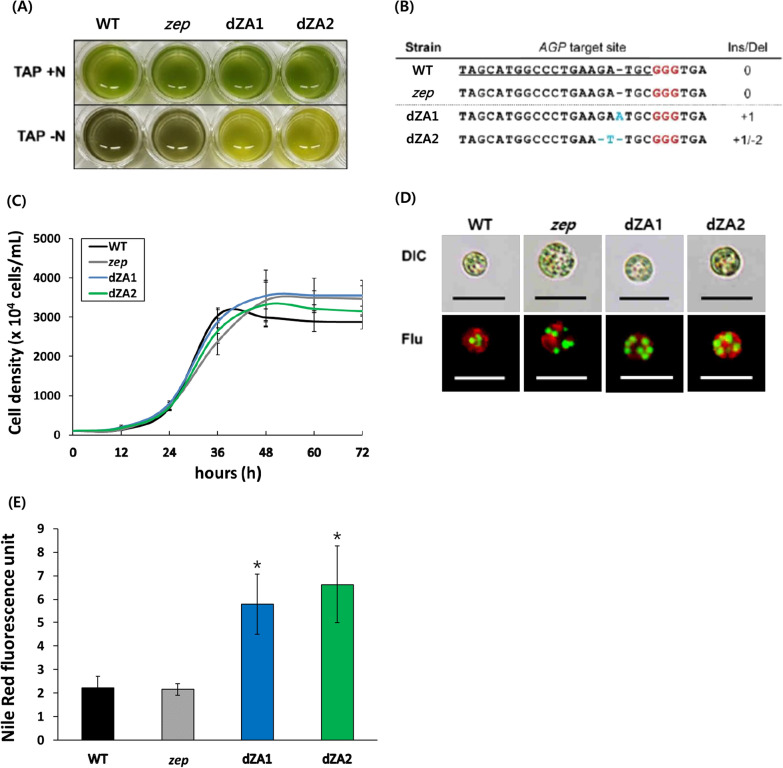
The photosynthetic microorganism Chlamydomonas reinhardtii has been approved as generally recognized as safe (GRAS) recently, this can excessively produce carotenoid pigments and fatty acids. Zeaxanthin epoxidase (ZEP), which converts zeaxanthin to violaxanthin, and ADP-glucose pyrophosphorylase (AGP). These are key regulating genes for the xanthophyll and starch pathways in C. reinhardtii respectively. In this study, to produce macular pigment-enriched microalgal oil, we attempted to edit the AGP gene as an additional knock-out target in the zep mutant as a parental strain.
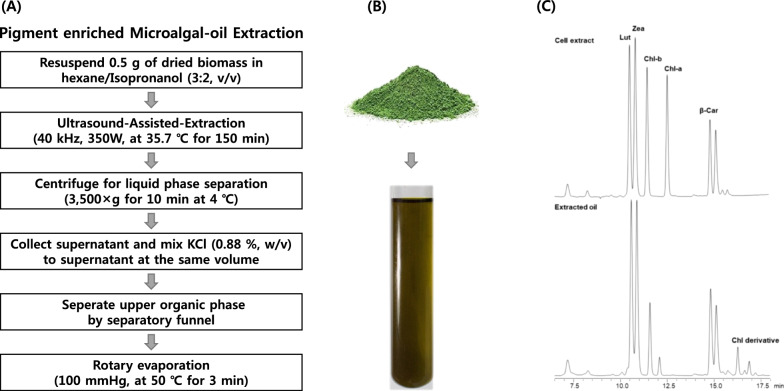
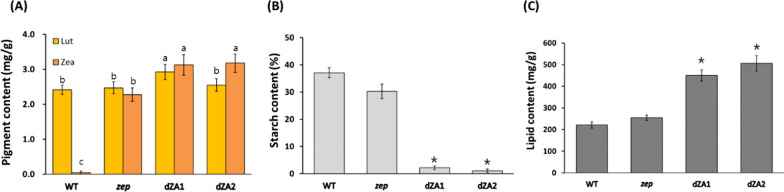
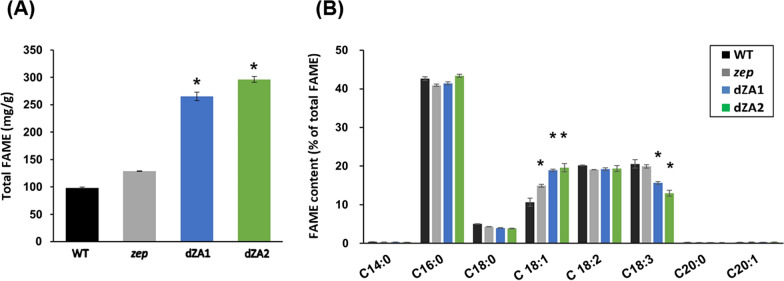
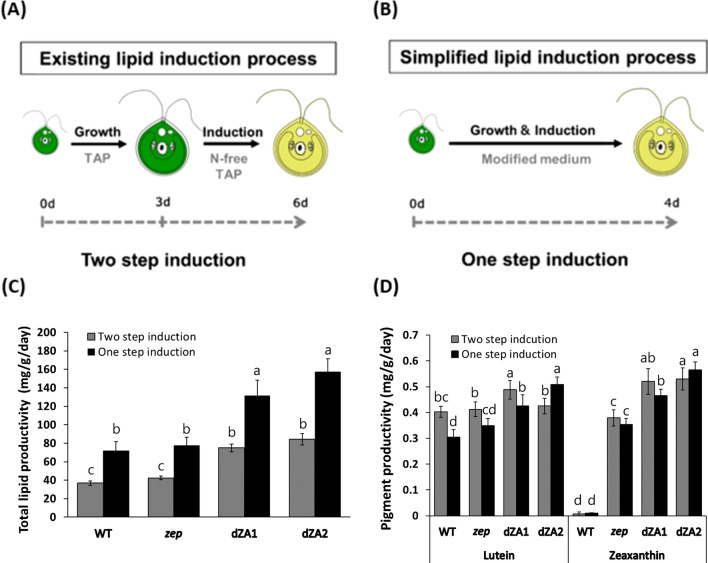
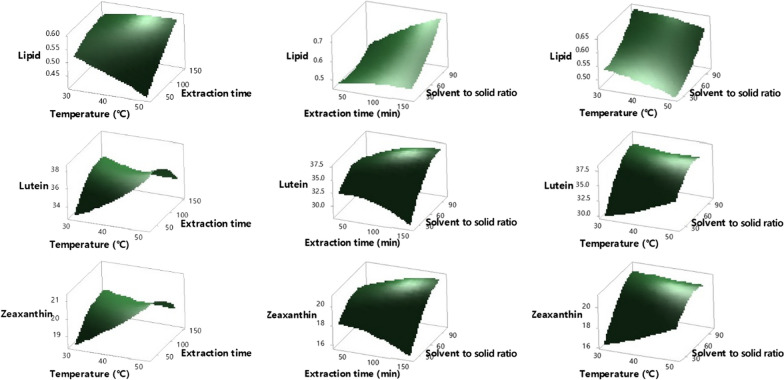
Using a sequential CRISPR-Cas9 RNP-mediated knock-out method, we generated double knock-out mutants (dZAs), in which both the ZEP and AGP genes were deleted. In dZA1, lutein (2.93 ± 0.22 mg g DCW: dried cell weight), zeaxanthin (3.12 ± 0.30 mg g DCW), and lipids (450.09 ± 25.48 mg g DCW) were highly accumulated in N-deprivation condition. Optimization of the culture medium and process made it possible to produce pigments and oil via one-step cultivation. This optimization process enabled dZAs to achieve 81% higher oil productivity along with similar macular pigment productivity, than the conventional two-step process. The hexane/isopropanol extraction method was developed for the use of macular pigment-enriched microalgal oil for food. As a result, 196 ± 20.1 mg g DCW of edible microalgal oil containing 8.42 ± 0.92 mg g lutein of oil and 7.69 ± 1.03 mg g zeaxanthin of oil was produced.
Our research showed that lipids and pigments are simultaneously induced in the dZA strain. Since dZAs are generated by introducing pre-assembled sgRNA and Cas9-protein into cells, antibiotic resistance genes or selective markers are not inserted into the genome of dZA, which is advantageous for applying dZA mutant to food. Therefore, the enriched macular pigment oil extracted from improved strains (dZAs) can be further applied to various food products and nutraceuticals.
光合微生物莱茵衣藻最近被批准为一般公认安全(GRAS),可过量生产类胡萝卜素色素和脂肪酸。玉米黄质环氧化酶(ZEP)可将玉米黄质转化为叶黄素,而 ADP-葡萄糖焦磷酸化酶(AGP)则分别是玉米黄质和淀粉途径的关键调控基因。在这项研究中,为了生产富含黄斑色素的微藻油,我们试图在 zep 突变体作为亲本菌株中编辑 AGP 基因作为额外的敲除靶点。
使用连续 CRISPR-Cas9 RNP 介导的敲除方法,我们生成了双敲除突变体(dZAs),其中 ZEP 和 AGP 基因均被删除。在 dZA1 中,在氮饥饿条件下,叶黄素(2.93±0.22 mg g DCW:干细胞重量)、玉米黄质(3.12±0.30 mg g DCW)和脂质(450.09±25.48 mg g DCW)高度积累。通过优化培养基和工艺,可以通过一步培养来生产色素和油。这种优化过程使 dZAs 的油产量提高了 81%,同时黄斑色素产量相似,高于传统的两步法。还开发了己烷/异丙醇提取方法用于食用富含黄斑色素的微藻油。结果,从可食用的微藻油中提取了 196±20.1 mg g DCW,其中含有 8.42±0.92 mg g 叶黄素/油和 7.69±1.03 mg g 玉米黄质/油。
我们的研究表明,脂质和色素在 dZA 菌株中同时被诱导。由于 dZA 是通过将预组装的 sgRNA 和 Cas9 蛋白引入细胞中产生的,因此没有将抗生素抗性基因或选择性标记物插入 dZA 的基因组中,这有利于将 dZA 突变体应用于食品。因此,从改良菌株(dZAs)中提取的富含黄斑色素的油可以进一步应用于各种食品和营养保健品。