Perinatal Research Laboratory, Department of Obstetrics and Gynaecology, Medical University of Graz, Graz, Austria.
Research Unit of Analytical Mass Spectrometry, Cell Biology and Biochemistry of Inborn Errors of Metabolism, Department of Paediatrics and Adolescent Medicine, Medical University of Graz, Graz, Austria.
Pediatr Res. 2022 Dec;92(6):1590-1597. doi: 10.1038/s41390-022-01966-4. Epub 2022 Feb 18.
Maternal cardiovascular risk factors (CVRF) in pregnancy, i.e., obesity and hyperglycemia, transmit to the fetus and affect placental and fetal endothelial function. Moreover, a sex dimorphism in endothelial function and susceptibility towards CVRF exists already in utero. Endothelial colony-forming cells (ECFC) are circulating endothelial progenitors highly present in neonatal cord blood and sensitive to CVRF. This study investigated whether fetal sex or subtle maternal metabolic changes within healthy range alter fetal ECFC outgrowth.
Outgrowth of ECFC from cord blood of male (n = 31) and female (n = 26) neonates was analyzed after healthy pregnancies and related to fetal sex and maternal metabolic parameters.
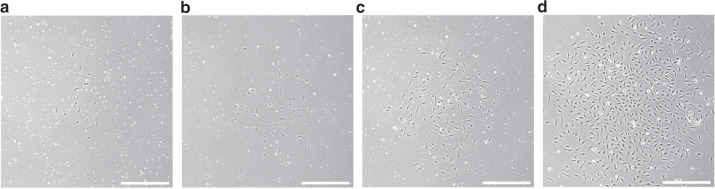
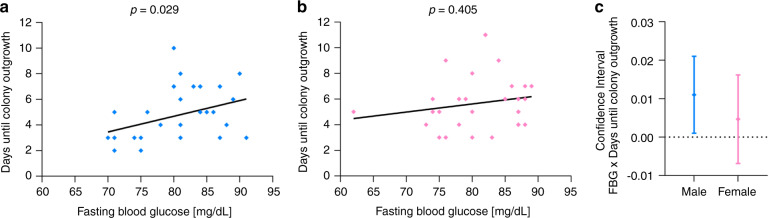
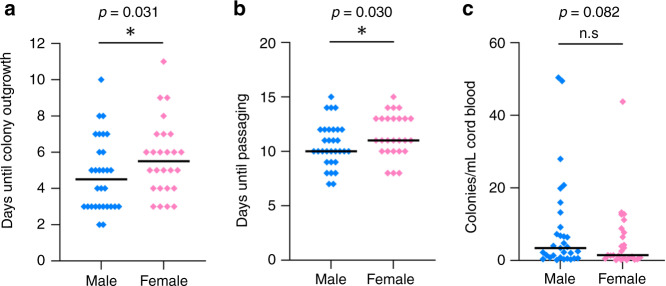
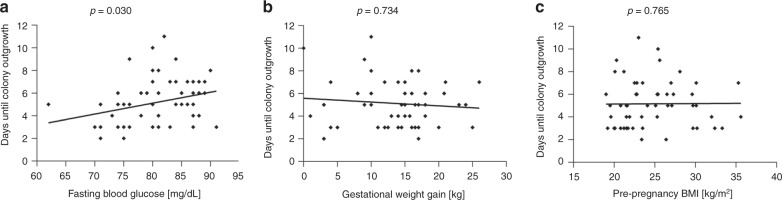
Male ECFC grew out earlier (-20.57% days; p = 0.031) than female. Although all women were non-diabetic, higher levels of fasting plasma glucose (FPG) at midpregnancy increased the time required for colony outgrowth (OR: 1.019; p = 0.030), which, after stratifying for fetal sex, was significant only in the males. Gestational weight gain and BMI did not affect outgrowth. Colony number was unchanged by all parameters.
Fetal sex and maternal FPG within normal range alter ECFC function in utero. A role of ECFC in postnatal angiogenesis and vasculogenesis has been suggested, which may be affected by altered outgrowth dynamics.
This study is the first to report that a sexual dimorphism exists in ECFC function, as cells of female progeny require a longer period of time until colony outgrowth than ECFC of male progeny. Our data show that ECFC function is highly sensitive and affected by maternal glucose levels even in a normal, non-diabetic range. Our data raise the question of whether maternal plasma glucose in pregnancy should be considered to play a critical role even in the non-diabetic setting.
孕妇的心血管危险因素(CVRF),即肥胖和高血糖,会传递给胎儿,并影响胎盘和胎儿的内皮功能。此外,内皮功能和对 CVRF 的易感性在子宫内已经存在性别二态性。内皮祖细胞(ECFC)是循环内皮祖细胞,在新生儿脐带血中高度存在,对 CVRF 敏感。本研究旨在探讨胎儿性别或健康范围内的细微母体代谢变化是否会改变胎儿 ECFC 的生长。
分析了来自健康妊娠的男性(n=31)和女性(n=26)新生儿脐带血中 ECFC 的生长情况,并与胎儿性别和母体代谢参数相关。
男性 ECFC 的生长时间更早(-20.57%天;p=0.031)。尽管所有女性均无糖尿病,但中孕期空腹血糖(FPG)水平升高会增加集落生长所需的时间(OR:1.019;p=0.030),这一现象在男性中更为显著。妊娠期体重增加和 BMI 均未影响生长。所有参数均未影响集落数量。
胎儿性别和正常范围内的母体 FPG 会改变子宫内 ECFC 的功能。已经有人提出 ECFC 在出生后血管生成和血管发生中的作用,这可能会受到生长动态改变的影响。
本研究首次报道 ECFC 功能存在性别二态性,即女性后代的细胞需要更长的时间才能开始集落生长,而男性后代的 ECFC 则不需要。我们的数据表明,即使在正常的非糖尿病范围内,ECFC 功能也非常敏感,并受到母体血糖水平的影响。我们的数据提出了一个问题,即在妊娠期间,母体血浆葡萄糖是否应该被认为即使在非糖尿病环境中也发挥关键作用。