Liu Xiaochen, Robinson Peter A
School of Physics, The University of Sydney, Sydney, NSW, Australia.
Center for Integrative Brain Function, The University of Sydney, Sydney, NSW, Australia.
Front Comput Neurosci. 2022 Feb 4;16:659316. doi: 10.3389/fncom.2022.659316. eCollection 2022.
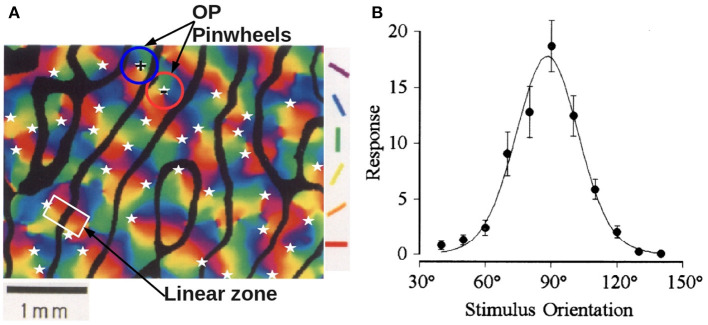
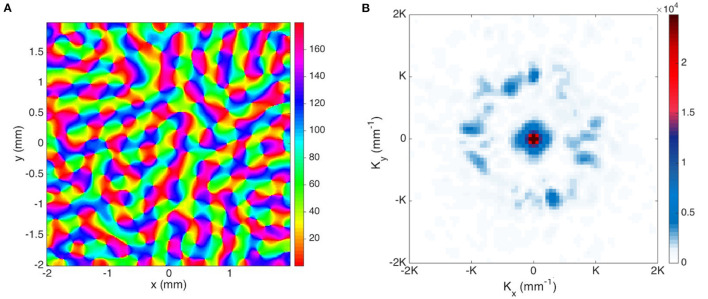
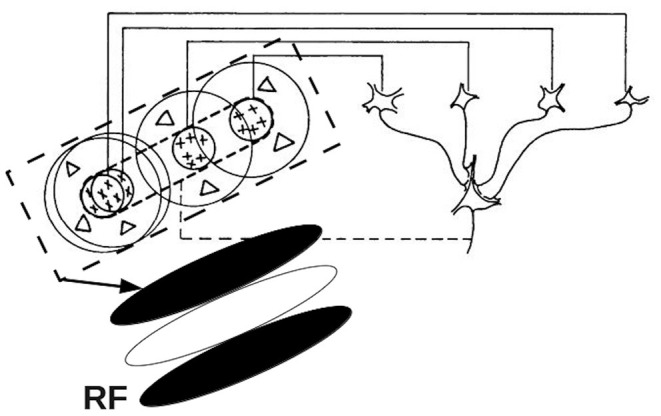
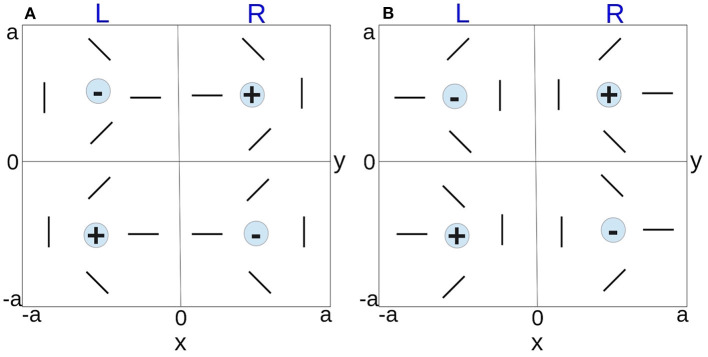
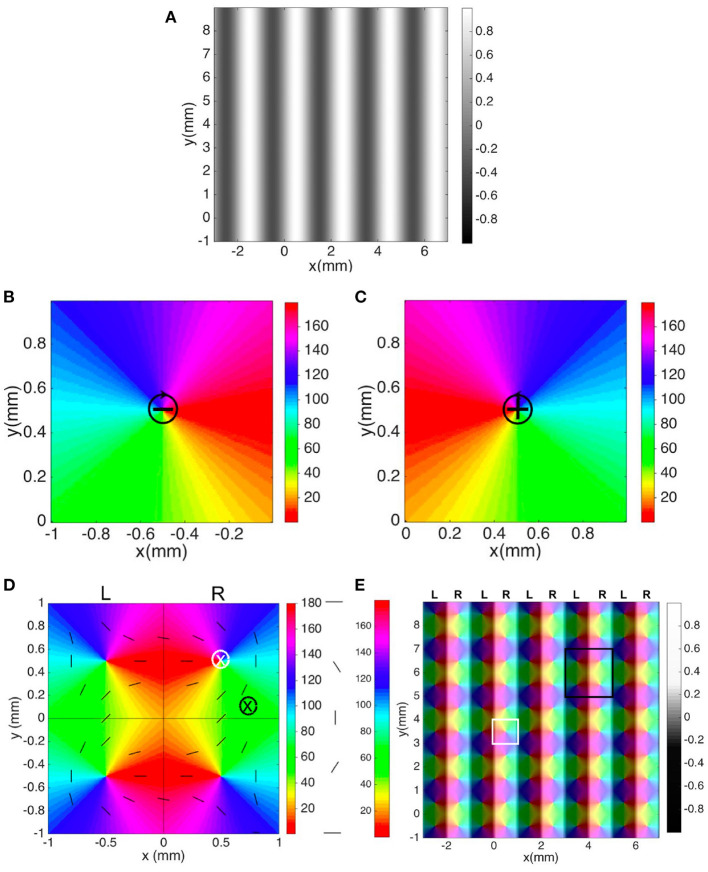
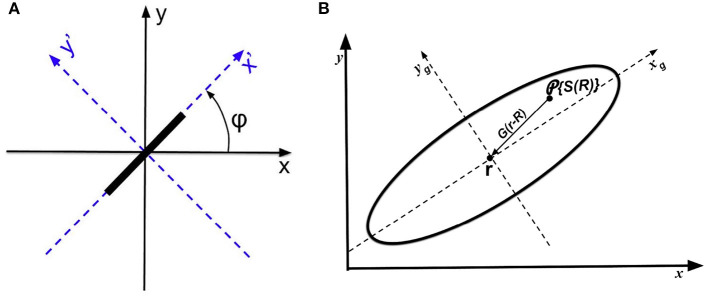
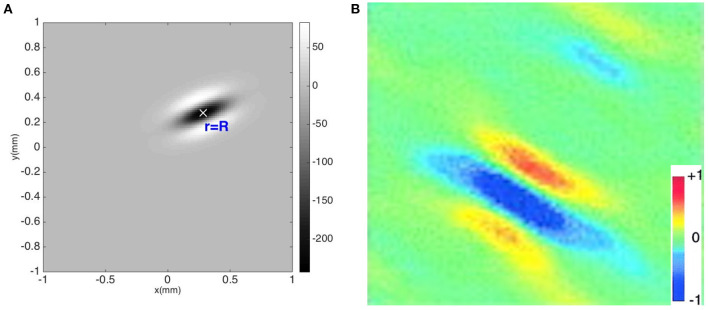
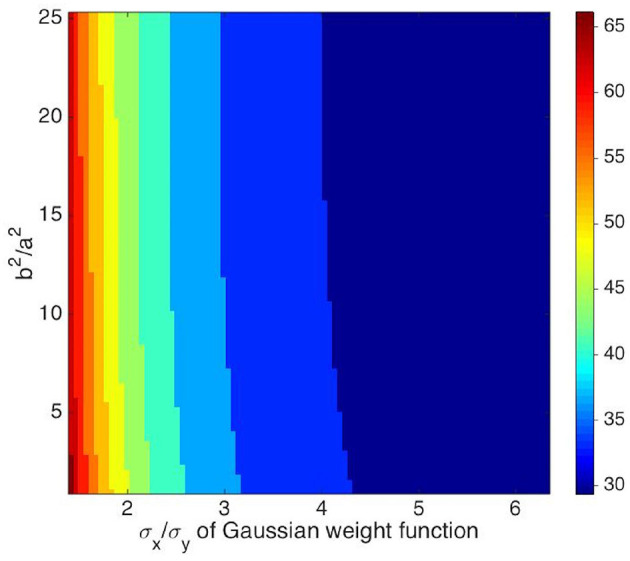
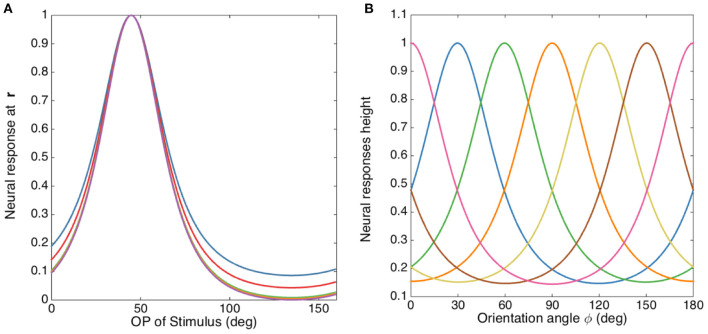
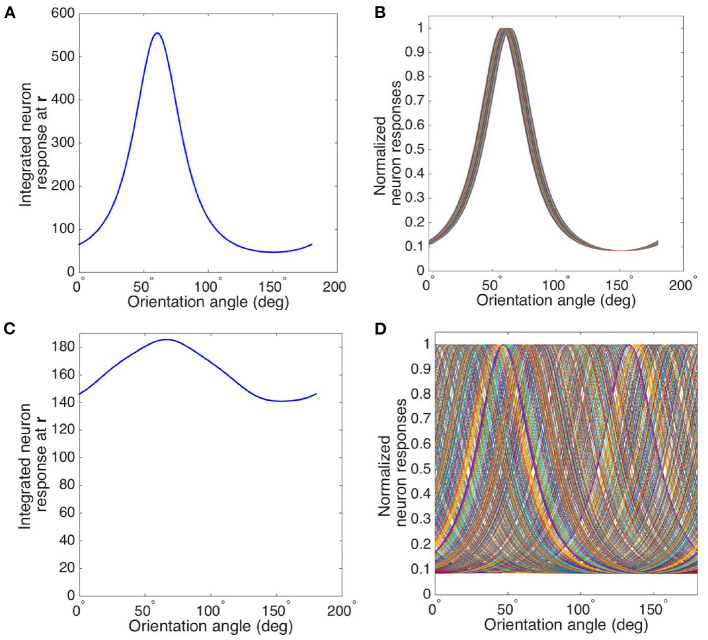
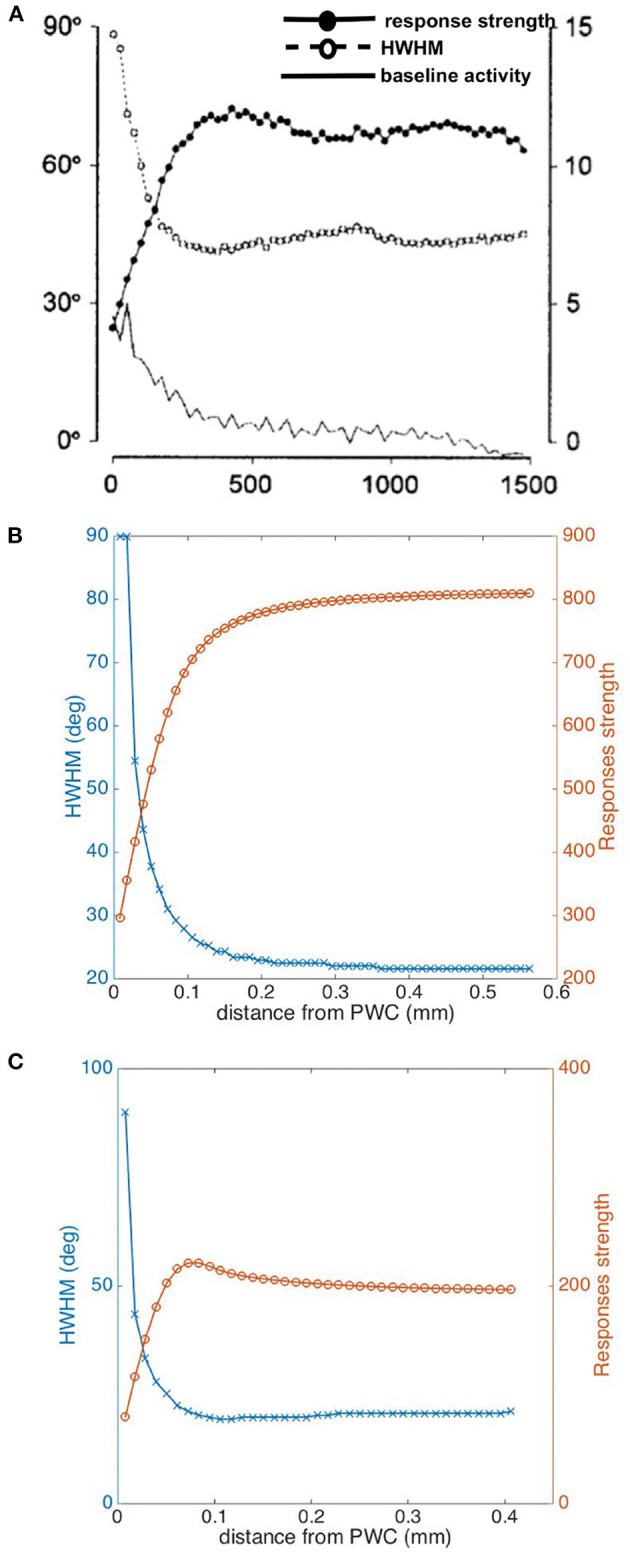
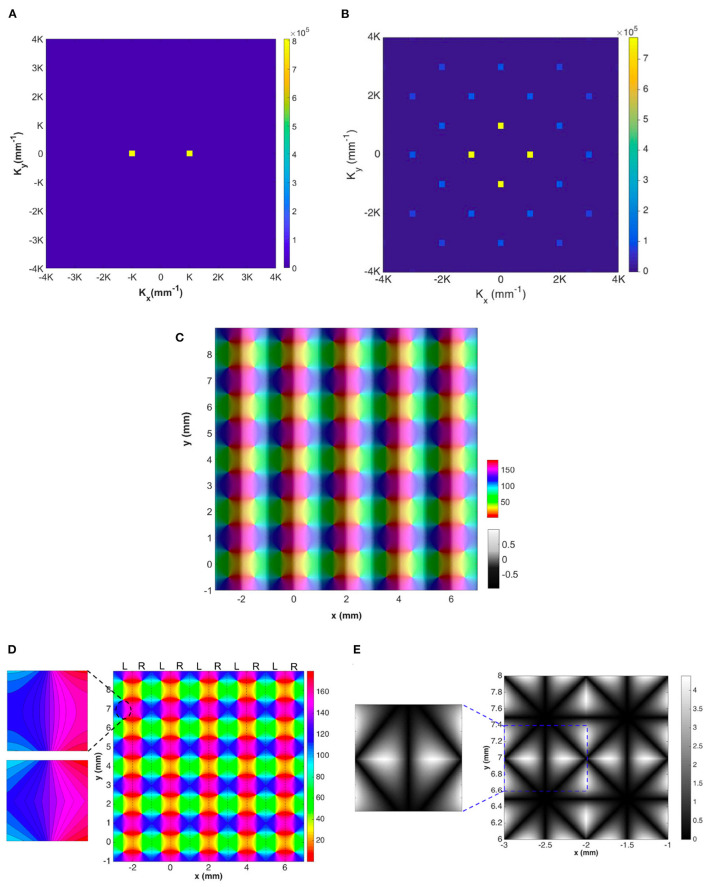
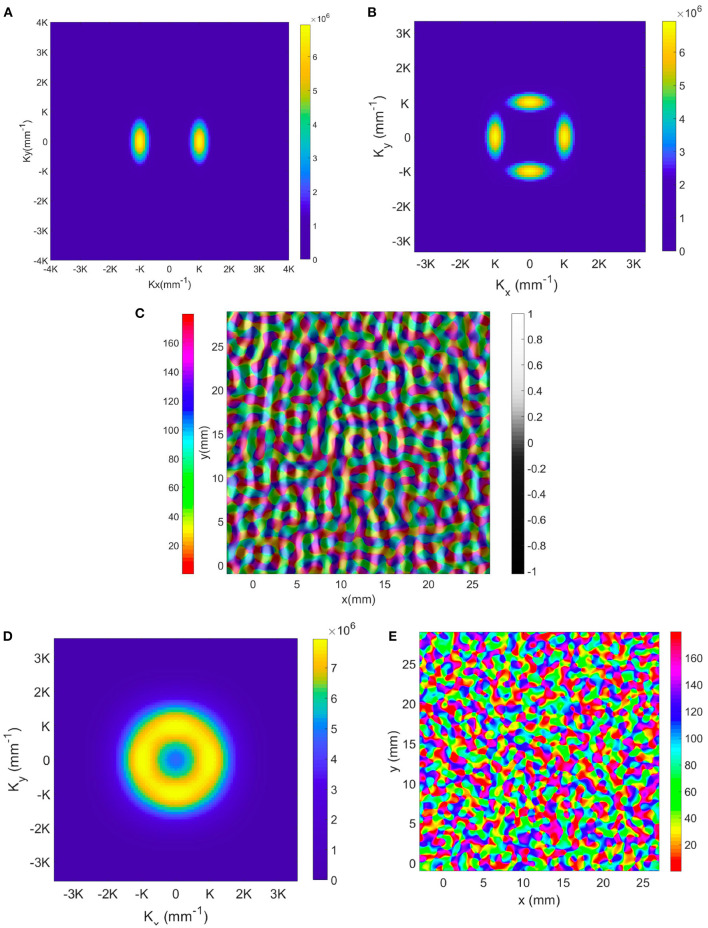
A compact analytic model is proposed to describe the combined orientation preference (OP) and ocular dominance (OD) features of simple cells and their mutual constraints on the spatial layout of the combined OP-OD map in the primary visual cortex (V1). This model consists of three parts: (i) an anisotropic Laplacian (AL) operator that represents the local neural sensitivity to the orientation of visual inputs; and (ii) obtain a receptive field (RF) operator that models the anisotropic spatial projection from nearby neurons to a given V1 cell over scales of a few tenths of a millimeter and combines with the AL operator to give an overall OP operator; and (iii) a map that describes how the parameters of these operators vary approximately periodically across V1. The parameters of the proposed model maximize the neural response at a given OP with an OP tuning curve fitted to experimental results. It is found that the anisotropy of the AL operator does not significantly affect OP selectivity, which is dominated by the RF anisotropy, consistent with Hubel and Wiesel's original conclusions that orientation tuning width of V1 simple cell is inversely related to the elongation of its RF. A simplified and idealized OP-OD map is then constructed to describe the approximately periodic local OP-OD structure of V1 in a compact form. It is shown explicitly that the OP map can be approximated by retaining its dominant spatial Fourier coefficients, which are shown to suffice to reconstruct its basic spatial structure. Moreover, this representation is a suitable form to analyze observed OP maps compactly and to be used in neural field theory (NFT) for analyzing activity modulated by the OP-OD structure of V1. Application to independently simulated V1 OP structure shows that observed irregularities in the map correspond to a spread of dominant coefficients in a circle in Fourier space. In addition, there is a strong bias toward two perpendicular directions when only a small patch of local map is included. The bias is decreased as the amount of V1 included in the Fourier transform is increased.
提出了一个紧凑的解析模型,用于描述初级视觉皮层(V1)中简单细胞的组合方向偏好(OP)和眼优势(OD)特征,以及它们对组合OP-OD图空间布局的相互约束。该模型由三部分组成:(i)一个各向异性拉普拉斯(AL)算子,它表示局部神经对视觉输入方向的敏感性;(ii)一个感受野(RF)算子,该算子对在几十分之一毫米尺度上从附近神经元到给定V1细胞的各向异性空间投影进行建模,并与AL算子相结合以给出一个整体的OP算子;(iii)一个映射,描述这些算子的参数如何在V1中近似周期性地变化。所提出模型的参数通过拟合实验结果的OP调谐曲线,在给定OP下使神经反应最大化。研究发现,AL算子的各向异性对OP选择性没有显著影响,OP选择性主要由RF各向异性决定,这与Hubel和Wiesel的原始结论一致,即V1简单细胞的方向调谐宽度与其RF的伸长成反比。然后构建了一个简化和理想化的OP-OD图,以紧凑的形式描述V1近似周期性的局部OP-OD结构。明确表明,通过保留其主要的空间傅里叶系数,可以近似OP图,这些系数足以重建其基本空间结构。此外,这种表示形式是紧凑分析观察到的OP图并用于神经场理论(NFT)以分析由V1的OP-OD结构调制的活动的合适形式。应用于独立模拟的V1 OP结构表明,图中观察到的不规则性对应于傅里叶空间中主导系数在一个圆内展开。此外,当仅包含局部图的一小部分时,存在对两个垂直方向的强烈偏向。随着傅里叶变换中包含的V1量增加,这种偏向会减小。