Garcia Audrey, Le Tri, Jankowski Paul, Yanaç Kadir, Yuan Qiuyan, Uyaguari-Diaz Miguel I
Department of Microbiology, University of Manitoba, Winnipeg, Manitoba, Canada.
Department of Civil Engineering, University of Manitoba, Winnipeg, Manitoba, Canada.
PeerJ. 2022 Feb 14;10:e12957. doi: 10.7717/peerj.12957. eCollection 2022.
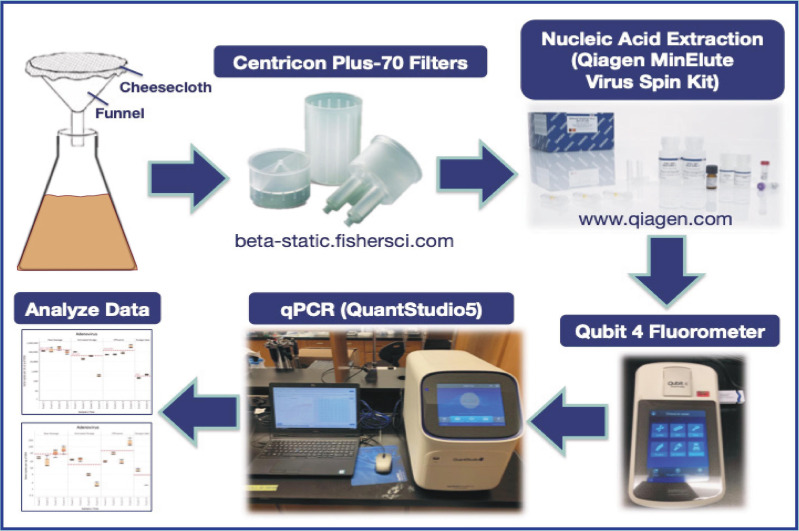
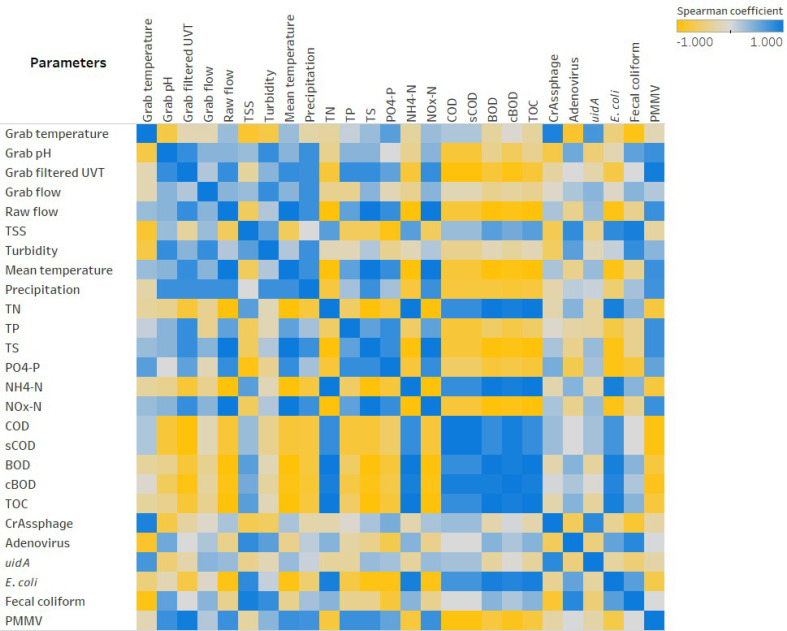
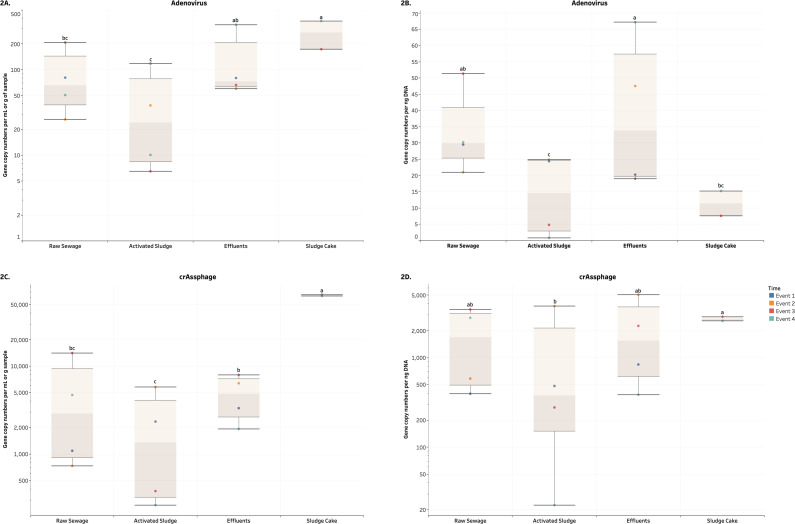
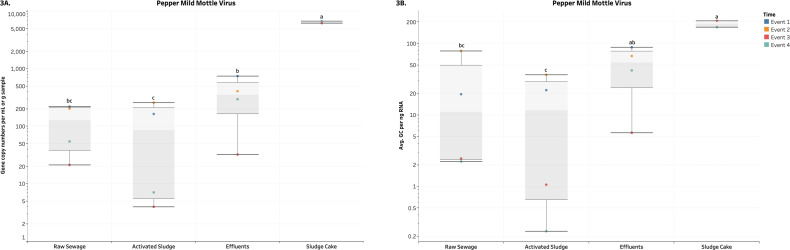
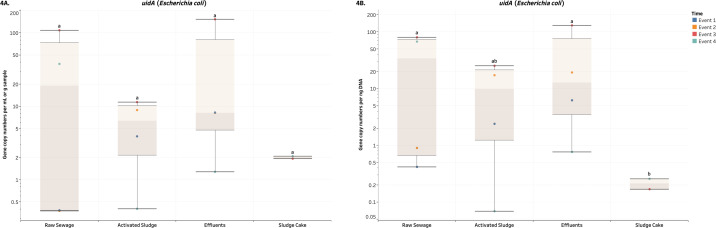
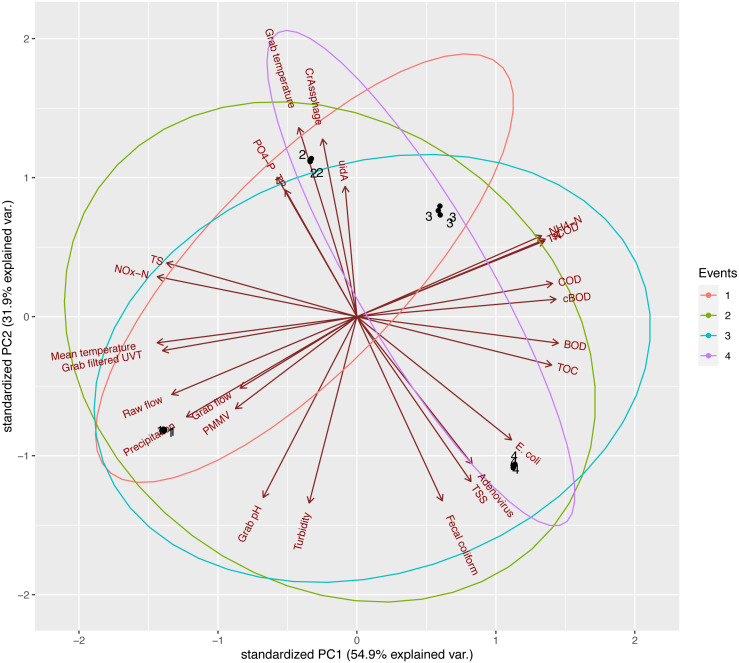
We investigated the potential use and quantification of human enteric viruses in municipal wastewater samples of Winnipeg (Manitoba, Canada) as alternative indicators of contamination and evaluated the processing stages of the wastewater treatment plant. During the fall 2019 and winter 2020 seasons, samples of raw sewage, activated sludge, effluents, and biosolids (sludge cake) were collected from the North End Sewage Treatment Plant (NESTP), which is the largest wastewater treatment plant in the City of Winnipeg. DNA (Adenovirus and crAssphage) and RNA enteric viruses (Pepper mild mottle virus, Norovirus genogroups GI and GII, Rotavirus Astrovirus, and Sapovirus) as well as the gene found in were targeted in the samples collected from the NESTP. Total nucleic acids from each wastewater treatment sample were extracted using a commercial spin-column kit. Enteric viruses were quantified in the extracted samples via quantitative PCR using TaqMan assays. Overall, the average gene copies assessed in the raw sewage were not significantly different (-values ranged between 0.1023 and 0.9921) than the average gene copies assessed in the effluents for DNA and RNA viruses and in terms of both volume and biomass. A significant reduction (-value ≤ 0.0438) of Adenovirus and Noroviruses genogroups GI and GII was observed in activated sludge samples compared with those for raw sewage per volume. Higher GCNs of enteric viruses were observed in dewatered sludge samples compared to liquid samples in terms of volume (g of sample) and biomass (ng of nucleic acids). Enteric viruses found in gene copy numbers were at least one order of magnitude higher than the marker , indicating that enteric viruses may survive the wastewater treatment process and viral-like particles are being released into the aquatic environment. Viruses such as Noroviruses genogroups GI and GII, and Rotavirus were detected during colder months. Our results suggest that Adenovirus, crAssphage, and Pepper mild mottle virus can be used confidently as complementary viral indicators of human fecal pollution.
我们研究了加拿大曼尼托巴省温尼伯市城市污水样本中人类肠道病毒作为污染替代指标的潜在用途和定量方法,并评估了污水处理厂的处理阶段。在2019年秋季和2020年冬季,从温尼伯市最大的污水处理厂——北端污水处理厂(NESTP)采集了原污水、活性污泥、出水和生物固体(污泥饼)样本。在从NESTP采集的样本中,靶向检测了DNA(腺病毒和crAssphage)和RNA肠道病毒(辣椒轻斑驳病毒、诺如病毒基因组GI和GII、轮状病毒、星状病毒和札幌病毒)以及在 中发现的 基因。使用商业旋转柱试剂盒从每个污水处理样本中提取总核酸。通过使用TaqMan分析的定量PCR对提取样本中的肠道病毒进行定量。总体而言,就体积和生物量而言,原污水中评估的平均基因拷贝数与出水中评估的DNA和RNA病毒的平均基因拷贝数没有显著差异(-值在0.1023至0.9921之间)。与每体积的原污水相比,活性污泥样本中腺病毒以及诺如病毒基因组GI和GII显著减少(-值≤0.0438)。就体积(克样本)和生物量(纳克核酸)而言,与液体样本相比,脱水污泥样本中观察到更高的肠道病毒基因组拷贝数(GCNs)。基因拷贝数中发现的肠道病毒比 标志物至少高一个数量级,这表明肠道病毒可能在废水处理过程中存活下来,并且病毒样颗粒正在释放到水生环境中。在较冷的月份检测到了诺如病毒基因组GI和GII以及轮状病毒等病毒。我们的结果表明,腺病毒、crAssphage和辣椒轻斑驳病毒可以可靠地用作人类粪便污染的补充病毒指标。