Govindaraj Mahalingam, Kanatti Anand, Rai Kedar Nath, Pfeiffer Wolfgang H, Shivade Harshad
International Crops Research Institute for the Semi-arid Tropics (ICRISAT), Patancheru, India.
Alliance of Bioversity International and the International Center for Tropical Agriculture (CIAT), Cali, Colombia.
Front Nutr. 2022 Feb 2;8:746625. doi: 10.3389/fnut.2021.746625. eCollection 2021.
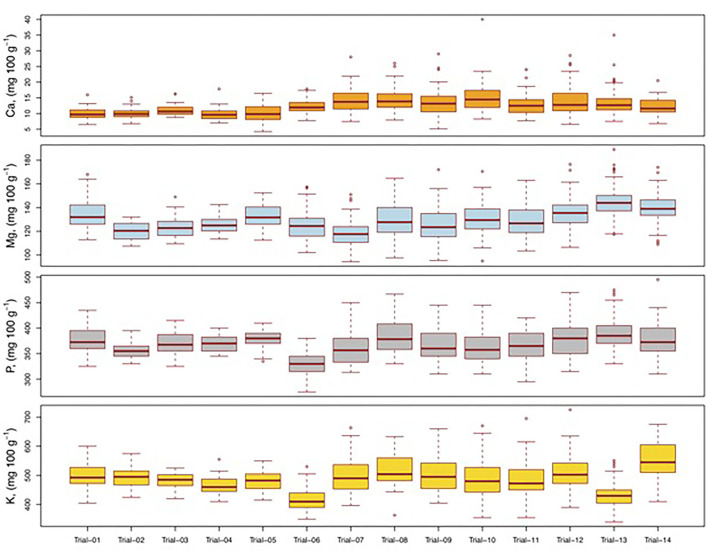
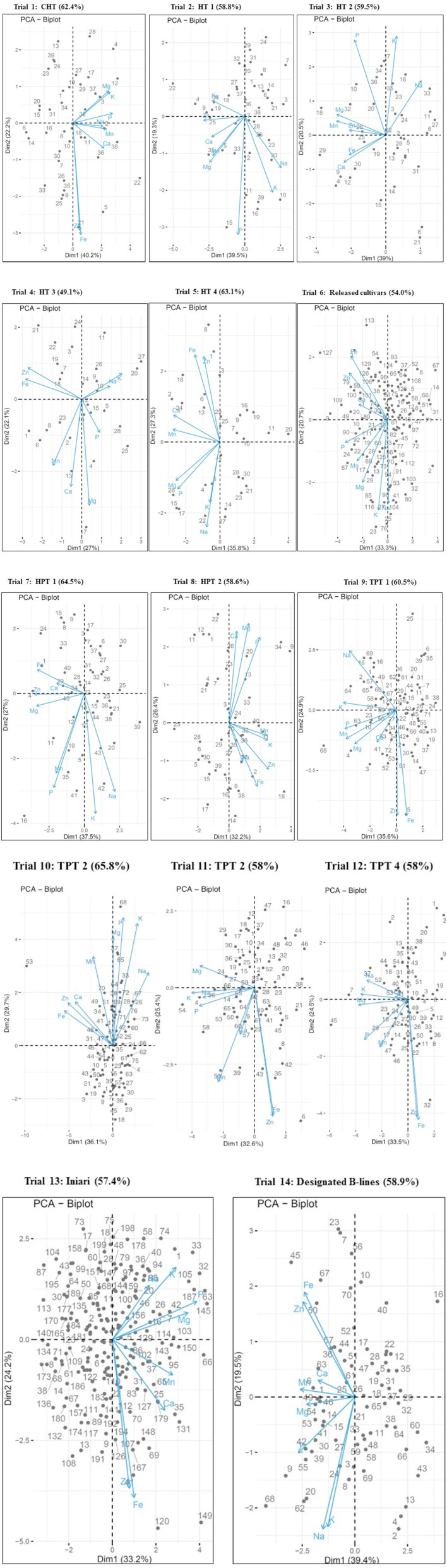
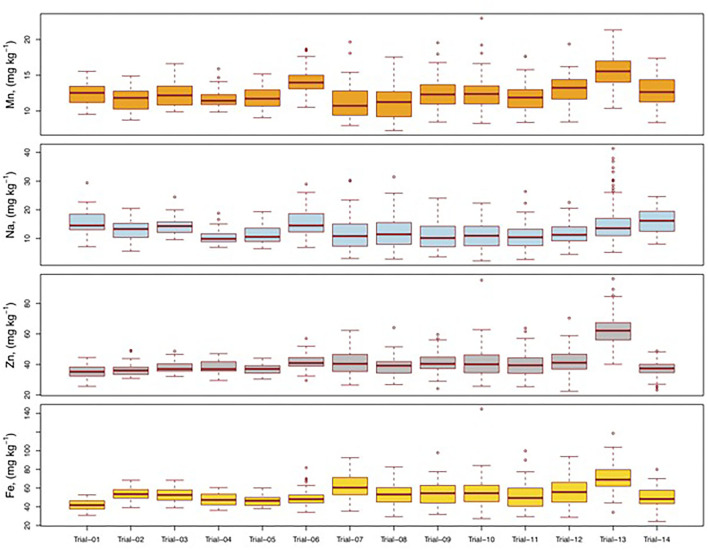
Micronutrient deficiency is most prevalent in developing regions of the world, including Africa and Southeast Asia where pearl millet ( L.) is a major crop. Increasing essential minerals in pearl millet through biofortification could reduce malnutrition caused by deficiency. This study evaluated the extent of variability of micronutrients (Fe, Zn, Mn, and Na) and macronutrients (P, K, Ca, and Mg) and their relationship with Fe and Zn content in 14 trials involving pearl millet hybrids, inbreds, and germplasm. Significant genetic variability of macronutrients and micronutrients was found within and across the trials (Ca: 4.2-40.0 mg 100 g, Fe: 24-145 mg kg, Zn: 22-96 mg kg, and Na: 3.0-63 mg kg). Parental lines showed significantly larger variation for nutrients than hybrids, indicating their potential for use in hybrid parent improvement through recurrent selection. Fe and Zn contents were positively correlated and highly significant ( = 0.58-0.81; < 0.01). Fe and Zn were positively and significantly correlated with Ca ( = 0.26-0.61; < 0.05) and Mn ( = 0.24-0.50; < 0.05). The findings indicate that joint selection for Fe, Zn, and Ca will be effective. Substantial genetic variation and high heritability (>0.60) for multiple grain minerals provide good selection accuracy prospects for genetic enhancement. A highly positive significant correlation between Fe and Zn and the nonsignificant correlation of grain macronutrients and micronutrients with Fe and Zn suggest that there is scope to achieve higher levels of Fe/Zn simultaneously in current pearl millet biofortification efforts without affecting other grain nutrients. Results suggest major prospects for improving multiple nutrients in pearl millet.
微量营养素缺乏在世界发展中地区最为普遍,包括非洲和东南亚,在这些地区珍珠粟是主要作物。通过生物强化增加珍珠粟中的必需矿物质可以减少因缺乏而导致的营养不良。本研究评估了14个涉及珍珠粟杂交种、自交系和种质的试验中微量营养素(铁、锌、锰和钠)和大量营养素(磷、钾、钙和镁)的变异程度及其与铁和锌含量的关系。在各试验内和试验间均发现大量营养素和微量营养素存在显著的遗传变异(钙:4.2 - 40.0毫克/100克,铁:24 - 145毫克/千克,锌:22 - 96毫克/千克,钠:3.0 - 63毫克/千克)。亲本系的养分变异显著大于杂交种,表明它们在通过轮回选择改良杂交亲本方面具有潜力。铁和锌含量呈正相关且高度显著(r = 0.58 - 0.81;P < 0.01)。铁和锌与钙(r = 0.26 - 0.61;P < 0.05)和锰(r = 0.24 - 0.50;P < 0.05)呈正相关且显著。研究结果表明,同时选择铁、锌和钙将是有效的。多种籽粒矿物质具有显著的遗传变异和高遗传力(>0.60),为遗传改良提供了良好的选择准确性前景。铁和锌之间高度正相关,而籽粒大量营养素和微量营养素与铁和锌无显著相关性,这表明在当前珍珠粟生物强化工作中,有机会在不影响其他籽粒养分的情况下同时实现更高水平的铁/锌。结果表明在改良珍珠粟多种养分方面有主要前景。