Lu Yu, Barrett Laura A, Lin Rebecca Z, Amith Muhammad, Tao Cui, He Zhe
School of Information, Florida State University, Tallahassee, FL, United States.
Washington University School of Medicine at St. Louis, St. Louis, MO, United States.
JMIR Pediatr Parent. 2022 Feb 21;5(1):e32235. doi: 10.2196/32235.
Understanding consumers' health information needs across all stages of the pregnancy trajectory is crucial to the development of mechanisms that allow them to retrieve high-quality, customized, and layperson-friendly health information.
The objective of this study was to identify research gaps in pregnancy-related consumer information needs and available information from different sources.
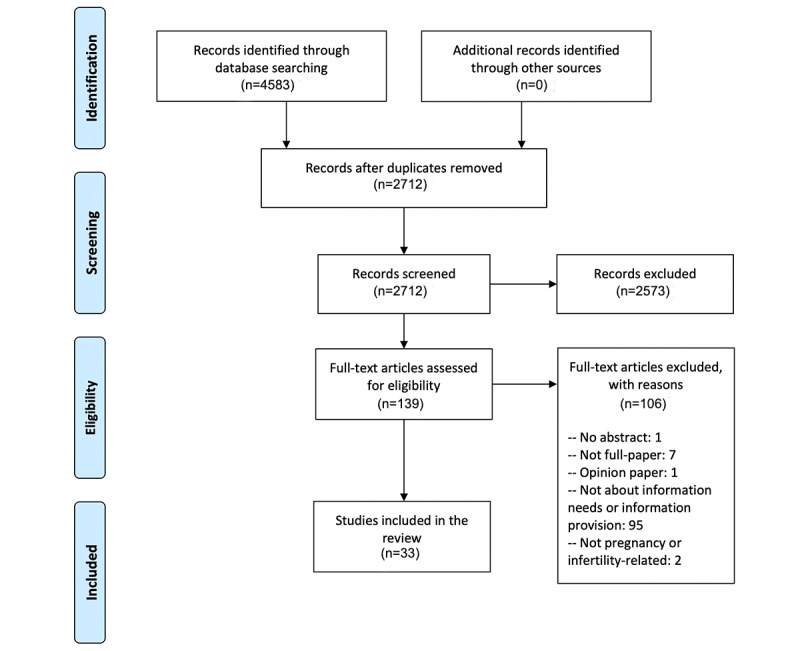
We conducted a systematic review of CINAHL, Cochrane, PubMed, and Web of Science for relevant articles that were published from 2009 to 2019. The quality of the included articles was assessed using the Critical Appraisal Skills Program. A descriptive data analysis was performed on these articles. Based on the review result, we developed the Pregnancy Information Needs Ontology (PINO) and made it publicly available in GitHub and BioPortal.
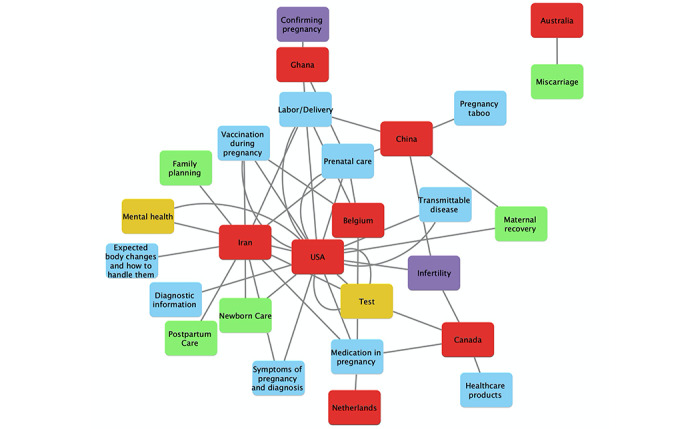
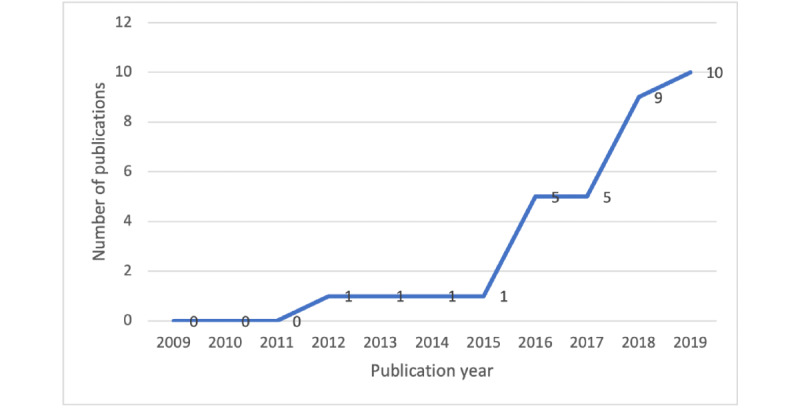
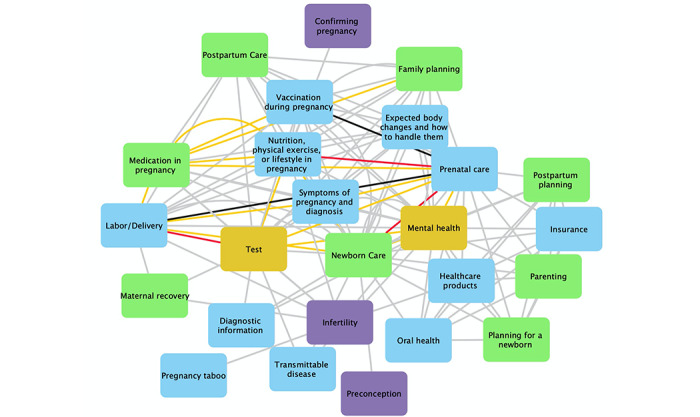
A total of 33 articles from 9 countries met the inclusion criteria for this review, of which the majority were published no earlier than 2016. Most studies were either descriptive (9/33, 27%), interviews (7/33, 21%), or surveys/questionnaires (7/33, 21%); 20 articles mentioned consumers' pregnancy-related information needs. Half (9/18, 50%) of the human-subject studies were conducted in the United States. More than a third (13/33, 39%) of all studies focused on during-pregnancy stage; only one study (1/33, 3%) was about all stages of pregnancy. The most frequent consumer information needs were related to labor delivery (9/20, 45%), medication in pregnancy (6/20, 30%), newborn care (5/20, 25%), and lab tests (6/20, 30%). The most frequently available source of information was the internet (15/24, 63%). PINO consists of 267 classes, 555 axioms, and 271 subclass relationships.
Only a few articles assessed the barriers to access to pregnancy-related information and the quality of each source of information; further work is needed. Future work is also needed to address the gaps between the information needed and the information available.
了解消费者在孕期各个阶段的健康信息需求对于开发能让他们获取高质量、定制化且通俗易懂的健康信息的机制至关重要。
本研究的目的是找出孕期相关消费者信息需求以及不同来源可用信息方面的研究空白。
我们对CINAHL、Cochrane、PubMed和Web of Science进行了系统综述,以查找2009年至2019年发表的相关文章。使用批判性评估技能计划对纳入文章的质量进行评估。对这些文章进行了描述性数据分析。基于综述结果,我们开发了孕期信息需求本体(PINO),并将其在GitHub和生物门户上公开。
来自9个国家的33篇文章符合本综述的纳入标准,其中大多数文章发表时间不早于2016年。大多数研究为描述性研究(9/33,27%)、访谈(7/33,21%)或调查/问卷研究(7/33,21%);20篇文章提及了消费者与孕期相关的信息需求。一半(9/18,50%)的人体研究在美国进行。所有研究中超过三分之一(13/33,39%)聚焦于孕期阶段;只有一项研究(1/33,3%)涉及孕期的所有阶段。最常见的消费者信息需求与分娩(9/20,45%)、孕期用药(6/20,30%)、新生儿护理(5/20,25%)和实验室检查(6/20,30%)有关。最常见的信息来源是互联网(15/24,63%)。PINO由267个类别、555条公理和271个子类关系组成。
只有少数文章评估了获取孕期相关信息的障碍以及各信息来源的质量;需要进一步开展工作。未来还需要解决所需信息与可用信息之间的差距。