Programme in Emerging Infectious Diseases, Duke-NUS Medical School, Singapore.
Department of Biochemistry and Molecular Biology, University of Texas Medical Branch, Galveston, Texas, USA.
mBio. 2022 Feb 22;13(1):e0019622. doi: 10.1128/mbio.00196-22.
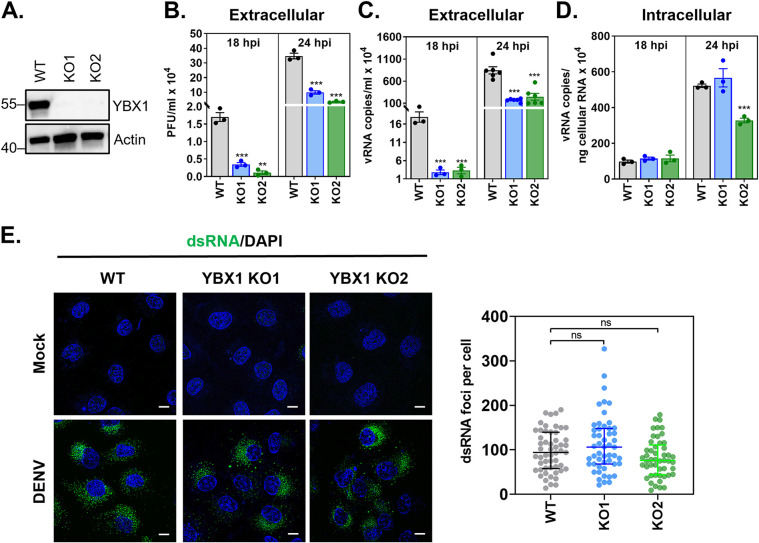
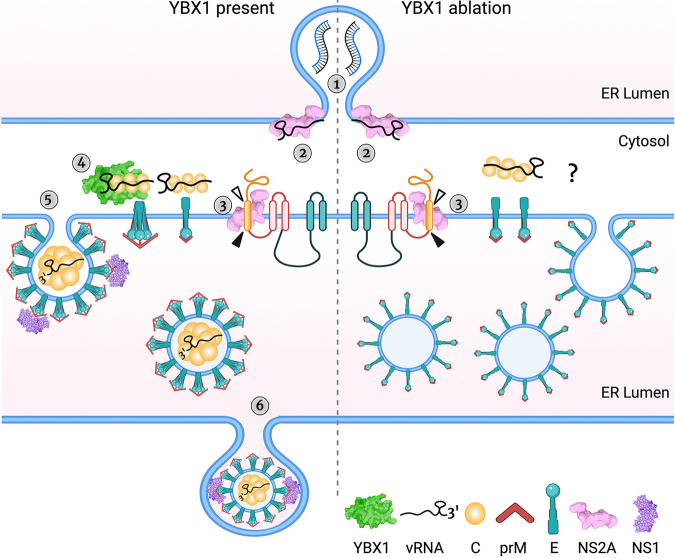
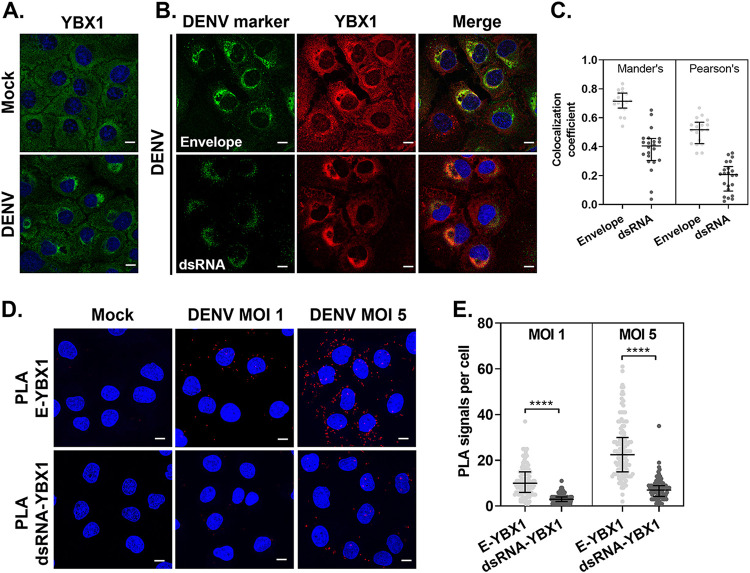
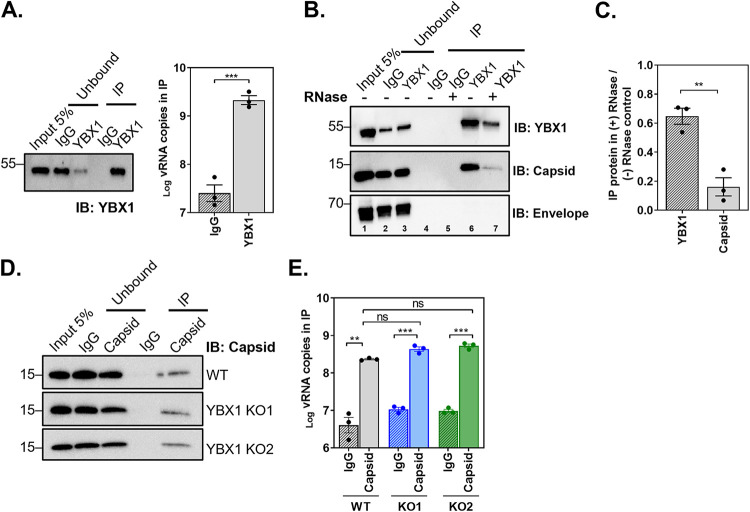
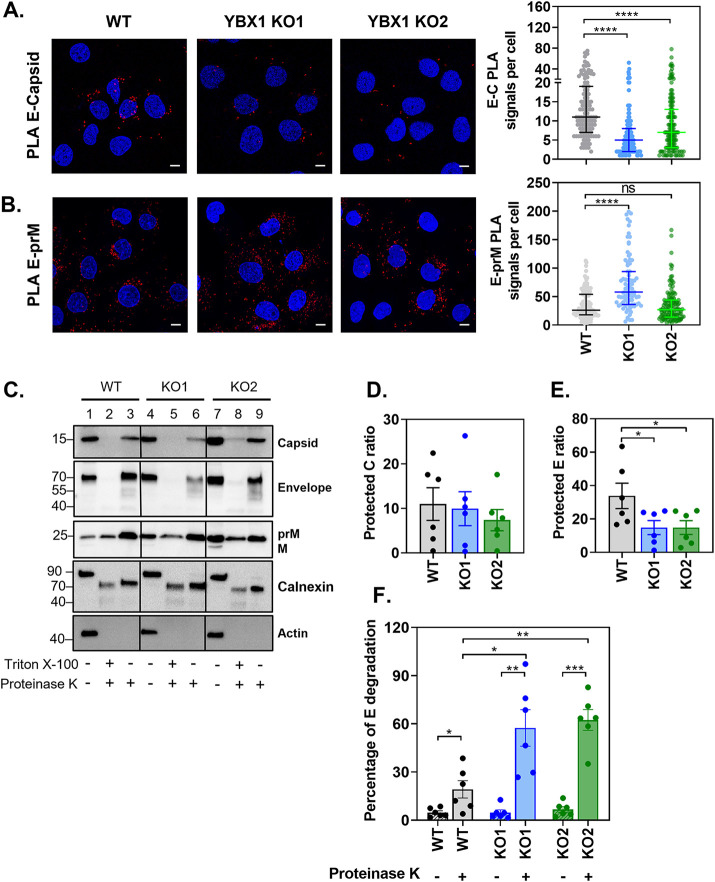
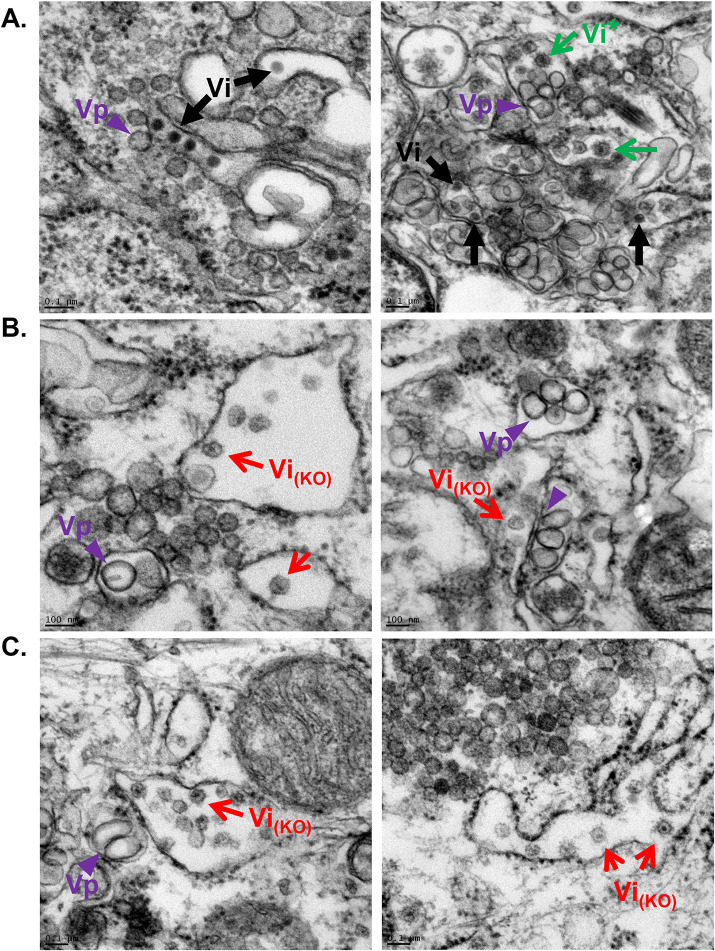
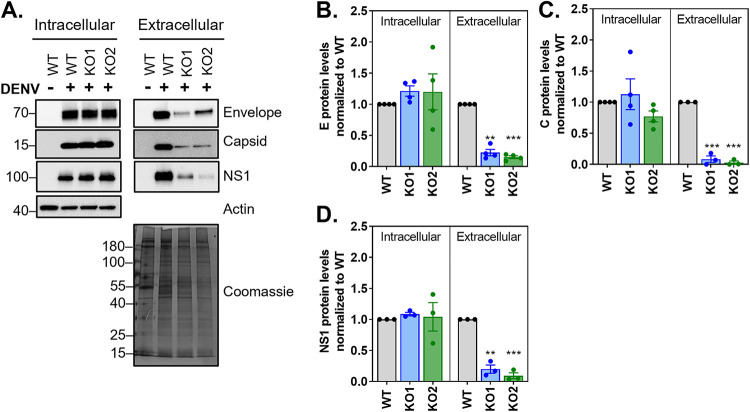
Infection with dengue virus (DENV) induces vast rearrangements of the endoplasmic reticulum, which allows the compartmentalization of viral RNA replication and particle assembly. Both processes occur in concert with viral and cellular proteins. Prior studies from our group suggest that the host RNA-binding protein (RBP) Y-box binding protein 1 (YBX1) is required for a late step in the DENV replication cycle. Here we report that YBX1 interacts with the viral nucleocapsid, distributes to DENV assembly sites and is required for efficient assembly of intracellular infectious virions and their secretion. Genetic ablation of YBX1 decreased the spatial proximity between capsid and envelope, increased the susceptibility of envelope to proteinase K mediated degradation, resulted in the formation of rough empty-looking particles, and decreased the secretion of viral particles. We propose a model wherein YBX1 enables the interaction between the viral nucleocapsid with the structural protein E, which is required for proper assembly of intracellular virus particles and their secretion. The global incidence of dengue virus (DENV) infections has steadily increased over the past decades representing an enormous challenge for public health. During infection, DENV viral RNA interacts with numerous host RNA binding proteins (RBPs) that aid viral replication and thus constitute potential molecular targets to curb infection. We recently reported that Y-box-binding protein 1 (YBX1) interacts with DENV RNA and is required at a late step of the replication cycle. Here we describe the molecular mechanism by which YBX1 mediates DENV infection. We show that YBX1 interacts with the viral nucleocapsid, distributes to DENV assembly sites and is required for efficient assembly of intracellular infectious virions. These results provide important insights into DENV assembly, revealing novel functions of host RBPs during viral infection and opening new avenues for antiviral intervention.
登革热病毒(DENV)感染会引起内质网的巨大重排,从而实现病毒 RNA 复制和颗粒组装的区室化。这两个过程都与病毒和细胞蛋白协同发生。我们小组的先前研究表明,宿主 RNA 结合蛋白(RBP)Y 盒结合蛋白 1(YBX1)是 DENV 复制周期晚期所必需的。在这里,我们报告 YBX1 与病毒核衣壳相互作用,分布在 DENV 组装部位,并且是有效组装细胞内传染性病毒粒子及其分泌所必需的。YBX1 的遗传缺失减少了衣壳和包膜之间的空间接近度,增加了包膜对蛋白酶 K 介导的降解的敏感性,导致形成粗糙的空外观颗粒,并减少了病毒粒子的分泌。我们提出了一个模型,其中 YBX1 使病毒核衣壳与结构蛋白 E 之间的相互作用成为可能,这对于细胞内病毒粒子的正确组装及其分泌是必需的。
过去几十年,登革热病毒(DENV)感染的全球发病率稳步上升,这对公共卫生构成了巨大挑战。在感染过程中,DENV 病毒 RNA 与许多宿主 RNA 结合蛋白(RBPs)相互作用,这些蛋白有助于病毒复制,因此构成了抑制感染的潜在分子靶标。我们最近报道 Y 盒结合蛋白 1(YBX1)与 DENV RNA 相互作用,并且是复制周期晚期所必需的。在这里,我们描述了 YBX1 介导 DENV 感染的分子机制。我们表明 YBX1 与病毒核衣壳相互作用,分布在 DENV 组装部位,并且是有效组装细胞内传染性病毒粒子所必需的。这些结果为 DENV 组装提供了重要的见解,揭示了宿主 RBPs 在病毒感染过程中的新功能,并为抗病毒干预开辟了新途径。