• 文献检索
  • 文档翻译
  • 深度研究
  • 学术资讯
  • Suppr Zotero 插件Zotero 插件
  • 邀请有礼
  • 套餐&价格
  • 历史记录
应用&插件
Suppr Zotero 插件Zotero 插件浏览器插件Mac 客户端Windows 客户端微信小程序
定价
高级版会员购买积分包购买API积分包
服务
文献检索文档翻译深度研究API 文档MCP 服务
关于我们
关于 Suppr公司介绍联系我们用户协议隐私条款
关注我们

Suppr 超能文献

核心技术专利:CN118964589B侵权必究
粤ICP备2023148730 号-1Suppr @ 2026

文献检索

告别复杂PubMed语法,用中文像聊天一样搜索,搜遍4000万医学文献。AI智能推荐,让科研检索更轻松。

立即免费搜索

文件翻译

保留排版,准确专业,支持PDF/Word/PPT等文件格式,支持 12+语言互译。

免费翻译文档

深度研究

AI帮你快速写综述,25分钟生成高质量综述,智能提取关键信息,辅助科研写作。

立即免费体验

绘制信息与错误信息版图以刻画社交媒体上的错误信息传播现象:全球范围内的新冠疫情信息传播研究。

Charting the Information and Misinformation Landscape to Characterize Misinfodemics on Social Media: COVID-19 Infodemiology Study at a Planetary Scale.

作者信息

Chen Emily, Jiang Julie, Chang Ho-Chun Herbert, Muric Goran, Ferrara Emilio

机构信息

Information Sciences Institute University of Southern California Marina del Rey, CA United States.

Department of Computer Science University of Southern California Los Angeles, CA United States.

出版信息

JMIR Infodemiology. 2022 Feb 8;2(1):e32378. doi: 10.2196/32378. eCollection 2022 Jan-Jun.

DOI:10.2196/32378
PMID:35190798
原文链接:https://pmc.ncbi.nlm.nih.gov/articles/PMC8828361/
Abstract

BACKGROUND

The novel coronavirus, also known as SARS-CoV-2, has come to define much of our lives since the beginning of 2020. During this time, countries around the world imposed lockdowns and social distancing measures. The physical movements of people ground to a halt, while their online interactions increased as they turned to engaging with each other virtually. As the means of communication shifted online, information consumption also shifted online. Governing authorities and health agencies have intentionally shifted their focus to use social media and online platforms to spread factual and timely information. However, this has also opened the gate for misinformation, contributing to and accelerating the phenomenon of misinfodemics.

OBJECTIVE

We carried out an analysis of Twitter discourse on over 1 billion tweets related to COVID-19 over a year to identify and investigate prevalent misinformation narratives and trends. We also aimed to describe the Twitter audience that is more susceptible to health-related misinformation and the network mechanisms driving misinfodemics.

METHODS

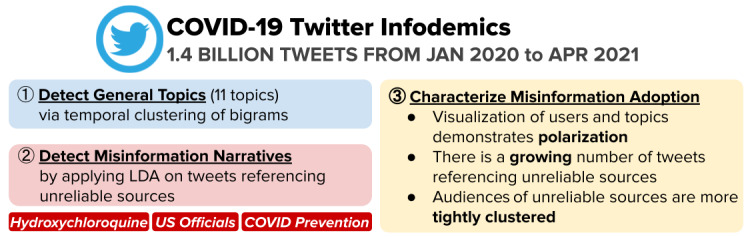
We leveraged a data set that we collected and made public, which contained over 1 billion tweets related to COVID-19 between January 2020 and April 2021. We created a subset of this larger data set by isolating tweets that included URLs with domains that had been identified by Media Bias/Fact Check as being prone to questionable and misinformation content. By leveraging clustering and topic modeling techniques, we identified major narratives, including health misinformation and conspiracies, which were present within this subset of tweets.

RESULTS

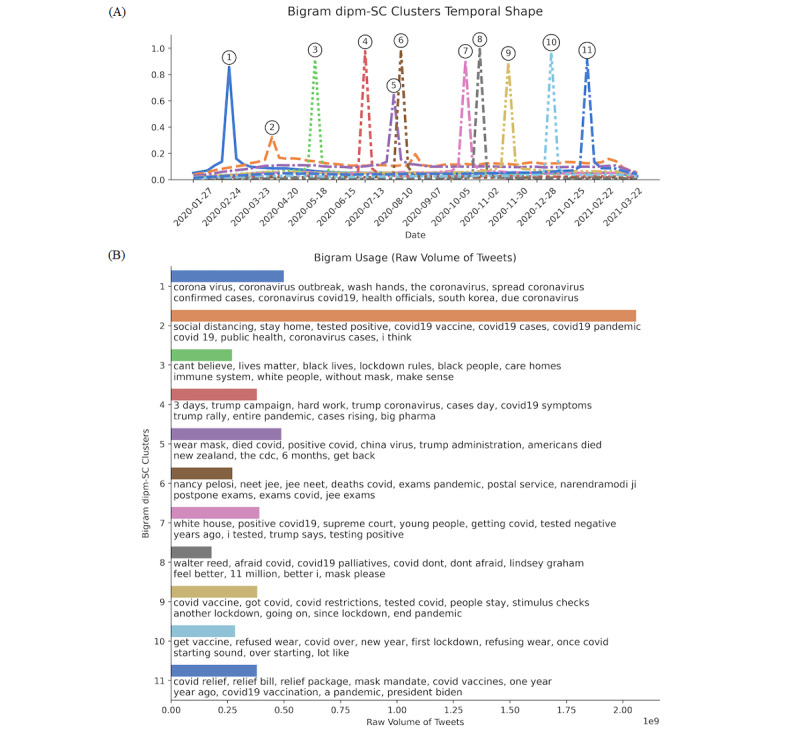
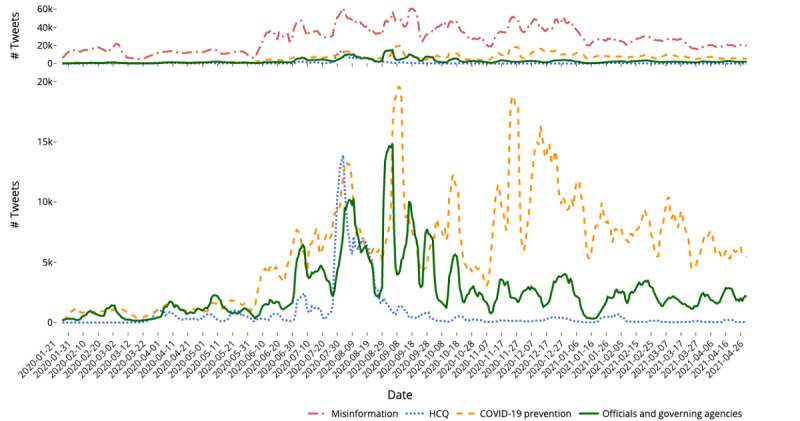
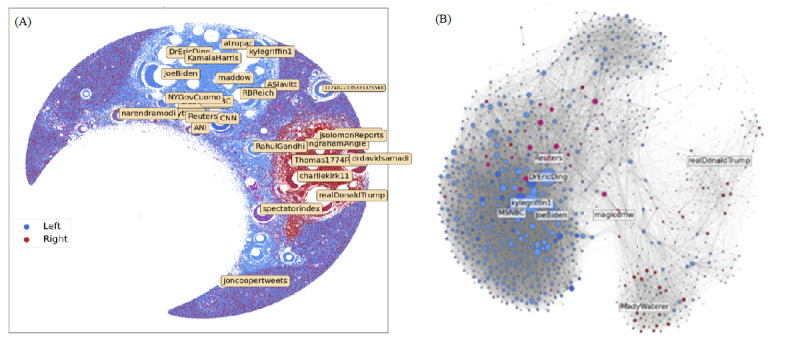
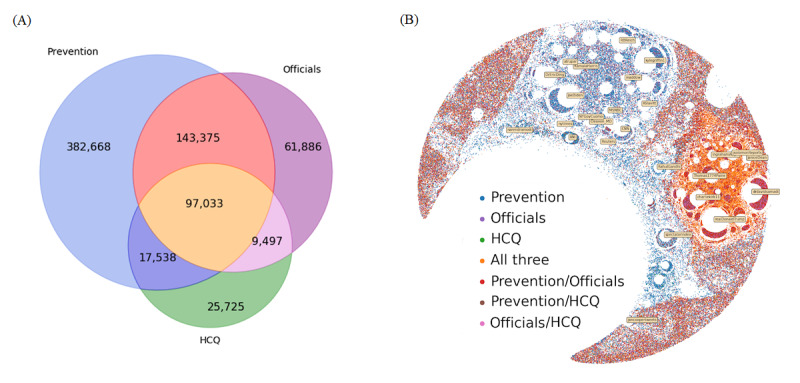
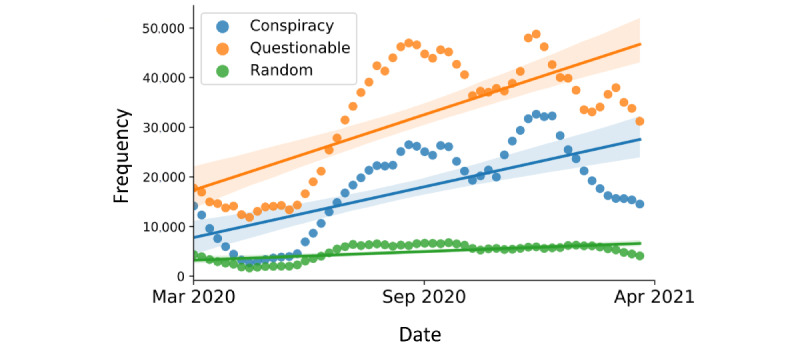
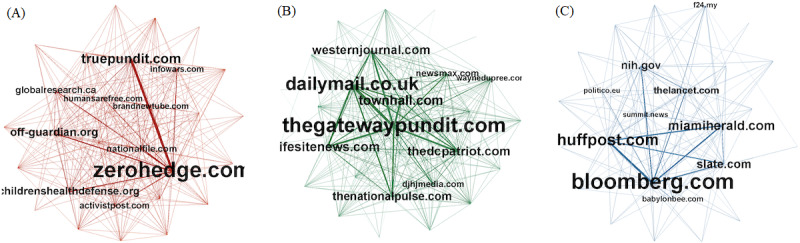
Our focus was on a subset of 12,689,165 tweets that we determined were representative of COVID-19 misinformation narratives in our full data set. When analyzing tweets that shared content from domains known to be questionable or that promoted misinformation, we found that a few key misinformation narratives emerged about hydroxychloroquine and alternative medicines, US officials and governing agencies, and COVID-19 prevention measures. We further analyzed the misinformation retweet network and found that users who shared both questionable and conspiracy-related content were clustered more closely in the network than others, supporting the hypothesis that echo chambers can contribute to the spread of health misinfodemics.

CONCLUSIONS

We presented a summary and analysis of the major misinformation discourse surrounding COVID-19 and those who promoted and engaged with it. While misinformation is not limited to social media platforms, we hope that our insights, particularly pertaining to health-related emergencies, will help pave the way for computational infodemiology to inform health surveillance and interventions.
https://cdn.ncbi.nlm.nih.gov/pmc/blobs/d9e1/10117306/9bb80c1c83a8/infodemiology_v2i1e32378_fig7.jpg
https://cdn.ncbi.nlm.nih.gov/pmc/blobs/d9e1/10117306/bc26acfe83b6/infodemiology_v2i1e32378_fig1.jpg
https://cdn.ncbi.nlm.nih.gov/pmc/blobs/d9e1/10117306/4f0a92524141/infodemiology_v2i1e32378_fig2.jpg
https://cdn.ncbi.nlm.nih.gov/pmc/blobs/d9e1/10117306/15a7920702ef/infodemiology_v2i1e32378_fig3.jpg
https://cdn.ncbi.nlm.nih.gov/pmc/blobs/d9e1/10117306/7657bef7e219/infodemiology_v2i1e32378_fig4.jpg
https://cdn.ncbi.nlm.nih.gov/pmc/blobs/d9e1/10117306/afe5d2391271/infodemiology_v2i1e32378_fig5.jpg
https://cdn.ncbi.nlm.nih.gov/pmc/blobs/d9e1/10117306/fb7eda9862c1/infodemiology_v2i1e32378_fig6.jpg
https://cdn.ncbi.nlm.nih.gov/pmc/blobs/d9e1/10117306/9bb80c1c83a8/infodemiology_v2i1e32378_fig7.jpg
https://cdn.ncbi.nlm.nih.gov/pmc/blobs/d9e1/10117306/bc26acfe83b6/infodemiology_v2i1e32378_fig1.jpg
https://cdn.ncbi.nlm.nih.gov/pmc/blobs/d9e1/10117306/4f0a92524141/infodemiology_v2i1e32378_fig2.jpg
https://cdn.ncbi.nlm.nih.gov/pmc/blobs/d9e1/10117306/15a7920702ef/infodemiology_v2i1e32378_fig3.jpg
https://cdn.ncbi.nlm.nih.gov/pmc/blobs/d9e1/10117306/7657bef7e219/infodemiology_v2i1e32378_fig4.jpg
https://cdn.ncbi.nlm.nih.gov/pmc/blobs/d9e1/10117306/afe5d2391271/infodemiology_v2i1e32378_fig5.jpg
https://cdn.ncbi.nlm.nih.gov/pmc/blobs/d9e1/10117306/fb7eda9862c1/infodemiology_v2i1e32378_fig6.jpg
https://cdn.ncbi.nlm.nih.gov/pmc/blobs/d9e1/10117306/9bb80c1c83a8/infodemiology_v2i1e32378_fig7.jpg
摘要

背景

自2020年初以来,新型冠状病毒,即严重急性呼吸综合征冠状病毒2(SARS-CoV-2),在很大程度上影响了我们的生活。在此期间,世界各国实施了封锁和社交距离措施。人们的出行基本停滞,而线上互动却有所增加,因为大家开始转向虚拟社交。随着沟通方式转向线上,信息消费也转移到了网上。政府当局和卫生机构有意将重点转向利用社交媒体和在线平台传播真实及时的信息。然而,这也为错误信息打开了大门,助长并加速了错误信息疫情的现象。

目的

我们对一年多来超过10亿条与新冠疫情相关的推特言论进行了分析,以识别和调查普遍存在的错误信息叙事及趋势。我们还旨在描述更容易受到健康相关错误信息影响的推特受众,以及推动错误信息疫情传播的网络机制。

方法

我们利用了自己收集并公开的一个数据集,其中包含2020年1月至2021年4月期间超过10亿条与新冠疫情相关的推文。我们通过隔离包含特定网址的推文创建了这个更大数据集的一个子集,这些网址的域名被“媒体偏见/事实核查”认定为容易出现可疑和错误信息内容。通过利用聚类和主题建模技术,我们在这个推文子集中识别出了主要叙事,包括健康错误信息和阴谋论。

结果

我们关注的是12689165条推文的子集,我们认定这些推文代表了完整数据集中新冠疫情错误信息叙事。在分析那些分享来自已知可疑领域内容或宣扬错误信息的推文时,我们发现出现了一些关于羟氯喹和替代药物、美国官员和政府机构以及新冠疫情预防措施的关键错误信息叙事。我们进一步分析了错误信息转发网络,发现分享可疑内容和阴谋论相关内容的用户在网络中比其他用户聚集得更紧密,这支持了回音室效应会促成健康错误信息疫情传播的假设。

结论

我们对围绕新冠疫情的主要错误信息言论以及传播和参与这些言论的人进行了总结和分析。虽然错误信息并不局限于社交媒体平台,但我们希望我们的见解,特别是与健康相关紧急情况有关的见解,将有助于为计算信息流行病学为健康监测和干预提供信息铺平道路。

相似文献

1
Charting the Information and Misinformation Landscape to Characterize Misinfodemics on Social Media: COVID-19 Infodemiology Study at a Planetary Scale.绘制信息与错误信息版图以刻画社交媒体上的错误信息传播现象:全球范围内的新冠疫情信息传播研究。
JMIR Infodemiology. 2022 Feb 8;2(1):e32378. doi: 10.2196/32378. eCollection 2022 Jan-Jun.
2
COVID-19 and the 5G Conspiracy Theory: Social Network Analysis of Twitter Data.新冠疫情与5G阴谋论:基于推特数据的社交网络分析
J Med Internet Res. 2020 May 6;22(5):e19458. doi: 10.2196/19458.
3
COVID-19 Vaccine Hesitancy on Social Media: Building a Public Twitter Data Set of Antivaccine Content, Vaccine Misinformation, and Conspiracies.社交媒体上对 COVID-19 疫苗的犹豫:构建一个关于反疫苗内容、疫苗错误信息和阴谋论的公共 Twitter 数据集。
JMIR Public Health Surveill. 2021 Nov 17;7(11):e30642. doi: 10.2196/30642.
4
"Thought I'd Share First" and Other Conspiracy Theory Tweets from the COVID-19 Infodemic: Exploratory Study.“我想率先分享”和其他有关 COVID-19 信息疫情的阴谋论推文:探索性研究。
JMIR Public Health Surveill. 2021 Apr 14;7(4):e26527. doi: 10.2196/26527.
5
Temporal and Location Variations, and Link Categories for the Dissemination of COVID-19-Related Information on Twitter During the SARS-CoV-2 Outbreak in Europe: Infoveillance Study.欧洲SARS-CoV-2疫情期间推特上新冠疫情相关信息传播的时间和地点变化以及链接类别:信息监测研究
J Med Internet Res. 2020 Aug 28;22(8):e19629. doi: 10.2196/19629.
6
Investigation of COVID-19 Misinformation in Arabic on Twitter: Content Analysis.推特上阿拉伯语新冠疫情虚假信息调查:内容分析
JMIR Infodemiology. 2022 Jul 26;2(2):e37007. doi: 10.2196/37007. eCollection 2022 Jul-Dec.
7
Coronavirus Goes Viral: Quantifying the COVID-19 Misinformation Epidemic on Twitter.冠状病毒迅速传播:量化推特上关于新冠疫情的错误信息传播情况
Cureus. 2020 Mar 13;12(3):e7255. doi: 10.7759/cureus.7255.
8
Spread of COVID-19 Vaccine Misinformation in the Ninth Inning: Retrospective Observational Infodemic Study.新冠疫苗错误信息在最后阶段的传播:回顾性观察性信息疫情研究
JMIR Infodemiology. 2022 Mar 16;2(1):e33587. doi: 10.2196/33587. eCollection 2022 Jan-Jun.
9
Association Between What People Learned About COVID-19 Using Web Searches and Their Behavior Toward Public Health Guidelines: Empirical Infodemiology Study.人们通过网络搜索了解 COVID-19 与他们对公共卫生指南行为之间的关联:实证信息流行病学研究。
J Med Internet Res. 2021 Sep 2;23(9):e28975. doi: 10.2196/28975.
10
Top Concerns of Tweeters During the COVID-19 Pandemic: Infoveillance Study.新冠疫情期间推特用户的主要担忧:信息监测研究
J Med Internet Res. 2020 Apr 21;22(4):e19016. doi: 10.2196/19016.

引用本文的文献

1
Beliefs in Misinformation About COVID-19 and the Russian Invasion of Ukraine Are Linked: Evidence From a Nationally Representative Survey Study.关于新冠疫情的错误信息信念与俄罗斯对乌克兰的入侵信念有关联:来自一项全国代表性调查研究的证据。
JMIR Infodemiology. 2025 Mar 10;5:e62913. doi: 10.2196/62913.
2
Healthcare workers' knowledge, attitude and practices on infection prevention and control in the context of the COVID-19 pandemic at the Faranah regional hospital and associated healthcare centers, Guinea.在几内亚法拉纳地区医院和相关医疗中心,针对 COVID-19 大流行的情况下,医护人员在感染预防和控制方面的知识、态度和实践。
Antimicrob Resist Infect Control. 2024 Jul 18;13(1):79. doi: 10.1186/s13756-024-01435-z.
3

本文引用的文献

1
Disrupting the COVID-19 Misinfodemic With Network Interventions: Network Solutions for Network Problems.用网络干预手段阻断 COVID-19 错误信息传播:网络问题的网络解决方案。
Am J Public Health. 2021 Mar;111(3):514-519. doi: 10.2105/AJPH.2020.306063. Epub 2021 Jan 21.
2
Black Lives Matter protests and COVID-19 cases: relationship in two databases.“黑人的命也是命”抗议活动和 COVID-19 病例:两个数据库中的关系。
J Public Health (Oxf). 2021 Jun 7;43(2):225-227. doi: 10.1093/pubmed/fdaa212.
3
Inoculating Against Fake News About COVID-19.防范关于新冠病毒的虚假消息
Content Analysis of Food Safety Information in Apple-Drying Recipes from YouTube, Blogs, Cookbooks, and Extension Materials.
来自YouTube、博客、食谱和推广材料中苹果干制作食谱的食品安全信息内容分析
Foods. 2024 Mar 1;13(5):778. doi: 10.3390/foods13050778.
4
How does Twitter account moderation work? Dynamics of account creation and suspension on Twitter during major geopolitical events.推特的账户审核是如何运作的?重大地缘政治事件期间推特账户创建与停用的动态变化。
EPJ Data Sci. 2023;12(1):43. doi: 10.1140/epjds/s13688-023-00420-7. Epub 2023 Oct 4.
5
Novel Psychosocial Correlates of COVID-19 Vaccine Hesitancy: Cross-Sectional Survey.新冠疫苗犹豫的新型社会心理关联因素:横断面调查
JMIR Form Res. 2023 Sep 27;7:e45980. doi: 10.2196/45980.
6
Staying Home, Tweeting Hope: Mixed Methods Study of Twitter Sentiment Geographical Index During US Stay-At-Home Orders.居家、传希望:美国居家令期间推特情绪地理指数的混合方法研究。
J Med Internet Res. 2023 Jul 24;25:e45757. doi: 10.2196/45757.
7
Interdisciplinary Approach to Identify and Characterize COVID-19 Misinformation on Twitter: Mixed Methods Study.跨学科方法识别和表征推特上关于新冠疫情的错误信息:混合方法研究
JMIR Form Res. 2023 Jun 28;7:e41134. doi: 10.2196/41134.
8
Advancing Infodemiology in a Digital Intensive Era.在数字密集时代推进信息流行病学
JMIR Infodemiology. 2022 Feb 14;2(1):e37115. doi: 10.2196/37115. eCollection 2022 Jan-Jun.
9
One Year of COVID-19 Vaccine Misinformation on Twitter: Longitudinal Study.《推特上一年的 COVID-19 疫苗错误信息:纵向研究》。
J Med Internet Res. 2023 Feb 24;25:e42227. doi: 10.2196/42227.
10
Nurses' Work Concerns and Disenchantment During the COVID-19 Pandemic: Machine Learning Analysis of Web-Based Discussions.新冠疫情期间护士的工作担忧与幻灭感:基于网络讨论的机器学习分析
JMIR Nurs. 2023 Feb 6;6:e40676. doi: 10.2196/40676.
Front Psychol. 2020 Oct 23;11:566790. doi: 10.3389/fpsyg.2020.566790. eCollection 2020.
4
Assessing the risks of 'infodemics' in response to COVID-19 epidemics.评估应对 COVID-19 疫情“信息疫情”的风险。
Nat Hum Behav. 2020 Dec;4(12):1285-1293. doi: 10.1038/s41562-020-00994-6. Epub 2020 Oct 29.
5
The COVID-19 social media infodemic.新冠病毒肺炎疫情相关社交媒体信息疫情。
Sci Rep. 2020 Oct 6;10(1):16598. doi: 10.1038/s41598-020-73510-5.
6
Community and Close Contact Exposures Associated with COVID-19 Among Symptomatic Adults ≥18 Years in 11 Outpatient Health Care Facilities - United States, July 2020.11 家门诊医疗机构中≥18 岁有症状成年人中 COVID-19 相关的社区和密切接触者暴露情况-美国,2020 年 7 月。
MMWR Morb Mortal Wkly Rep. 2020 Sep 11;69(36):1258-1264. doi: 10.15585/mmwr.mm6936a5.
7
Hydroxychloroquine and Chloroquine Prescribing Patterns by Provider Specialty Following Initial Reports of Potential Benefit for COVID-19 Treatment - United States, January-June 2020.羟氯喹和氯喹的处方模式按医生专业划分,参考了最初关于其对 COVID-19 治疗潜在益处的报告 - 美国,2020 年 1 月至 6 月。
MMWR Morb Mortal Wkly Rep. 2020 Sep 4;69(35):1210-1215. doi: 10.15585/mmwr.mm6935a4.
8
Political polarization drives online conversations about COVID-19 in the United States.政治两极分化推动了美国关于新冠疫情的线上讨论。
Hum Behav Emerg Technol. 2020 Jul;2(3):200-211. doi: 10.1002/hbe2.202. Epub 2020 Jul 1.
9
Tracking Social Media Discourse About the COVID-19 Pandemic: Development of a Public Coronavirus Twitter Data Set.追踪社交媒体上关于 COVID-19 大流行的讨论:公共冠状病毒 Twitter 数据集的开发。
JMIR Public Health Surveill. 2020 May 29;6(2):e19273. doi: 10.2196/19273.
10
Fighting misinformation on social media using crowdsourced judgments of news source quality.利用众包新闻来源质量判断来打击社交媒体上的错误信息。
Proc Natl Acad Sci U S A. 2019 Feb 12;116(7):2521-2526. doi: 10.1073/pnas.1806781116. Epub 2019 Jan 28.