University Hospitals, Rainbow Babies and Children's Hospital, 11100 Euclid Ave, Suite 380, Cleveland, OH, 44106, USA.
Division of Pediatric Cardiology, Case Western Reserve University, Cleveland, OH, USA.
Pediatr Cardiol. 2022 Jun;43(5):1136-1140. doi: 10.1007/s00246-022-02835-x. Epub 2022 Feb 22.
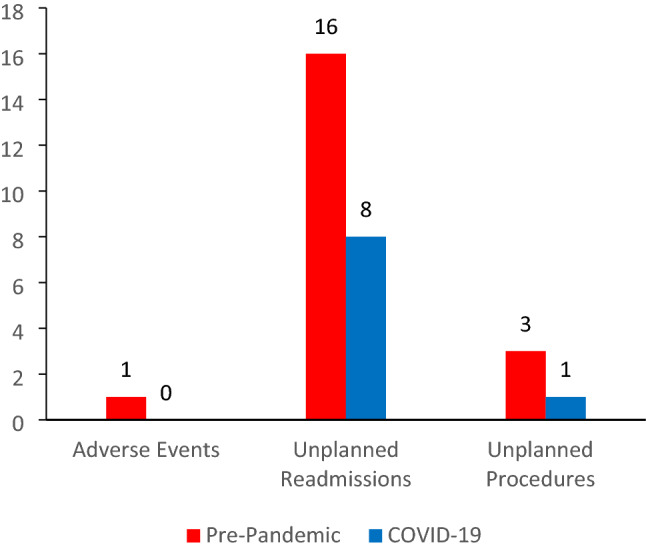
Pediatric single ventricle patients have seen dramatic improvements in overall outcomes over the past several decades. This is attributed to the development of home monitoring programs for interstage patients. In today's current COVID-19 pandemic, the use of telemedicine has allowed providers to care for these patients and support their families effectively while minimizing the risk of COVID-19 exposure. Our single-center study reviewed the charts of nine patients followed by our single ventricle team through the COVID-19 pandemic. Patients discharged from the hospital and enrolled in our digital home monitoring program were included. Records were retrospectively reviewed for total number of outpatient visits, adverse events, unplanned hospital readmissions, and unplanned procedures. These results were then compared to outcomes from 2018 to 2019. In-person visits averaged every 6 weeks compared to every 2-3-week pre-pandemic. Zero adverse events reported with the use of telemedicine compared to one adverse event pre-pandemic. There was a 50% decrease in unplanned readmissions and 60% decrease in unplanned procedures during our study period. One patient was diagnosed with acute COVID-19 infection and managed conservatively via telemedicine with full recovery. To our knowledge, this is the only case-control study reporting the use of telemedicine during the COVID-19 pandemic in the interstage population. Although not statistically significant, we report a decrease in total adverse events, unplanned procedures, and unplanned admissions. Telemedicine visits allowed for identification of issues requiring hospital readmission as well as conservative management of one patient with COVID-19.
在过去的几十年中,儿科单心室患者的整体预后有了显著改善。这归因于为过渡阶段患者开发家庭监测计划。在当前的 COVID-19 大流行中,远程医疗的使用使提供者能够有效地照顾这些患者并支持他们的家庭,同时将 COVID-19 暴露的风险降到最低。我们的单中心研究回顾了在 COVID-19 大流行期间通过我们的单心室团队进行随访的 9 名患者的病历。包括从医院出院并参加我们的数字家庭监测计划的患者。回顾性记录了门诊就诊次数、不良事件、非计划性住院再入院和非计划性手术的总次数。然后将这些结果与 2018 年至 2019 年的结果进行比较。与大流行前每 2-3 周相比,面对面就诊平均每 6 周进行一次。与大流行前的 1 例不良事件相比,远程医疗报告的不良事件为零。在研究期间,非计划性再入院减少了 50%,非计划性手术减少了 60%。一名患者被诊断患有急性 COVID-19 感染,并通过远程医疗进行保守治疗,完全康复。据我们所知,这是唯一一项在过渡阶段人群中报告 COVID-19 大流行期间使用远程医疗的病例对照研究。尽管没有统计学意义,但我们报告总不良事件、非计划性手术和非计划性入院的数量有所减少。远程医疗就诊可以发现需要住院再入院的问题,并对一名 COVID-19 患者进行保守治疗。