Division of Hematology, Oncology, and Transplantation, Department of Medicine.
Department of Surgery, and.
Blood Adv. 2022 Jun 14;6(11):3451-3457. doi: 10.1182/bloodadvances.2021006783.
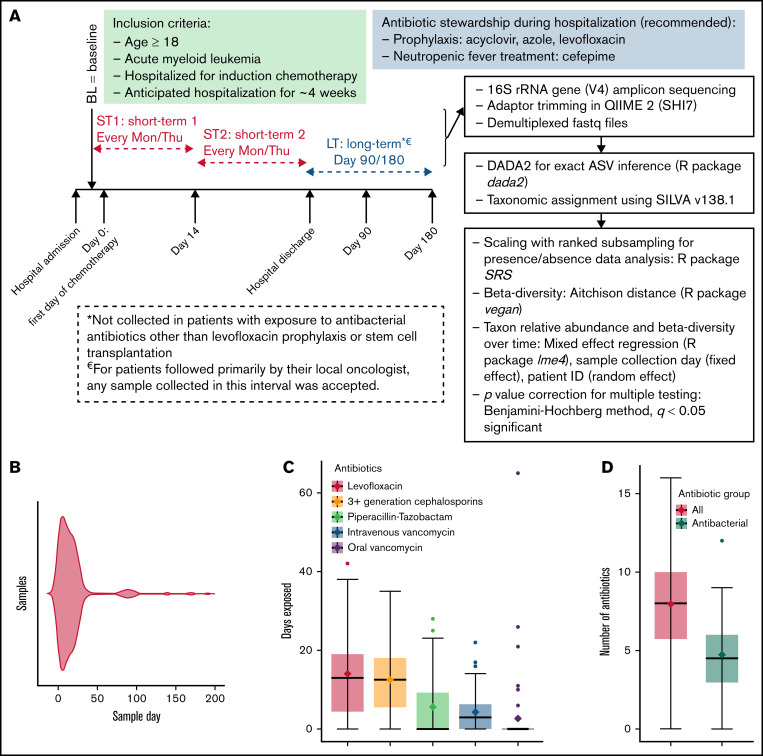
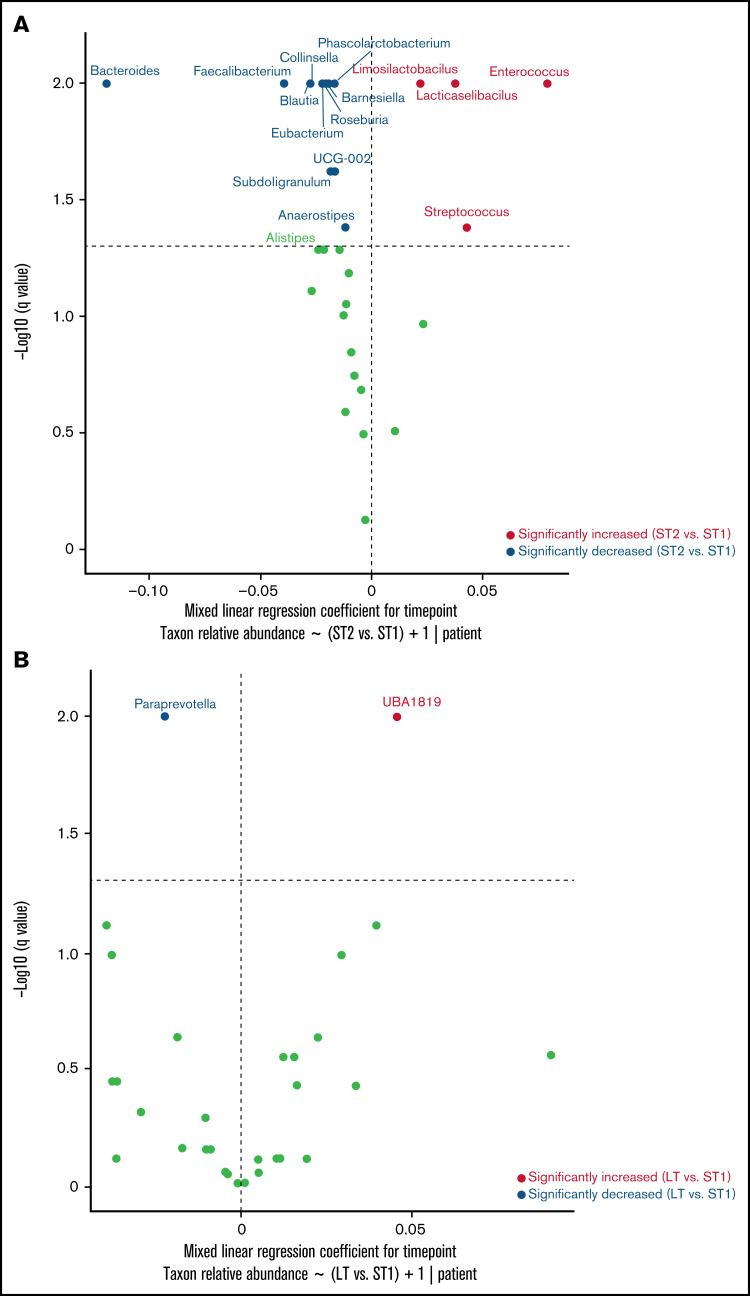
Previous studies have shown that the gut microbiota of patients with acute myeloid leukemia (AML) is disrupted during induction chemotherapy; however, the durability of microbiota changes is unknown. This is an important knowledge gap, because reduced microbiota diversity at the time of stem cell transplantation weeks to months after the initial chemotherapy has been associated with higher mortality after transplantation. By sequencing the gut microbiota in 410 longitudinal stool samples from 52 patients with AML, we found that, during inpatient chemotherapy, the gut microbiota is stressed beyond its ability to recover its original state. Despite major reductions in antibiotic pressure and other disturbances to the microbiota after hospital discharge, the trajectory of microbiota recovery yields new communities that are highly dissimilar to baseline. This lasting shift in the gut microbiota is relevant for subsequent phases of curative therapy and is a potential target for novel microbiota protective/restorative interventions. This trial was registered at www.clinicaltrials.gov as #NCT03316456.
先前的研究表明,急性髓系白血病(AML)患者的肠道微生物组在诱导化疗期间被打乱;然而,微生物组变化的持久性尚不清楚。这是一个重要的知识空白,因为在初始化疗后数周到数月进行干细胞移植时,微生物多样性的减少与移植后死亡率的升高有关。通过对 52 名 AML 患者的 410 个纵向粪便样本进行测序,我们发现,在住院化疗期间,肠道微生物组受到的压力超出了其恢复原有状态的能力。尽管在出院后抗生素压力和其他对微生物组的干扰大大减少,但微生物组恢复的轨迹产生了与基线高度不同的新群落。肠道微生物组的这种持久变化与后续治疗阶段相关,是新型微生物保护/恢复干预的潜在目标。该试验在 www.clinicaltrials.gov 上注册为 #NCT03316456。