Service d'hématologie clinique et de thérapie cellulaire, Hôpital Saint Antoine, APHP, Sorbonne Université, INSERM UMRs 938, Paris, France.
Service d'hématologie, Institut Paoli Calmettes, Marseille, France.
Nat Commun. 2021 May 25;12(1):3084. doi: 10.1038/s41467-021-23376-6.
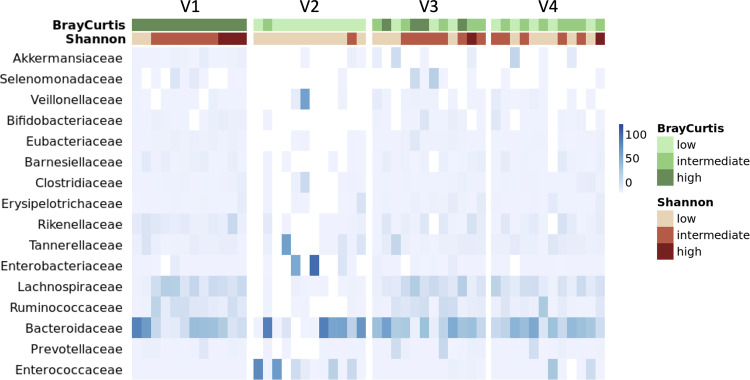
Acute myeloid leukemia (AML) intensive chemotherapy combined with broad-spectrum antibiotics, leads to gut microbiota dysbiosis promoting pathological conditions and an increased incidence of complications. Here we report findings from a phase II single-arm, multicenter study evaluating autologous fecal microbiota transfer (AFMT) in 25 AML patients treated with intensive chemotherapy and antibiotics (ClinicalTrials.gov number: NCT02928523). The co-primary outcomes of the study are to evaluate the efficacy of AFMT in dysbiosis correction and multidrug-resistant bacteria eradication. The main secondary outcomes are to define a dysbiosis biosignature, to evaluate the effect of dysbiosis correction on patient clinical status, to assess the short and mid-term safety of AFMT in this immunocompromised population, and to evaluate the feasibility of the AFMT procedure and acceptability by the patient. Intensive induction chemotherapy induces a dramatic decrease of α-diversity indices, and a microbial dysbiosis with a significant shift of the microbial communities and domination of pro-inflammatory families. After AFMT treatment, α-diversity indices return to their initial mean levels and the similarity index shows the restoration of microbial communities. The trial meets pre-specified endpoints. AFMT appears to be safe and may be effective for gut microbiota restoration in AML patients receiving intensive chemotherapy and antibiotics, with an excellent gut microbiota reconstruction based on both richness and diversity indices at the species level.
急性髓系白血病(AML)强化化疗联合广谱抗生素会导致肠道微生物群落失调,促进病理状态的发生,并增加并发症的发生率。在这里,我们报告了一项 2 期单臂、多中心研究的结果,该研究评估了 25 例接受强化化疗和抗生素治疗的 AML 患者中自体粪便微生物群移植(AFMT)的效果(ClinicalTrials.gov 编号:NCT02928523)。该研究的主要终点是评估 AFMT 在纠正菌群失调和消除耐多药细菌方面的疗效。主要次要终点是定义菌群失调的生物标志物,评估菌群失调纠正对患者临床状况的影响,评估 AFMT 在这种免疫功能低下人群中的短期和中期安全性,以及评估 AFMT 程序的可行性和患者的可接受性。强化诱导化疗会导致 α 多样性指数显著下降,并出现微生物群落失调,微生物群落发生显著变化,促炎家族占主导地位。AFMT 治疗后,α 多样性指数恢复到初始平均水平,相似性指数显示微生物群落的恢复。该试验达到了预设的终点。AFMT 似乎是安全的,并且可能对接受强化化疗和抗生素治疗的 AML 患者的肠道微生物群恢复有效,基于物种水平的丰富度和多样性指数,具有极好的肠道微生物群重建。