Belhassan Assia, Chtita Samir, Zaki Hanane, Alaqarbeh Marwa, Alsakhen Nada, Almohtaseb Firas, Lakhlifi Tahar, Bouachrine Mohammed
Molecular Chemistry and Natural Substances Laboratory, Faculty of Science, Moulay Ismail University of Meknes, Morocco.
Laboratory of Analytical and Molecular Chemistry, Faculty of Sciences Ben M'Sik, Hassan II University of Casablanca, Sidi Othman, Casablanca 7955, Morocco.
J Mol Struct. 2022 Jun 15;1258:132652. doi: 10.1016/j.molstruc.2022.132652. Epub 2022 Feb 18.
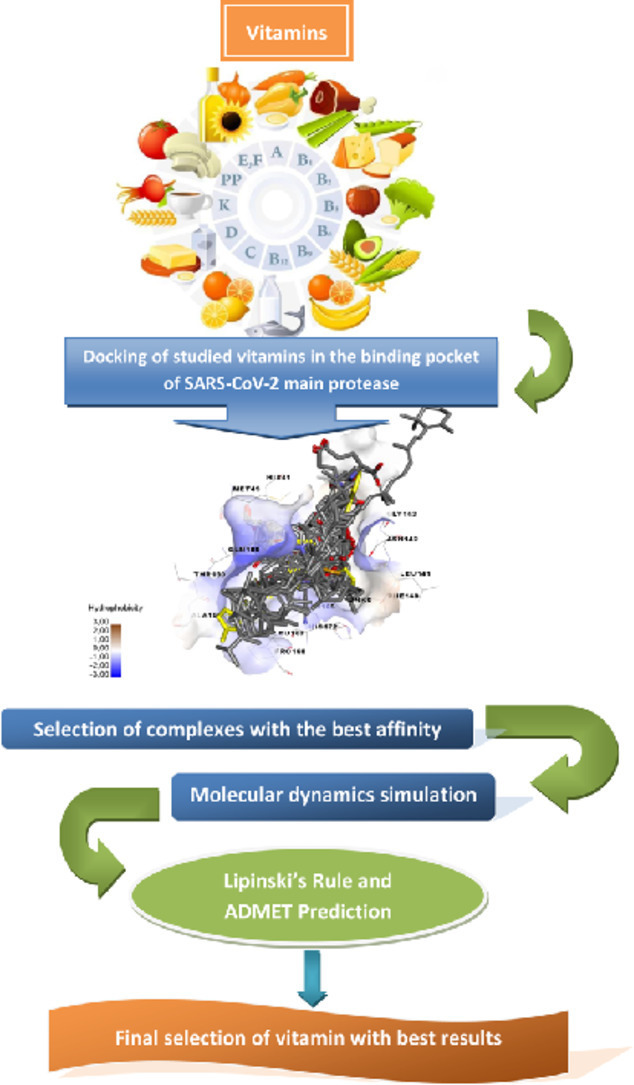
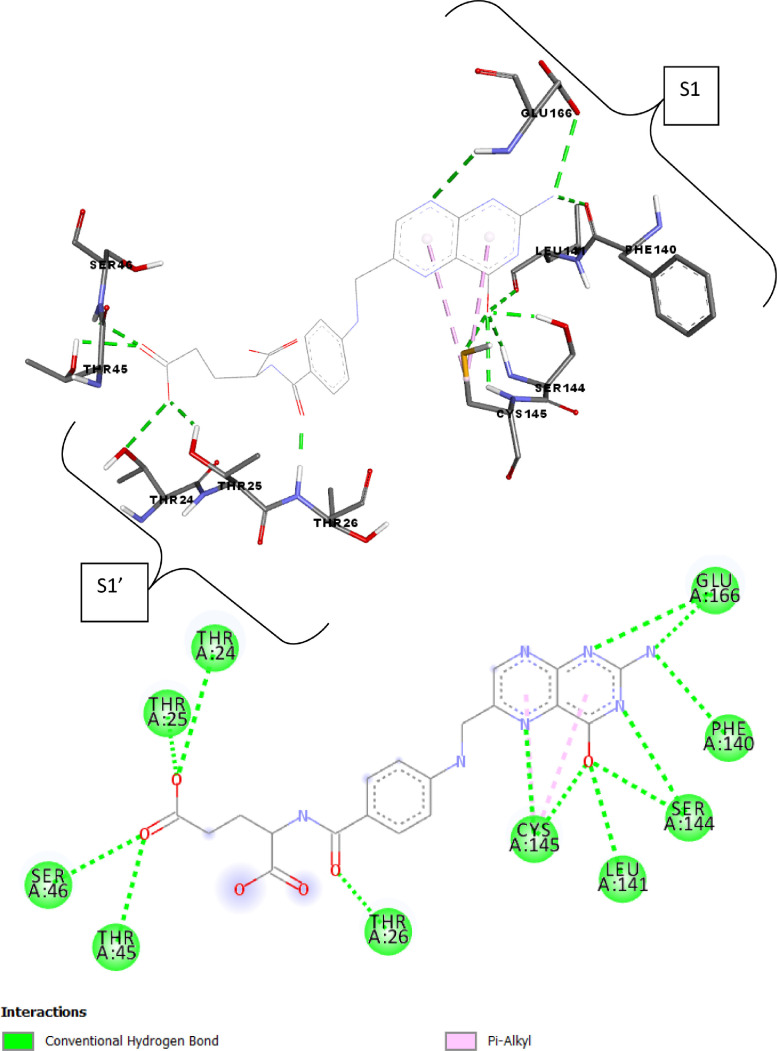
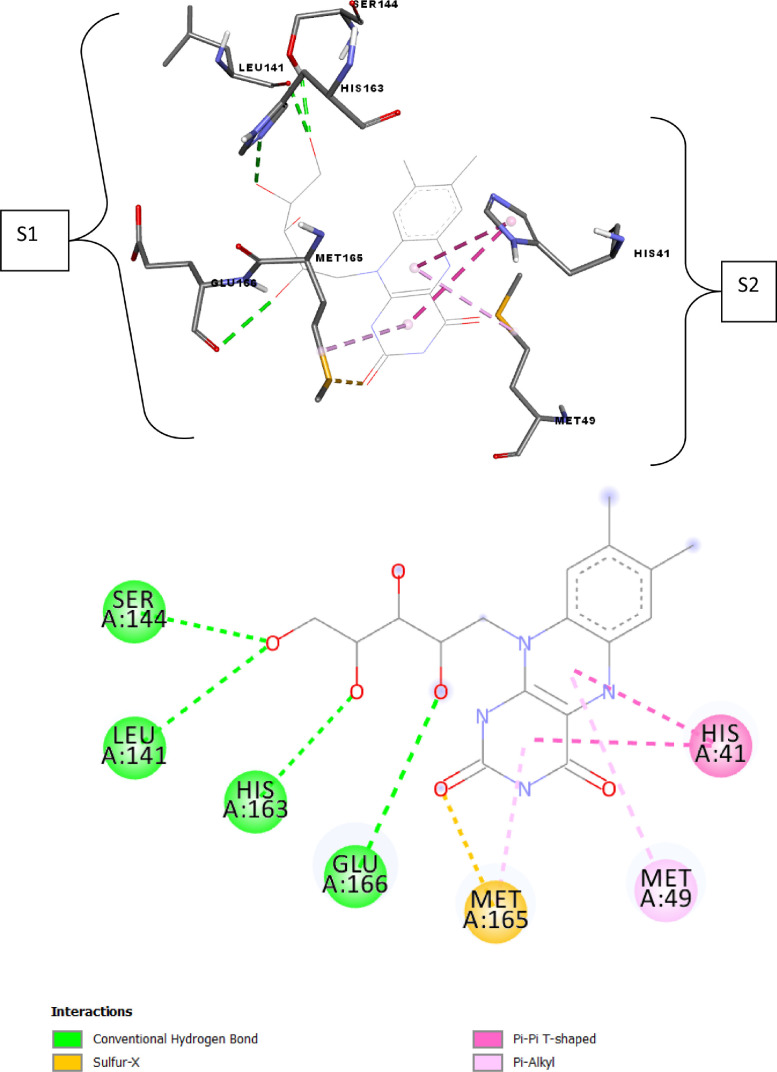
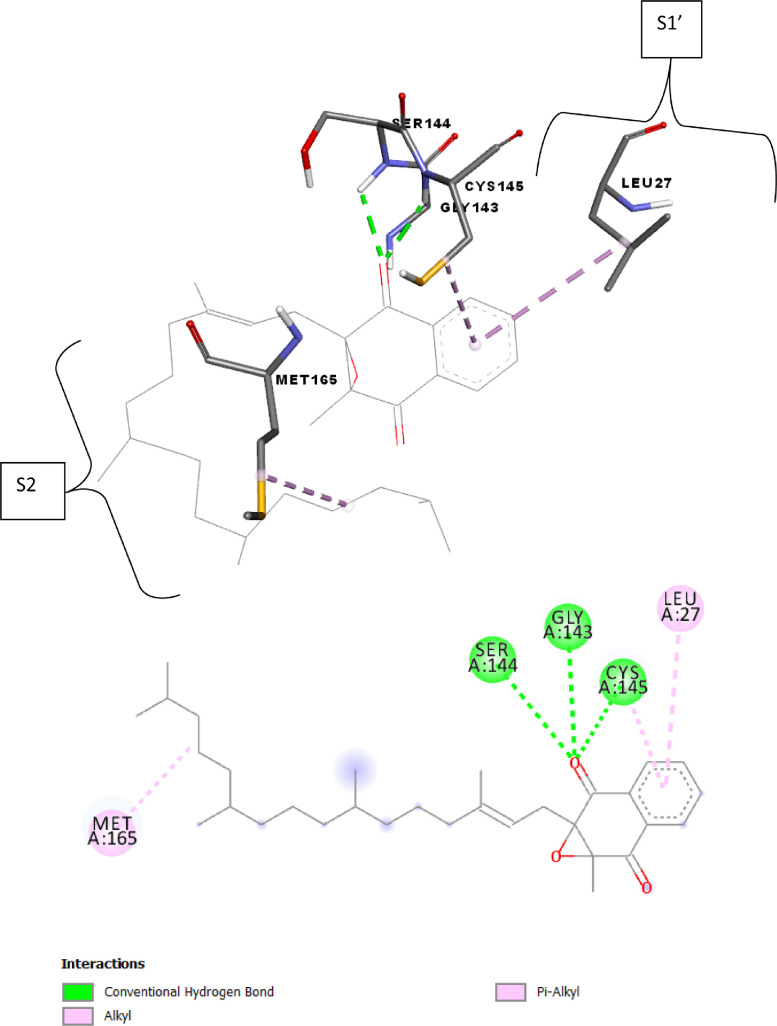
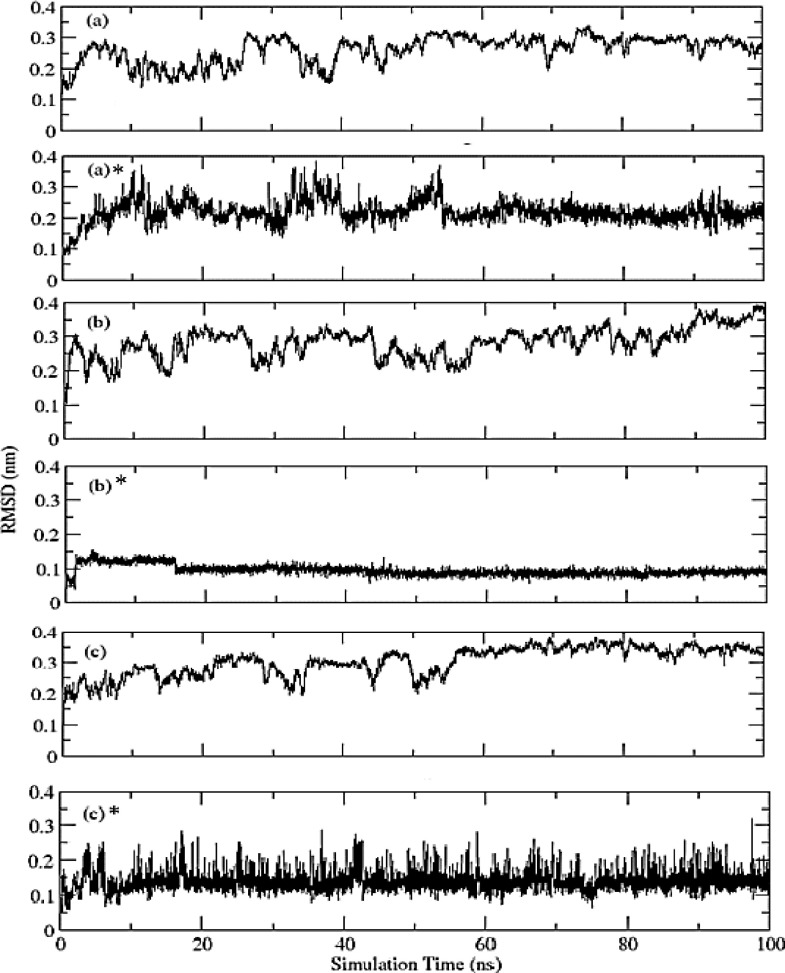
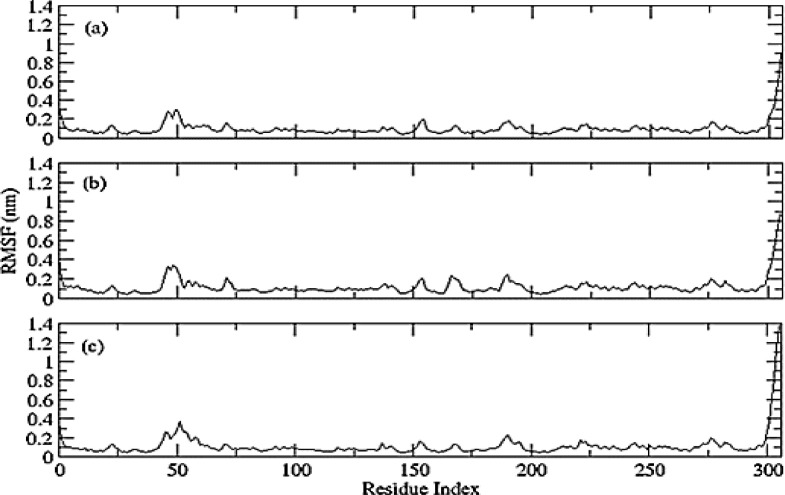
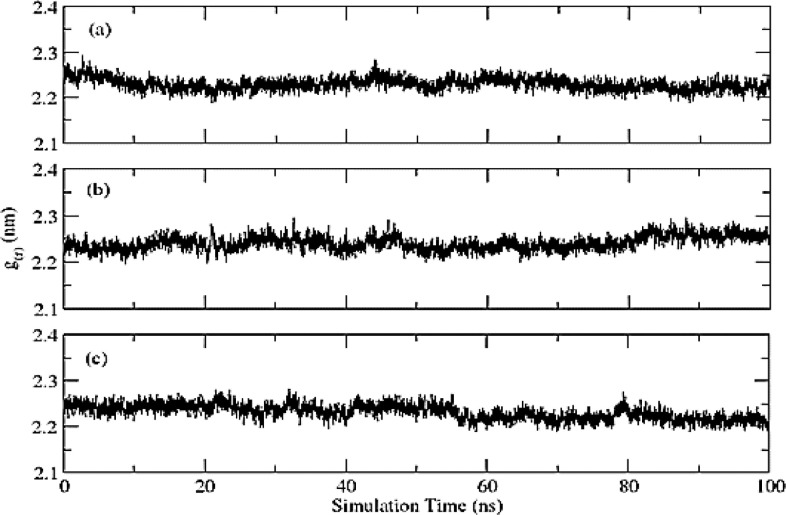
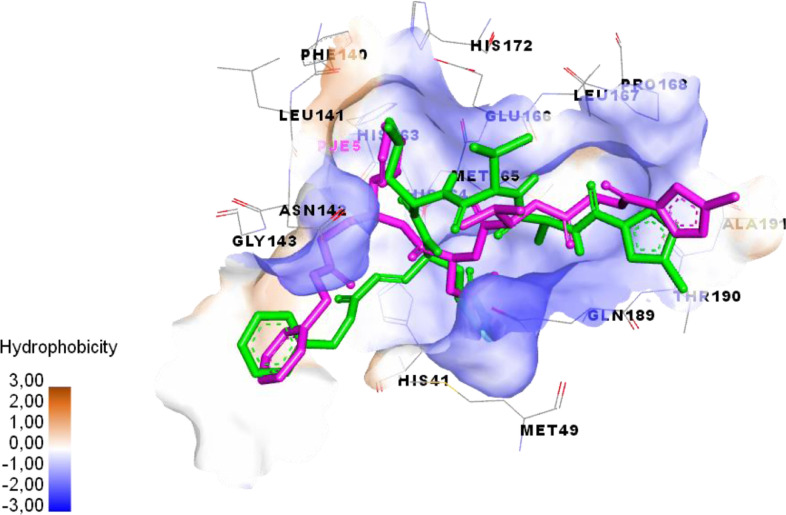
COVID-19 is a new infectious disease caused by SARS-COV-2 virus of the coronavirus Family. The identification of drugs against this serious infection is a significant requirement due to the rapid rise in the positive cases and deaths around the world. With this concept, a molecular docking analysis for vitamins and their derivatives (28 molecules) with the active site of SARS-CoV-2 main protease was carried out. The results of molecular docking indicate that the structures with best binding energy in the binding site of the studied enzyme (lowest energy level) are observed for the compounds; Folacin, Riboflavin, and Phylloquinone oxide (Vitamin K1 oxide). A Molecular Dynamic simulation was carried out to study the binding stability for the selected vitamins with the active site of SARS-CoV-2 main protease enzyme. Molecular Dynamic shows that Phylloquinone oxide and Folacin are quite unstable in binding to SARS-CoV-2 main protease, while the Riboflavin is comparatively rigid. The higher fluctuations in Phylloquinone oxide and Folacin indicate that they may not fit very well into the binding site. As expected, the Phylloquinone oxide exhibits small number of H-bonds with protein and Folacin does not form a good interaction with protein. Riboflavin exhibits the highest number of Hydrogen bonds and forms consistent interactions with protein. Additionally, this molecule respect the conditions mentioned in Lipinski's rule and have acceptable ADMET proprieties which indicates that Riboflavin (Vitamin B2) could be interesting for the antiviral treatment of COVID-19.
新型冠状病毒肺炎(COVID-19)是由冠状病毒科的严重急性呼吸综合征冠状病毒2(SARS-CoV-2)引起的一种新型传染病。鉴于全球确诊病例和死亡人数迅速上升,研发针对这种严重感染的药物成为一项重要需求。基于这一理念,我们对维生素及其衍生物(28种分子)与SARS-CoV-2主要蛋白酶的活性位点进行了分子对接分析。分子对接结果表明,在所研究的酶的结合位点中,结合能最佳(能量水平最低)的结构是叶酸、核黄素和氧化叶绿醌(维生素K1氧化物)。进行了分子动力学模拟,以研究所选维生素与SARS-CoV-2主要蛋白酶活性位点的结合稳定性。分子动力学表明,氧化叶绿醌和叶酸与SARS-CoV-2主要蛋白酶的结合相当不稳定,而核黄素相对稳定。氧化叶绿醌和叶酸的波动较大,表明它们可能与结合位点的契合度不太好。正如预期的那样,氧化叶绿醌与蛋白质形成的氢键数量较少,叶酸与蛋白质没有形成良好的相互作用。核黄素形成的氢键数量最多,与蛋白质形成稳定的相互作用。此外,该分子符合Lipinski规则中提到的条件,具有可接受的药物代谢动力学性质,这表明核黄素(维生素B2)可能对COVID-19的抗病毒治疗具有潜在价值。