Karuppasamy Manikanda Bharath, Seshachalam Srinivasalu, Natesan Usha, Ayyamperumal Ramamoorthy, Karuppannan Shankar, Gopalakrishnan Gnanachandrasamy, Nazir Nusrat
Institute for Ocean Management, Anna University, Chennai, Tamil Nadu 600025 India.
Centre for Water Resources, Anna University, Chennai, Tamil Nadu 600025 India.
Air Qual Atmos Health. 2020;13(11):1375-1384. doi: 10.1007/s11869-020-00892-w. Epub 2020 Aug 12.
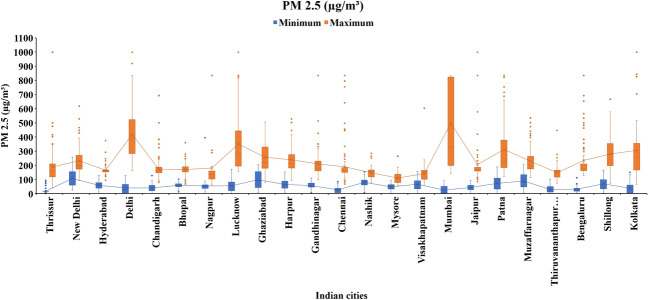
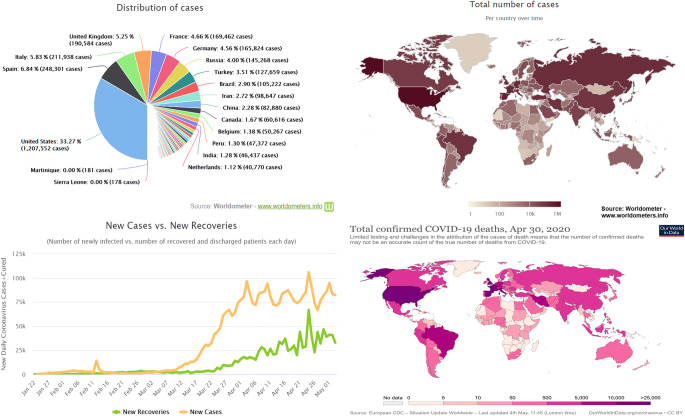
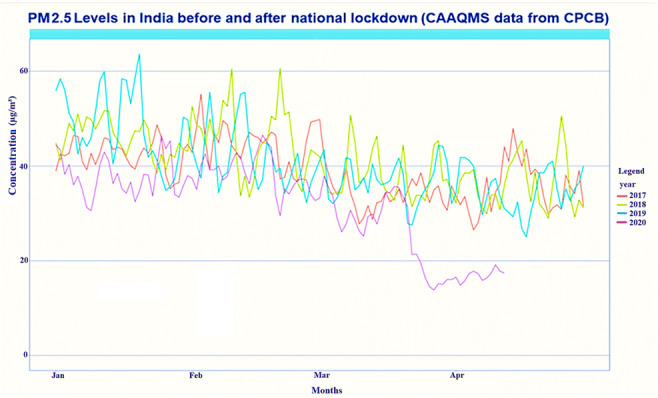
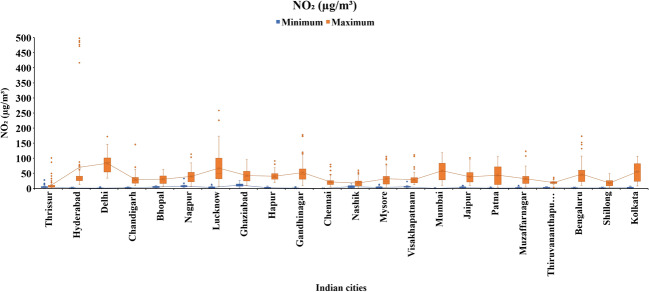
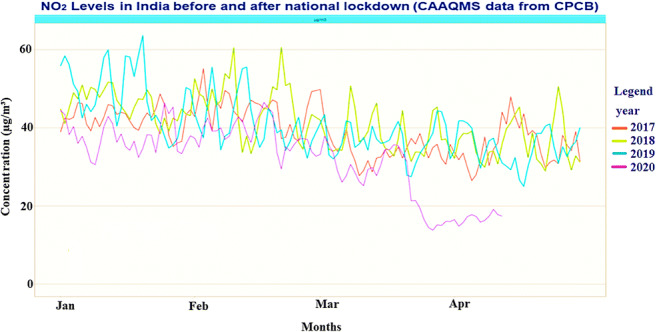
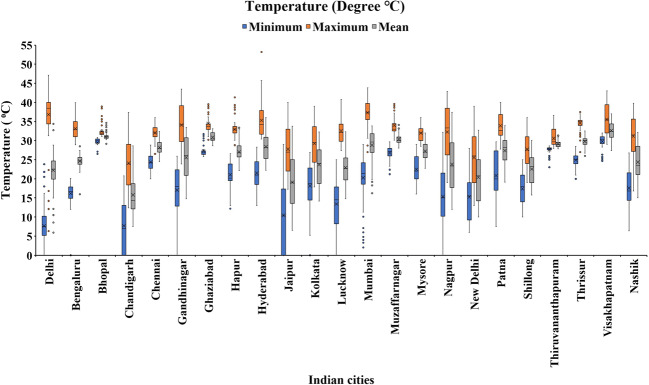
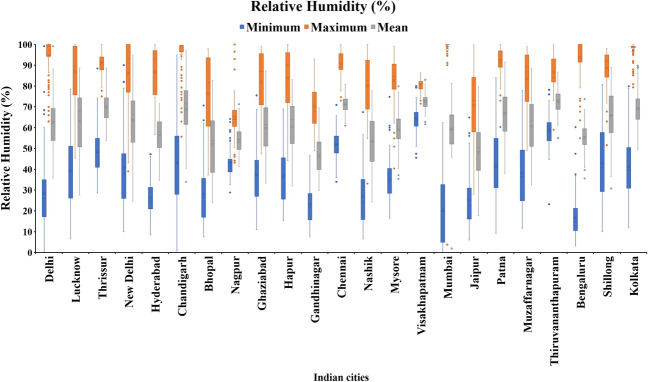
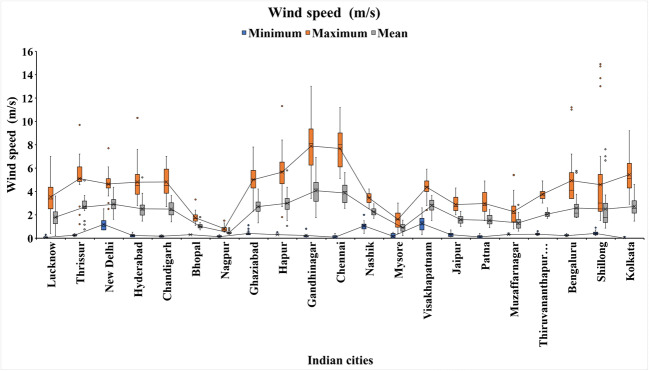
This research was carried out using the open-source database system along with the continuous air quality monitoring station results from global data sets during the COVID-19 pandemic lockdown in India and the global. Our purpose of this research is to study the improvement of air quality and human mortality rates in countries worldwide during the COVID-19 pandemic lockdown. Worldwide air quality data were collected from > 12,000 continuous air quality monitoring stations on six continents covering 1000 major cities from over 100 countries. Here, we discussed the implementation of the open-source data set of basic air pollutants such as PM 2.5, NO, temperature, relative humidity, and Air Quality Index variation during the pre-lockdown and lockdown pandemic COVID-19 in India and described the global aspect. An average concentration of PM 2.5 (145.51 μg/m), NO (21.64 μg/m), and AQI index (55.58) continuously decreased. The variation of PM 2.5, NO, normally shows more than 25 μg/m every year, but during the COVID-19 lockdown period (April 2020) continuously decreased below 20 μg/m. Similarly, the AQI index and meteorological factors such as temperature, relative humidity, and wind speed variation decreased significantly in the many countries in the world. In Asian countries, air quality improved during the national lockdown especially in the most polluted cities globally such as Beijing, Delhi, and Nanjing and also in developed cities like Madrid, New York, Paris, Seoul, Sydney, Tokyo. Furthermore, the reduction of particulate matter was in about 46%, and other gaseous pollutants during the lockdown period were observed in a 54% reduction. We are witnessing pollution reductions which add significantly to improvements in air quality. This is due to the massive decrease in the use of fossil fuel, which in turn reduces production and traffic in general. People nowadays are now willing to see a comparatively healthier world with bleached skies and natural ecosystems. This research finding demonstrates potential safety benefits associated with improving air quality and mortality rates during the COVID-19 pandemic, resulting in decreases in mortality rates in India and around the world.
本研究利用开源数据库系统以及印度和全球新冠疫情封锁期间全球数据集的连续空气质量监测站结果开展。本研究的目的是研究新冠疫情封锁期间全球各国空气质量的改善情况以及人类死亡率。全球空气质量数据收集自六大洲12000多个连续空气质量监测站,覆盖100多个国家的1000个主要城市。在此,我们讨论了印度新冠疫情封锁前和封锁期间基本空气污染物(如PM 2.5、NO、温度、相对湿度)的开源数据集的实施情况以及空气质量指数变化,并描述了全球情况。PM 2.5(145.51μg/m)、NO(21.64μg/m)的平均浓度以及空气质量指数(55.58)持续下降。PM 2.5、NO的变化通常每年超过25μg/m,但在新冠疫情封锁期间(2020年4月)持续降至20μg/m以下。同样,世界上许多国家的空气质量指数以及温度、相对湿度和风速等气象因素的变化也显著下降。在亚洲国家,全国封锁期间空气质量得到改善,尤其是在全球污染最严重的城市,如北京、德里和南京,以及马德里、纽约、巴黎、首尔、悉尼、东京等发达城市。此外,封锁期间颗粒物减少了约46%,其他气态污染物减少了54%。我们正在见证污染的减少,这极大地改善了空气质量。这是由于化石燃料使用量大幅下降,进而总体上减少了生产和交通。如今人们希望看到一个天空更洁净、自然生态系统更健康的世界。这一研究发现表明,新冠疫情期间改善空气质量与死亡率之间存在潜在的安全益处,印度和全球的死亡率因此下降。