Department of Clinical Laboratory, The First Affiliated Hospital of Xiamen University, Xiamen, Fujian, China.
Xiamen Key Laboratory of Genetic Testing, Xiamen, China.
Bioengineered. 2022 Mar;13(3):6080-6091. doi: 10.1080/21655979.2022.2031413.
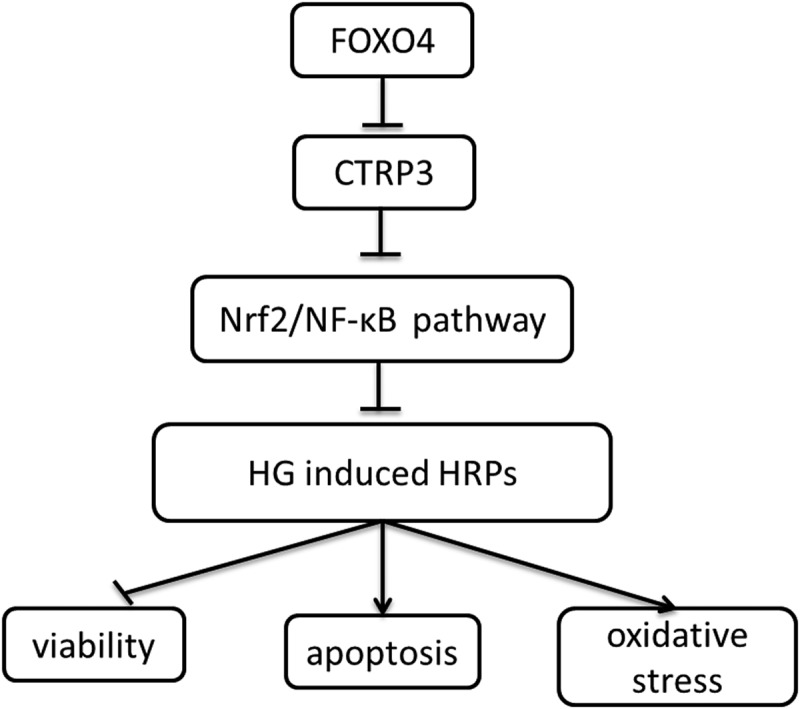
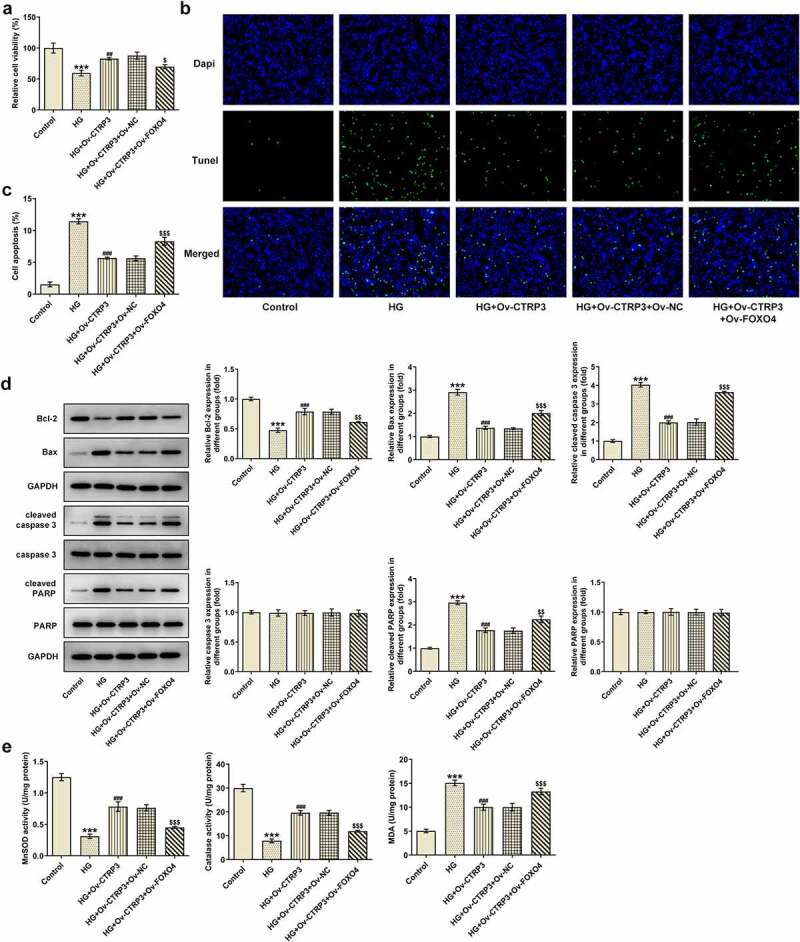
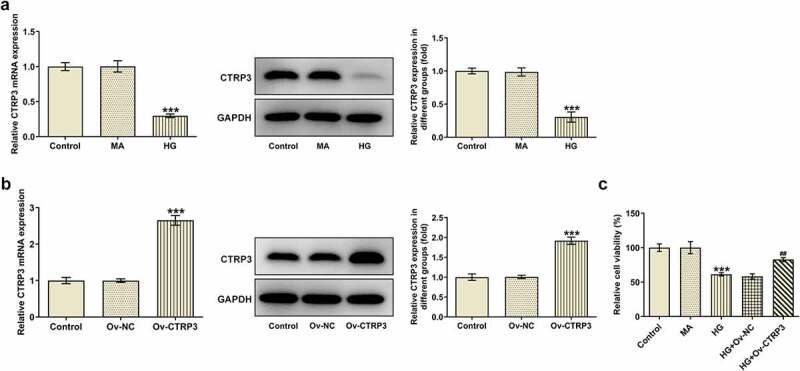
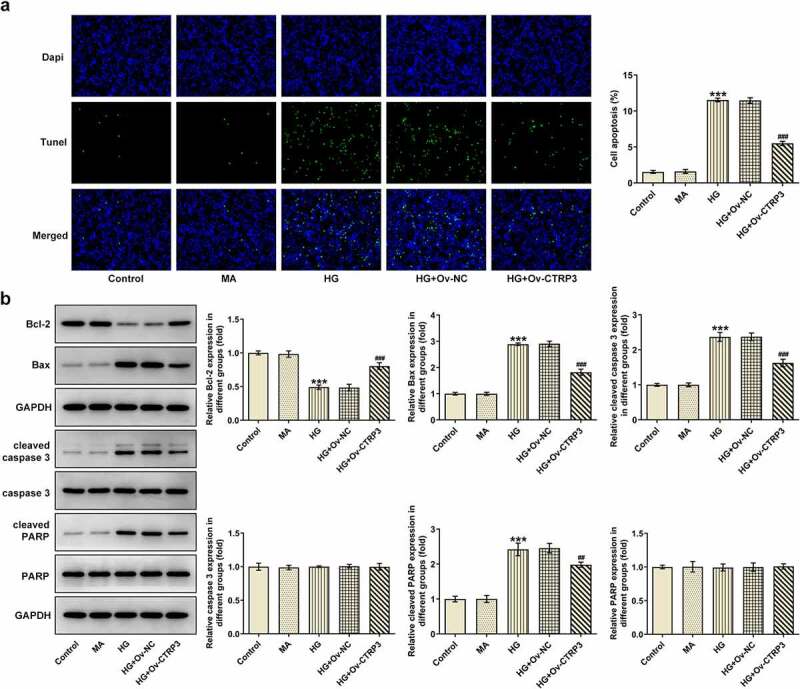
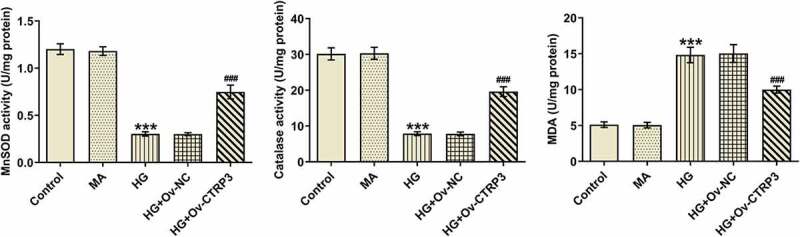
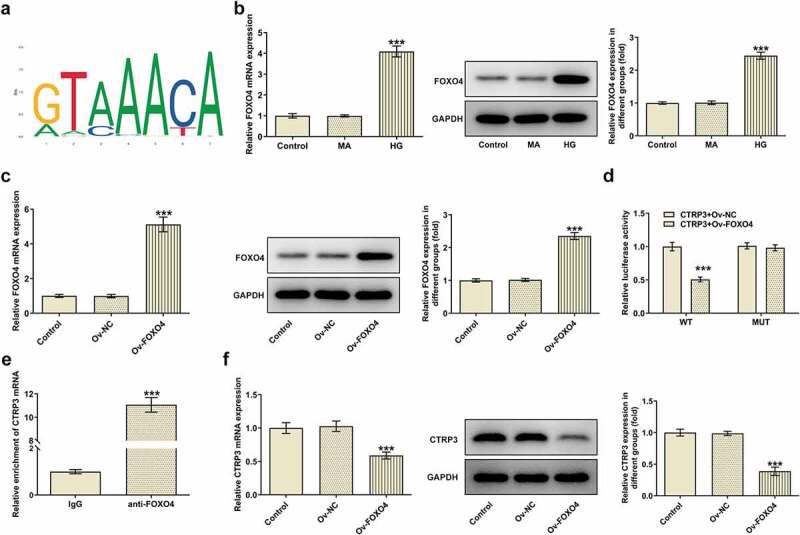
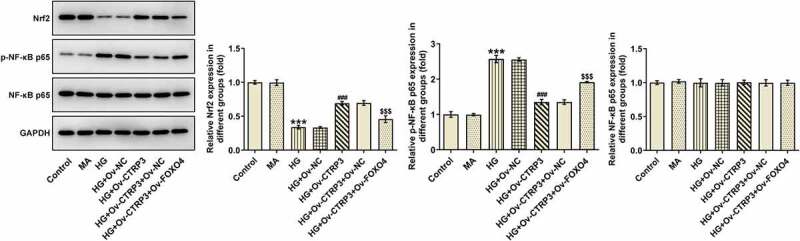
Diabetic retinopathy (DR) remains a major cause of blindness among diabetes mellitus patients. C1q/tumor necrosis factor-related protein-3 (CTRP3) is a novel adipokine which is associated with multiple types of metabolism. Nevertheless, little is known about the role of CTRP3 in high glucose (HG)-induced human retinal pericytes (HRPs). This study set out to assess the influence of CTRP3 on HG-induced HRPs and elucidate the latent regulatory mechanism. RT-qPCR and Western blot were to analyze CTRP3 and forkhead box O4 (FOXO4) expression. Western blot was also utilized to detect the protein levels of apoptosis-related factors and nuclear factor erythroid 2-related factor 2 (Nrf2)/Nuclear factor-kappaB (NF-κB) signaling-related factors. CCK-8 was to measure cell proliferation while TUNEL assay was to estimate cell apoptosis. Levels of oxidative stress biomarkers including manganese (MnSOD), catalase (CAT) and malonedialdehyde (MDA) were evaluated by the corresponding kits. JASPAR database, ChIP and luciferase reporter assay were to verify the interaction between FOXO4 and CTRP3 promoter. The experimental results uncovered that CTRP3 expression was decreased in HG-stimulated HRPs. Moreover, CTRP3 overexpression strengthened the viability while abrogated the apoptosis and oxidative stress of HG-induced HRPs. Furthermore. FOXO4 was up-regulated in HG-induced HRPs. Besides, FOXO4 bond to CTRP3 promoter and inhibited CTRP3 transcription to modulate the Nrf2/NF-κB signaling pathway. FOXO4 up-regulation reversed the influence of CTRP3 elevation on the proliferation, apoptosis and oxidative stress of HG-induced HRPs. To be summarized, CTRP3 negatively modulated by FOXO4 prevented HG-induced oxidative damage in DR via modulation of Nrf2/NF-κB signaling.
糖尿病性视网膜病变(DR)仍然是糖尿病患者失明的主要原因。C1q/肿瘤坏死因子相关蛋白-3(CTRP3)是一种新型脂肪因子,与多种代谢类型有关。然而,关于 CTRP3 在高葡萄糖(HG)诱导的人视网膜周细胞(HRP)中的作用知之甚少。本研究旨在评估 CTRP3 对 HG 诱导的 HRP 的影响,并阐明潜在的调节机制。RT-qPCR 和 Western blot 用于分析 CTRP3 和叉头框 O4(FOXO4)的表达。Western blot 还用于检测凋亡相关因子和核因子红细胞 2 相关因子 2(Nrf2)/核因子-κB(NF-κB)信号相关因子的蛋白水平。CCK-8 用于测量细胞增殖,而 TUNEL 测定用于估计细胞凋亡。MnSOD、CAT 和 MDA 等氧化应激生物标志物的水平通过相应的试剂盒进行评估。JASPAR 数据库、ChIP 和荧光素酶报告基因测定用于验证 FOXO4 与 CTRP3 启动子之间的相互作用。实验结果表明,HG 刺激的 HRP 中 CTRP3 的表达降低。此外,CTRP3 过表达增强了 HG 诱导的 HRP 的活力,同时消除了 HG 诱导的 HRP 的凋亡和氧化应激。此外,FOXO4 在 HG 诱导的 HRP 中上调。此外,FOXO4 与 CTRP3 启动子结合并抑制 CTRP3 转录,从而调节 Nrf2/NF-κB 信号通路。FOXO4 的上调逆转了 CTRP3 升高对 HG 诱导的 HRP 增殖、凋亡和氧化应激的影响。总之,FOXO4 下调的 CTRP3 通过调节 Nrf2/NF-κB 信号通路,防止 DR 中 HG 诱导的氧化损伤。