Department of Anatomy and Physiology, The University of Melbourne, Level 5, Medical Building, Grattan St, Parkville, Victoria, Australia.
Autophagy. 2022 Oct;18(10):2368-2384. doi: 10.1080/15548627.2022.2034131. Epub 2022 Feb 23.
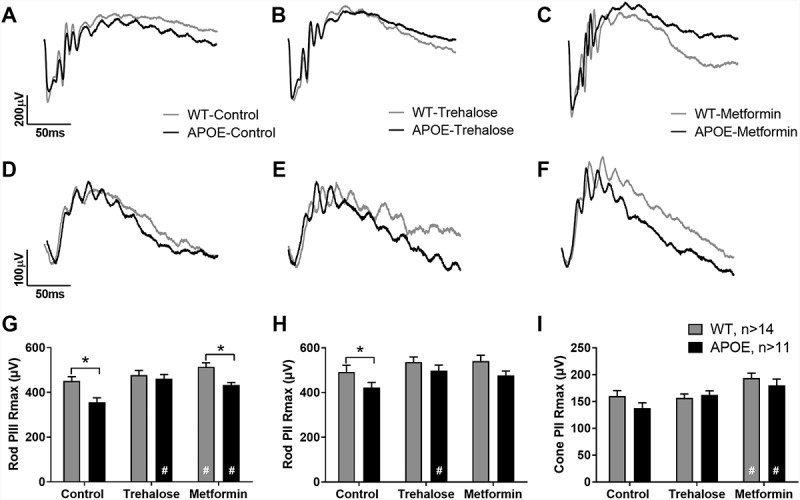
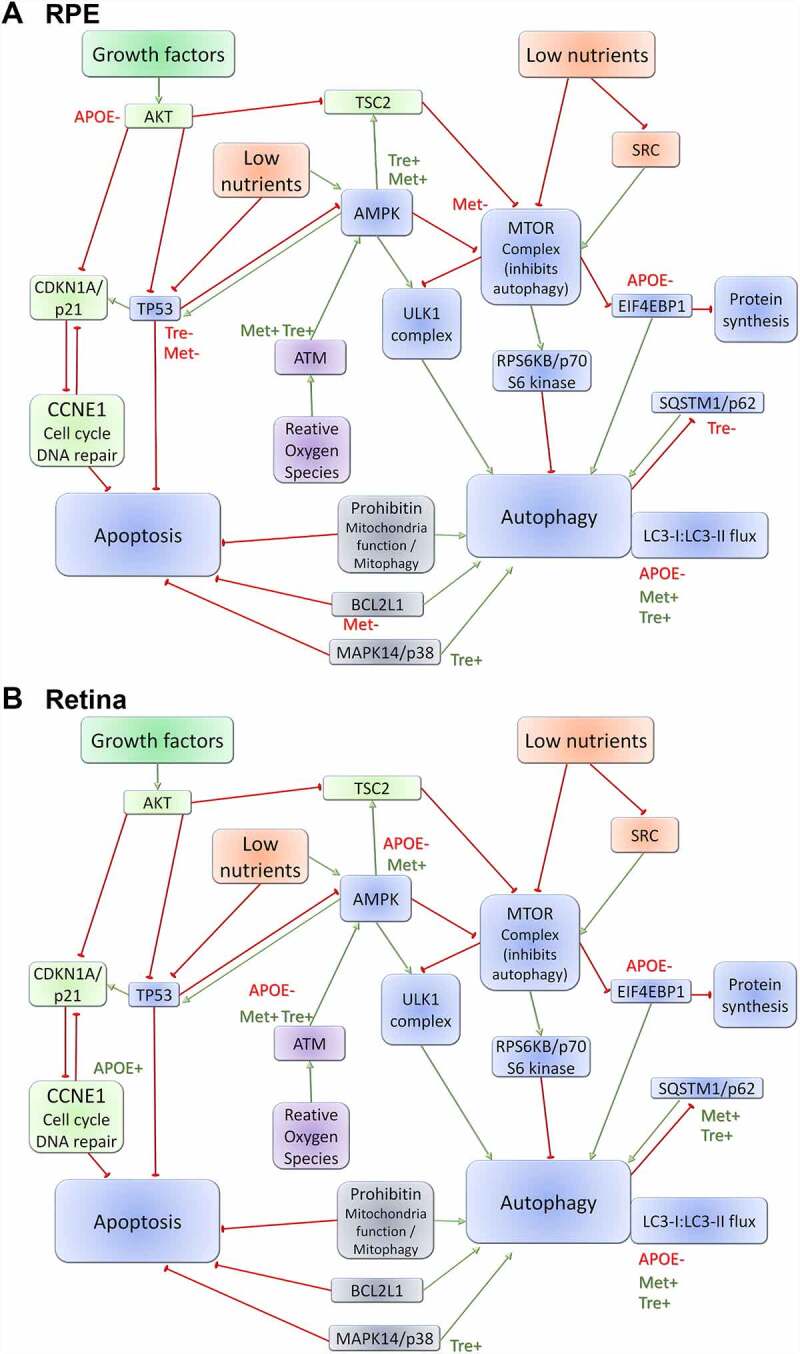
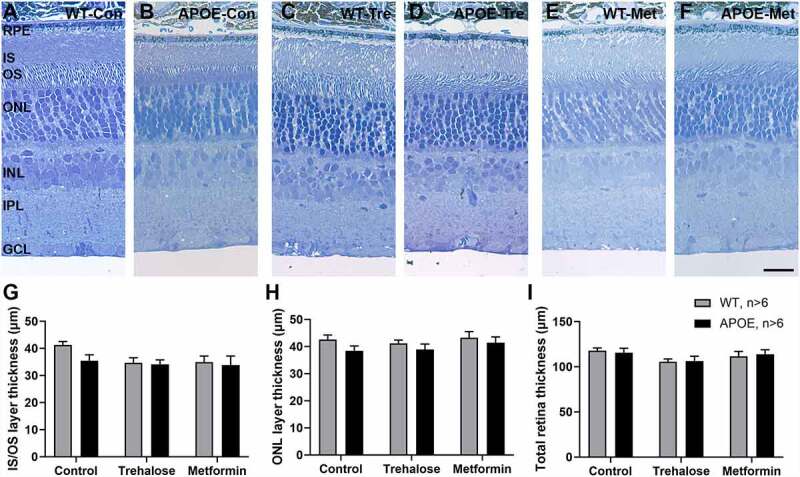
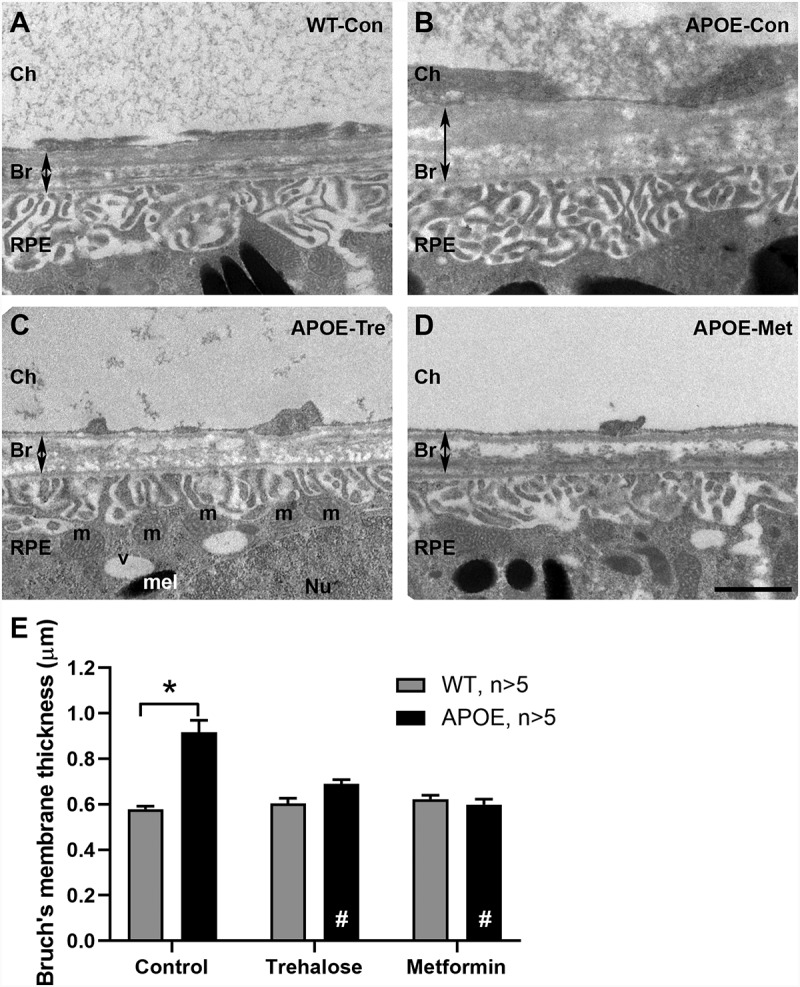
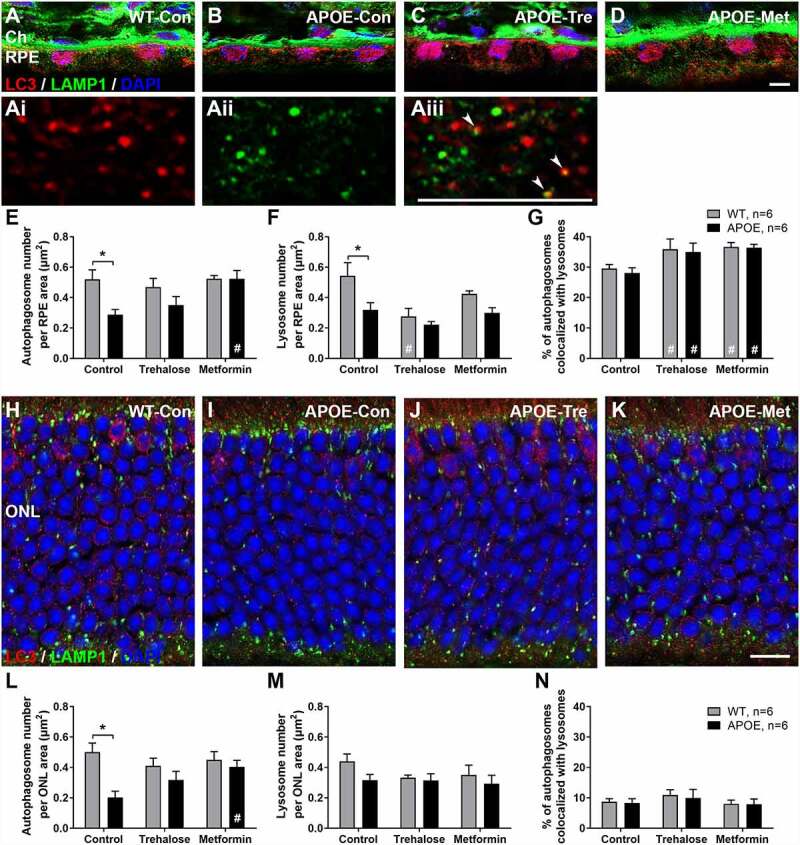
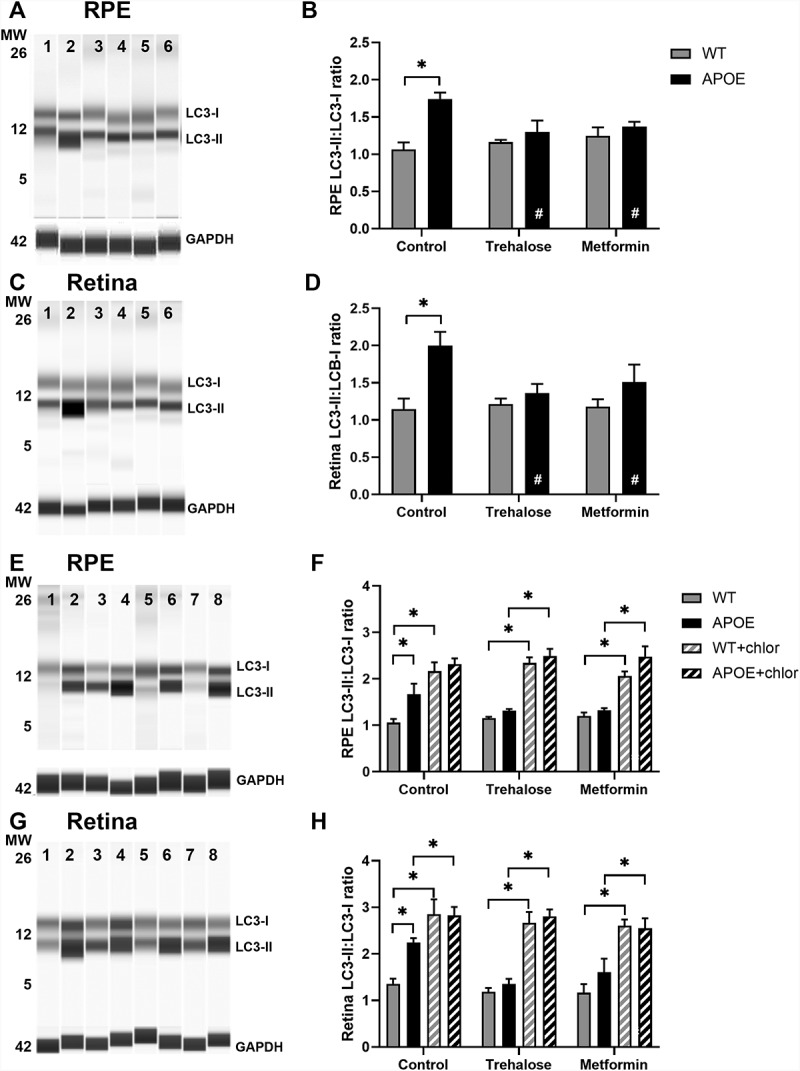
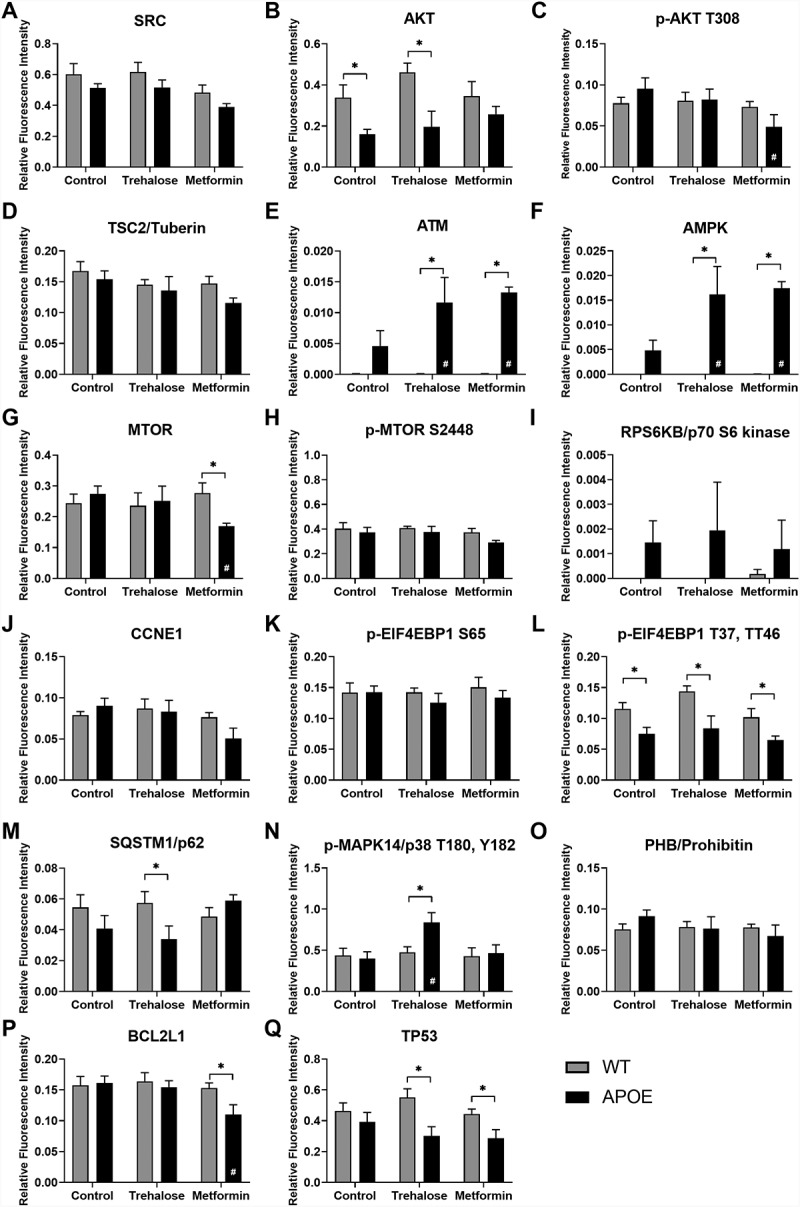
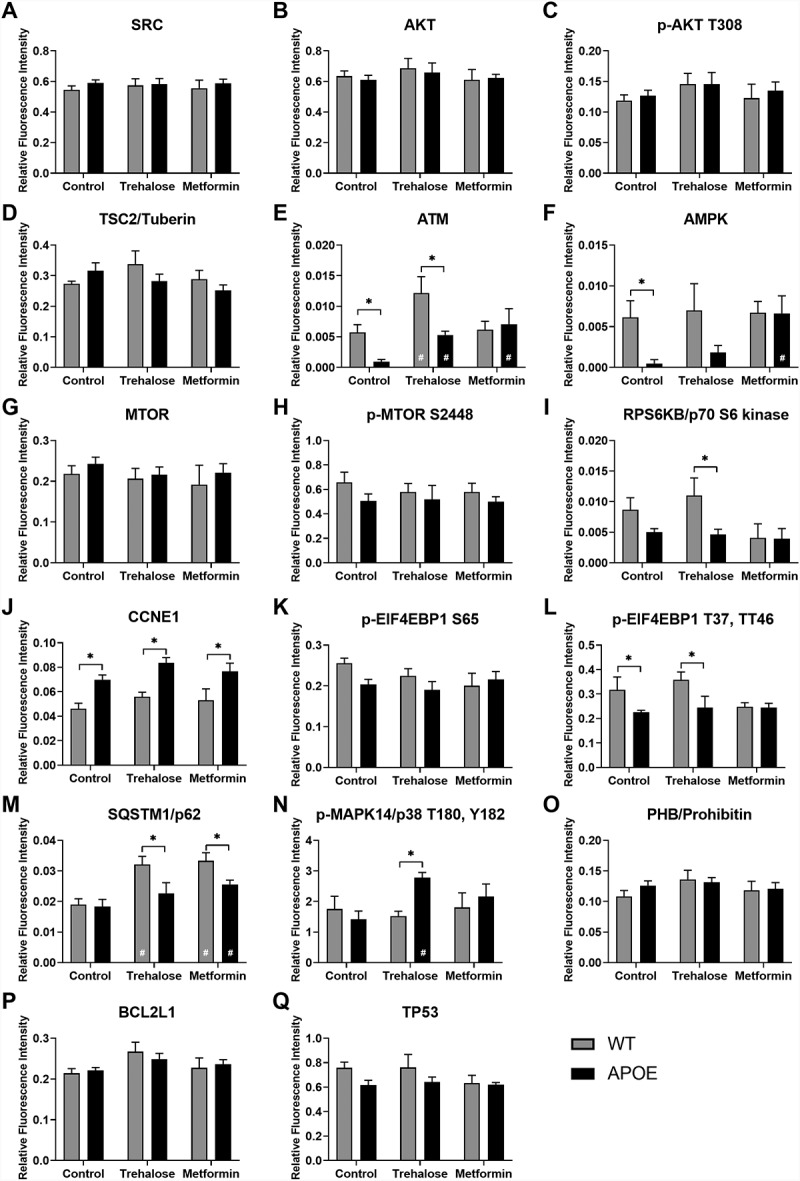
Age-related macular degeneration (AMD) is a leading cause of vision loss with recent evidence indicating an important role for macroautophagy/autophagy in disease progression. In this study we investigate the efficacy of targeting autophagy for slowing dysfunction in a mouse model with features of early AMD. Mice lacking APOE (apolipoprotein E; B6.129P2-ApoeJ/Arc) and C57BL/6 J- (wild-type, WT) mice were treated with metformin or trehalose in the drinking water from 5 months of age and the ocular phenotype investigated at 13 months. Control mice received normal drinking water. APOE-control mice had reduced retinal function and thickening of Bruch's membrane consistent with an early AMD phenotype. Immunohistochemical labeling showed reductions in MAP1LC3B/LC3 (microtubule-associated protein 1 light chain 3 beta) and LAMP1 (lysosomal-associated membrane protein 1) labeling in the photoreceptors and retinal pigment epithelium (RPE). This correlated with increased LC3-II:LC3-I ratio and alterations in protein expression in multiple autophagy pathways measured by reverse phase protein array, suggesting autophagy was slowed. Treatment of APOE-mice with metformin or trehalose ameliorated the loss of retinal function and reduced Bruch's membrane thickening, enhancing LC3 and LAMP1 labeling in the ocular tissues and restoring LC3-II:LC3-I ratio to WT levels. Protein analysis indicated that both treatments boost ATM-AMPK driven autophagy. Additionally, trehalose increased p-MAPK14/p38 to enhance autophagy. Our study shows that treatments targeting pathways to enhance autophagy have the potential for treating early AMD and provide support for the use of metformin, which has been found to reduce the risk of AMD development in human patients.AMD: age-related macular degeneration; AMPK: 5' adenosine monophosphate-activated protein kinase APOE: apolipoprotein E; ATM: ataxia telangiectasia mutated; BCL2L1/Bcl-xL: BCL2-like 1; DAPI: 4'-6-diamidino-2-phenylindole; ERG: electroretinogram; GAPDH: glyceraldehyde-3-phosphate dehydrogenase; GCL: ganglion cell layer; INL: inner nuclear layer; IPL: inner plexiform layer; IS/OS: inner and outer photoreceptor segments; LAMP1: lysosomal-associated membrane protein 1; MAP1LC3B/LC3: microtubule-associated protein 1 light chain 3 beta; MTOR: mechanistic target of rapamycin kinase; OCT: optical coherence tomography; ONL: outer nuclear layer; OPs: oscillatory potentials; p-EIF4EBP1: phosphorylated eukaryotic translation initiation factor 4E binding protein 1; p-MAPK14/p38: phosphorylated mitogen-activated protein kinase 14; RPE: retinal pigment epithelium; RPS6KB/p70 S6 kinase: ribosomal protein S6 kinase; SQSTM1/p62: sequestosome 1; TP53/TRP53/p53: tumor related protein 53; TSC2: TSC complex subunit 2; WT: wild type.
年龄相关性黄斑变性 (AMD) 是导致视力丧失的主要原因,最近的证据表明自噬/细胞自噬在疾病进展中起着重要作用。在这项研究中,我们研究了针对自噬的靶向治疗在具有早期 AMD 特征的小鼠模型中减缓功能障碍的效果。从 5 个月大开始,apoE 缺失的小鼠 (载脂蛋白 E; B6.129P2-ApoeJ/Arc) 和 C57BL/6J-(野生型,WT) 小鼠用二甲双胍或海藻糖在饮用水中治疗,并在 13 个月时研究眼部表型。对照组小鼠饮用正常饮用水。apoE 对照组小鼠的视网膜功能下降,Bruch 膜增厚,与早期 AMD 表型一致。免疫组织化学标记显示,光感受器和视网膜色素上皮 (RPE) 中的 MAP1LC3B/LC3 (微管相关蛋白 1 轻链 3 beta) 和 LAMP1 (溶酶体相关膜蛋白 1) 标记减少。这与 LC3-II:LC3-I 比值增加和通过反转录蛋白阵列测量的多种自噬途径中的蛋白质表达改变相关,表明自噬减慢。用二甲双胍或海藻糖治疗 apoE 小鼠可改善视网膜功能丧失并减少 Bruch 膜增厚,增强眼部组织中的 LC3 和 LAMP1 标记,并将 LC3-II:LC3-I 比值恢复到 WT 水平。蛋白质分析表明,两种治疗方法都能增强 ATM-AMPK 驱动的自噬。此外,海藻糖增加 p-MAPK14/p38 以增强自噬。我们的研究表明,针对增强自噬途径的治疗方法具有治疗早期 AMD 的潜力,并为使用二甲双胍提供了支持,二甲双胍已被发现可降低人类 AMD 发展的风险。AMD:年龄相关性黄斑变性;AMPK:5' 腺苷单磷酸激活蛋白激酶;APOE:载脂蛋白 E;ATM:共济失调毛细血管扩张突变;BCL2L1/Bcl-xL:B 细胞淋巴瘤 2 样 1;DAPI:4'-6-二脒基-2-苯基吲哚;ERG:视网膜电图;GAPDH:甘油醛-3-磷酸脱氢酶;GCL:神经节细胞层;INL:内核层;IPL:内丛状层;IS/OS:内、外光感受器节段;LAMP1:溶酶体相关膜蛋白 1;MAP1LC3B/LC3:微管相关蛋白 1 轻链 3 beta;MTOR:雷帕霉素靶蛋白激酶;OCT:光学相干断层扫描;ONL:外核层;Ops:振荡电位;p-EIF4EBP1:磷酸化真核翻译起始因子 4E 结合蛋白 1;p-MAPK14/p38:磷酸化丝裂原活化蛋白激酶 14;RPE:视网膜色素上皮;RPS6KB/p70 S6 激酶:核糖体蛋白 S6 激酶;SQSTM1/p62:自噬体 1;TP53/TRP53/p53:肿瘤相关蛋白 53;TSC2:结节性硬化复合物亚基 2;WT:野生型。