Nanomaterials Research and Synthesis Unit, Animal Health Research Institute, ARC, Giza, Egypt.
Department of Biochemistry, Animal Health Research Institute, ARC, Giza, Egypt.
Naunyn Schmiedebergs Arch Pharmacol. 2022 May;395(5):593-606. doi: 10.1007/s00210-022-02219-1. Epub 2022 Feb 24.
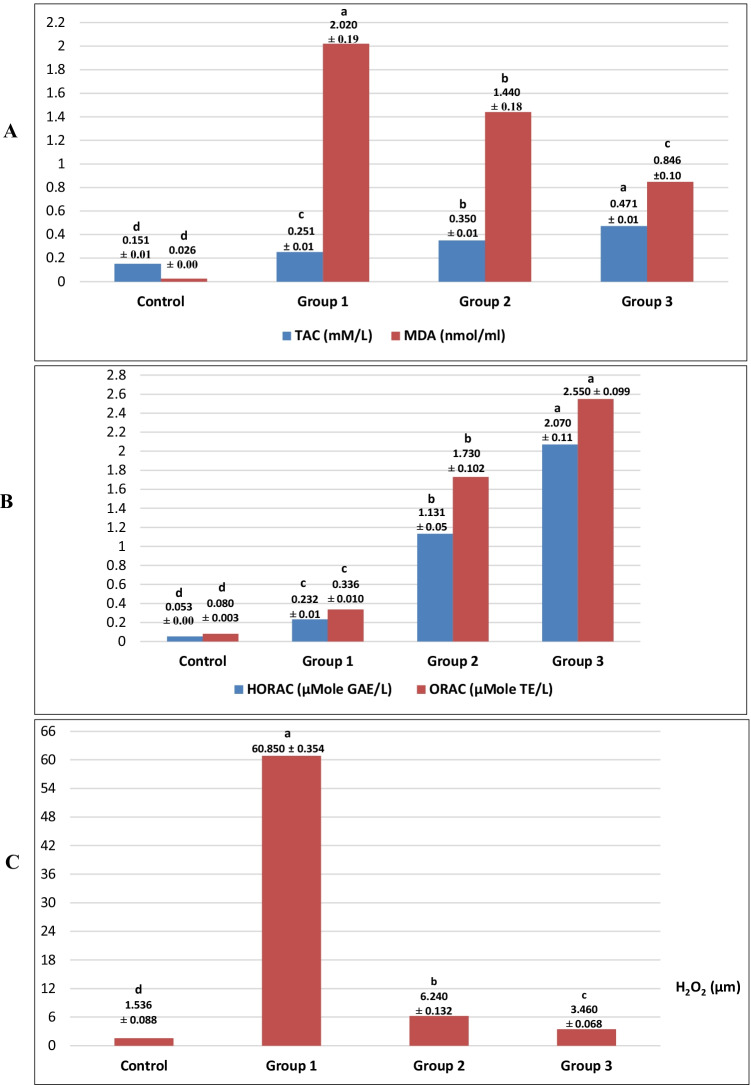
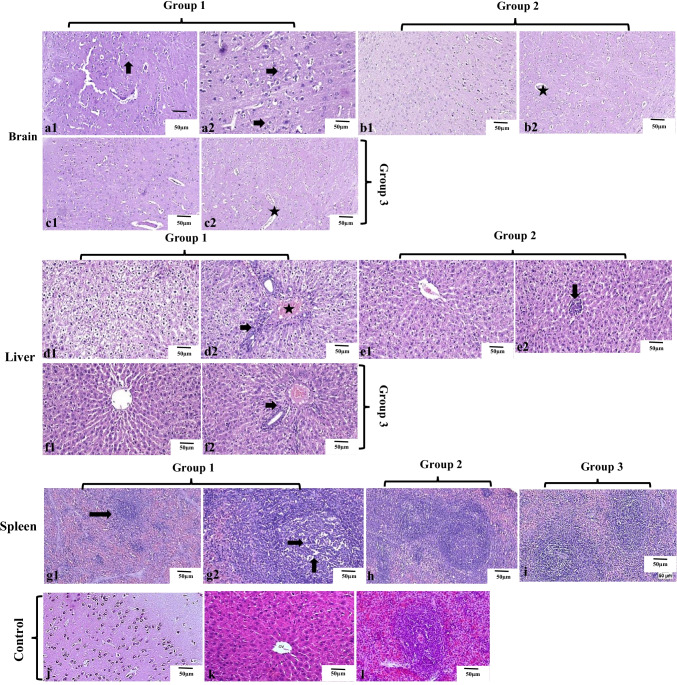
Herein, we assess the dose-dependent antioxidant efficacy of ultrafine spherical functionalized core-shell yttrium oxide nanoparticles (YNPs) with a mean size of 7-8 nm and modified with poly EGMP (ethylene glycol methacrylate phosphate) and N-Fluorescein Acrylamide. The antioxidant properties of these nanoparticles were investigated in three groups of Sprague-Dawley rats (10 per group) exposed to environmental stress daily for 1 week and one control group. Groups 2 and 3 were intravenously injected twice a week with YNPs at 0.3 and 0.5 mg at 2nd and 5th day of environmental stress exposure respectively. Different samples of blood and serum were collected from all experimental groups at end of the experiment to measure oxidative biomarkers such as total antioxidant capacity (TAC), hydroxyl radical antioxidant capacity (HORAC), oxygen radical antioxidant capacity (ORAC), malondialdehyde (MDA), and oxidants concentration as hydrogen peroxide (HO). The liver, brain, and spleen tissues were collected for fluorescence imaging and histopathological examination in addition to brain tissue examination by transmission electron microscope (TEM). Inductively coupled plasma-mass spectrometry (ICP-MS) was used to estimate YNPs translocation and concentration in tissues which is consecutively dependent on the dose of administration. Depending on all results, poly EGMP YNPs (poly EGMP yttrium oxide nanoparticles) can act as a potent direct antioxidant in a dose-dependent manner with good permeability through blood-brain barrier (BBB). Also, the neuroprotective effect of YNPs opening the door to a new therapeutic approach for modulating oxidative stress-related neural disorders. HIGHLIGHTS: • The dose-dependent antioxidant efficacy of ultrafine spherical functionalized core-shell yttrium oxide nanoparticles (YNPs) with a mean size of 7-8 nm and modified with poly EGMP (ethylene glycol methacrylate phosphate) and N-Fluorescein Acrylamide was assessed. • The dose of administration directly affecting the brain, liver, and spleen tissues distribution, retention, and uptake of YNPs and direct correlation between the absorbed amount and higher dose administered. • YNPs can act as a potent direct antioxidant in a dose-dependent manner with good permeability through blood-brain barrier (BBB).
在这里,我们评估了平均粒径为 7-8nm 的超精细球形功能化核壳氧化钇纳米粒子(YNPs)的剂量依赖性抗氧化功效,这些纳米粒子经过聚乙二醇甲基丙烯酸酯磷酸盐(poly EGMP)和 N-荧光丙烯酰胺修饰。我们在三组暴露于环境应激的 Sprague-Dawley 大鼠(每组 10 只)中研究了这些纳米粒子的抗氧化特性,并设立了一个对照组。第 2 天和第 5 天,第 2 组和第 3 组大鼠分别在环境应激暴露的第 2 天和第 5 天接受两次静脉注射,剂量分别为 0.3 和 0.5mg。在实验结束时,从所有实验组采集不同的血液和血清样本,以测量氧化生物标志物,如总抗氧化能力(TAC)、羟基自由基抗氧化能力(HORAC)、氧自由基抗氧化能力(ORAC)、丙二醛(MDA)和氧化物质浓度(过氧化氢(HO))。收集肝脏、大脑和脾脏组织进行荧光成像和组织病理学检查,此外还通过透射电子显微镜(TEM)检查大脑组织。电感耦合等离子体质谱法(ICP-MS)用于估计组织中的 YNPs 转移动力学及其浓度,这与给药剂量呈连续依赖性。根据所有结果,聚乙二醇甲基丙烯酸酯磷酸盐修饰的氧化钇纳米粒子(poly EGMP yttrium oxide nanoparticles)可作为一种有效的直接抗氧化剂,具有良好的血脑屏障(BBB)通透性。此外,氧化钇纳米粒子的神经保护作用为调节与氧化应激相关的神经紊乱提供了一种新的治疗方法。
评估了平均粒径为 7-8nm 的超精细球形功能化核壳氧化钇纳米粒子(YNPs)的剂量依赖性抗氧化功效,这些纳米粒子经过聚乙二醇甲基丙烯酸酯磷酸盐(poly EGMP)和 N-荧光丙烯酰胺修饰。
给药剂量直接影响 YNPs 在脑、肝和脾组织中的分布、保留和摄取,吸收量与给药剂量之间存在直接相关性。
YNPs 可作为一种有效的直接抗氧化剂,具有良好的血脑屏障(BBB)通透性。