Department of Molecular Gastroenterology and Hepatology, Kyoto Prefectural University of Medicine, Kyoto, Japan.
Department of Human Immunology and Nutrition Science, Kyoto Prefectural University of Medicine, Kyoto, Japan.
Cancer Sci. 2022 May;113(5):1789-1800. doi: 10.1111/cas.15306. Epub 2022 Mar 17.
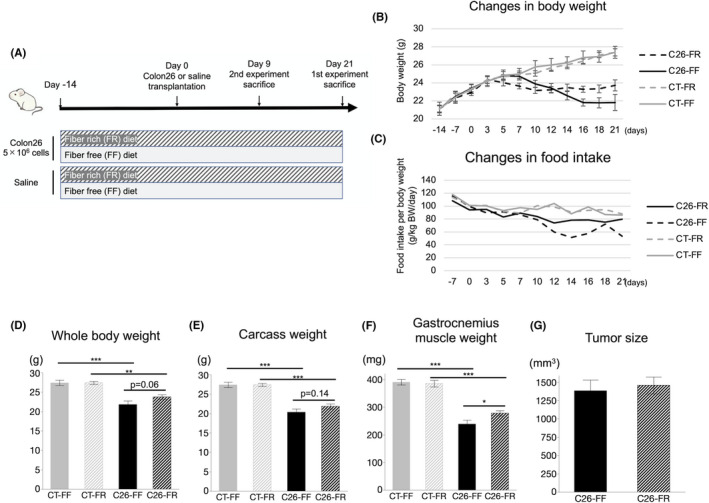
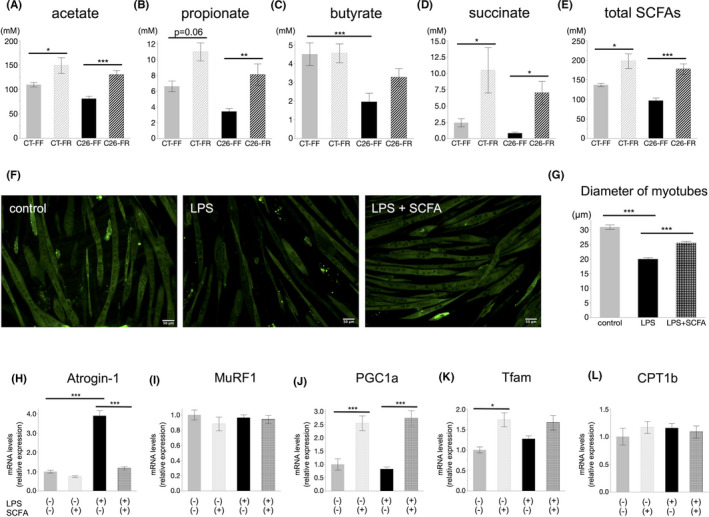
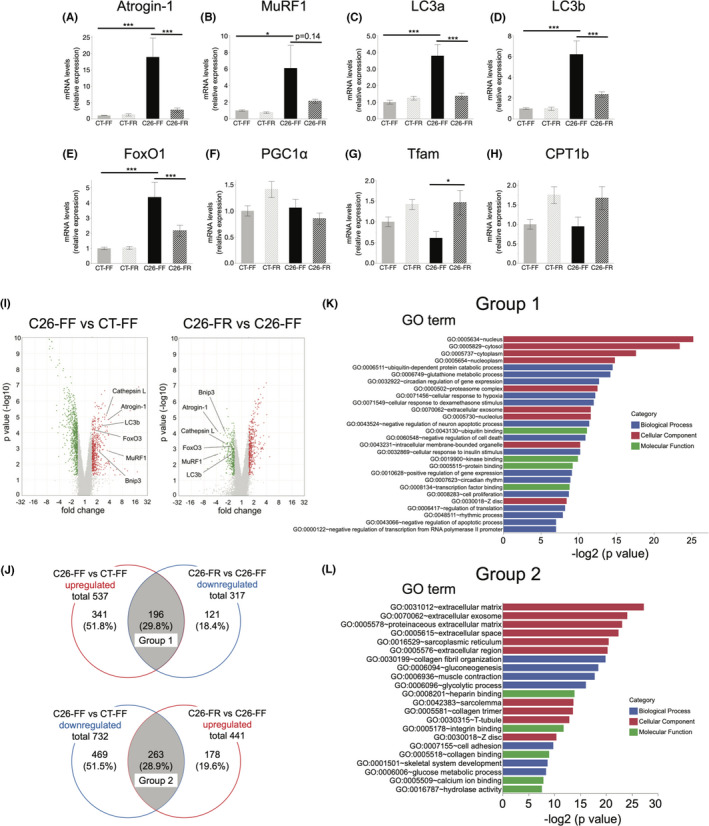
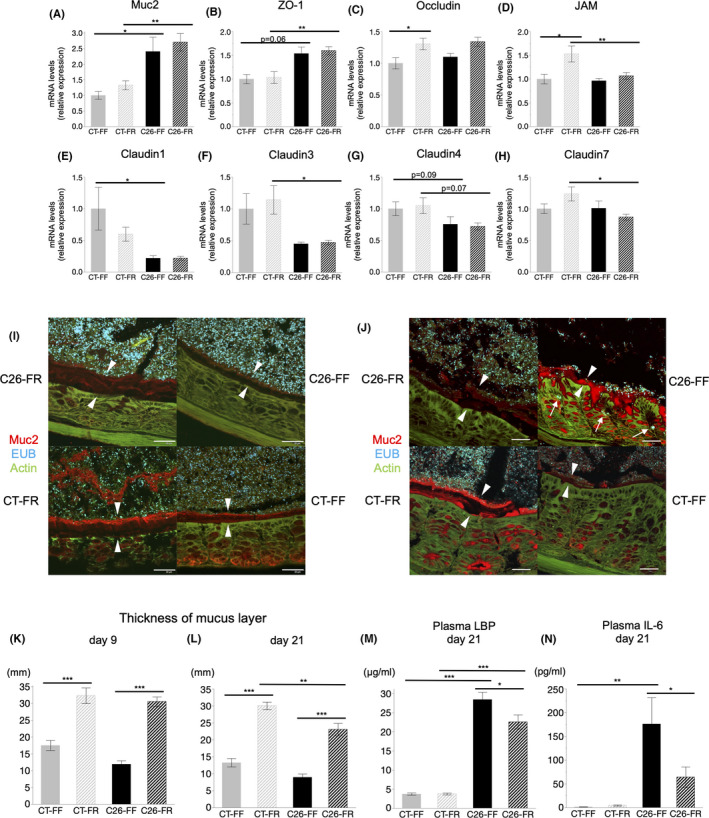
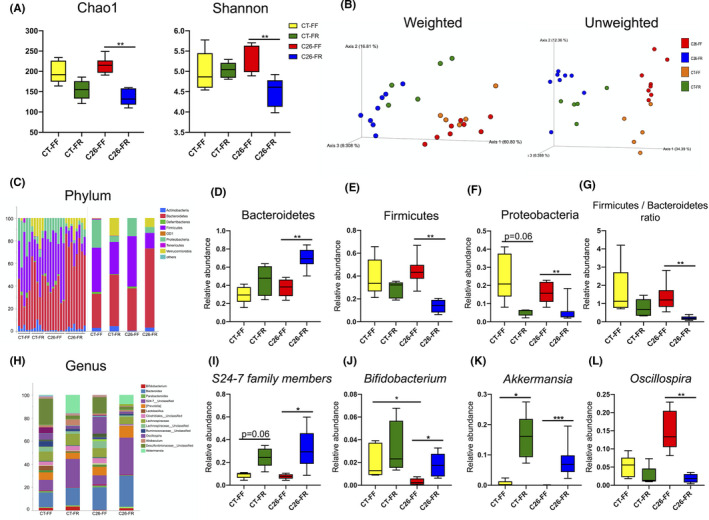
Cancer cachexia and the associated skeletal muscle wasting are considered poor prognostic factors, although effective treatment has not yet been established. Recent studies have indicated that the pathogenesis of skeletal muscle loss may involve dysbiosis of the gut microbiota and the accompanying chronic inflammation or altered metabolism. In this study, we evaluated the possible effects of modifying the gut microenvironment with partially hydrolyzed guar gum (PHGG), a soluble dietary fiber, on cancer-related muscle wasting and its mechanism using a colon-26 murine cachexia model. Compared with a fiber-free (FF) diet, PHGG contained fiber-rich (FR) diet-attenuated skeletal muscle loss in cachectic mice by suppressing the elevation of the major muscle-specific ubiquitin ligases Atrogin-1 and MuRF1, as well as the autophagy markers LC3 and Bnip3. Although tight-junction markers were partially reduced in both FR and FF diet-fed cachectic mice, the abundance of Bifidobacterium, Akkermansia, and unclassified S24-7 family increased by FR diet, contributing to the retention of the colonic mucus layer. The reinforcement of the gut barrier function resulted in the controlled entry of pathogens into the host system and reduced circulating levels of lipopolysaccharide-binding protein (LBP) and IL-6, which in turn led to the suppression of proteolysis by downregulating the ubiquitin-proteasome system and autophagy pathway. These results suggest that dietary fiber may have the potential to alleviate skeletal muscle loss in cancer cachexia, providing new insights for developing effective strategies in the future.
癌症恶病质和相关的骨骼肌消耗被认为是预后不良的因素,尽管尚未确立有效的治疗方法。最近的研究表明,骨骼肌丢失的发病机制可能涉及肠道微生物群落的失调以及随之而来的慢性炎症或代谢改变。在这项研究中,我们使用结肠 26 小鼠恶病质模型,评估了用部分水解瓜尔胶(PHGG)——一种可溶性膳食纤维——来改变肠道微环境对癌症相关肌肉消耗的可能影响及其机制。与无纤维(FF)饮食相比,富含纤维(FR)饮食可通过抑制主要肌肉特异性泛素连接酶 Atrogin-1 和 MuRF1 以及自噬标记物 LC3 和 Bnip3 的升高来减轻恶病质小鼠的骨骼肌消耗。尽管 FR 和 FF 饮食喂养的恶病质小鼠的紧密连接标记物部分减少,但 FR 饮食可增加双歧杆菌、阿克曼氏菌和未分类的 S24-7 家族的丰度,有助于保留结肠黏液层。肠道屏障功能的增强导致病原体进入宿主系统的受控进入,并降低循环脂多糖结合蛋白(LBP)和 IL-6 的水平,这反过来又通过下调泛素-蛋白酶体系统和自噬途径来抑制蛋白水解。这些结果表明,膳食纤维可能具有缓解癌症恶病质中骨骼肌消耗的潜力,为未来开发有效的策略提供了新的思路。