Oliveira-Rizzo Carolina, Ottati María Carolina, Fort Rafael Sebastián, Chavez Santiago, Trinidad Juan Manuel, DiPaolo Andrés, Garat Beatriz, Sotelo-Silveira José Roberto, Duhagon María Ana
Laboratorio de Interacciones Moleculares, Facultad de Ciencias, Universidad de la República, Iguá 4225, Montevideo 11400, Uruguay.
Departamento de Genética, Facultad de Medicina, Universidad de la República, Av. Gral. Flores 2125, Montevideo 11800, Uruguay.
Noncoding RNA. 2022 Jan 18;8(1):11. doi: 10.3390/ncrna8010011.
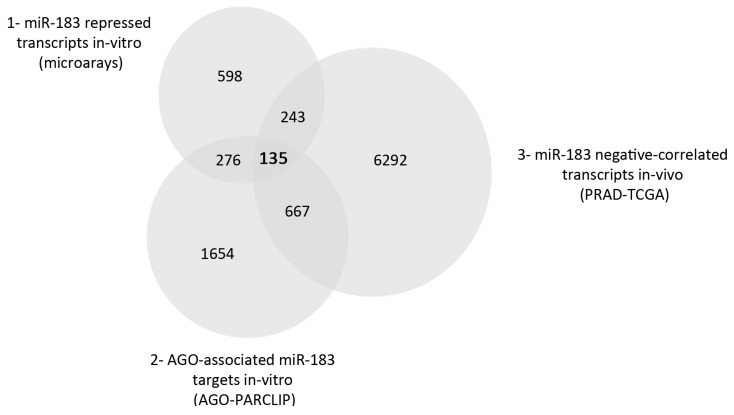
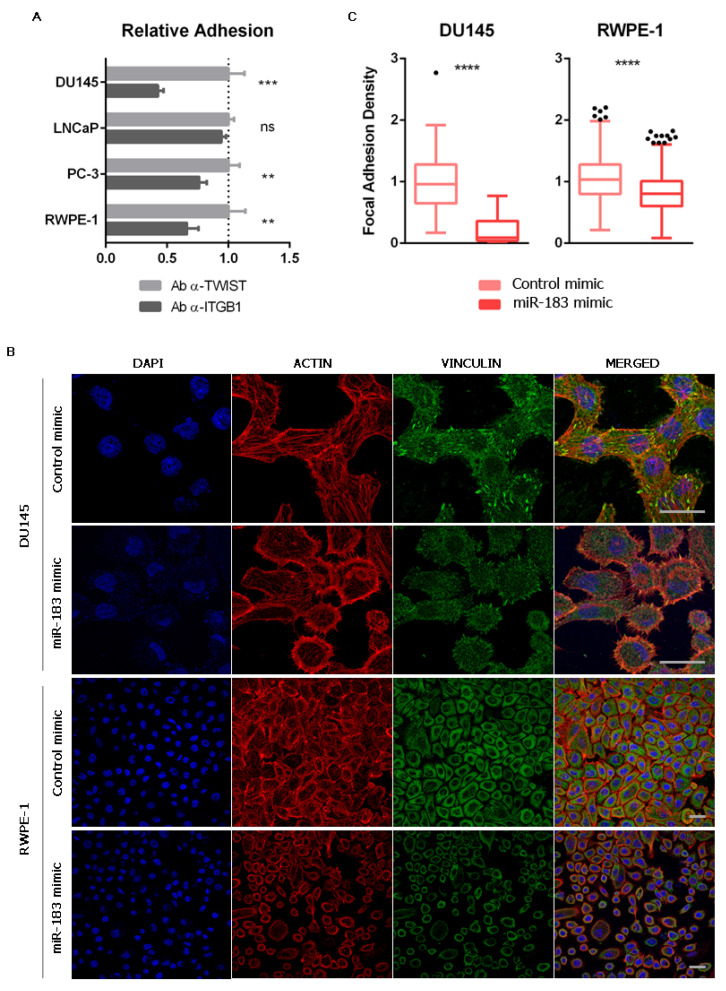
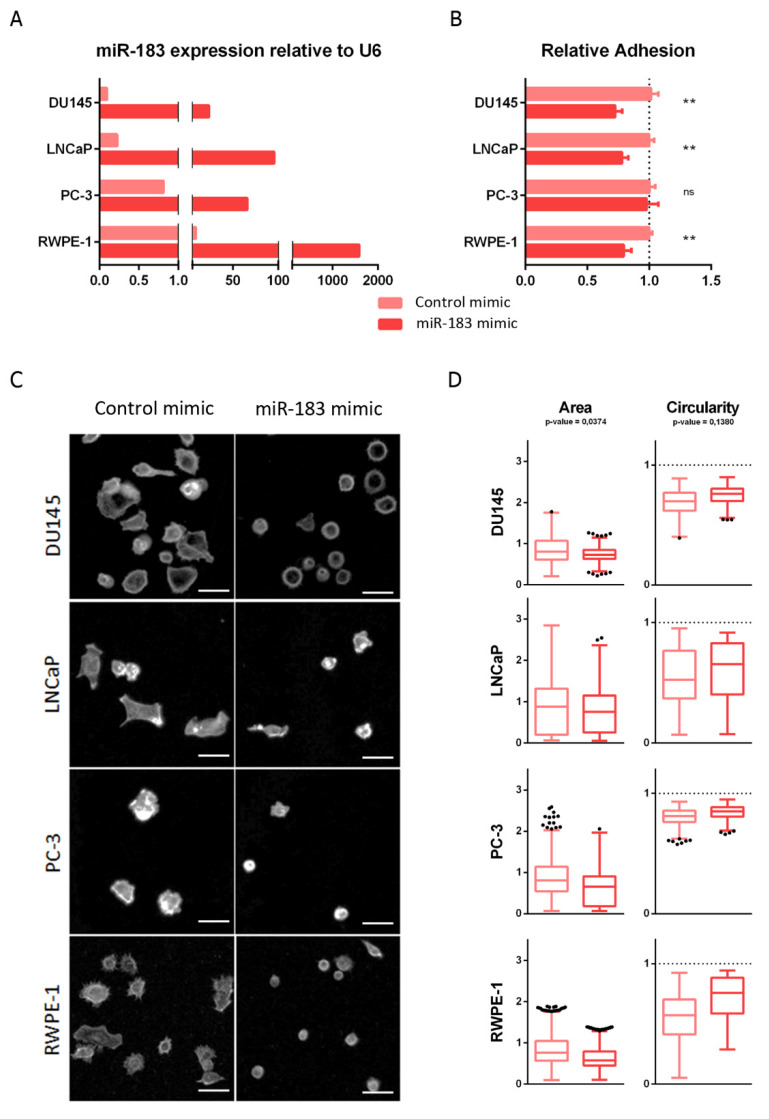
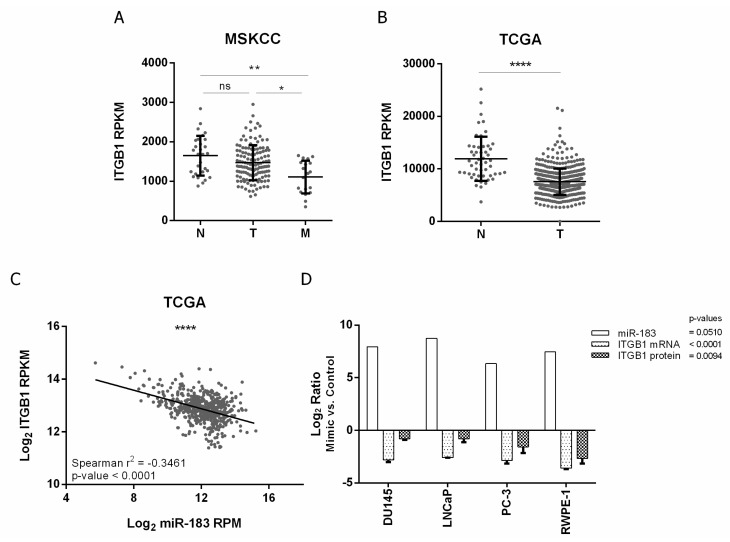
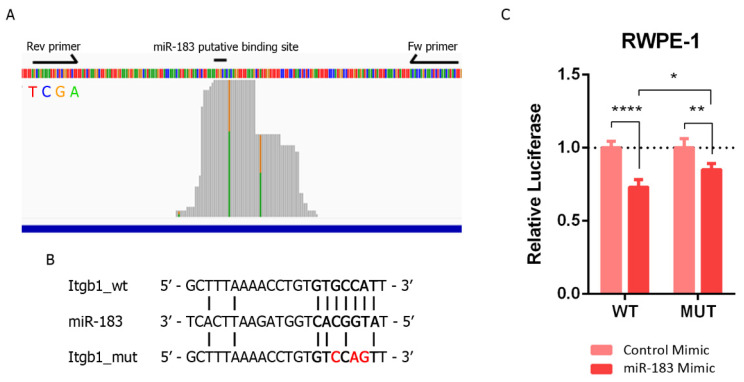
Prostate cancer is a major health problem worldwide. MiR-183 is an oncomiR and a candidate biomarker in prostate cancer, affecting various pathways responsible for disease initiation and progression. We sought to discover the most relevant processes controlled by miR-183 through an unbiased transcriptomic approach using prostate cell lines and patient tissues to identify miR-183 responsive genes and pathways. Gain of function experiments, reporter gene assays, and transcript and protein measurements were conducted to validate predicted functional effects and protein mediators. A total of 135 candidate miR-183 target genes overrepresenting cell adhesion terms were inferred from the integrated transcriptomic analysis. Cell attachment, spreading assays and focal adhesion quantification of miR-183-overexpressing cells confirmed the predicted reduction in cell adhesion. was validated as a major target of repression by miR-183 as well as a mediator of cell adhesion in response to miR-183. The reporter gene assay and PAR-CLIP read mapping suggest that ITGB1 may be a direct target of miR-183. The negative correlation between miR-183 and expression in prostate cancer cohorts supports their interaction in the clinical set. Overall, cell adhesion was uncovered as a major pathway controlled by miR-183 in prostate cancer, and ITGB1 was identified as a relevant mediator of this effect.
前列腺癌是全球范围内的一个重大健康问题。MiR-183是一种癌基因miRNA,也是前列腺癌中的一个候选生物标志物,它影响着负责疾病发生和进展的各种途径。我们试图通过一种无偏向性的转录组学方法,利用前列腺癌细胞系和患者组织来发现受MiR-183控制的最相关过程,以识别MiR-183反应性基因和途径。进行了功能获得实验、报告基因检测以及转录本和蛋白质测量,以验证预测的功能效应和蛋白质介质。综合转录组分析推断出总共135个代表细胞黏附术语的候选MiR-183靶基因。对过表达MiR-183的细胞进行细胞附着、铺展实验和粘着斑定量分析,证实了预测的细胞黏附减少。 被验证为MiR-183抑制的主要靶点,也是响应MiR-183的细胞黏附介质。报告基因检测和PAR-CLIP读数定位表明ITGB1可能是MiR-183的直接靶点。前列腺癌队列中MiR-183与 表达之间的负相关支持了它们在临床环境中的相互作用。总体而言,细胞黏附被发现是前列腺癌中受MiR-183控制的主要途径,并且ITGB1被确定为这种效应的相关介质。 (注:原文中“ was validated as a major target of repression by miR-183 as well as a mediator of cell adhesion in response to miR-183.”和“前列腺癌队列中MiR-183与 表达之间的负相关支持了它们在临床环境中的相互作用。”这两处有缺失信息,翻译时保留了原文格式)