Querido Micaela Machado, Rosário Fernanda, Bessa Maria João, Mendes Francisca, Teixeira José Carlos, Teixeira João Paulo, Pereira Cristiana Costa
Environmental Health Department, National Institute of Health, 4000-055 Porto, Portugal.
EPIUnit, Institute of Public Health, University of Porto, 4050-600 Porto, Portugal.
Toxics. 2022 Jan 27;10(2):58. doi: 10.3390/toxics10020058.
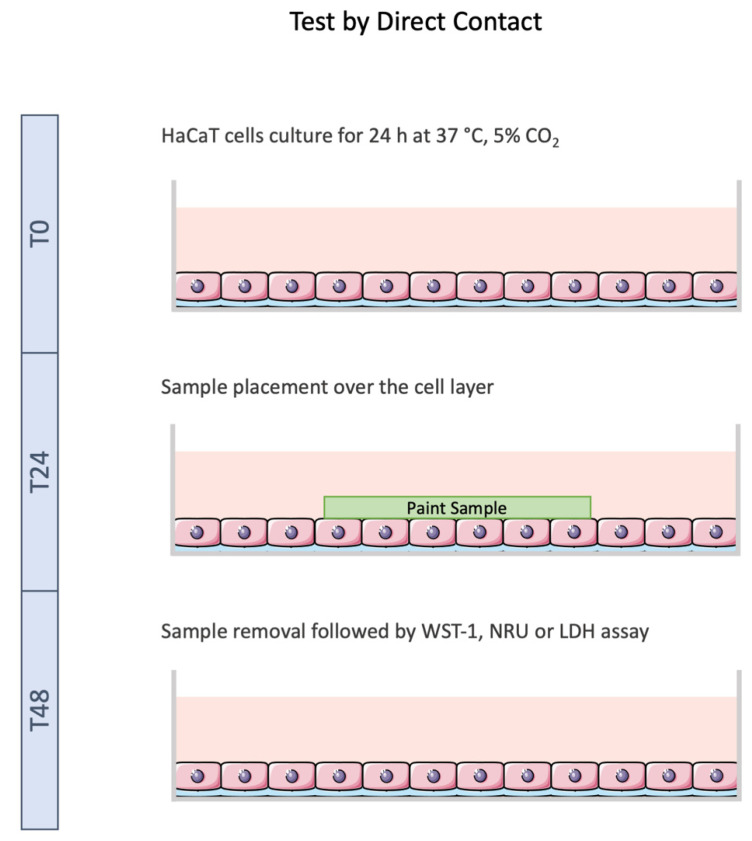
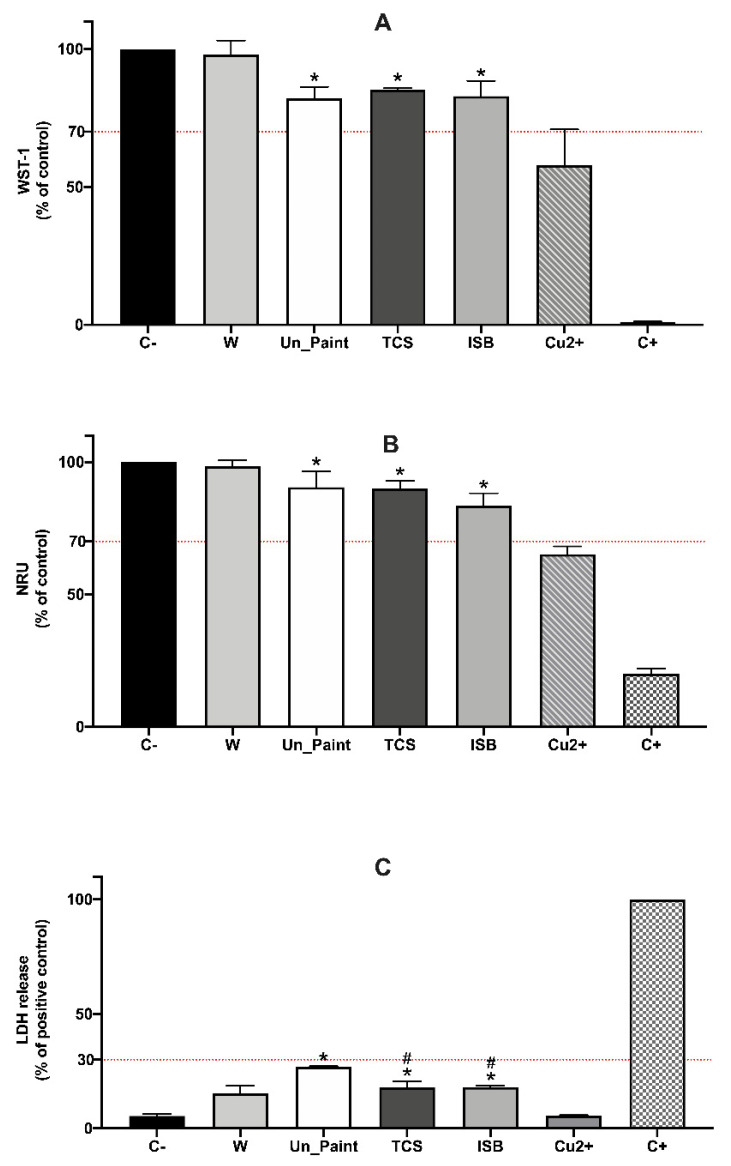
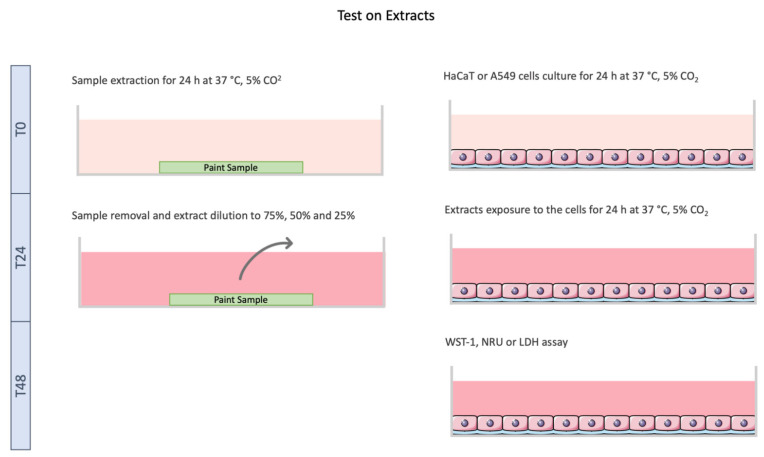
Surfaces with antimicrobial properties are gaining notoriety as an efficient method to avoid surface contamination. Self-disinfecting paints are a promising strategy towards cleaner indoor environments by preventing the colonization of walls with microorganisms. However, its widespread use needs an appropriate toxicological safety evaluation due to the potential for biological disturbance associated to its biocidal activity. In this work, the cyto- and genotoxic assessment of two self-disinfecting paints containing the antimicrobial substances triclosan (TCS) and isoborneol (ISB) is performed. HaCaT and A549 cell lines models were selected for the in vitro assessment. To evaluate the cytotoxicity, tests by direct contact and on extracts obtained from leaching were performed following ISO 10993, whereas the genotoxicity was assessed by comet assay and cytokinesis-block micronucleus (CBMN) assay. The results showed low levels of cyto- and genotoxicity under the models and conditions tested, indicating that these substances have commercial potential.
具有抗菌特性的表面作为一种避免表面污染的有效方法正日益受到关注。自消毒涂料是一种通过防止微生物在墙壁上定殖来营造更清洁室内环境的有前景的策略。然而,由于其杀菌活性可能会对生物造成干扰,其广泛应用需要进行适当的毒理学安全性评估。在这项工作中,对两种含有抗菌物质三氯生(TCS)和异冰片(ISB)的自消毒涂料进行了细胞毒性和遗传毒性评估。选择HaCaT和A549细胞系模型进行体外评估。为了评估细胞毒性,按照ISO 10993进行了直接接触测试和对浸出提取物的测试,而遗传毒性则通过彗星试验和胞质分裂阻滞微核(CBMN)试验进行评估。结果表明,在所测试的模型和条件下,细胞毒性和遗传毒性水平较低,表明这些物质具有商业潜力。