
口腔经历、口腔卫生教育与自我报告的口腔卫生行为之间的关系。
Relationship between dental experiences, oral hygiene education and self-reported oral hygiene behaviour.
机构信息
Faculty of Medicine, Division for Cariology, Department of Operative Dentistry and Periodontology, Medical Center-University of Freiburg, Freiburg, Germany.
Faculty of Medicine, Department of Psychosomatic Medicine and Psychotherapy, University of Freiburg, Freiburg, Germany.
出版信息
PLoS One. 2022 Feb 24;17(2):e0264306. doi: 10.1371/journal.pone.0264306. eCollection 2022.
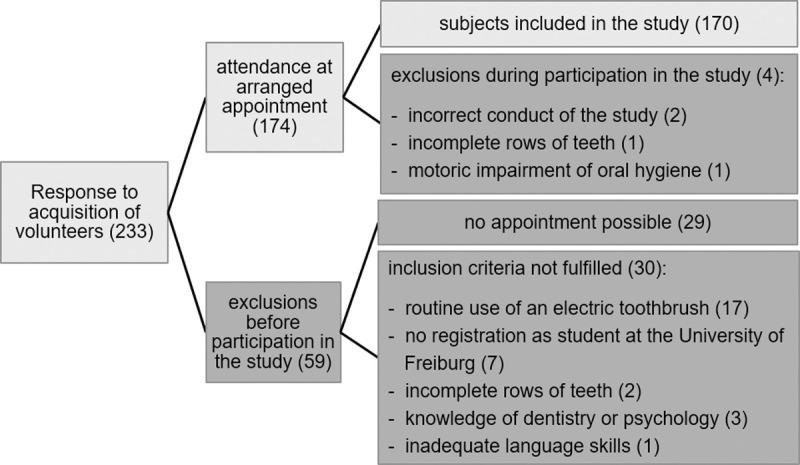
Many preventive approaches in dentistry aim to improve oral health through behavioural instruction or intervention concerning oral health behaviour. However, it is still unknown which factors have the highest impact on oral health behaviours, such as toothbrushing or regular dental check-ups. Various external and internal individual factors such as education, experience with dentists or influence by parents could be relevant. Therefore, the present observational study investigated the influence of these factors on self-reported oral heath behaviour. One hundred and seventy participants completed standardized questionnaires about dental anxiety (Dental Anxiety Scale (DAS), and dental self-efficacy perceptions (dSEP)). They also answered newly composed questionnaires on oral hygiene behaviours and attitudes, current and childhood dental experiences as well as parental oral hygiene education and care. Four independent factors, namely attitude towards oral hygiene, attitude towards one's teeth, sense of care and self-inspection of one's teeth were extracted from these questionnaires by rotating factor analysis. The results of the questionnaires were correlated by means of linear regressions. Dental anxiety was related to current negative emotions when visiting a dentist and negative dental-related experiences during childhood. High DAS scores, infantile and current negative experiences showed significant negative correlations with the attitude towards oral hygiene and one's teeth. Dental anxiety and current negative dental experiences reduced participants' dental self-efficacy perceptions as well as the self-inspection of one's teeth. While parental care positively influenced the attitude towards one's teeth, dental self-efficacy perceptions significantly correlated with attitude towards oral hygiene, self-inspection of one's teeth and parental care. Dental anxiety, dental experiences, parents' care for their children's oral hygiene and dental self-efficacy perceptions influence the attitude towards oral hygiene and one's own oral cavity as well as the autonomous control of one's own dental health. Therefore, oral hygiene instruction and the development of patient-centred preventive approaches should consider these factors.
许多牙科预防措施旨在通过口腔健康行为的行为指导或干预来改善口腔健康。然而,目前仍不清楚哪些因素对口腔健康行为(如刷牙或定期看牙医)的影响最大。各种外部和内部个体因素,如教育程度、与牙医的接触经验或受父母的影响,都可能相关。因此,本观察性研究调查了这些因素对自我报告的口腔健康行为的影响。170 名参与者完成了关于牙科焦虑症(牙科焦虑量表(DAS))和口腔自我效能感认知(dSEP)的标准化问卷。他们还回答了新编制的关于口腔卫生行为和态度、当前和儿童期牙科经历以及父母口腔卫生教育和护理的问卷。通过旋转因子分析,从这些问卷中提取出四个独立的因素,即对口腔卫生的态度、对牙齿的态度、关怀感和对牙齿的自我检查。通过线性回归分析对问卷结果进行相关性分析。牙科焦虑症与当前看牙医时的负面情绪和儿童期的负面牙科经历有关。高 DAS 评分、幼稚和当前的负面经历与对口腔卫生和对牙齿的态度呈显著负相关。牙科焦虑症和当前的负面牙科经历降低了参与者的口腔自我效能感认知以及对牙齿的自我检查。虽然父母的关心会正面影响对牙齿的态度,但口腔自我效能感认知与对口腔卫生的态度、对牙齿的自我检查以及父母的关心显著相关。牙科焦虑症、牙科经历、父母对孩子口腔卫生的关心以及口腔自我效能感认知会影响对口腔卫生和自身口腔的态度以及对自身口腔健康的自主控制。因此,口腔卫生指导和以患者为中心的预防措施的发展应考虑这些因素。


 Zotero 插件