Chiappini Stefania, Mosca Alessio, Miuli Andrea, Semeraro Francesco Maria, Mancusi Gianluca, Santovito Maria Chiara, Di Carlo Francesco, Pettorruso Mauro, Guirguis Amira, Corkery John Martin, Martinotti Giovanni, Schifano Fabrizio, Di Giannantonio Massimo
Department of Neurosciences, Imaging and Clinical Sciences, Università degli Studi G. D'Annunzio, 66100 Chieti, Italy.
Psychopharmacology, Drug Misuse and Novel Psychoactive Substances Research Unit, School of Life and Medical Sciences, University of Hertfordshire, Hatfield AL10 9AB, UK.
Biomedicines. 2022 Feb 1;10(2):355. doi: 10.3390/biomedicines10020355.
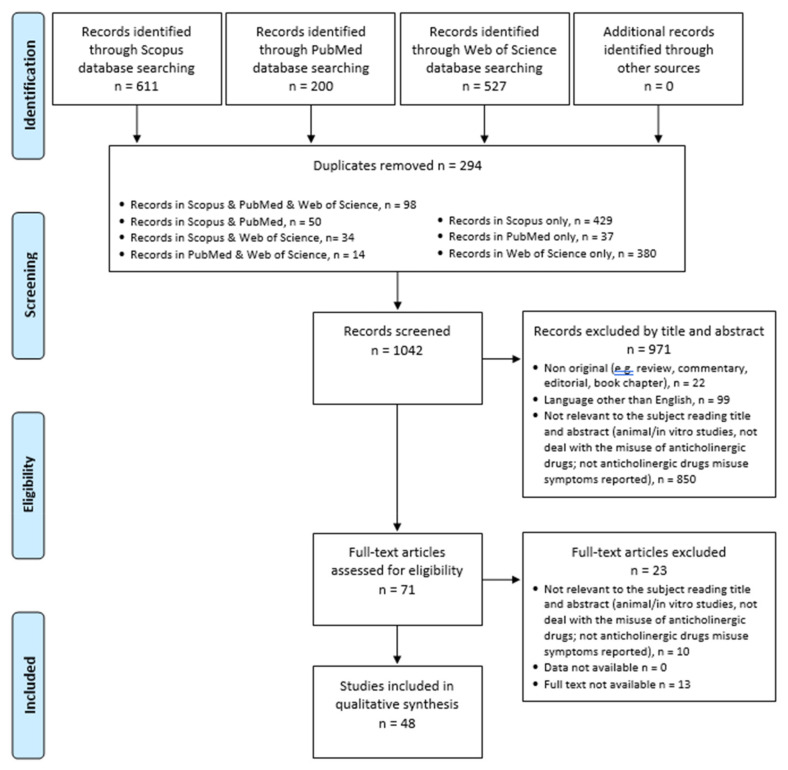
(1) Background: Over the last decade, misuse and diversion of medications has appeared to be increasingly concerning phenomena, including a range of different molecules. As current knowledge on the abuse of centrally acting anticholinergics is limited, the aim of the present study is to review the relevant published data, focusing on the following molecules: benztropine, biperiden, scopolamine, orphenadrine, and benzhexol/trihexyphenidyl (THP). (2) Methods: A systematic literature review was carried out using Pubmed, Scopus, and Web of Science databases following the Preferred Reporting Items for Systematic Reviews and Meta-Analyses (PRISMA). Research methods were registered on PROSPERO (CRD42021257293). (3) Results: A total of 48 articles, including case reports, surveys, and retrospective case series analyses, were included. Most articles focused on benzhexol/THP ( = 25), and benztropine ( = 4). The routes of administration were mostly oral, and macrodoses together concomitant illicit drugs, e.g., cocaine, have been recorded. Toxidromes included both physical (e.g., tachycardia, tachypnoea, dilatated pupils, dry skin, urinary retention, ataxia, etc.) and psychiatric symptoms (e.g., anxiety, agitation, delirium, etc.). Fatal outcomes were very rare but reported. (4) Conclusion: Results from the present study show that anticholinergic misusing issues are both widespread worldwide and popular. Considering the potential adverse effects associated, healthcare professionals should be vigilant and monitor eventual misusing issues.
(1) 背景:在过去十年中,药物的滥用和转移似乎已成为日益令人担忧的现象,涉及一系列不同的分子。由于目前关于中枢性抗胆碱能药物滥用的知识有限,本研究的目的是回顾相关的已发表数据,重点关注以下分子:苯海索、比哌立登、东莨菪碱、奥芬那君和苄托品/三己芬迪(THP)。(2) 方法:按照系统评价和Meta分析的首选报告项目(PRISMA),使用PubMed、Scopus和科学网数据库进行系统的文献综述。研究方法已在国际前瞻性系统评价注册库(PROSPERO,注册号:CRD42021257293)登记。(3) 结果:共纳入48篇文章,包括病例报告、调查和回顾性病例系列分析。大多数文章聚焦于苄托品/三己芬迪(n = 25)和苯海索(n = 4)。给药途径大多为口服,并且记录到有大剂量用药以及同时使用可卡因等非法药物的情况。中毒症状包括身体症状(如心动过速、呼吸急促、瞳孔散大、皮肤干燥、尿潴留、共济失调等)和精神症状(如焦虑、激动、谵妄等)。虽然致命后果非常罕见,但仍有报告。(4) 结论:本研究结果表明,抗胆碱能药物的滥用问题在全球范围内既普遍又常见。考虑到相关的潜在不良反应,医疗保健专业人员应保持警惕并监测可能出现的滥用问题。