Zhao Huaibao, Bai Hai, Deng Fuli, Zhong Ruqing, Liu Lei, Chen Liang, Zhang Hongfu
State Key Laboratory of Animal Nutrition, Institute of Animal Science, Chinese Academy of Agricultural Sciences, Beijing 100193, China.
School of Life Science, Shanxi Datong University, Datong 037000, China.
Antibiotics (Basel). 2022 Jan 20;11(2):132. doi: 10.3390/antibiotics11020132.
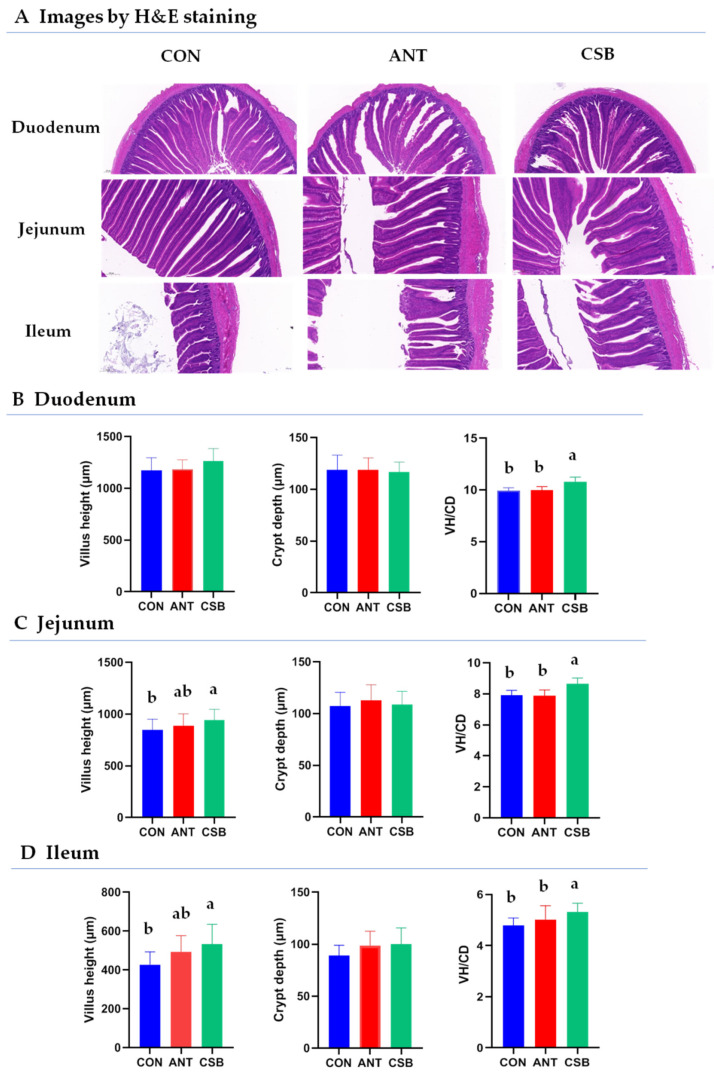
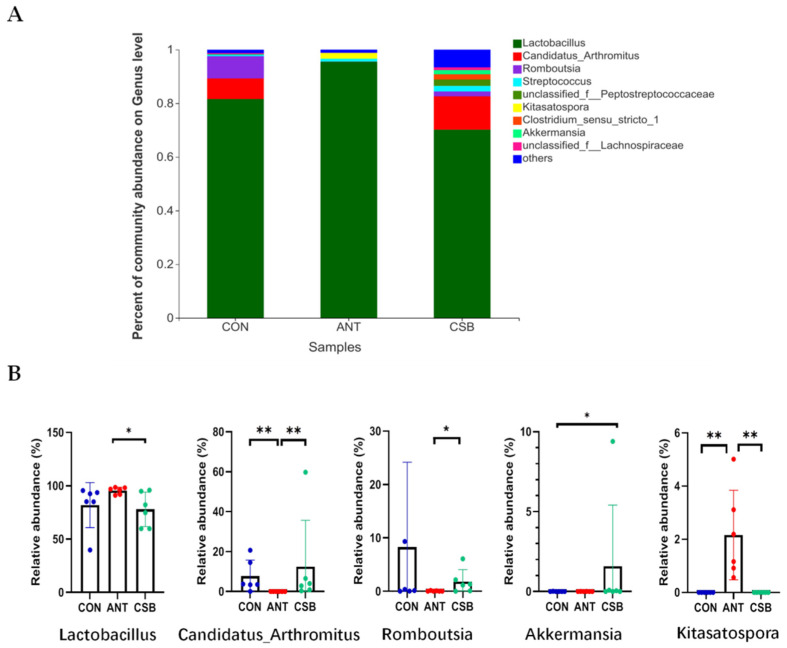
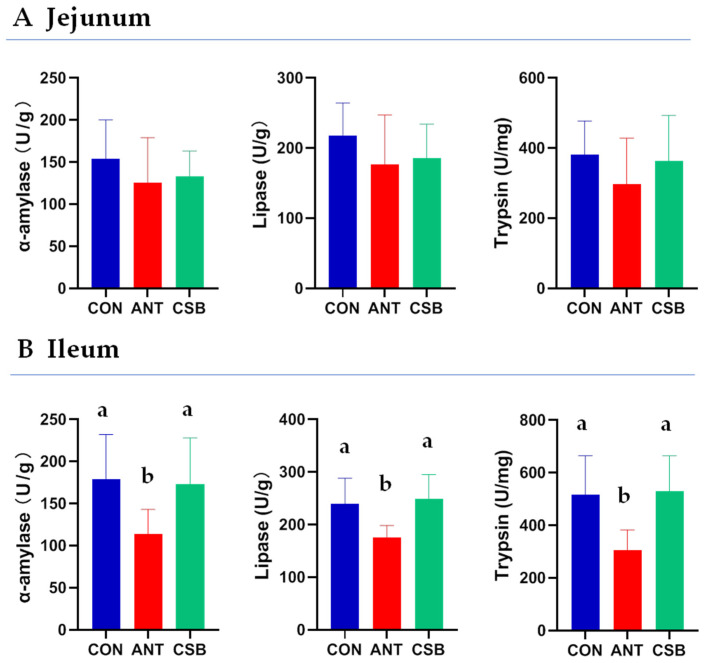
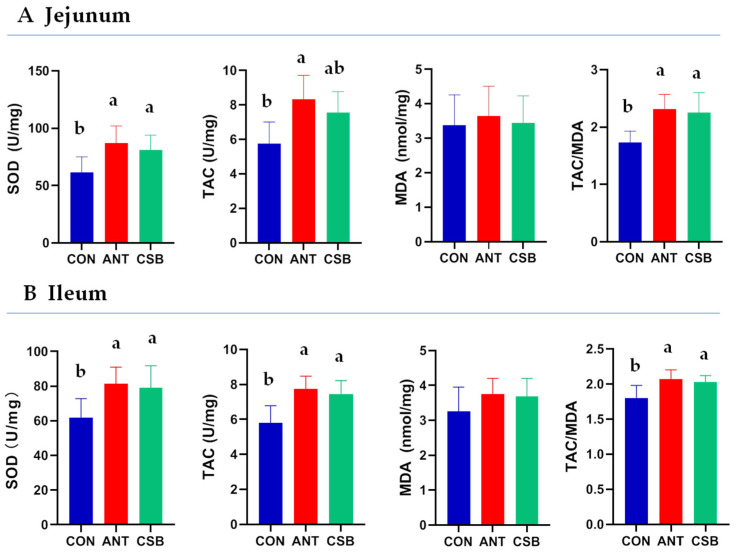
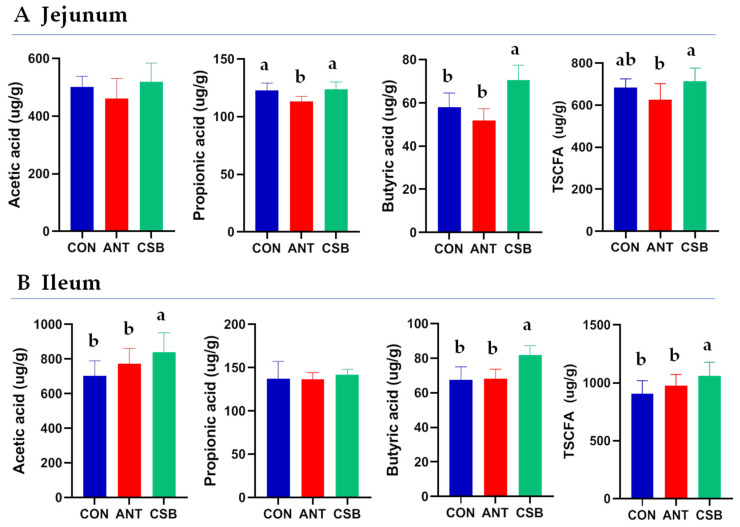
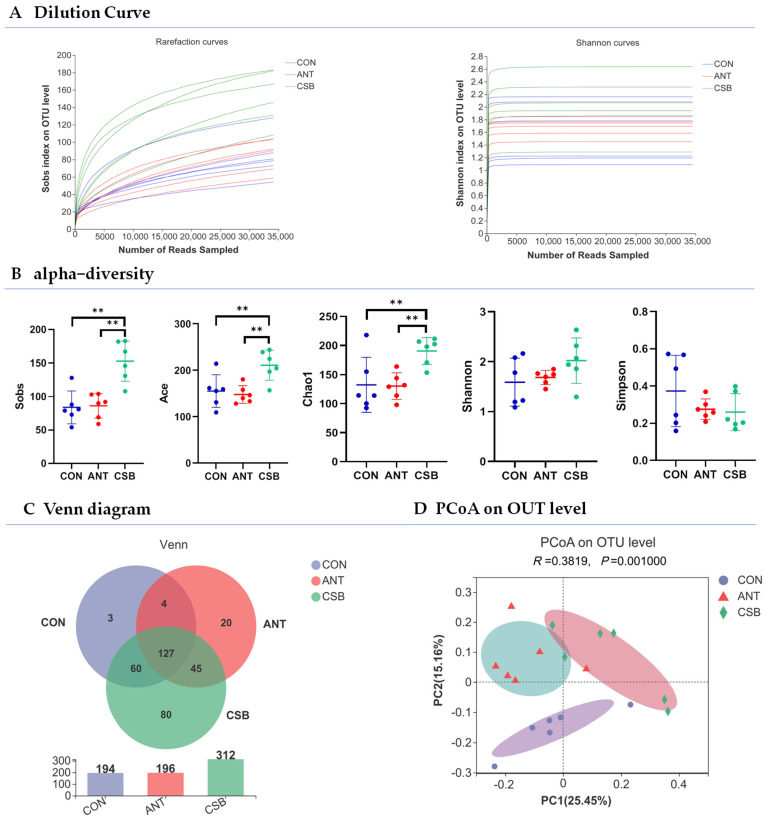
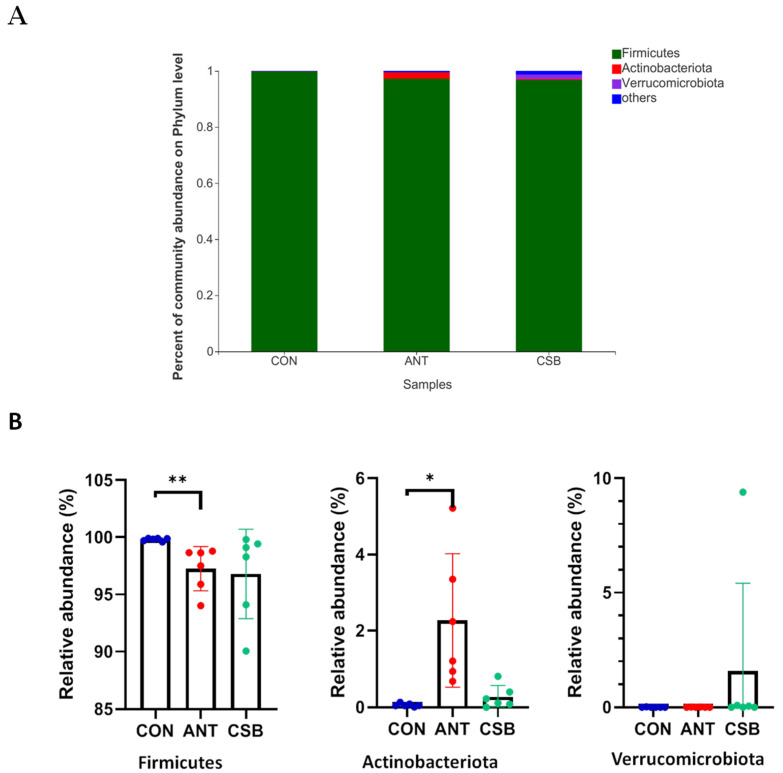
The purpose of this study was to investigate the effects of chemically protected sodium butyrate (CSB) on growth performance and the early development and function of small intestine in broilers as one potential substitute for antibiotics. A total of 192 one-day-old Arbor Acres male broilers were randomly assigned into three dietary treatment groups (eight replicates per treatment): the control (CON) diet; ANT diet, CON diet supplemented with the antibiotics (enramycin, 8 mg/kg and aureomycin, 100 mg/kg); CSB diet, CON diet supplemented with 1000 mg/kg CSB, respectively. The results showed that dietary CSB and antibiotics addition significantly improved the growth performance of broilers by increasing the body weight gain (BWG) and feed conversion ratio (FCR) during different stages ( < 0.05). On day 21, the supplement of CSB in diet improved the structure of small intestine (duodenum, jejunum, and ileum) in broilers by increasing the ratio of villus height to crypt depth (VH/CD) ( < 0.05) and enhanced the butyric acid (BA) ( < 0.05) and total short chain fatty acids (SCFA) concentrations of small intestine (jejunum and ileum) compared with the CON and ANT diets. Besides that, the superoxide dismutase (SOD), total antioxidant capacity (TAC) and TAC to malondialdehyde (TAC/MDA) ratio of the ileal and jejunal mucosa were significantly higher ( < 0.05) in the CSB and ANT than in the CON. In addition, the supplement of CSB in diet markedly significantly enhanced α-amylase, lipase, and trypsin activities of the ileum ( < 0.05) as compared to the ANT diet. 16S rRNA gene sequencing indicated that CSB markedly increased the microbiota diversity of ileum in broilers at 21 days of age as compared to CON and ANT ( < 0.05). Furthermore, we found that was the predominant phyla and was the major genus in the ileum of broilers. Compared with the ANT diet, the supplement of CSB in diet increased the relative abundance of some genera microbiota (e.g., , ) by decreasing the relative abundance of . Moreover, in the CSB was the highest in comparison to that in the CON and ANT. In addition, that belongs to the phylum was only found in ileum of broilers fed the ANT diet. In summary, the supplement of 1000 mg/kg CSB in the diet improved the growth performance by promoting early development and function of the small intestine, which is associated with the regulation of intestinal flora and reestablishment of micro-ecological balance in broilers. Thus, CSB has great potential value as one of effective substitutes for in-feed antibiotics in the broiler industry.
本研究旨在探讨化学保护丁酸钠(CSB)作为抗生素的一种潜在替代品,对肉鸡生长性能以及小肠早期发育和功能的影响。总共192只1日龄的艾维茵雄性肉鸡被随机分为三个日粮处理组(每个处理8个重复):对照组(CON)日粮;ANT日粮,即CON日粮添加抗生素(恩拉霉素,8 mg/kg和金霉素,100 mg/kg);CSB日粮,即CON日粮添加1000 mg/kg CSB。结果表明,日粮添加CSB和抗生素通过提高不同阶段的体重增加(BWG)和饲料转化率(FCR),显著改善了肉鸡的生长性能(P<0.05)。在第21天,日粮中添加CSB通过提高绒毛高度与隐窝深度之比(VH/CD),改善了肉鸡小肠(十二指肠、空肠和回肠)的结构(P<0.05),并与CON和ANT日粮相比,提高了小肠(空肠和回肠)中丁酸(BA)(P<0.05)和总短链脂肪酸(SCFA)的浓度。除此之外,CSB和ANT组回肠和空肠黏膜的超氧化物歧化酶(SOD)、总抗氧化能力(TAC)以及TAC与丙二醛之比(TAC/MDA)显著高于CON组(P<0.05)。此外,与ANT日粮相比,日粮中添加CSB显著提高了回肠的α-淀粉酶、脂肪酶和胰蛋白酶活性(P<0.05)。16S rRNA基因测序表明,与CON和ANT组相比,CSB显著增加了21日龄肉鸡回肠的微生物群多样性(P<0.05)。此外,我们发现 是肉鸡回肠中的优势门, 是主要属。与ANT日粮相比,日粮中添加CSB通过降低 的相对丰度,增加了一些属微生物群(如 、 )的相对丰度。此外,CSB组中的 与CON和ANT组相比是最高的。此外,属于 门的 在仅饲喂ANT日粮的肉鸡回肠中被发现。总之,日粮中添加1000 mg/kg CSB通过促进小肠的早期发育和功能改善了生长性能,这与调节肠道菌群和重建肉鸡的微生态平衡有关。因此,CSB作为肉鸡行业中饲料抗生素的有效替代品之一具有巨大的潜在价值。