Laboratory of Pharmacology, Department of Medicine, Democritus University of Thrace, 68100 Alexandroupolis, Greece.
Laboratory of Genetics & Genomics of Cancer and Chronic Diseases, Department of Molecular Biology & Genetics, Democritus University of Thrace, 68100 Alexandroupolis, Greece.
Biomolecules. 2022 Feb 6;12(2):263. doi: 10.3390/biom12020263.
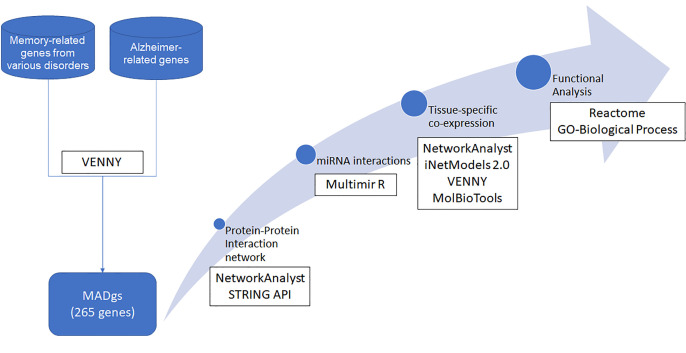
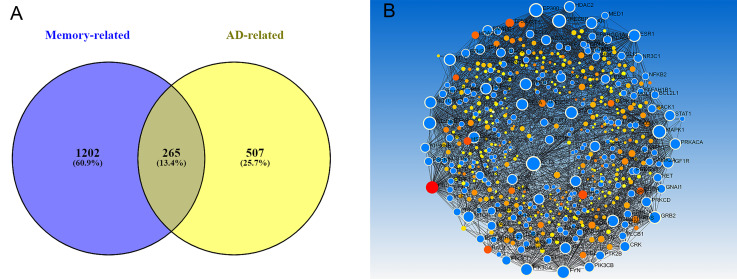
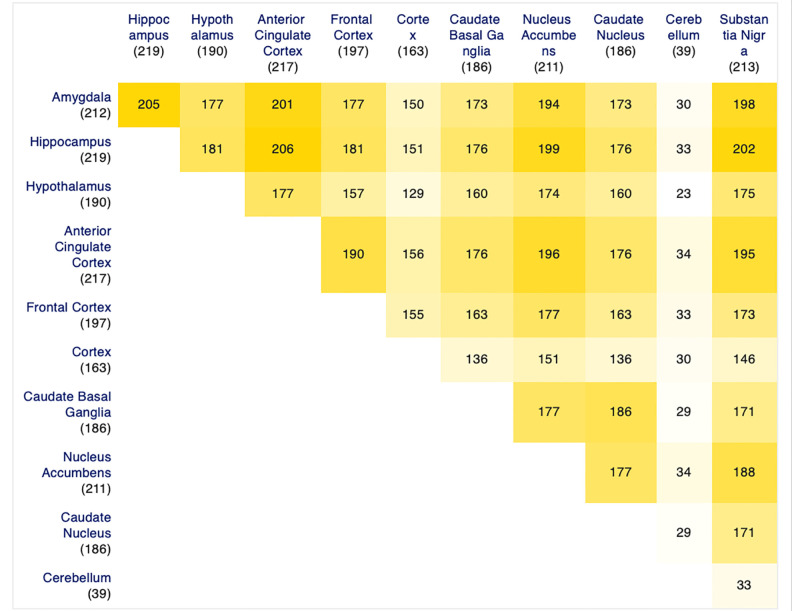
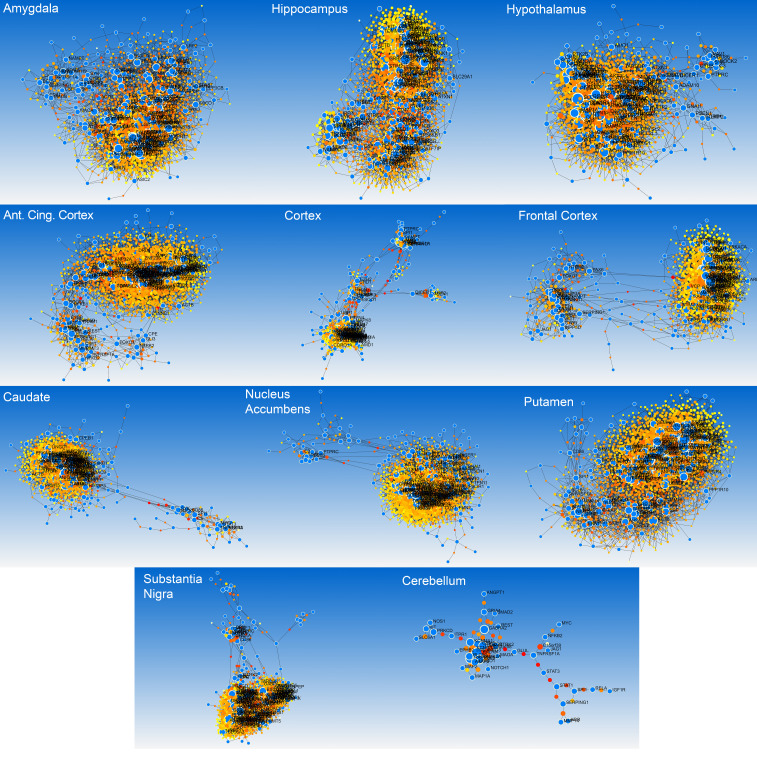
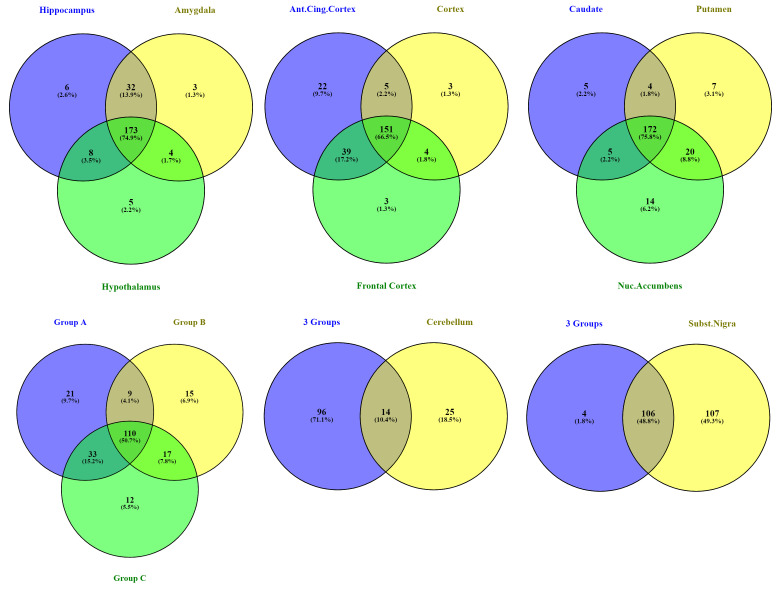
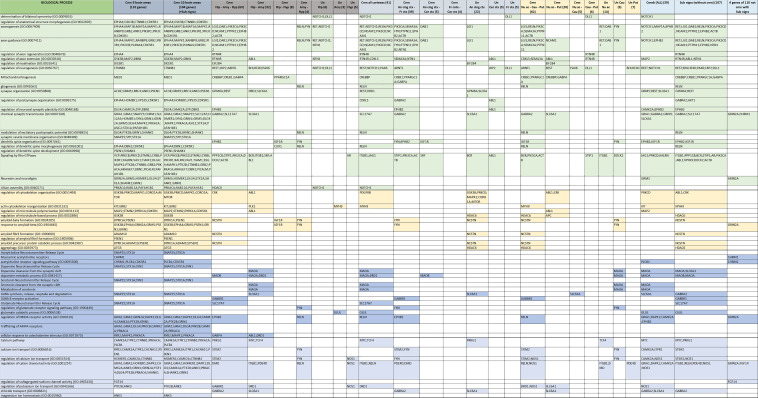
Alzheimer's Disease (AD) is a neurodegenerative disorder characterized by a progressive loss of memory and a general cognitive decline leading to dementia. AD is characterized by changes in the behavior of the genome and can be traced across multiple brain regions and cell types. It is mainly associated with β-amyloid deposits and tau protein misfolding, leading to neurofibrillary tangles. In recent years, however, research has shown that there is a high complexity of mechanisms involved in AD neurophysiology and functional decline enabling its diverse presentation and allowing more questions to arise. In this study, we present a computational approach to facilitate brain region-specific analysis of genes and biological processes involved in the memory process in AD. Utilizing current genetic knowledge we provide a gene set of 265 memory-associated genes in AD, combinations of which can be found co-expressed in 11 different brain regions along with their functional role. The identified genes participate in a spectrum of biological processes ranging from structural and neuronal communication to epigenetic alterations and immune system responses. These findings provide new insights into the molecular background of AD and can be used to bridge the genotype-phenotype gap and allow for new therapeutic hypotheses.
阿尔茨海默病(AD)是一种神经退行性疾病,其特征是记忆逐渐丧失和认知能力普遍下降导致痴呆。AD 表现为基因组行为的改变,可以在多个大脑区域和细胞类型中追踪到。它主要与β-淀粉样蛋白沉积和 tau 蛋白错误折叠有关,导致神经纤维缠结。然而,近年来的研究表明,AD 神经生理学和功能下降涉及的机制非常复杂,这使其表现形式多种多样,并引发了更多的问题。在这项研究中,我们提出了一种计算方法,以促进 AD 记忆过程中涉及的基因和生物学过程的大脑区域特异性分析。利用当前的遗传知识,我们提供了一个在 AD 中与记忆相关的 265 个基因的基因集,这些基因可以在 11 个不同的大脑区域中找到共表达,并具有其功能作用。确定的基因参与了一系列生物学过程,从结构和神经元通讯到表观遗传改变和免疫系统反应。这些发现为 AD 的分子背景提供了新的见解,并可用于弥合基因型-表型差距,为新的治疗假说提供依据。