Hernández-López Reyniel, Torrens-Mas Margalida, Pons Daniel G, Company Maria M, Falcó Esther, Fernández Teresa, Ibarra de la Rosa Javier M, Roca Pilar, Oliver Jordi, Sastre-Serra Jorge
Grupo Multidisciplinar de Oncología Traslacional, Institut Universitari d´Investigació en Ciències de la Salut (IUNICS), Universitat de les Illes Balears, E-07122 Palma de Mallorca, Illes Balears, Spain.
Instituto de Investigación Sanitaria de las Islas Baleares (IdISBa), Hospital Universitario Son Espases, Edificio S, E-07120 Palma de Mallorca, Illes Balears, Spain.
Biology (Basel). 2022 Feb 11;11(2):293. doi: 10.3390/biology11020293.
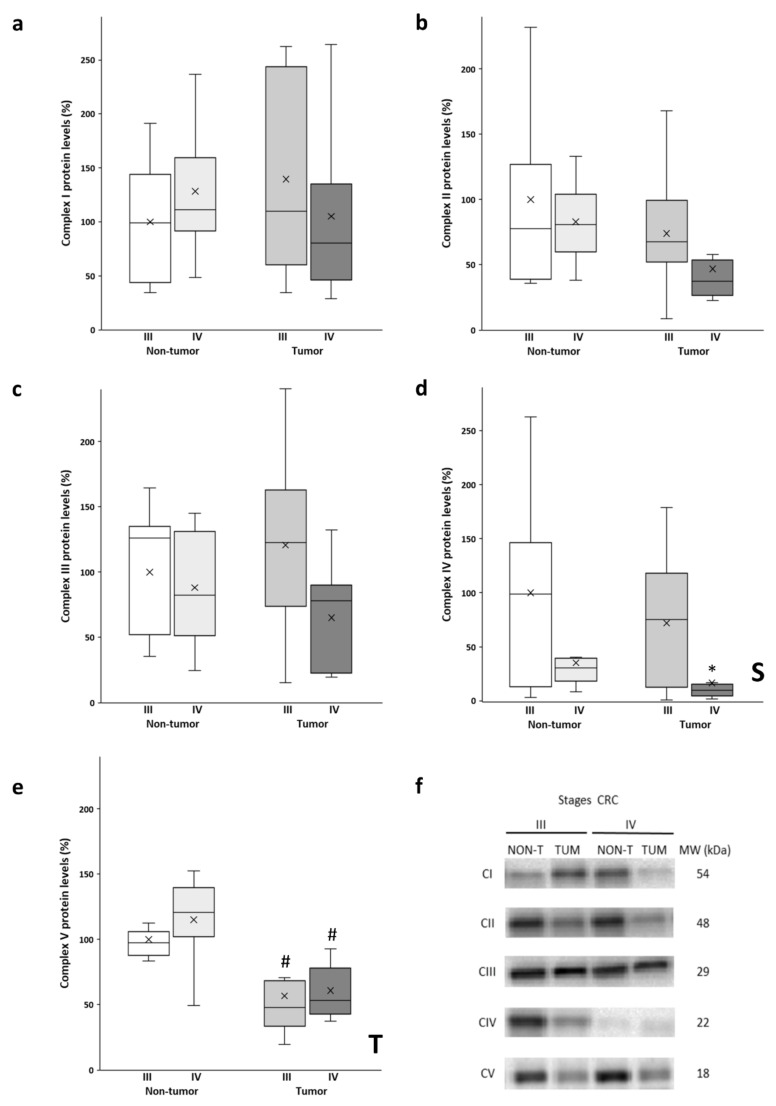
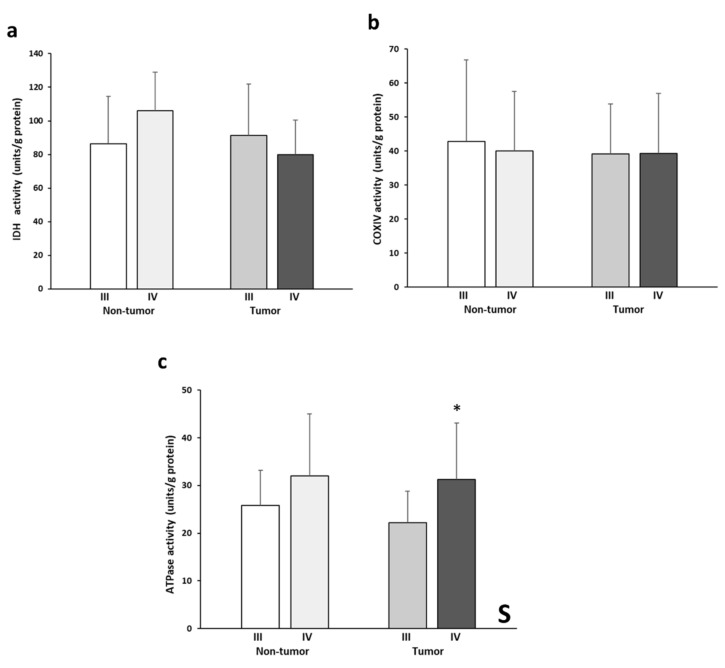
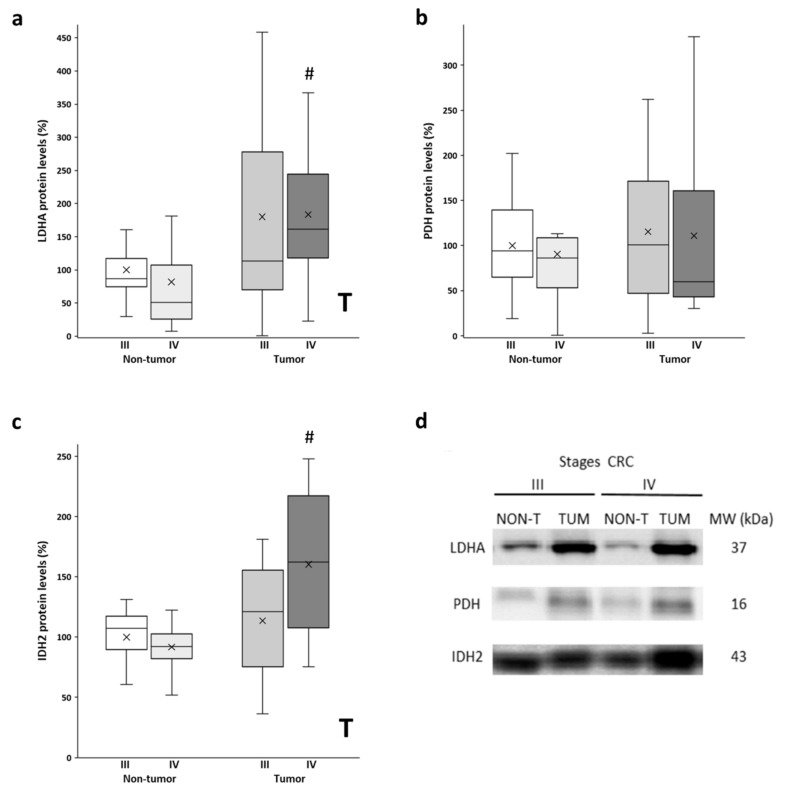
Most colorectal cancer (CRC) patients die as a consequence of metastasis. Mitochondrial dysfunction could enhance cancer development and metastatic progression. We aimed to evaluate the adaptations associated with mitochondrial function in tumor tissues from stages III and IV of human CRC and whether they could ultimately be used as a therapeutic target in metastatic colorectal cancer (mCRC). We analyzed the protein levels by Western blotting and the enzymatic activities of proteins involved in mitochondrial function, as well as the amount of mitochondrial DNA (mtDNA), by real-time PCR, analyzing samples of non-tumor adjacent tissue and tumor tissue from stages III and IV CRC patients without radio- or chemotherapy treatment prior to surgery. Our data indicate that the tumor tissue of pre-metastatic stage III CRC exhibited an oxidant metabolic profile very similar to the samples of non-tumor adjacent tissue of both stages. Notable differences in the protein expression levels of ATPase, IDH2, LDHA, and SIRT1, as well as mtDNA amount, were detected between the samples of non-tumor adjacent tissue and tumor tissue from metastatic CRC patients. These findings suggest a shift in the oxidative metabolic profile that takes place in the tumor tissue once the metastatic stage has been reached. Tumor tissue oxidative metabolism contributes to promote and maintain the metastatic phenotype, with evidence of mitochondrial function impairment in stage IV tumor tissue.
大多数结直肠癌(CRC)患者死于转移。线粒体功能障碍可促进癌症发展和转移进程。我们旨在评估人类CRC III期和IV期肿瘤组织中线粒体功能相关的适应性变化,以及它们最终是否可作为转移性结直肠癌(mCRC)的治疗靶点。我们通过蛋白质印迹法分析蛋白质水平,通过实时PCR分析参与线粒体功能的蛋白质的酶活性以及线粒体DNA(mtDNA)的量,分析未经放疗或化疗的III期和IV期CRC患者手术前的非肿瘤邻近组织和肿瘤组织样本。我们的数据表明,转移前III期CRC的肿瘤组织表现出与两个阶段的非肿瘤邻近组织样本非常相似的氧化代谢特征。在转移性CRC患者的非肿瘤邻近组织和肿瘤组织样本之间,检测到ATPase、IDH2、LDHA和SIRT1的蛋白质表达水平以及mtDNA量存在显著差异。这些发现表明,一旦达到转移阶段,肿瘤组织中的氧化代谢特征就会发生转变。肿瘤组织氧化代谢有助于促进和维持转移表型,IV期肿瘤组织存在线粒体功能受损的证据。