Michel Philippe, Fadel Fouad, Ehrmann Stephan, Plantefève Gaëtan, Gelée Bruno
Réanimation Médico-Chirurgicale, Centre Hospitalier René Dubos 6 av de l'Ile de France, F95303 Pontoise, France.
Service de Soins Continus, Centre Hospitalier Pierre Le Damany, Rue Kergomar Lannion Cedex, F22303 Lannion, France.
J Clin Med. 2022 Feb 9;11(4):897. doi: 10.3390/jcm11040897.
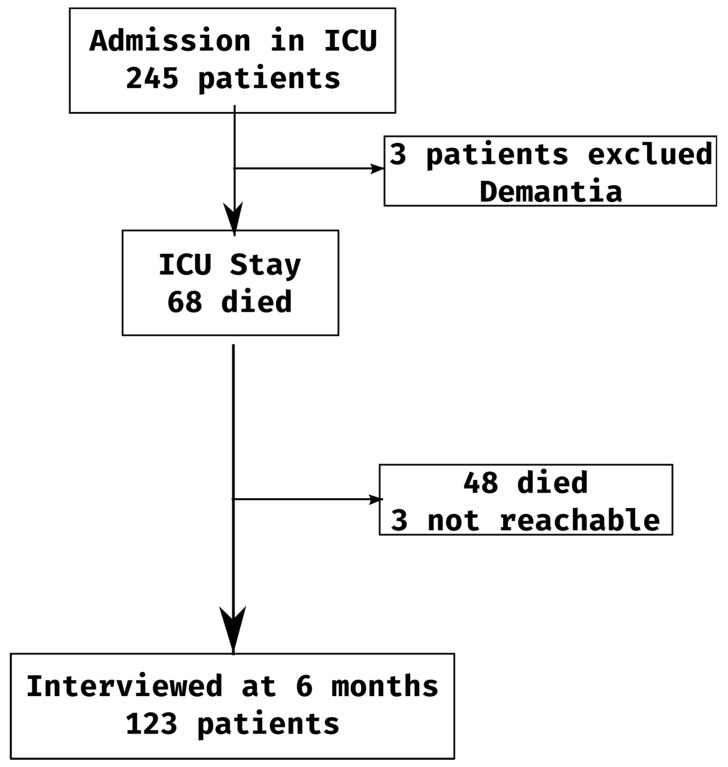
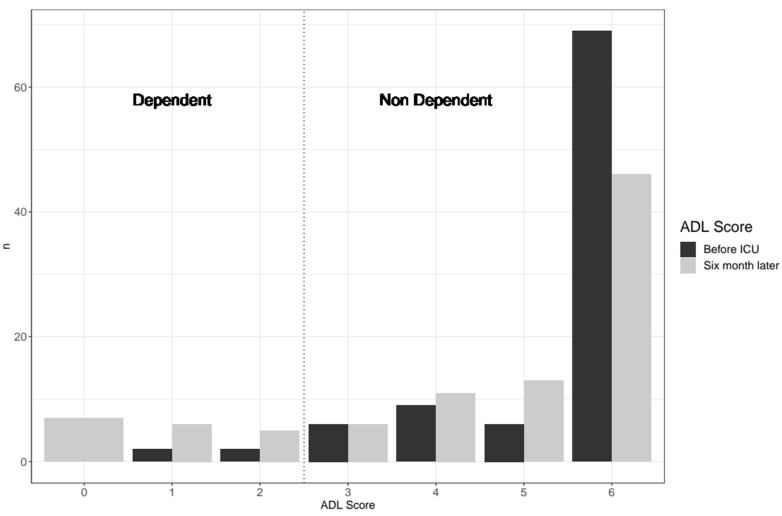
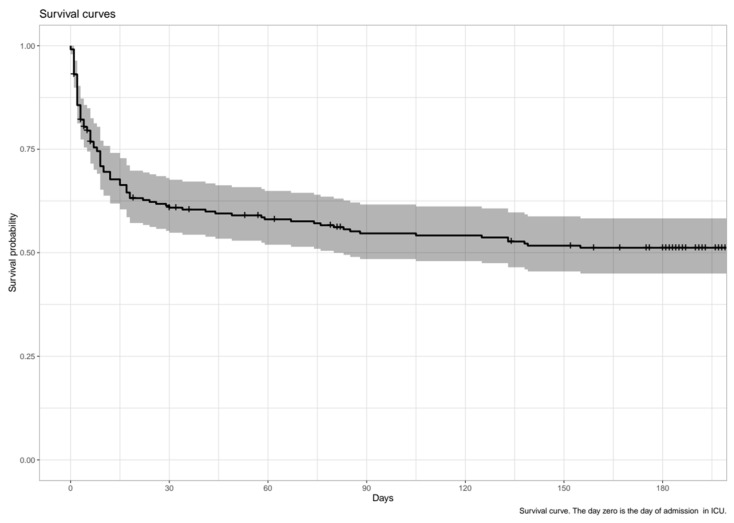
Elderly patients (over age 85) are increasingly treated in Intensive Care Units (ICU), despite doctors' reluctance to accept these frail patients. There are only few studies describing the relevance of treatments for this group of patients in ICU. One of these studies defined an age of 85 or over as the essential admittance criterion. Exclusion criteriwere low autonomy before admittance or an inability to answer the phone. Epidemiological data, history, lifestyle, and autonomy (ADL score of six items) were recorded during admission to the ICU and by phone interviews six months later. Eight French ICUs included 239 patients aged over 85. The most common diagnostics were non-cardiogenic lung disease (36%), severe sepsis/septic shock (29%), and acute pulmonary oedem (28%). Twenty-three percent of patients were dependent at the time of their admission. Seventy-one percent of patients were still alive when released from ICU, and 52% were still alive after 6 months. Among the patients which were non-dependent before hospitalization, 17% became dependent. The only prognostic criterifound were the SAPS II score on admission and the place of residence before admission (nursing home or family environment had poor prognosis). Although the prognosis of these elderly patients was good after hospitalization in ICU, it should be noted that the population was carefully selected as having few comorbidities or dependence. No triage critericould be suggested.
尽管医生不太愿意接收这些体弱的患者,但老年患者(85岁以上)在重症监护病房(ICU)接受治疗的情况越来越多。关于ICU中针对这类患者的治疗相关性的研究很少。其中一项研究将85岁及以上的年龄定义为基本入院标准。排除标准为入院前自主性低或无法接听电话。在入住ICU期间以及六个月后通过电话访谈记录了流行病学数据、病史、生活方式和自主性(六项日常生活活动能力评分)。八家法国ICU纳入了239名85岁以上的患者。最常见的诊断是非心源性肺病(36%)、严重脓毒症/脓毒性休克(29%)和急性肺水肿(28%)。23%的患者入院时存在依赖。71%的患者从ICU出院时仍存活,6个月后52%仍存活。在住院前不依赖他人的患者中,17%变得依赖他人。唯一发现的预后标准是入院时的简化急性生理学评分系统(SAPS II)得分以及入院前的居住地点(养老院或家庭环境预后较差)。尽管这些老年患者在ICU住院后的预后良好,但应注意的是,该人群经过精心挑选,合并症或依赖情况较少。无法提出分诊标准。