Bendig Jonas, Wolf Anna-Sophie, Mark Tony, Frank Anika, Mathiebe Josephine, Scheibe Madlen, Müller Gabriele, Stahr Marcus, Schmitt Jochen, Reichmann Heinz, Loewenbrück Kai F, Falkenburger Björn H
Department of Neurology, University Hospital Carl Gustav Carus and Carl Gustav Carus Faculty of Medicine, Technische Universität Dresden, 01307 Dresden, Germany.
German Center for Neurodegenerative Diseases (DZNE), 01307 Dresden, Germany.
J Clin Med. 2022 Feb 18;11(4):1074. doi: 10.3390/jcm11041074.
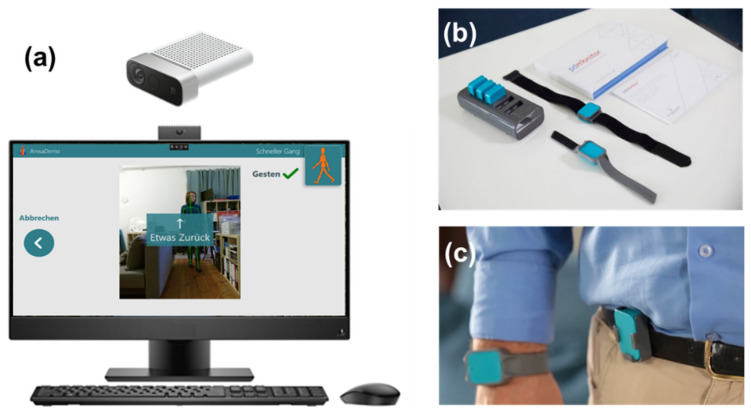
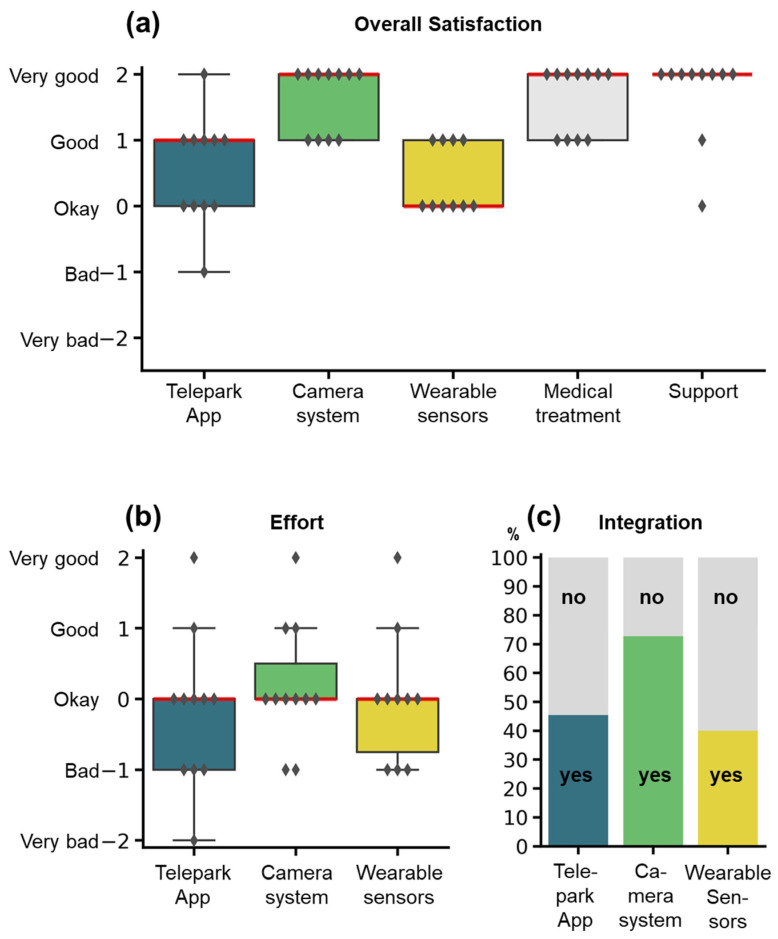
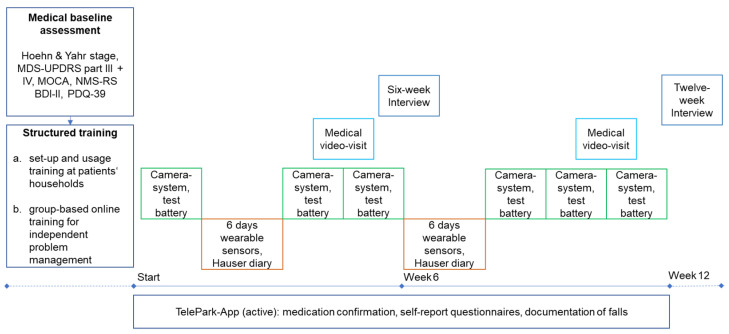
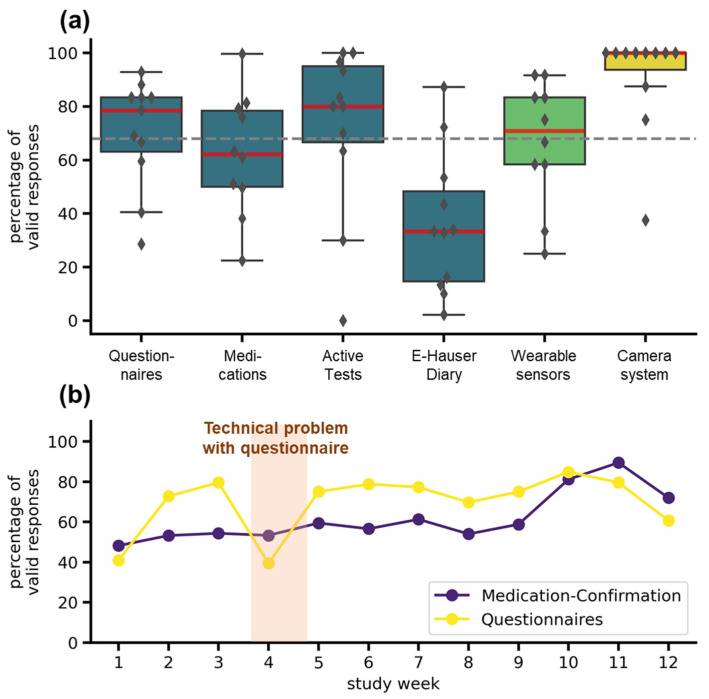
Symptoms of Parkinson's disease (PD) can be controlled well, but treatment often requires expert judgment. Telemedicine and sensor-based assessments can allow physicians to better observe the evolvement of symptoms over time, in particular with motor fluctuations. In addition, they potentially allow less frequent visits to the expert's office and facilitate care in rural areas. A variety of systems with different strengths and shortcomings has been investigated in recent years. We designed a multimodal telehealth intervention (TelePark) to mitigate the shortcomings of individual systems and assessed the feasibility of our approach in 12 patients with PD over 12 weeks in preparation for a larger randomized controlled trial. TelePark uses video visits, a smartphone app, a camera system, and wearable sensors. Structured training included setting up the equipment in patients' homes and group-based online training. Usability was assessed by questionnaires and semi-standardized telephone interviews. Overall, 11 out of 12 patients completed the trial (5 female, 6 male). Mean age was 65 years, mean disease duration 7 years, mean MoCA score 27. Adherence was stable throughout the study and 79% for a short questionnaire administered every second day, 62% for medication confirmation, and 33% for an electronic Hauser diary. Quality of life did not change in the course of the study, and a larger cohort will be required to determine the effect on motor symptoms. Interviews with trial participants identified motivations to use such systems and areas for improvements. These insights can be helpful in designing similar trials.
帕金森病(PD)的症状可以得到很好的控制,但治疗通常需要专家判断。远程医疗和基于传感器的评估可以让医生更好地观察症状随时间的演变,尤其是运动波动情况。此外,它们有可能减少患者到专家办公室就诊的频率,并便于在农村地区提供护理。近年来,人们研究了各种优缺点各异的系统。我们设计了一种多模式远程健康干预措施(TelePark),以弥补单个系统的不足,并在12周内对12名帕金森病患者评估了我们方法的可行性,为开展更大规模的随机对照试验做准备。TelePark使用视频问诊、智能手机应用程序、摄像系统和可穿戴传感器。结构化培训包括在患者家中安装设备以及基于小组的在线培训。通过问卷调查和半标准化电话访谈评估了其可用性。总体而言,12名患者中有11名完成了试验(5名女性,6名男性)。平均年龄为65岁,平均病程7年,平均蒙特利尔认知评估量表(MoCA)得分为27分。在整个研究过程中,依从性保持稳定,每隔一天进行的简短问卷调查的依从率为79%,用药确认的依从率为62%,电子豪泽日记的依从率为33%。在研究过程中,生活质量没有变化,需要更大规模的队列来确定对运动症状的影响。对试验参与者的访谈确定了使用此类系统的动机和改进领域。这些见解有助于设计类似的试验。