Dalian University of Technology, Dalian, China.
Dongbei University of Finance and Economics, Dalian, China.
J Med Internet Res. 2020 Jul 10;22(7):e18697. doi: 10.2196/18697.
The number of patients with neurological diseases is currently increasing annually, which presents tremendous challenges for both patients and doctors. With the advent of advanced information technology, digital medical care is gradually changing the medical ecology. Numerous people are exploring new ways to receive a consultation, track their diseases, and receive rehabilitation training in more convenient and efficient ways. In this paper, we explore the use of facial expression recognition via artificial intelligence to diagnose a typical neurological system disease, Parkinson disease (PD).
This study proposes methods to diagnose PD through facial expression recognition.
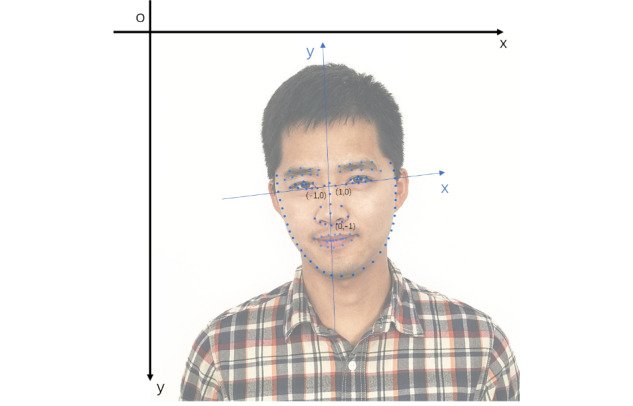
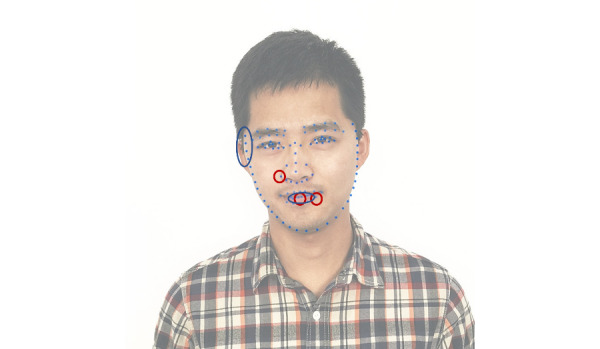
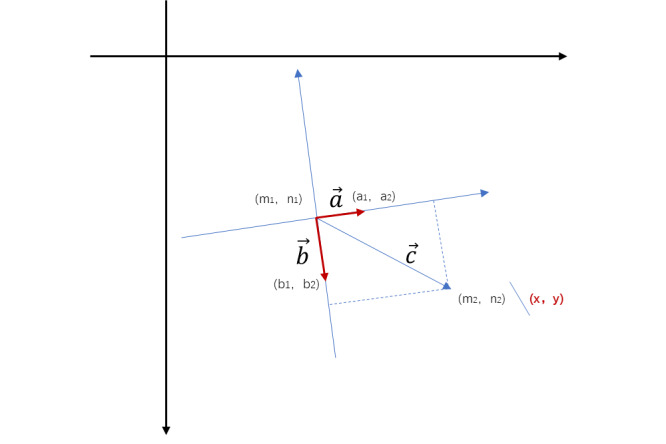
We collected videos of facial expressions of people with PD and matched controls. We used relative coordinates and positional jitter to extract facial expression features (facial expression amplitude and shaking of small facial muscle groups) from the key points returned by Face++. Algorithms from traditional machine learning and advanced deep learning were utilized to diagnose PD.
The experimental results showed our models can achieve outstanding facial expression recognition ability for PD diagnosis. Applying a long short-term model neural network to the positions of the key features, precision and F1 values of 86% and 75%, respectively, can be reached. Further, utilizing a support vector machine algorithm for the facial expression amplitude features and shaking of the small facial muscle groups, an F1 value of 99% can be achieved.
This study contributes to the digital diagnosis of PD based on facial expression recognition. The disease diagnosis model was validated through our experiment. The results can help doctors understand the real-time dynamics of the disease and even conduct remote diagnosis.
目前,神经系统疾病患者的数量正在逐年增加,这给患者和医生都带来了巨大的挑战。随着先进信息技术的出现,数字医疗正在逐渐改变医疗生态。许多人正在探索新的途径,以更方便、更高效的方式接受咨询、跟踪疾病和接受康复训练。本文探讨了利用人工智能的面部表情识别来诊断一种典型的神经系统疾病——帕金森病(PD)。
本研究提出了通过面部表情识别来诊断 PD 的方法。
我们收集了 PD 患者和对照组的面部表情视频。我们使用相对坐标和位置抖动从 Face++返回的关键点中提取面部表情特征(面部表情幅度和小面部肌肉群的抖动)。传统机器学习和先进深度学习算法用于诊断 PD。
实验结果表明,我们的模型可以实现出色的 PD 诊断面部表情识别能力。应用长短时记忆模型神经网络对关键特征的位置进行分析,可分别达到 86%和 75%的精度和 F1 值。此外,利用支持向量机算法对面部表情幅度特征和小面部肌肉群的抖动进行分析,可达到 99%的 F1 值。
本研究为基于面部表情识别的 PD 数字化诊断做出了贡献。通过实验验证了疾病诊断模型。研究结果有助于医生了解疾病的实时动态,甚至进行远程诊断。