Zhang Ye, Richards Jeffrey T, Feiveson Alan H, Richards Stephanie E, Neelam Srujana, Dreschel Thomas W, Plante Ianik, Hada Megumi, Wu Honglu, Massa Gioia D, Douglas Grace L, Levine Howard G
NASA John F. Kennedy Space Center, Kennedy Space Center, Merritt Island, FL 32899, USA.
Amentum Services, Inc., LASSO Contract, Kennedy Space Center, Merritt Island, FL 32899, USA.
Life (Basel). 2022 Jan 19;12(2):144. doi: 10.3390/life12020144.
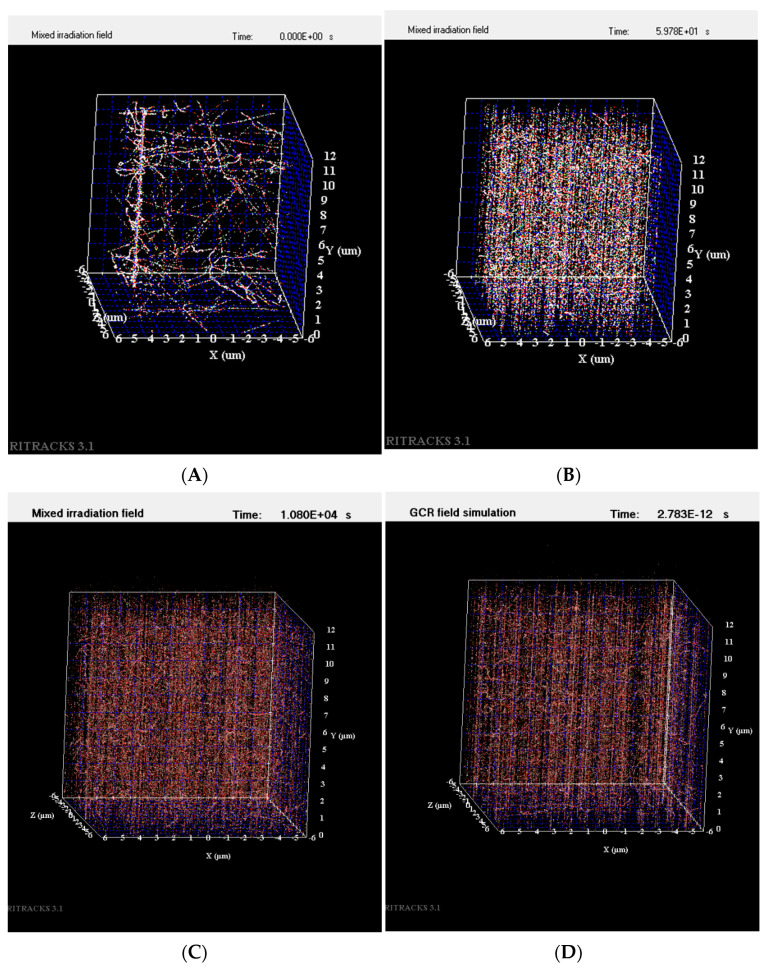
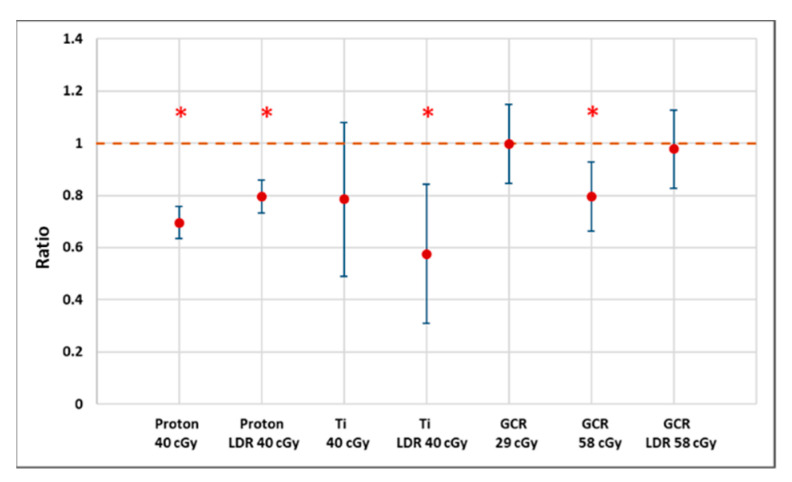
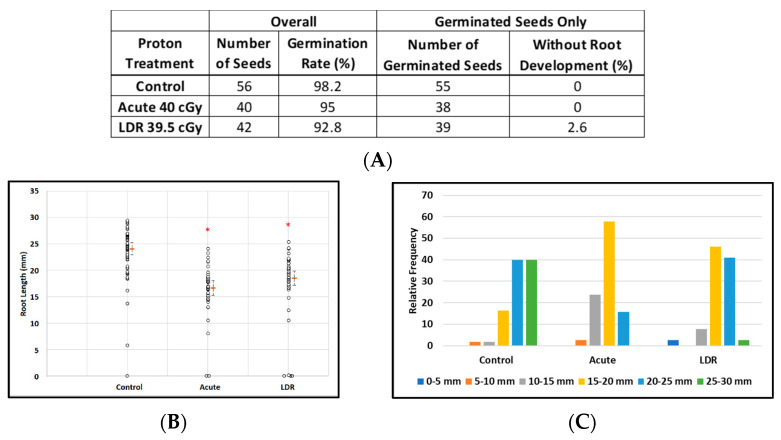
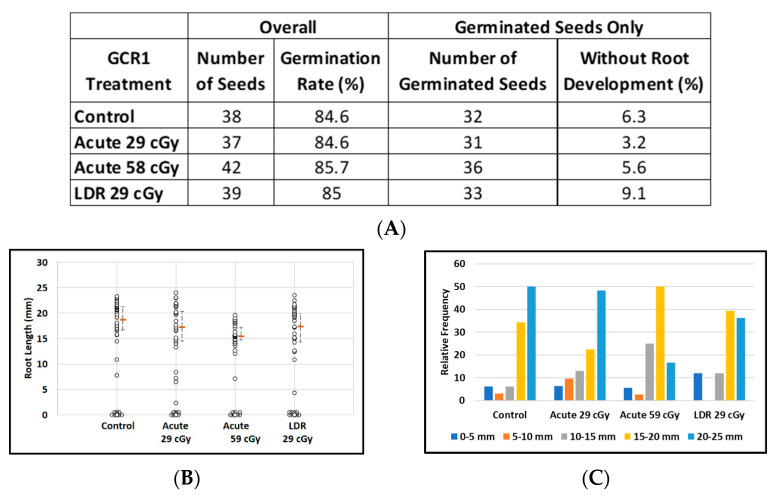
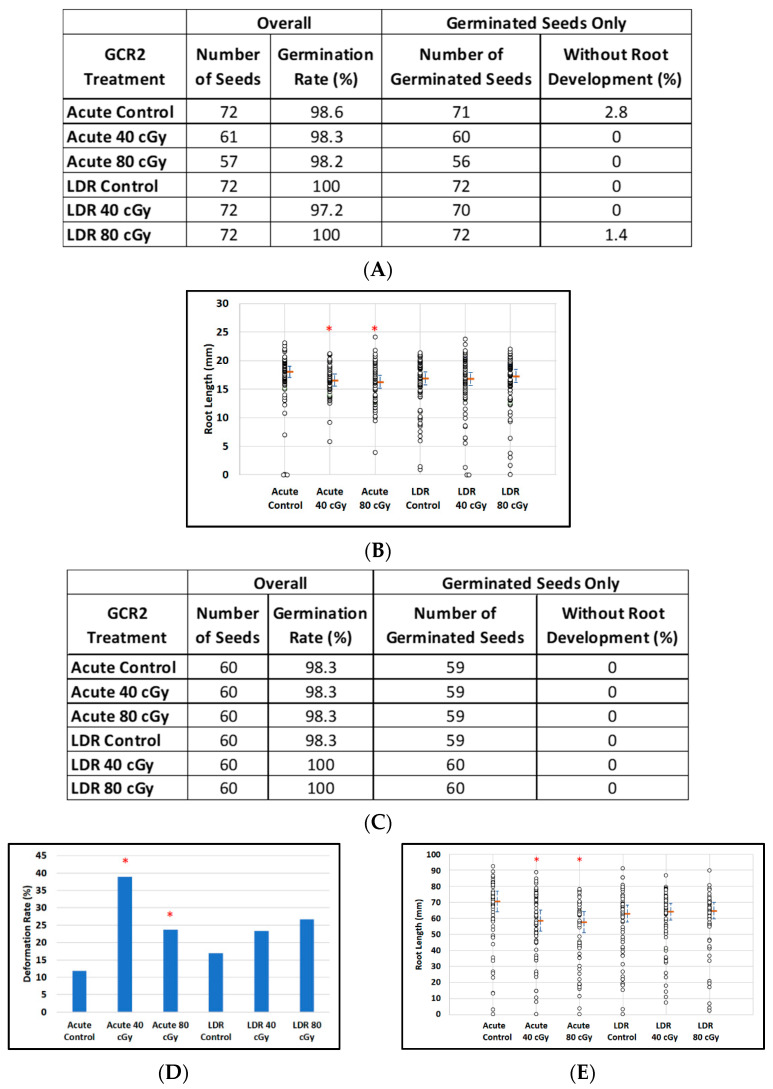
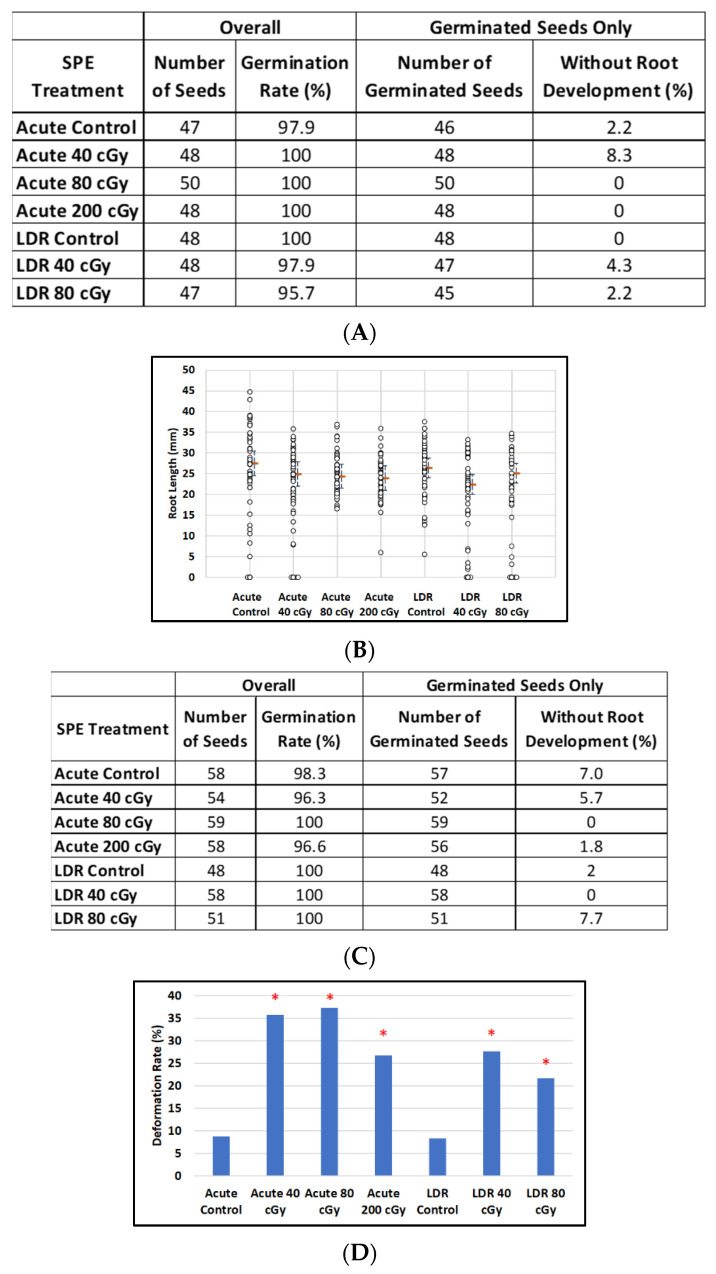
One of the major concerns for long-term exploration missions beyond the Earth's magnetosphere is consequences from exposures to solar particle event (SPE) protons and galactic cosmic rays (GCR). For long-term crewed Lunar and Mars explorations, the production of fresh food in space will provide both nutritional supplements and psychological benefits to the astronauts. However, the effects of space radiation on plants and plant propagules have not been sufficiently investigated and characterized. In this study, we evaluated the effect of two different compositions of charged particles-simulated GCR, and simulated SPE protons on dry and hydrated seeds of the model plant and the crop plant Mizuna mustard []. Exposures to charged particles, simulated GCRs (up to 80 cGy) or SPEs (up to 200 cGy), were performed either acutely or at a low dose rate using the NASA Space Radiation Laboratory (NSRL) facility at Brookhaven National Lab (BNL). Control and irradiated seeds were planted in a solid phytogel and grown in a controlled environment. Five to seven days after planting, morphological parameters were measured to evaluate radiation-induced damage in the seedlings. After exposure to single types of charged particles, as well as to simulated GCR, the hydrated seeds showed dose- and quality-dependent responses, with heavier ions causing more severe defects. Seeds exposed to simulated GCR (dry seeds) and SPE (hydrated seeds) had significant, although much less damage than seeds exposed to heavier and higher linear energy transfer (LET) particles. In general, the extent of damage depends on the seed type.
长期探索地球磁层以外的任务面临的一个主要问题是暴露于太阳粒子事件(SPE)质子和银河宇宙射线(GCR)所带来的后果。对于长期载人月球和火星探索任务而言,在太空中生产新鲜食物将为宇航员提供营养补充并带来心理上的益处。然而,太空辐射对植物及其繁殖体的影响尚未得到充分研究和描述。在本研究中,我们评估了两种不同成分的带电粒子——模拟GCR和模拟SPE质子,对模式植物和作物水菜薹的干燥种子和水合种子的影响。使用布鲁克海文国家实验室(BNL)的美国国家航空航天局空间辐射实验室(NSRL)设施,对带电粒子、模拟GCR(最高80 cGy)或SPE(最高200 cGy)进行急性或低剂量率照射。将对照种子和辐照种子种植在固体植物凝胶中,并在可控环境中生长。种植后五到七天,测量形态参数以评估幼苗中的辐射诱导损伤。暴露于单一类型的带电粒子以及模拟GCR后,水合种子表现出剂量和质量依赖性反应,较重的离子会导致更严重的缺陷。暴露于模拟GCR(干燥种子)和SPE(水合种子)的种子有显著损伤,尽管比暴露于更重且线性能量转移(LET)更高的粒子的种子损伤要小得多。一般来说,损伤程度取决于种子类型。