Galun Danijel, Mijac Dragana, Filipovic Aleksandar, Bogdanovic Aleksandar, Zivanovic Marko, Masulovic Dragan
School of Medicine, University of Belgrade, 11000 Belgrade, Serbia.
HPB Unit, Clinic for Digestive Surgery, University Clinical Center of Serbia, 11000 Belgrade, Serbia.
J Pers Med. 2022 Jan 24;12(2):149. doi: 10.3390/jpm12020149.
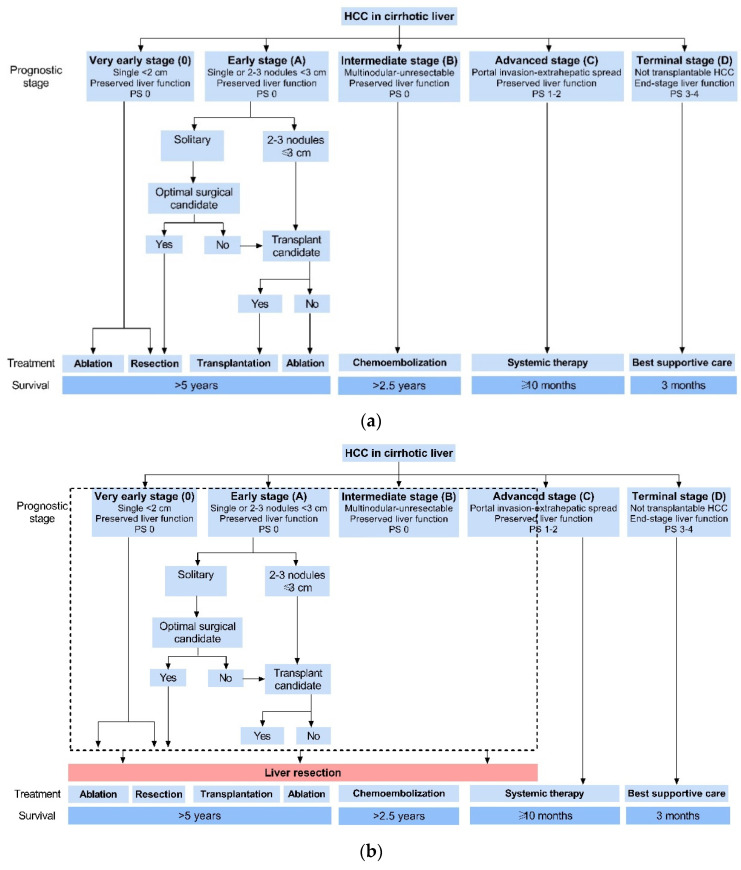
Hepatocellular carcinoma (HCC) is one of the major malignant diseases worldwide, characterized by growing incidence and high mortality rates despite apparent improvements in surveillance programs, diagnostic and treatment procedures, molecular therapies, and numerous research initiatives. Most HCCs occur in patients with liver cirrhosis, and the competing mortality risks from the tumor and the cirrhosis should be considered. Presently, previously identified risk factors, such as hepatitis virus infection, hepatic inflammation and fibrosis, and metabolic syndrome, may be used as chemoprevention targets. The application of precision medicine for HCC management challenges the one-size-fits-all concept; moreover, patients should no longer be treated entirely according to the histology of their tumor but based on molecular targets specific to their tumor biology. Next-generation sequencing emphasizes HCC molecular heterogeneity and aids our comprehension of possible vulnerabilities that can be exploited. Moreover, genetic sequencing as part of a precision medicine concept may work as a promising tool for postoperative cancer monitoring. The use of genetic and epigenetic markers to identify therapeutic vulnerability could change the diagnosis and treatment of HCC, which so far was based on Barcelona clinic liver cancer (BCLC) staging. In daily clinical practice, the shift from a stage-oriented to a therapeutic-oriented approach is needed to direct the choice of HCC treatment toward the potentially most effective option on an individual basis. The important factor in precision medicine is the promotion of patient management based on the individual approach, knowing that the final decision must be approved by a multidisciplinary expert team.
肝细胞癌(HCC)是全球主要的恶性疾病之一,其特点是尽管在监测计划、诊断和治疗程序、分子疗法以及众多研究举措方面有明显改善,但发病率仍在上升且死亡率很高。大多数肝细胞癌发生在肝硬化患者中,应考虑肿瘤和肝硬化带来的相互竞争的死亡风险。目前,先前确定的风险因素,如肝炎病毒感染、肝脏炎症和纤维化以及代谢综合征,可作为化学预防靶点。精准医学在肝细胞癌管理中的应用挑战了一刀切的概念;此外,患者不应再完全根据肿瘤的组织学进行治疗,而应基于其肿瘤生物学特有的分子靶点。下一代测序强调了肝细胞癌的分子异质性,并有助于我们理解可以利用的潜在弱点。此外,作为精准医学概念一部分的基因测序可能成为术后癌症监测的一种有前景的工具。使用基因和表观遗传标记来识别治疗弱点可能会改变肝细胞癌的诊断和治疗,迄今为止肝细胞癌的诊断和治疗是基于巴塞罗那临床肝癌(BCLC)分期。在日常临床实践中,需要从以阶段为导向的方法转向以治疗为导向的方法,以便根据个体情况将肝细胞癌治疗的选择导向潜在最有效的选项。精准医学的重要因素是基于个体化方法促进患者管理,要知道最终决定必须得到多学科专家团队的批准。