Maruyama Tetsuo
Department of Obstetrics and Gynecology, Keio University School of Medicine, Tokyo 160-8582, Japan.
J Pers Med. 2022 Feb 4;12(2):216. doi: 10.3390/jpm12020216.
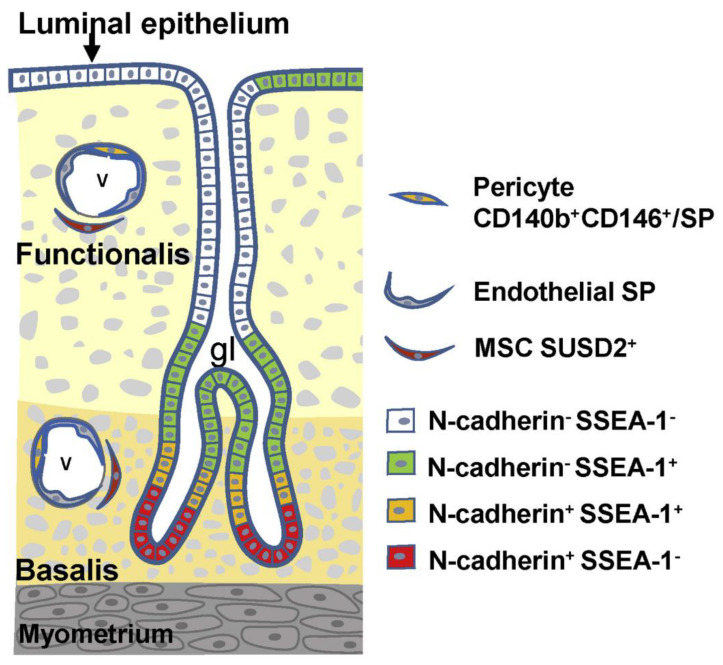
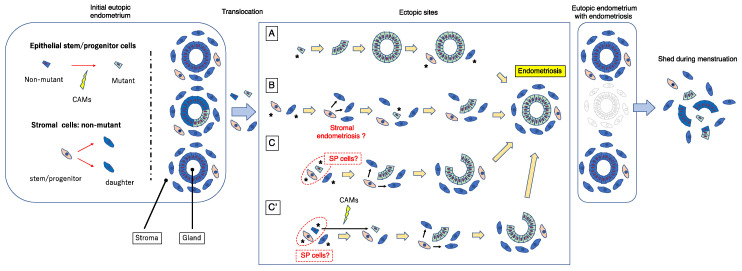
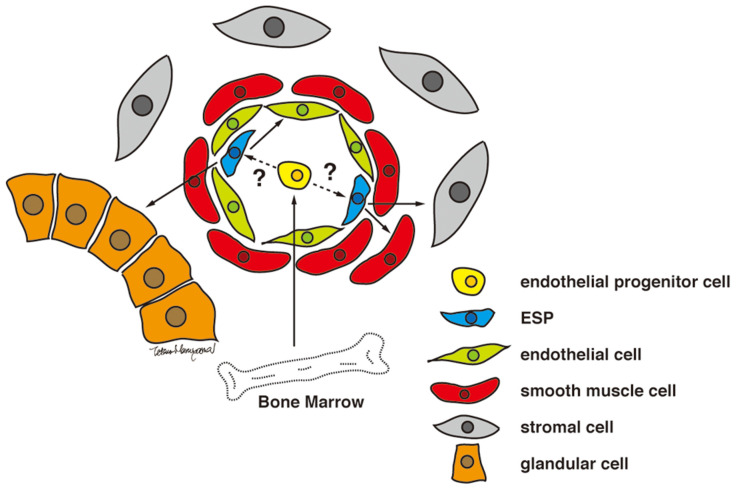
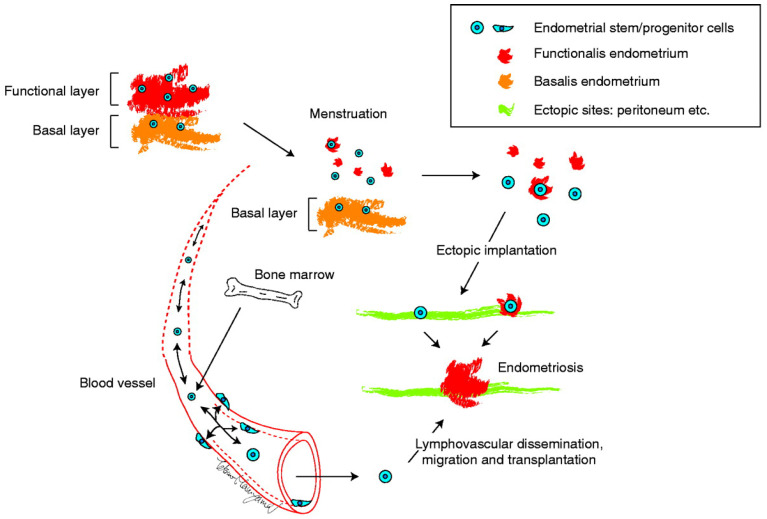
During the past decade, a stem cell-based hypothesis has emerged (among many others) to explain the pathogenesis of endometriosis. The initial hypothesis proposed that endometriosis arose from a single or a few specific cells with stem cell properties, including self-renewal and multi-lineage cell differentiation. The origins of the endometriosis-initiating stem cells were thought to be the bone marrow, uterine endometrium, and other tissues. Based on the implantation or metastatic theory in combination with the initial stem cell theory, one or a few multipotent stem/progenitor cells present in the eutopic endometrium or bone marrow translocate to ectopic sites via fallopian tubes during menstruation, vasculolymphatic routes, or through direct migration and invasion. Subsequently, they give rise to endometriotic lesions followed by differentiation into various cell components of endometriosis, including glandular and stromal cells. Recent somatic mutation analyses of deep infiltrating endometriosis, endometrioma, and eutopic normal endometrium using next-generation sequencing techniques have redefined the stem cell theory. It is now proposed that stem/progenitor cells of at least two different origins-epithelium and stroma-sequentially, differentially, but coordinately contribute to the genesis of endometriosis. The dual stem cell theory on how two (or more) stem/progenitor cells differentially and coordinately participate in the establishment of endometriotic lesions remains to be elucidated. Furthermore, the stem/progenitor cells involved in this theory also remain to be identified. Given that the origin of endometriosis is eutopic endometrium, the candidate cells for endometriotic epithelium-initiating cells are likely to be endometrial epithelial cells positive for either N-cadherin or SSEA-1 or both. The candidate cells for endometriotic stroma-initiating cells may be endometrial mesenchymal stem cells positive for SUSD2. Endometrial side population cells are also a possible candidate because they contain unipotent or multipotent cells capable of behaving as endometrial epithelial and stromal stem/progenitor cells.
在过去十年间,(众多假说中)出现了一种基于干细胞的假说来解释子宫内膜异位症的发病机制。最初的假说提出,子宫内膜异位症起源于单个或少数具有干细胞特性的特定细胞,这些特性包括自我更新和多谱系细胞分化。人们认为子宫内膜异位症起始干细胞的来源是骨髓、子宫内膜及其他组织。基于植入或转移理论并结合最初的干细胞理论,在位子宫内膜或骨髓中存在的一个或少数多能干细胞/祖细胞在月经期间通过输卵管、血管淋巴管途径或直接迁移与侵袭转移至异位部位。随后,它们形成子宫内膜异位症病灶,接着分化为子宫内膜异位症的各种细胞成分,包括腺细胞和基质细胞。最近,利用新一代测序技术对深部浸润性子宫内膜异位症、卵巢巧克力囊肿和在位正常子宫内膜进行的体细胞突变分析重新定义了干细胞理论。现在有人提出,至少两种不同来源(上皮和基质)的干细胞/祖细胞依次、差异但协同地促成了子宫内膜异位症的发生。关于两种(或更多)干细胞/祖细胞如何差异且协同参与子宫内膜异位症病灶形成的双干细胞理论仍有待阐明。此外,该理论中涉及的干细胞/祖细胞也有待确定。鉴于子宫内膜异位症的起源是在位子宫内膜,子宫内膜异位症上皮起始细胞的候选细胞可能是N-钙黏蛋白或阶段特异性胚胎抗原-1(SSEA-1)阳性或两者均阳性的子宫内膜上皮细胞。子宫内膜异位症基质起始细胞的候选细胞可能是SUSD2阳性的子宫内膜间充质干细胞。子宫内膜侧群细胞也是一个可能的候选者,因为它们含有能够表现为子宫内膜上皮和基质干细胞/祖细胞的单能或多能细胞。