Department of Immunology, Graduate School of Medicine, Chiba University, Chuo-ku, Chiba 260-8670, Japan.
Division of Biology and Biological Engineering, California Institute of Technology, Pasadena, CA 91125.
Proc Natl Acad Sci U S A. 2022 Mar 1;119(9). doi: 10.1073/pnas.2108686119.
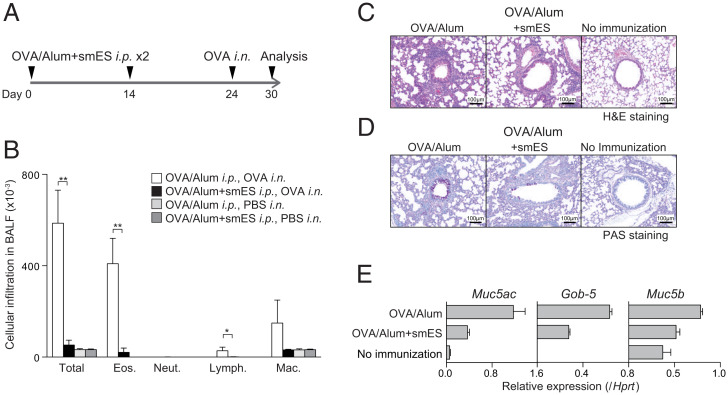
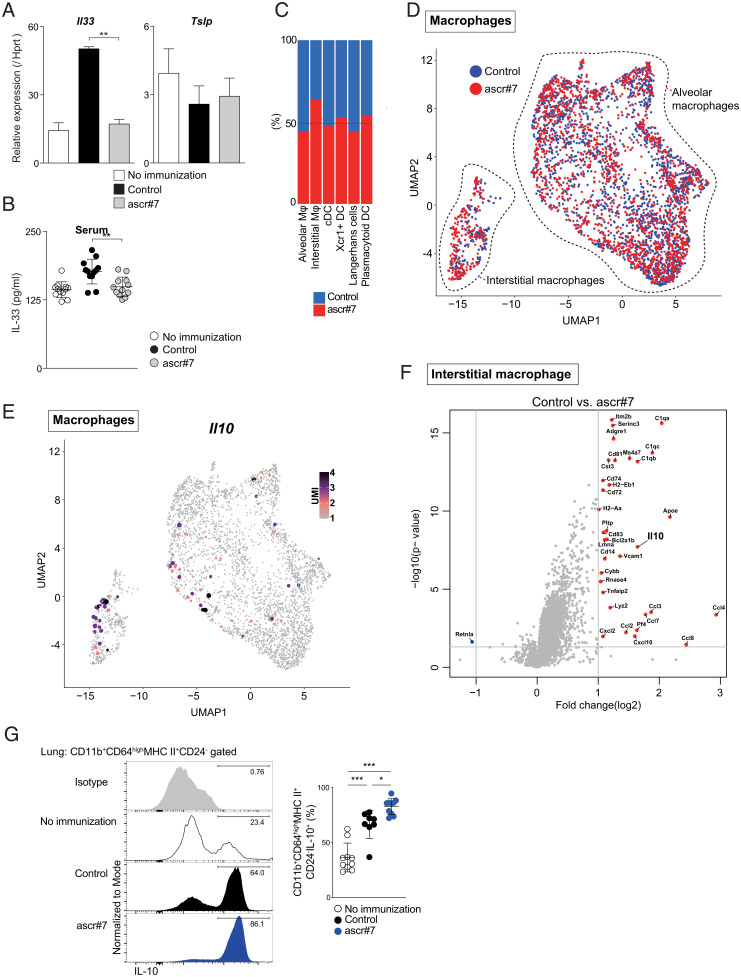
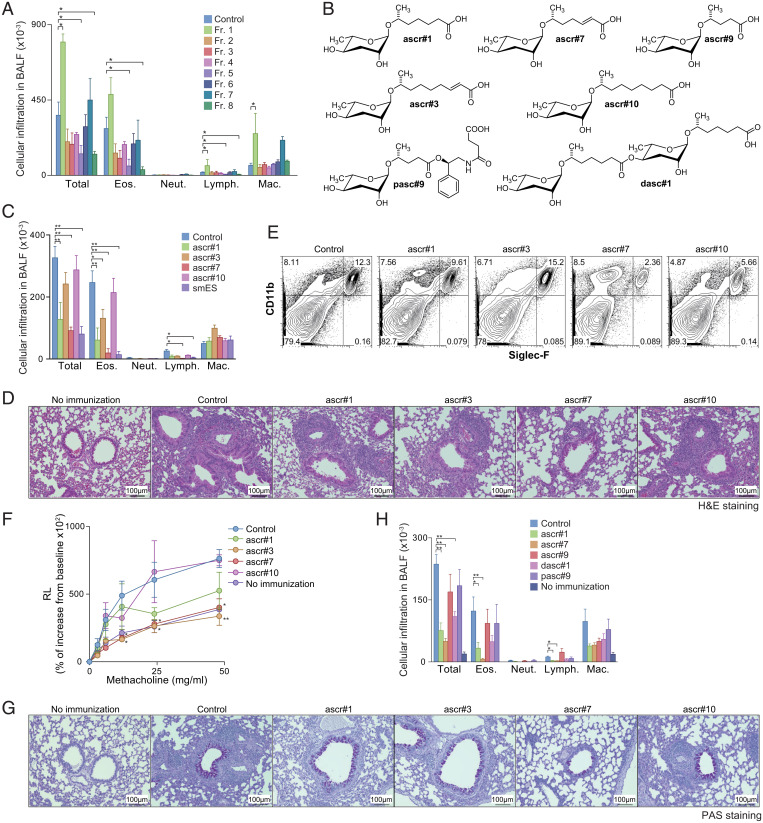
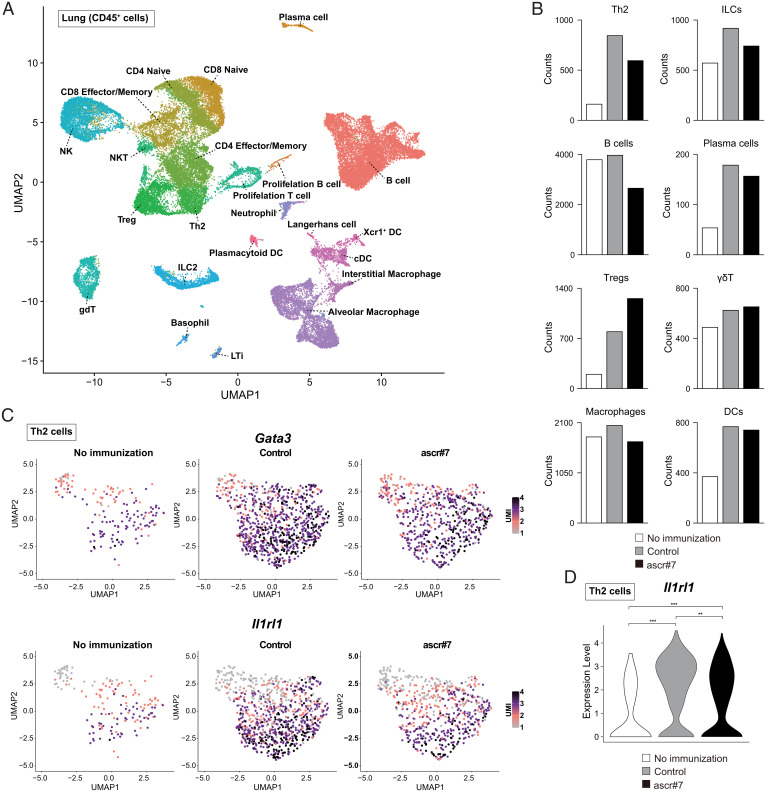
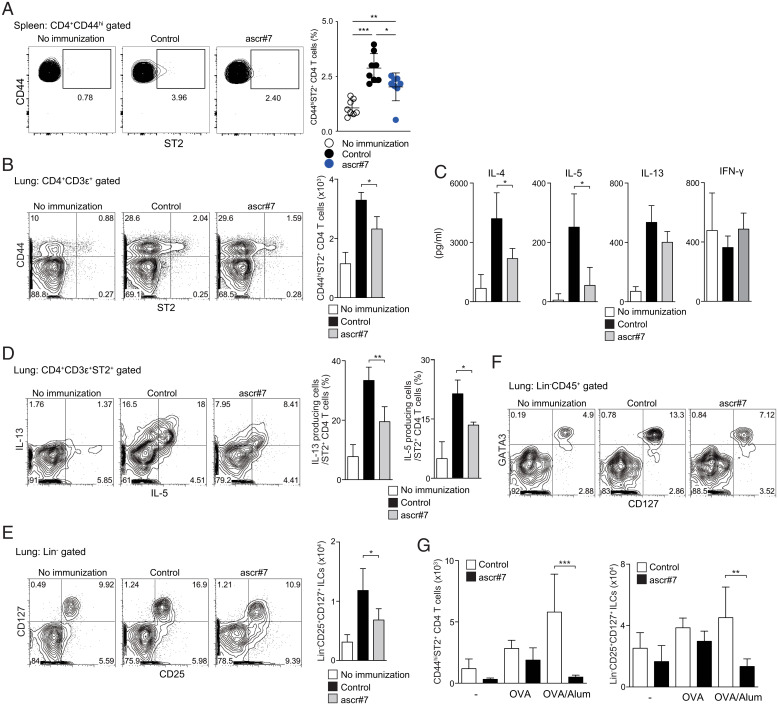
Mounting evidence suggests that nematode infection can protect against disorders of immune dysregulation. Administration of live parasites or their excretory/secretory (ES) products has shown therapeutic effects across a wide range of animal models for immune disorders, including asthma. Human clinical trials of live parasite ingestion for the treatment of immune disorders have produced promising results, yet concerns persist regarding the ingestion of pathogenic organisms and the immunogenicity of protein components. Despite extensive efforts to define the active components of ES products, no small molecules with immune regulatory activity have been identified from nematodes. Here we show that an evolutionarily conserved family of nematode pheromones called ascarosides strongly modulates the pulmonary immune response and reduces asthma severity in mice. Screening the inhibitory effects of ascarosides produced by animal-parasitic nematodes on the development of asthma in an ovalbumin (OVA) murine model, we found that administration of nanogram quantities of ascr#7 prevented the development of lung eosinophilia, goblet cell metaplasia, and airway hyperreactivity. Ascr#7 suppressed the production of IL-33 from lung epithelial cells and reduced the number of memory-type pathogenic Th2 cells and ILC2s in the lung, both key drivers of the pathology of asthma. Our findings suggest that the mammalian immune system recognizes ascarosides as an evolutionarily conserved molecular signature of parasitic nematodes. The identification of a nematode-produced small molecule underlying the well-documented immunomodulatory effects of ES products may enable the development of treatment strategies for allergic diseases.
越来越多的证据表明,线虫感染可以预防免疫失调紊乱。在哮喘等多种免疫紊乱动物模型中,寄生虫或其排泄/分泌产物(ES 产物)的治疗效果已经得到了证明。活寄生虫摄入治疗免疫紊乱的人体临床试验取得了可喜的结果,但人们仍然担心摄入病原体和蛋白质成分的免疫原性。尽管人们已经做出了广泛的努力来定义 ES 产物的活性成分,但从线虫中尚未发现具有免疫调节活性的小分子。在这里,我们发现一类名为ascarosides 的进化上保守的线虫信息素强烈调节肺部免疫反应,并降低哮喘小鼠的严重程度。在卵清蛋白 (OVA) 小鼠模型中筛选动物寄生线虫产生的 ascarosides 对哮喘发展的抑制作用,我们发现纳克数量的 ascr#7 可预防肺部嗜酸性粒细胞增多、杯状细胞化生和气道高反应性的发生。Ascr#7 抑制肺上皮细胞中 IL-33 的产生,并减少肺部记忆型致病性 Th2 细胞和 ILC2 的数量,这两者都是哮喘病理的关键驱动因素。我们的研究结果表明,哺乳动物免疫系统将 ascarosides 识别为寄生线虫的进化上保守的分子特征。鉴定出一种线虫产生的小分子,其具有 ES 产物的有充分记录的免疫调节作用,可能为过敏性疾病的治疗策略的发展提供可能。