Yao Yangyang, Liu Zhen, Huang Shanshan, Huang Chunye, Cao Yuan, Li Li, Guo Hui, Liu Fenfen, Huang Shipeng, Liao Quan, He Xin, Chen Jun, Li Junhe, Xiang Xiaojun, Xiong Jianping, Deng Jun
Department of Oncology, First Affiliated Hospital of Nanchang University, Nanchang, Jiangxi Province, 330006, China.
Jiangxi Provincial People's Hospital, Nanchang, Jiangxi Province, 330006, China.
Cell Death Discov. 2022 Feb 24;8(1):79. doi: 10.1038/s41420-022-00868-y.
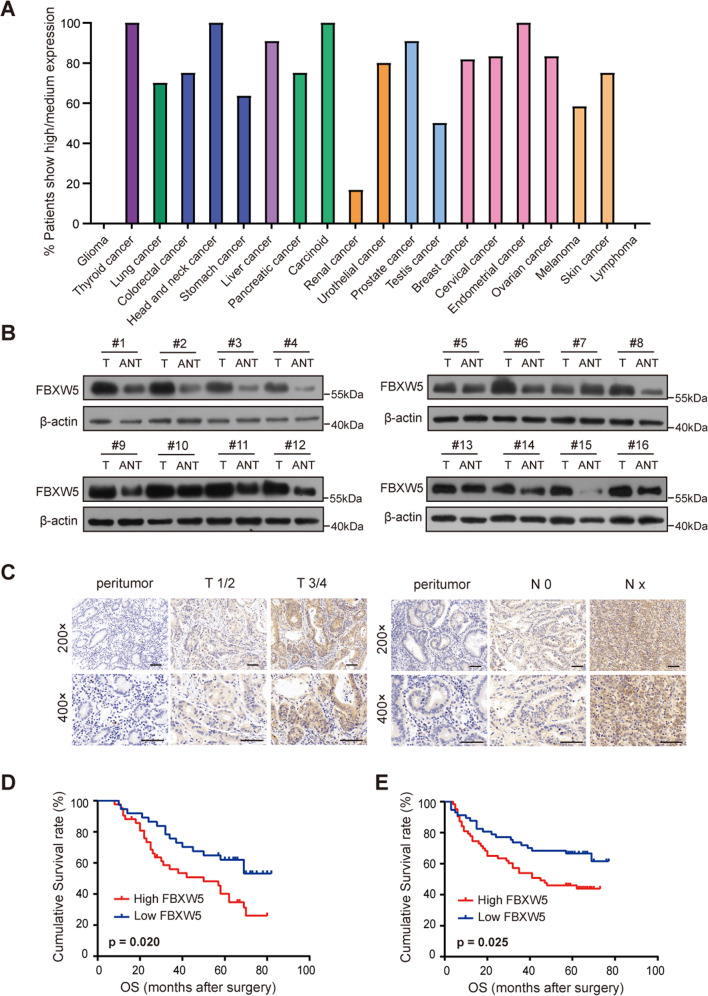
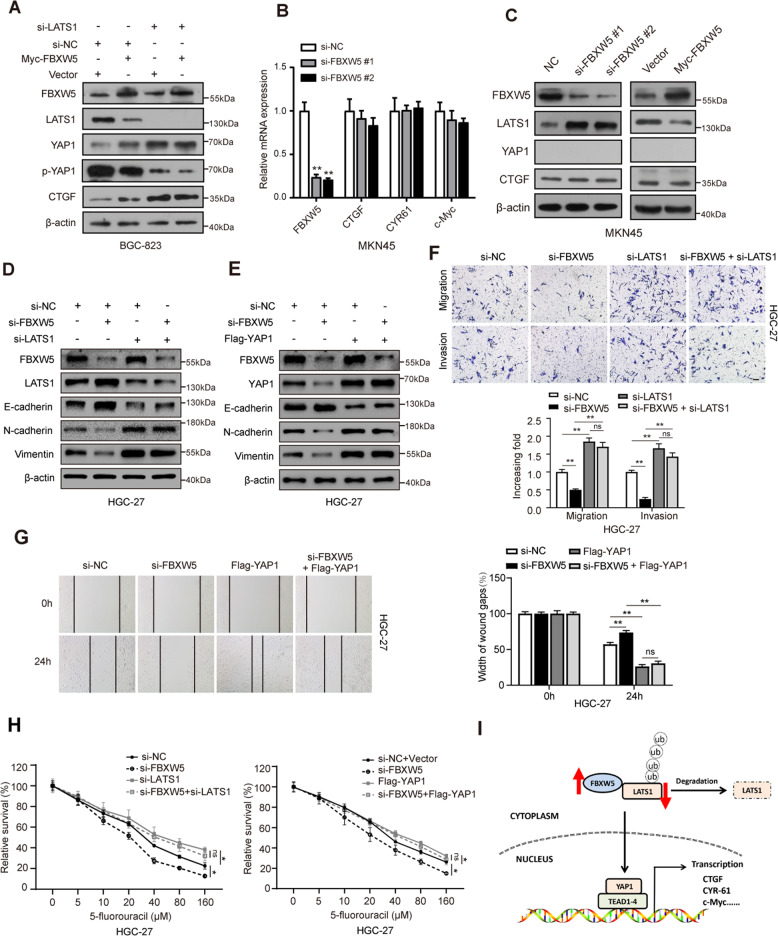
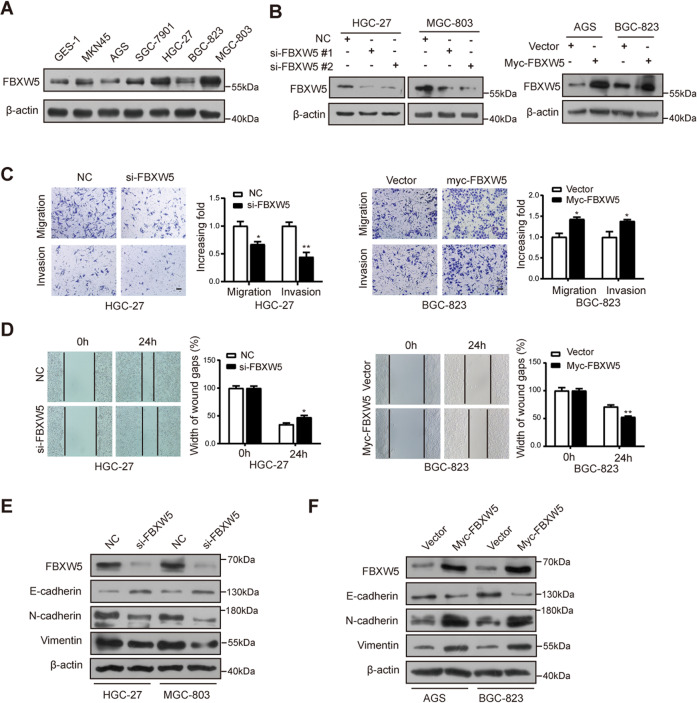
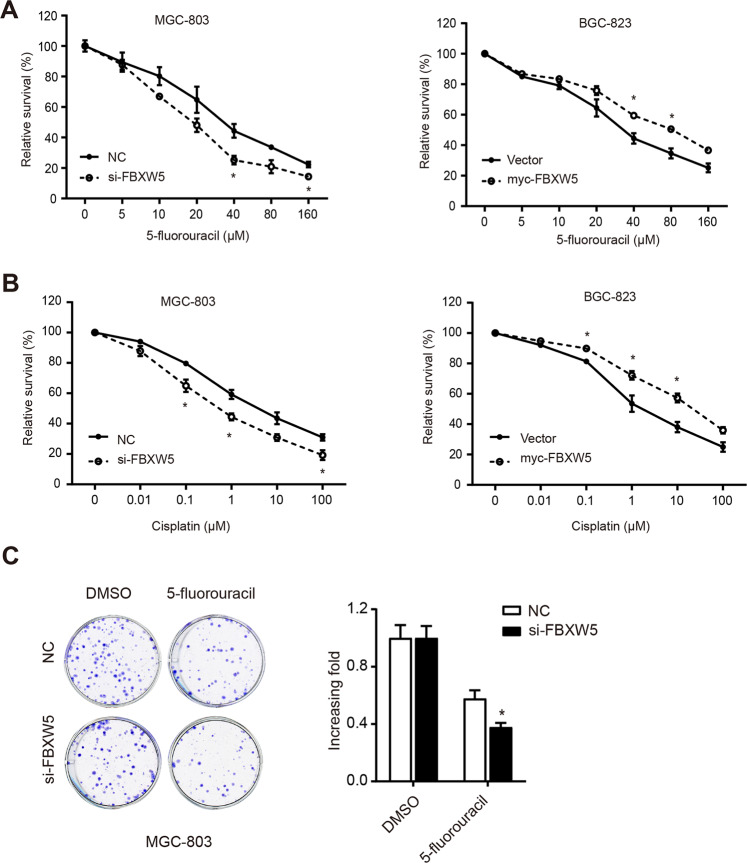
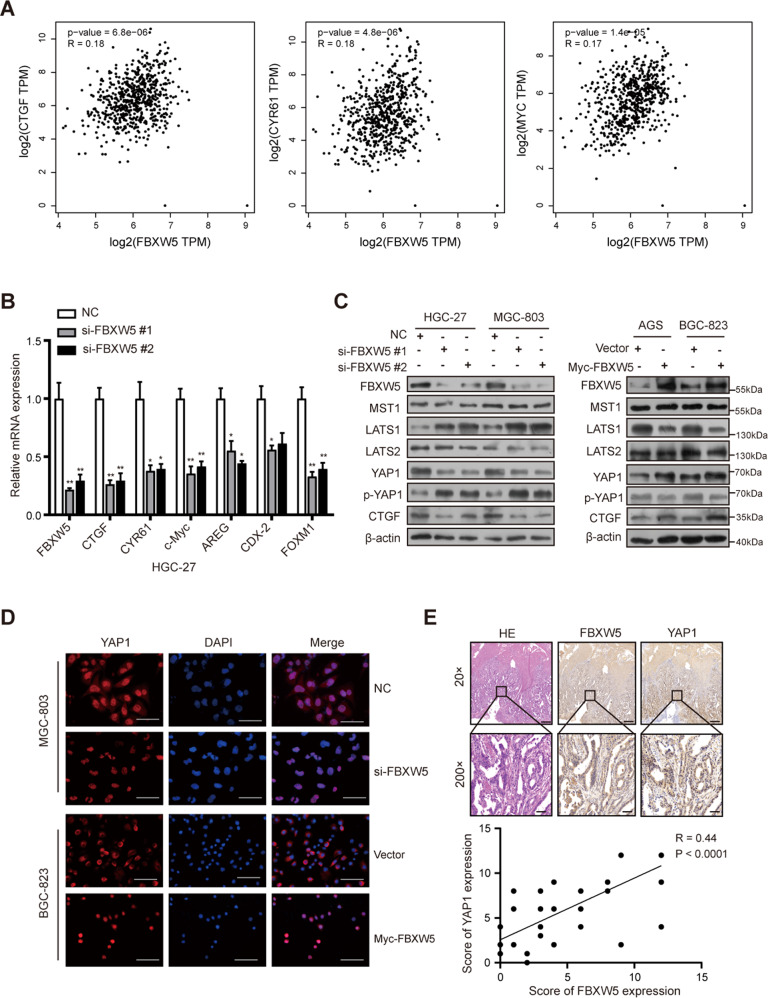
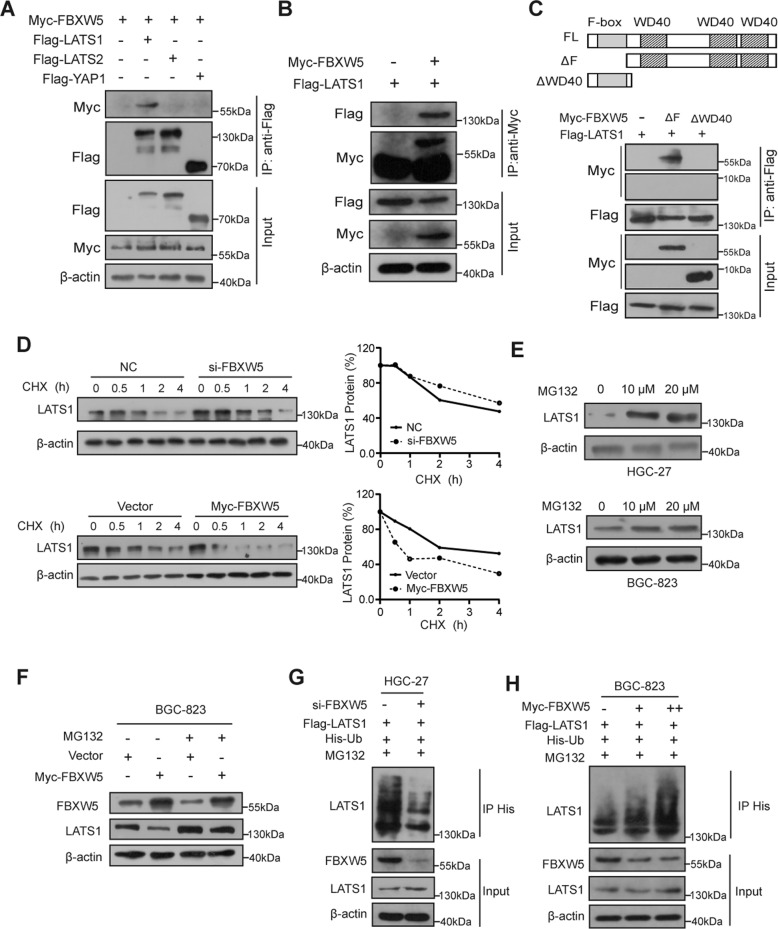
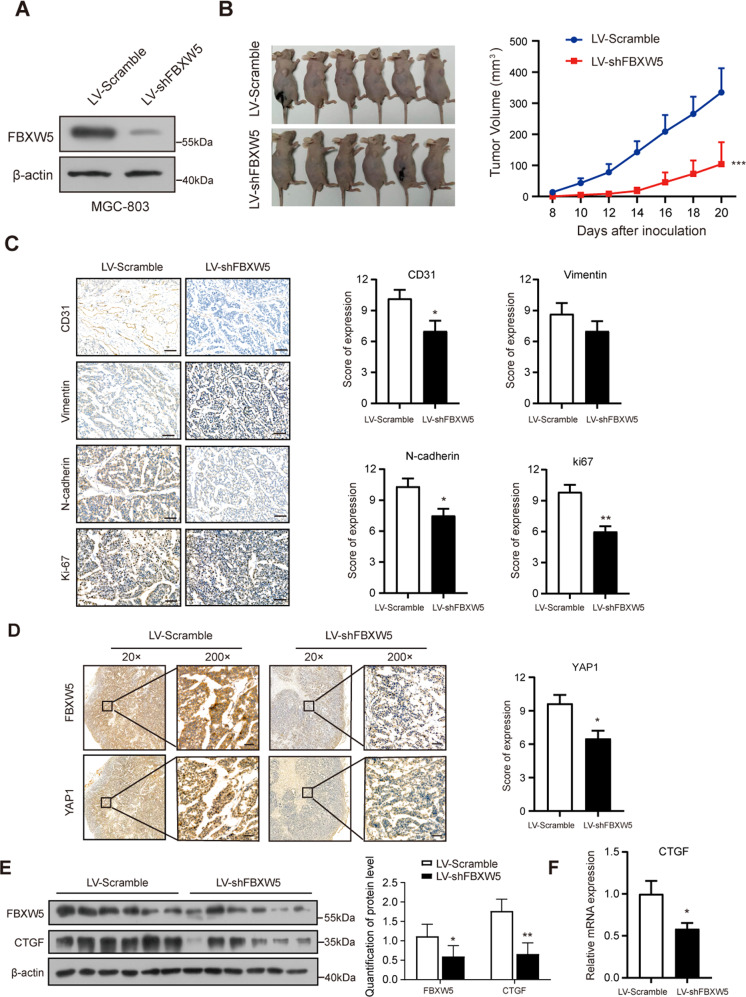
F-box and WD repeat domain-containing 5 (FBXW5), with WD40 repeats, can bind to the PPxY sequence of the large tumor suppressor kinases 1/2 (LATS1/2) kinase domain, resulting in ubiquitination. Ubiquitination and the subsequent degradation of LATS1/2 abrogate the Hippo pathway and worsen gastric cancer (GC). However, the effects and molecular mechanisms of FBXW5 in GC remain unexplored. To elucidate the clinical significance of FBXW5, immunohistochemistry was conducted to reveal the positive correlation between FBXW5 expression and lymph node metastasis (p < 0.001) and TNM stage (training cohort: p = 0.018; validation cohort: p = 0.001). Further, patients with high FBXW5 expression were found to have poor prognosis (training cohort: log-rank p = 0.020; validation cohort: log-rank p = 0.025). Cell experiments revealed the promoting effects of FBXW5 on the proliferation, invasion, metastasis, and chemoresistance of GC cells. Blocking LATS1-YAP1 leads to the loss of FBXW5-mediated regulation of the Hippo pathway and partial functions. Further, co-immunoprecipitation and in vivo ubiquitination assays revealed the interaction between FBXW5 and LATS1, which promoted the ubiquitination and degradation of LATS1. Based on mouse xenograft assays, FBXW5 silencing attenuated the growth of subcutaneous tumor xenografts. Altogether, FBXW5 was found to inactivate the Hippo signaling pathway by enhancing LATS1 ubiquitination and degradation, which promoted the invasion, metastasis, and drug resistance of GC cells.
含F-box和WD重复结构域5(FBXW5)具有WD40重复序列,可与大肿瘤抑制激酶1/2(LATS1/2)激酶结构域的PPxY序列结合,导致泛素化。LATS1/2的泛素化及随后的降解会废除Hippo通路并使胃癌(GC)恶化。然而,FBXW5在GC中的作用和分子机制仍未被探索。为阐明FBXW5的临床意义,进行了免疫组织化学检测,结果显示FBXW5表达与淋巴结转移(p<0.001)和TNM分期(训练队列:p = 0.018;验证队列:p = 0.001)呈正相关。此外,发现FBXW5高表达的患者预后较差(训练队列:对数秩检验p = 0.020;验证队列:对数秩检验p = 0.025)。细胞实验揭示了FBXW5对GC细胞增殖、侵袭、转移和化疗耐药性的促进作用。阻断LATS1 - YAP1会导致FBXW5介导的Hippo通路调节及部分功能丧失。此外,免疫共沉淀和体内泛素化分析揭示了FBXW5与LATS1之间的相互作用,这促进了LATS1的泛素化和降解。基于小鼠异种移植实验,FBXW5沉默减弱了皮下肿瘤异种移植的生长。总之,发现FBXW5通过增强LATS1泛素化和降解使Hippo信号通路失活,从而促进了GC细胞的侵袭、转移和耐药性。