Department of Physiology and Cell Biology, University of Arkansas for Medical Sciences, Little Rock, AR, USA.
Center for Musculoskeletal Disease Research, University of Arkansas for Medical Sciences, Little Rock, AR, USA.
Sci Rep. 2022 Feb 24;12(1):3134. doi: 10.1038/s41598-022-07157-9.
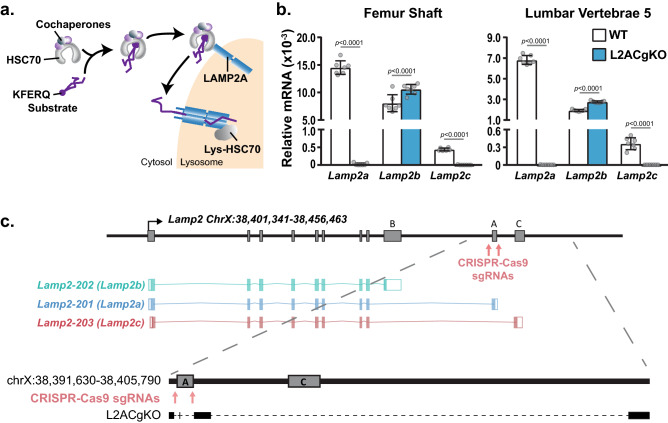
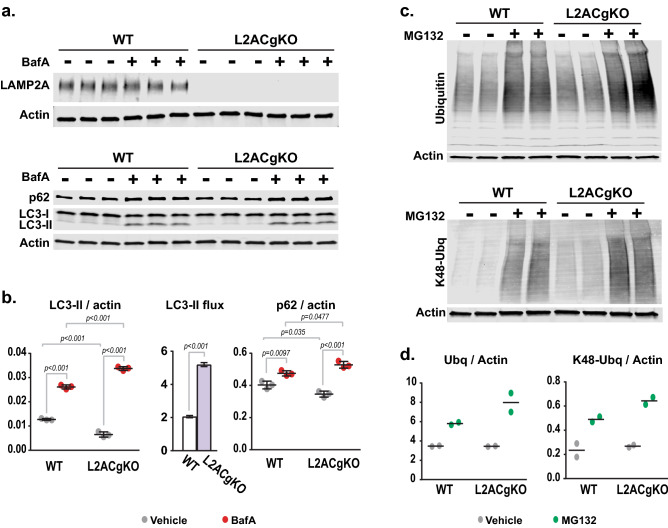
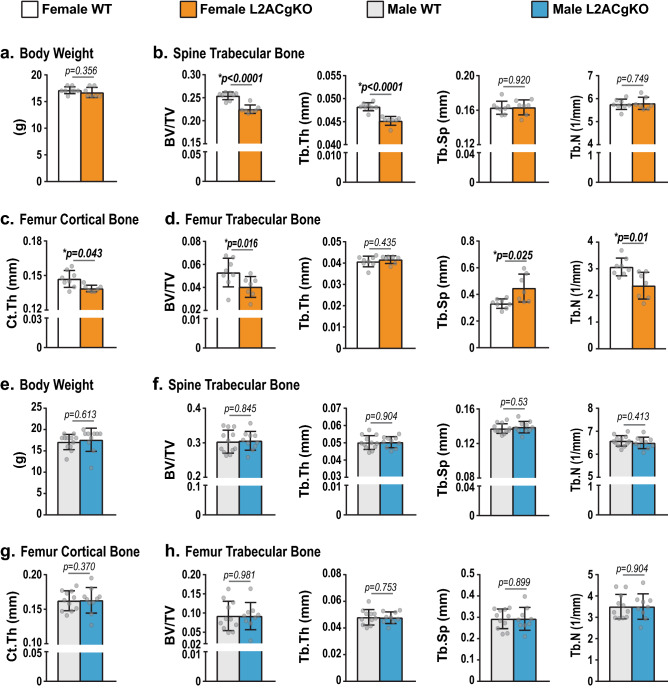
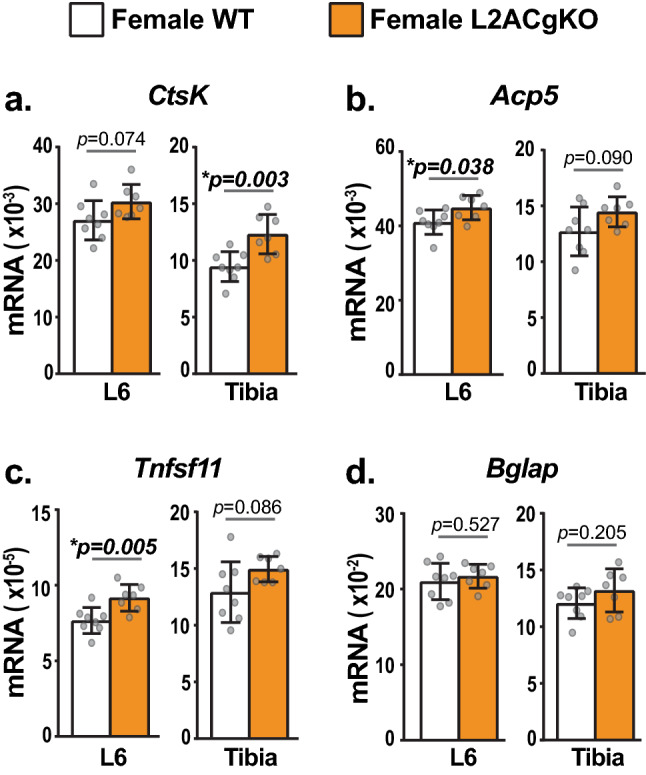
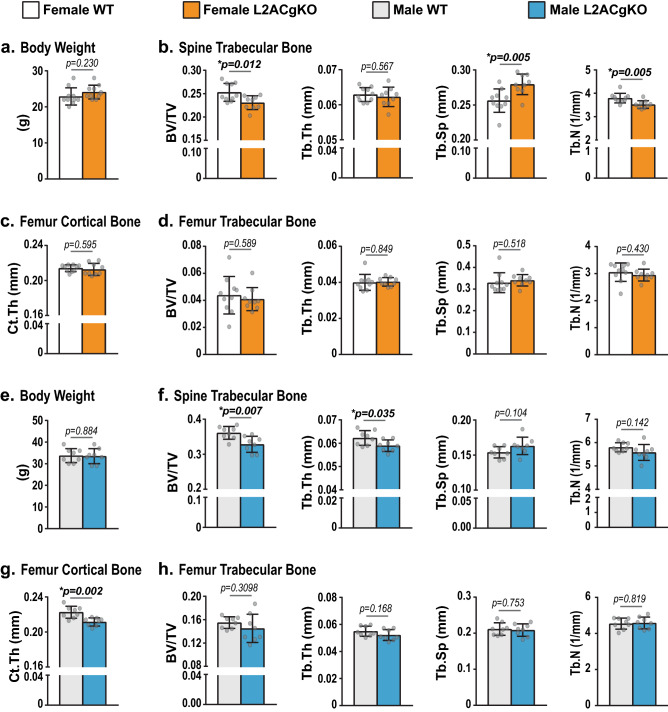
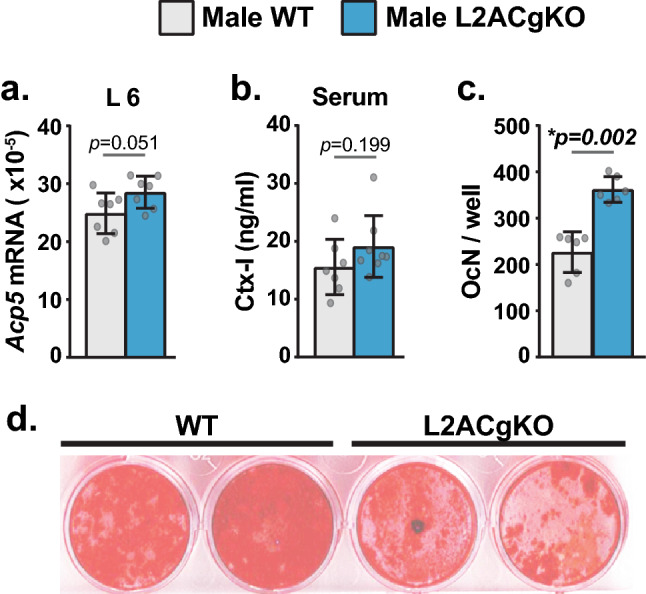
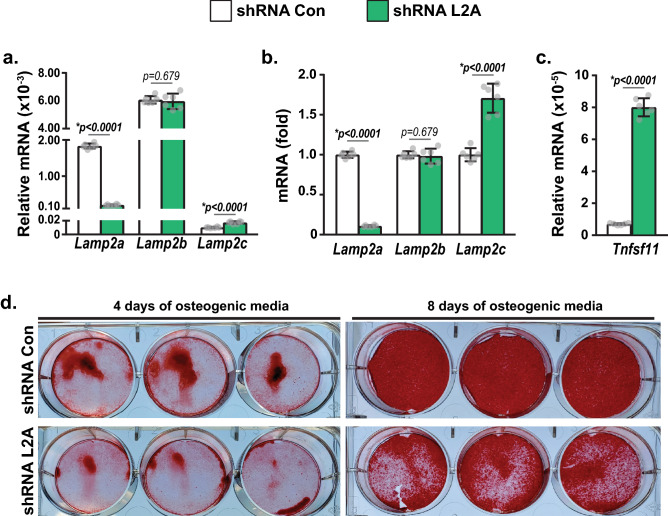
Chaperone-mediated autophagy (CMA) is a protein degradation pathway that eliminates soluble cytoplasmic proteins that are damaged, incorrectly folded, or targeted for selective proteome remodeling. However, the role of CMA in skeletal homeostasis under physiological and pathophysiological conditions is unknown. To address the role of CMA for skeletal homeostasis, we deleted an essential component of the CMA process, namely Lamp2a, from the mouse genome. CRISPR-Cas9-based genome editing led to the deletion of both Lamp2a and Lamp2c, another Lamp2 isoform, producing Lamp2AC global knockout (L2ACgKO) mice. At 5 weeks of age female L2ACgKO mice had lower vertebral cancellous bone mass compared to wild-type (WT) controls, whereas there was no difference between genotypes in male mice at this age. The low bone mass of L2ACgKO mice was associated with elevated RANKL expression and the osteoclast marker genes Trap and Cathepsin K. At 18 weeks of age, both male and female L2ACgKO mice had lower vertebral cancellous bone mass compared to WT controls. The low bone mass of L2ACgKO mice was associated with increased osteoclastogenesis and decreased mineral deposition in cultured cells. Consistent with these findings, specific knockdown of Lamp2a in an osteoblastic cell line increased RANKL expression and decreased mineral deposition. Moreover, similar to what has been observed in other cell types, macroautophagy and proteasomal degradation were upregulated in CMA-deficient osteoblasts in culture. Thus, an increase in other protein degradation pathways may partially compensate for the loss of CMA in osteoblasts. Taken together, our results suggest that CMA plays a role in vertebral cancellous bone mass accrual in young adult mice and that this may be due to an inhibitory role of CMA on osteoclastogenesis or a positive role of CMA in osteoblast formation or function.
伴侣蛋白介导的自噬(CMA)是一种蛋白质降解途径,可消除受损、错误折叠或靶向选择性蛋白质组重塑的可溶性细胞质蛋白。然而,在生理和病理生理条件下,CMA 在骨骼稳态中的作用尚不清楚。为了研究 CMA 对骨骼稳态的作用,我们从鼠基因组中敲除了 CMA 过程的一个必需成分,即 Lamp2a。基于 CRISPR-Cas9 的基因组编辑导致 Lamp2a 和另一种 Lamp2 同工型 Lamp2c 的缺失,产生 Lamp2AC 全局敲除(L2ACgKO)小鼠。在 5 周龄时,雌性 L2ACgKO 小鼠的椎骨松质骨量低于野生型(WT)对照,而在这个年龄的雄性小鼠中,两种基因型之间没有差异。L2ACgKO 小鼠的低骨量与 RANKL 表达升高和破骨细胞标记基因 Trap 和组织蛋白酶 K 有关。在 18 周龄时,雄性和雌性 L2ACgKO 小鼠的椎骨松质骨量均低于 WT 对照。L2ACgKO 小鼠的低骨量与培养细胞中破骨细胞生成增加和矿化减少有关。与这些发现一致,在成骨细胞系中特异性敲低 Lamp2a 会增加 RANKL 表达并减少矿化。此外,与在其他细胞类型中观察到的相似,培养中 CMA 缺陷的成骨细胞中巨自噬和蛋白酶体降解被上调。因此,其他蛋白质降解途径的增加可能部分补偿了成骨细胞中 CMA 的缺失。总之,我们的研究结果表明,CMA 在年轻成年小鼠的椎骨松质骨量积累中发挥作用,这可能是由于 CMA 对破骨细胞生成的抑制作用,或者 CMA 对成骨细胞形成或功能的积极作用。