Xue Qing, Yang Jinxin, Wang Huatian, Zhang Deyu
Shandong Youth University of Political Science, Jinan, People's Republic of China.
University of Jinan, Jinan, People's Republic of China.
Psychol Res Behav Manag. 2022 Feb 15;15:273-290. doi: 10.2147/PRBM.S344717. eCollection 2022.
College students' well-being is important for their self-growth and the whole society. However, we still know relatively little about how college students could proactively, strategically improve their well-being in the leisure context. Following the self-determination theory and proactivity literature, this study examines how and when leisure crafting (ie, a proactive act whereby individuals balance their leisure resources and demands by utilizing their personal abilities and needs) can enhance college students' well-being.
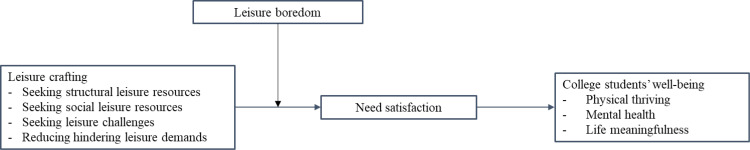
Conducting a quantitative weekly diary study of 80 Chinese students in an engineering college (320 observations), we drew a moderated mediation model.
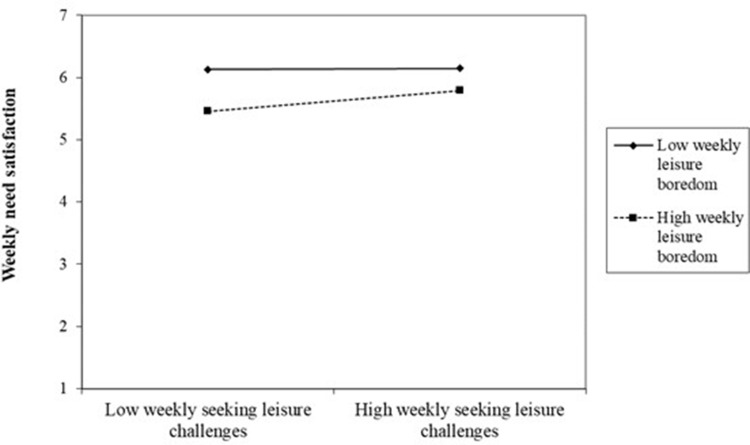
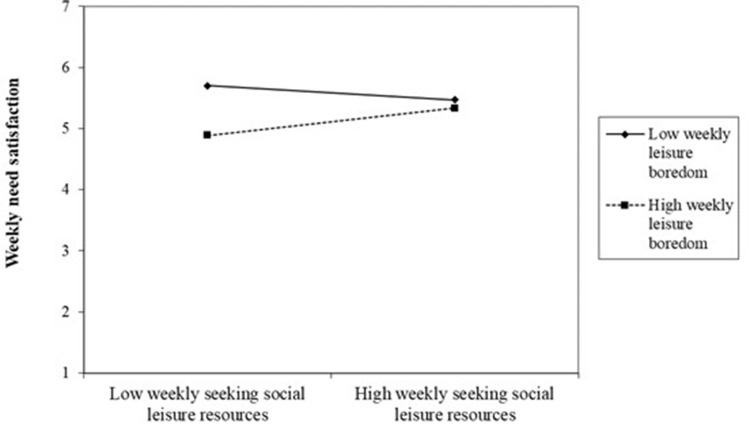
We found that weekly leisure crafting behaviors (ie, seeking structural leisure resources, seeking social leisure resources, seeking leisure challenges, and reducing hindering leisure demands) were positively related to weekly intrinsic need satisfaction (ie, need for competence, autonomy, and relatedness), then resulting in higher weekly subjective well-being (ie, physical thriving, mental health, and life meaningfulness). Moreover, this indirect effect was stronger for those who had a higher level of leisure boredom.
Our study contributes to student development and well-being literature by focusing on the students' leisure context and providing a means to enhance their well-being. We unfold how the leisure crafting strategy boosts college students' well-being via increasing their intrinsic need satisfaction. We also highlight the compensating role of leisure crafting when one is in an unfavorable personal state (eg, leisure boredom).
大学生的幸福感对其自身成长和整个社会都很重要。然而,我们对大学生如何在休闲情境中积极主动、策略性地提升幸福感仍知之甚少。基于自我决定理论和主动性相关文献,本研究探讨休闲手工制作(即个体通过利用自身能力和需求来平衡休闲资源与需求的一种主动行为)如何以及何时能够提升大学生的幸福感。
我们对一所工科院校的80名中国学生进行了每周一次的定量日记研究(共320次观察),构建了一个有调节的中介模型。
我们发现,每周的休闲手工制作行为(即寻求结构化休闲资源、寻求社交休闲资源、寻求休闲挑战以及减少阻碍性休闲需求)与每周的内在需求满足感(即能力需求、自主需求和关系需求)呈正相关,进而带来更高的每周主观幸福感(即身体活力、心理健康和生活意义感)。此外,对于那些休闲无聊程度较高的学生,这种间接效应更强。
我们的研究通过关注学生的休闲情境并提供提升其幸福感的方法,为学生发展和幸福感相关文献做出了贡献。我们揭示了休闲手工制作策略如何通过提高学生的内在需求满足感来提升其幸福感。我们还强调了在个人处于不利状态(如休闲无聊)时休闲手工制作的补偿作用。