Muhammad Siraj, Kalaa Mohamad Omar Al, Refai Hazem H
Center for Devices and Radiological Health, U.S. Food and Drug Administration, Silver Spring, MD 90145, USA.
Department of Electrical and Computer Engineering, The University of Oklahoma, Tulsa, OK 74135, USA.
IEEE Access. 2021;9:24604-24615. doi: 10.1109/access.2021.3056909. Epub 2021 Feb 11.
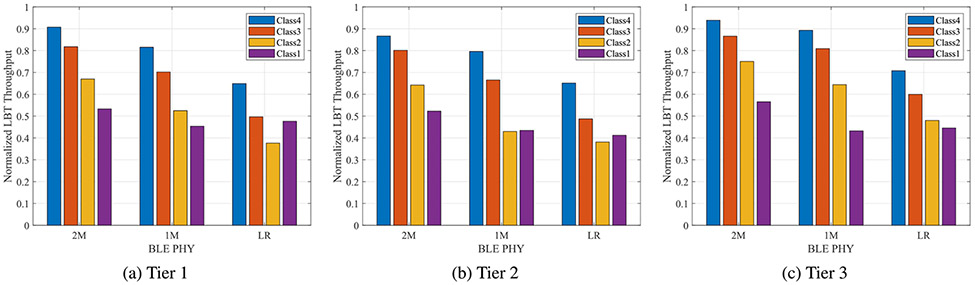
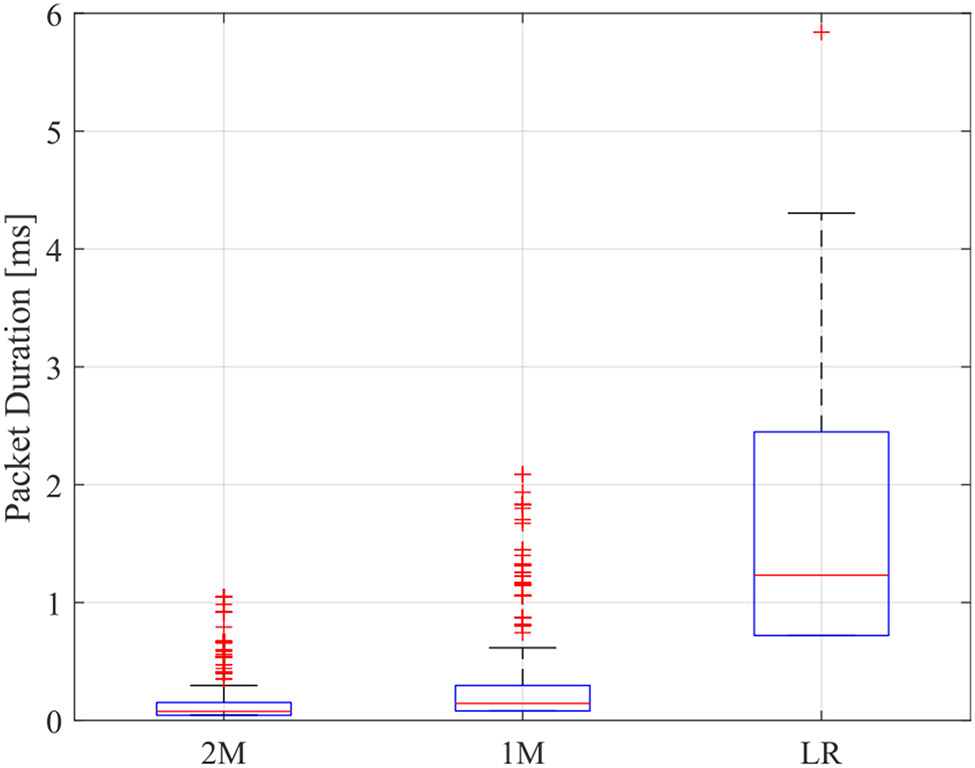
The 2.4 GHz spectrum is home to several Radio Access Technologies (RATs), including ZigBee, Bluetooth Low Energy (BLE), and Wi-Fi. Accordingly, the technologies' spectrum-sharing qualities have been extensively studied in literature. License-Assisted Access (LAA) Listen-Before-Talk (LBT) has been identified in technical reports as the foundation for the channel access mechanism for 5G New Radio-Unlicensed (NR-U) operating in the 2.4 GHz Industrial, Scientific, and Medical (ISM) band. The introduction of NR-U into this band raises new concerns regarding coexistence of the newcomer with traditional incumbents. This article reports an investigation of BLE 5 and cellular LBT coexisting systems by means of empirical evaluation. The importance of this study stems from that the studied LBT mechanism is indicative of how 5G NR-U would perform in the 2.4 GHz band. Tests were performed in conformity with the American National Standards Institute (ANSI) C63.27 standard for evaluation of wireless coexistence, and results were reported in terms of throughput and interframe delays. In accordance with the standard and under different BLE physical layers (PHYs) and LBT priority classes, three setups were investigated. These pertain to the three tiers of evaluation, which correspond to the criticality of the device under test. Results demonstrated how BLE throughput dropped as the intended-to-unintended signal ratio decreased, and LBT classes exhibited a diminishing effect as the class priority descended. Long Range BLE PHY was found to sustain longer gap times (i.e., delay) than the other two PHYs; however, it showed less susceptibility to interference. Results also demonstrated that low data rate BLE PHYs hindered the LBT throughput performance since they correspond to longer airtime durations.
2.4吉赫兹频段是多种无线接入技术(RAT)的所在频段,包括ZigBee、低功耗蓝牙(BLE)和Wi-Fi。因此,这些技术的频谱共享特性在文献中得到了广泛研究。在技术报告中,许可辅助接入(LAA)先听后说(LBT)已被确定为在2.4吉赫兹工业、科学和医疗(ISM)频段运行的5G新无线接入非授权频段(NR-U)的信道接入机制基础。将NR-U引入该频段引发了关于新来者与传统现有技术共存的新问题。本文通过实证评估报告了对BLE 5和蜂窝LBT共存系统的调查。这项研究的重要性在于所研究的LBT机制表明了5G NR-U在2.4吉赫兹频段的性能表现。测试是按照美国国家标准学会(ANSI)C63.27无线共存评估标准进行的,并根据吞吐量和帧间延迟报告了结果。根据该标准并在不同的BLE物理层(PHY)和LBT优先级类别下,研究了三种设置。这些设置属于三个评估级别,对应于被测设备的关键程度。结果表明,随着目标信号与非目标信号之比降低,BLE吞吐量下降,并且随着LBT类别的优先级降低,LBT类别表现出递减效应。发现长距离BLE PHY比其他两种PHY能维持更长的间隔时间(即延迟);然而,它对干扰的敏感度较低。结果还表明,低数据速率的BLE PHY会阻碍LBT吞吐量性能,因为它们对应的空中时间持续时间更长。