
同种异体嵌合抗原受体疗法治疗淋巴瘤。
Allogeneic Chimeric Antigen Receptor Therapy in Lymphoma.
机构信息
Division of Hematology, Mayo Clinic, 200 First Street, SW, Rochester, MN, 55905, USA.
出版信息
Curr Treat Options Oncol. 2022 Feb;23(2):171-187. doi: 10.1007/s11864-021-00920-6. Epub 2022 Feb 25.
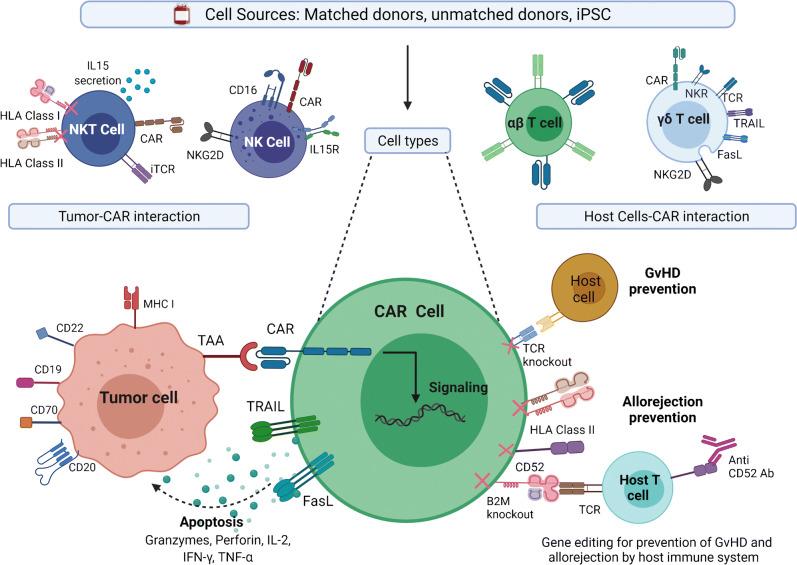
The therapeutic armamentarium has significantly expanded since the approval of various CD19-targeting chimeric antigen receptor T cell (CAR-T) therapies in non-Hodgkin lymphoma (NHL). These CAR-Ts are patient-specific and require a complex, resource, and time-consuming process. While this appears promising, autologous CAR-Ts are limited due to the lack of accessibility, manufacturing delays, and variable product quality. To overcome these, allogeneic (allo) CARs from healthy donors appear appealing. These can be immediately available as "off the shelf" ready-to-use products of standardized and superior quality exempt from the effects of an immunosuppressive tumor microenvironment and prior treatments, and potentially with lower healthcare utilization using industrialized scale production. Allogeneic CARs, however, are not devoid of complications and require genomic editing, especially with αβ T cells to avoid graft versus host disease (GvHD) and allo-rejection by the recipient's immune system. Tools for genomic editing such as TALEN and CRISPR provide promise to develop truly "off the shelf" universal CARs and further advance the field of cellular immunotherapy. Several allogeneic CARs are currently in early phase clinical trials, and preliminary data is encouraging. Longer follow-up is required to truly assess the feasibility and safety of these techniques in the patients. This review focuses on the strategies for developing allogeneic CARs along with cell sources and clinical experience thus far in lymphoma.
自各种针对非霍奇金淋巴瘤 (NHL) 的 CD19 靶向嵌合抗原受体 T 细胞 (CAR-T) 疗法获得批准以来,治疗手段有了显著的扩展。这些 CAR-T 是针对患者个体的,需要一个复杂、资源密集且耗时的过程。虽然这看起来很有前途,但由于不可及性、制造延迟和产品质量的变化,自体 CAR-T 受到限制。为了克服这些限制,来自健康供体的同种异体 (allo) CAR 似乎很有吸引力。这些可以立即作为“现成的”即用型产品使用,具有标准化和更高质量,不受免疫抑制肿瘤微环境和先前治疗的影响,并且可能通过工业化规模生产降低医疗保健利用率。然而,同种异体 CAR 并非没有并发症,需要基因组编辑,特别是对于 αβ T 细胞,以避免移植物抗宿主病 (GvHD) 和受者免疫系统的同种异体排斥。基因组编辑工具,如 TALEN 和 CRISPR,为开发真正的“现成的”通用 CAR 并进一步推进细胞免疫治疗领域提供了希望。目前有几种同种异体 CAR 处于早期临床试验阶段,初步数据令人鼓舞。需要更长时间的随访才能真正评估这些技术在患者中的可行性和安全性。本综述重点介绍了开发同种异体 CAR 的策略,以及迄今为止在淋巴瘤中使用的细胞来源和临床经验。
 Zotero 插件