
室内萜烯臭氧分解产生二次有机气溶胶的化学过程及其对人体暴露的影响
Chemistry and human exposure implications of secondary organic aerosol production from indoor terpene ozonolysis.
作者信息
Rosales Colleen Marciel F, Jiang Jinglin, Lahib Ahmad, Bottorff Brandon P, Reidy Emily K, Kumar Vinay, Tasoglou Antonios, Huber Heinz, Dusanter Sebastien, Tomas Alexandre, Boor Brandon E, Stevens Philip S
机构信息
O'Neill School of Public and Environmental Affairs, Indiana University, Bloomington, IN 47405, USA.
Lyles School of Civil Engineering, Purdue University, West Lafayette, IN 47907, USA.
出版信息
Sci Adv. 2022 Feb 25;8(8):eabj9156. doi: 10.1126/sciadv.abj9156.
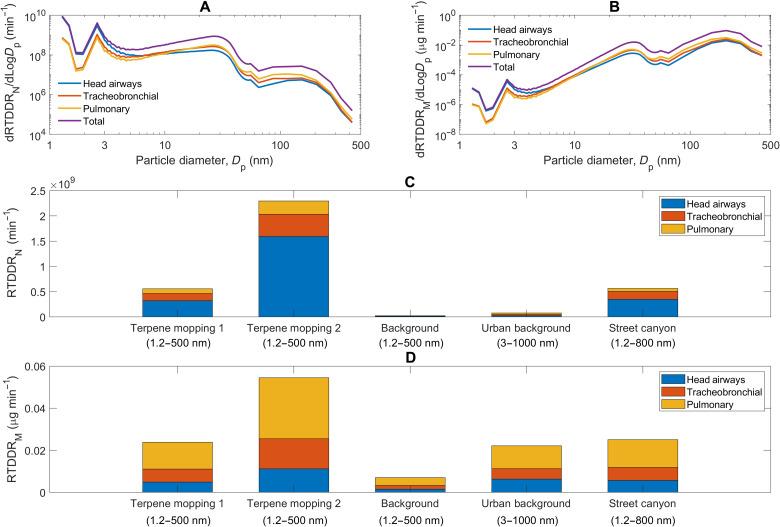
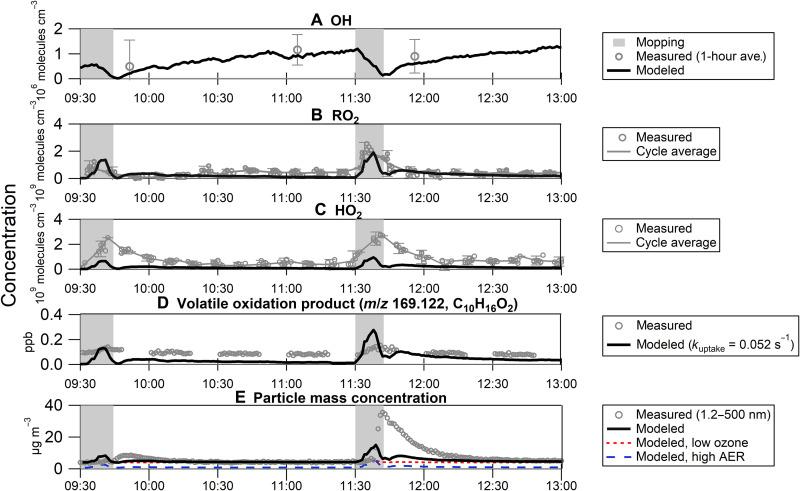
Surface cleaning using commercial disinfectants, which has recently increased during the coronavirus disease 2019 pandemic, can generate secondary indoor pollutants both in gas and aerosol phases. It can also affect indoor air quality and health, especially for workers repeatedly exposed to disinfectants. Here, we cleaned the floor of a mechanically ventilated office room using a commercial cleaner while concurrently measuring gas-phase precursors, oxidants, radicals, secondary oxidation products, and aerosols in real-time; these were detected within minutes after cleaner application. During cleaning, indoor monoterpene concentrations exceeded outdoor concentrations by two orders of magnitude, increasing the rate of ozonolysis under low (<10 ppb) ozone levels. High number concentrations of freshly nucleated sub-10-nm particles (≥10 cm) resulted in respiratory tract deposited dose rates comparable to or exceeding that of inhalation of vehicle-associated aerosols.
使用商业消毒剂进行表面清洁,在2019年冠状病毒病大流行期间这种情况最近有所增加,这会在气相和气溶胶相中产生二次室内污染物。它还会影响室内空气质量和健康,尤其是对于反复接触消毒剂的工人。在这里,我们使用一种商业清洁剂清洁了一间机械通风办公室的地板,同时实时测量气相前体、氧化剂、自由基、二次氧化产物和气溶胶;在使用清洁剂后的几分钟内就检测到了这些物质。在清洁过程中,室内单萜烯浓度比室外浓度高出两个数量级,在低(<10 ppb)臭氧水平下增加了臭氧分解速率。大量新生成的亚10纳米颗粒(≥10⁶ cm⁻³)导致呼吸道沉积剂量率与吸入车辆相关气溶胶相当或超过后者。



 Zotero 插件