UOS STIIMA Lecco-Human-Centered, Smart & Safe, Living Environment, Italian National Research Council (CNR), Via Previati 1/E, 23900 Lecco, Italy.
VIKTOR S.r.l.-Via Pasubio, 5, 24044 Dalmine (BG), Italy.
Sensors (Basel). 2022 Feb 13;22(4):1443. doi: 10.3390/s22041443.
Neurological diseases and traumas are major factors that may reduce motor functionality. Functional electrical stimulation is a technique that helps regain motor function, assisting patients in daily life activities and in rehabilitation practices. In this study, we evaluated the efficacy of a treatment based on whole-body Adaptive Functional Electrical Stimulation Kinesitherapy (AFESK™) with the use of muscle synergies, a well-established method for evaluation of motor coordination. The evaluation is performed on retrospectively gathered data of neurological patients executing whole-body movements before and after AFESK-based treatments.
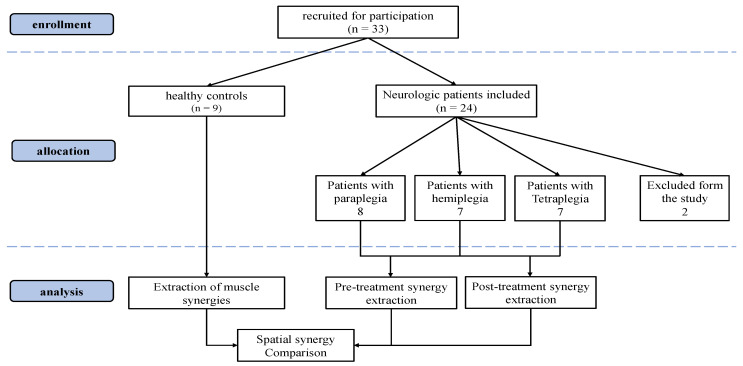
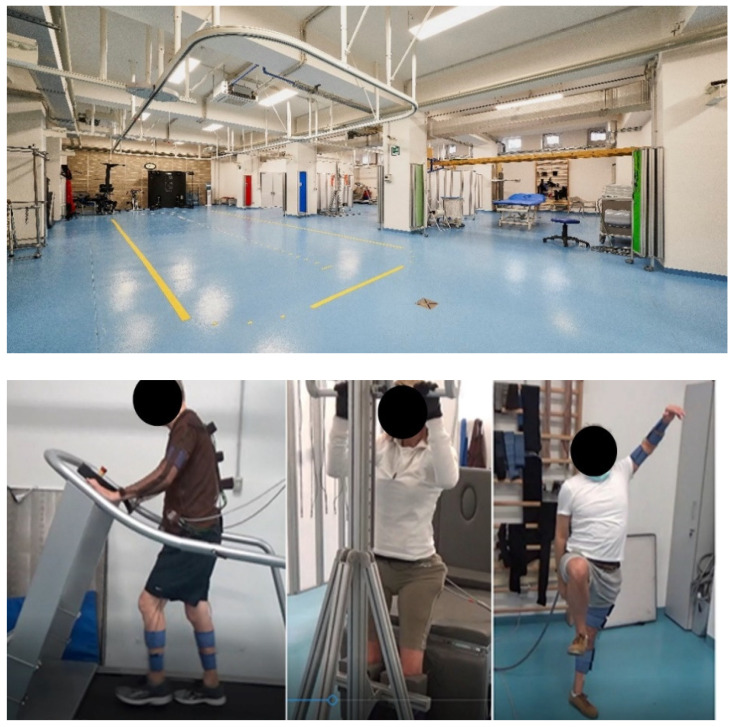
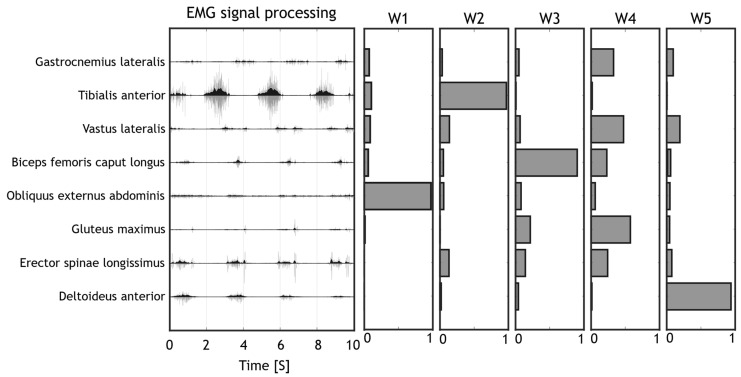
Twenty-four chronic neurologic patients and 9 healthy subjects were recruited in this study. The patient group was further subdivided in 3 subgroups: hemiplegic, tetraplegic and paraplegic. All patients underwent two acquisition sessions: before treatment and after a FES based rehabilitation treatment at the VIKTOR Physio Lab. Patients followed whole-body exercise protocols tailored to their needs. The control group of healthy subjects performed all movements in a single session and provided reference data for evaluating patients' performance. sEMG was recorded on relevant muscles and muscle synergies were extracted for each patient's EMG data and then compared to the ones extracted from the healthy volunteers. To evaluate the effect of the treatment, the motricity index was measured and patients' extracted synergies were compared to the control group before and after treatment.
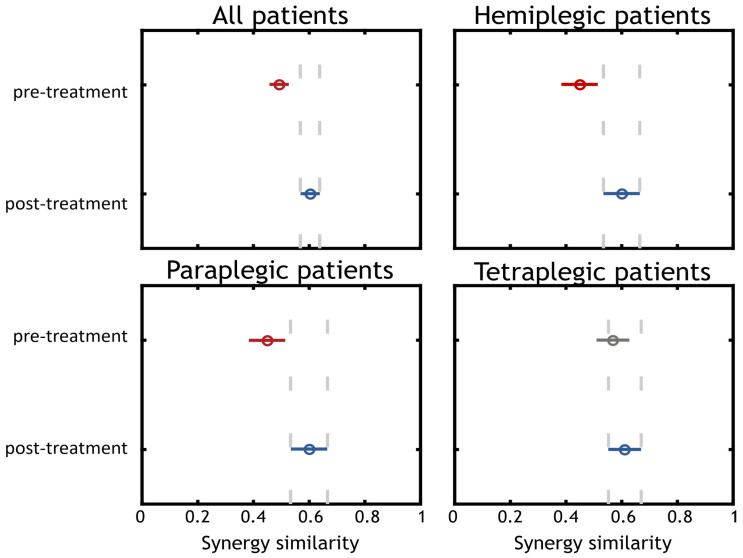
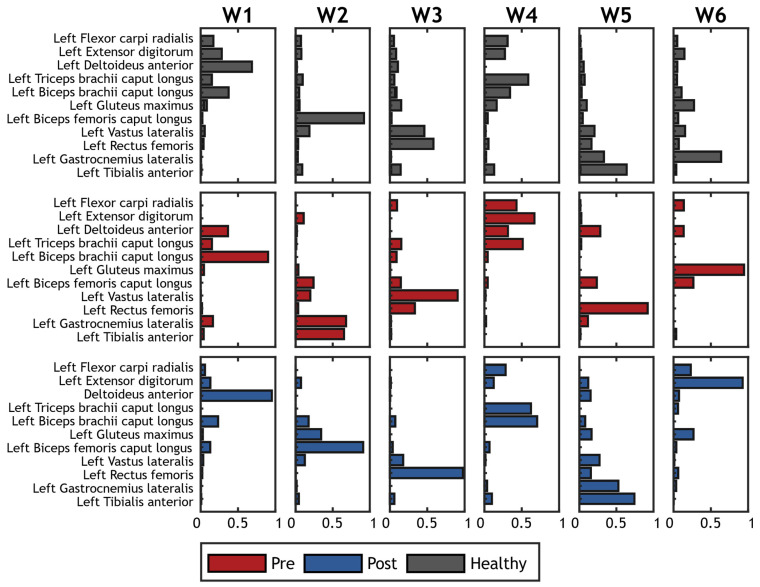
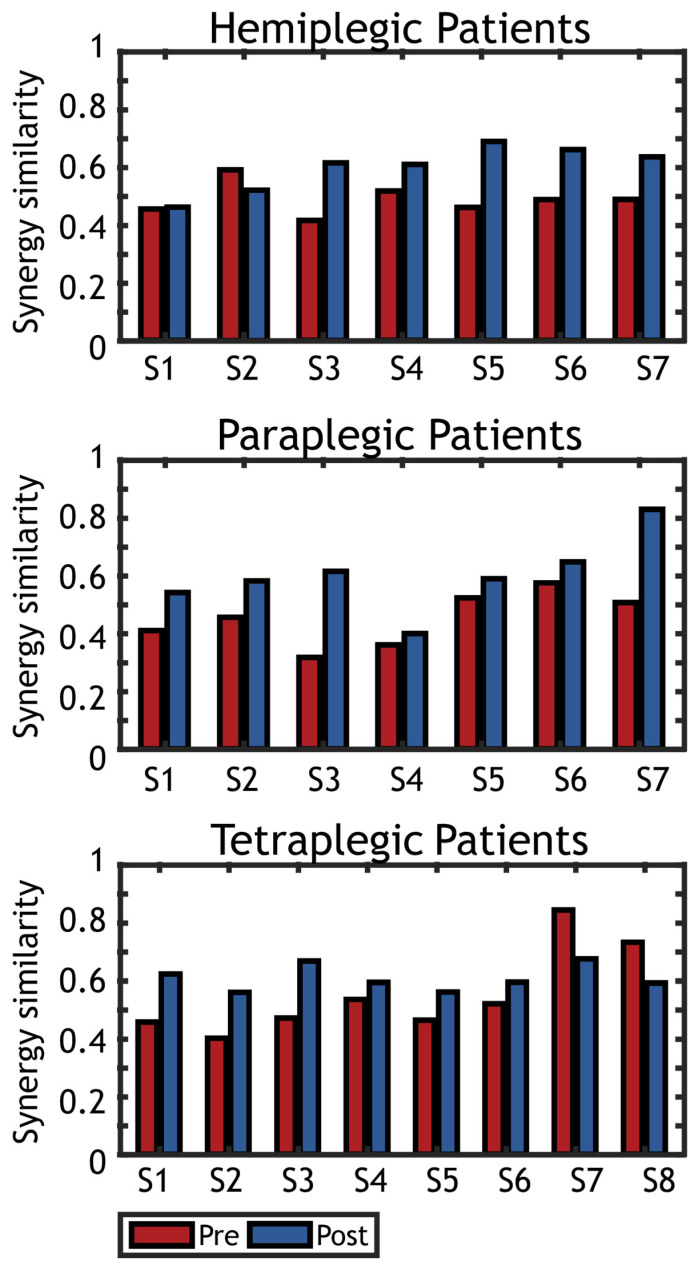
After the treatment, patients' motricity index increased for many of the screened body segments. Muscle synergies were more similar to those of healthy people. Globally, the normalized synergy similarity in respect to the control group was 0.50 before the treatment and 0.60 after ( < 0.001), with improvements for each subgroup of patients.
AFESK treatment induced favorable changes in muscle activation patterns in chronic neurologic patients, partially restoring muscular patterns similar to healthy people. The evaluation of the synergic relationships of muscle activity when performing test exercises allows to assess the results of rehabilitation measures in patients with impaired locomotor functions.
神经疾病和创伤是可能降低运动功能的主要因素。功能性电刺激是一种有助于恢复运动功能的技术,可帮助患者进行日常生活活动和康复实践。在这项研究中,我们评估了基于全身适应性功能性电刺激运动疗法(AFESK™)的治疗效果,该方法使用肌肉协同作用,这是一种评估运动协调的成熟方法。评估是基于神经患者在接受基于 AFESK 的治疗前后回顾性收集的全身运动数据进行的。
本研究共招募了 24 名慢性神经患者和 9 名健康受试者。患者组进一步分为 3 个亚组:偏瘫、四肢瘫和截瘫。所有患者均接受了两次采集:治疗前和在 VIKTOR 物理治疗实验室进行基于 FES 的康复治疗后。患者遵循针对其需求定制的全身运动方案。健康对照组在一次采集中完成所有运动,并提供评估患者表现的参考数据。在相关肌肉上记录表面肌电图,并从每位患者的肌电图数据中提取肌肉协同作用,然后与健康志愿者提取的协同作用进行比较。为了评估治疗效果,测量了运动指数,并将患者的提取协同作用与治疗前后的对照组进行了比较。
治疗后,许多筛选出的身体部位的患者运动指数增加。肌肉协同作用与健康人更相似。总体而言,治疗前与对照组的协同相似性归一化为 0.50,治疗后为 0.60(<0.001),每个患者亚组均有改善。
AFESK 治疗可诱导慢性神经患者的肌肉激活模式发生有利变化,部分恢复类似于健康人的肌肉模式。在进行测试运动时评估肌肉活动的协同关系可以评估运动功能受损患者康复措施的结果。