Nutrigenomics Research Group, Department of Biochemistry and Biotechnology, Campus Sescelades, Universitat Rovira i Virgili, 43007 Tarragona, Spain.
Muscle Dynamics and Metabolism (DMEM), National Research Institute for Agriculture, Food and Environment (INRAE), EMN, UMR 866, Université de Montpellier, 34090 Montpellier, France.
Nutrients. 2022 Feb 12;14(4):774. doi: 10.3390/nu14040774.
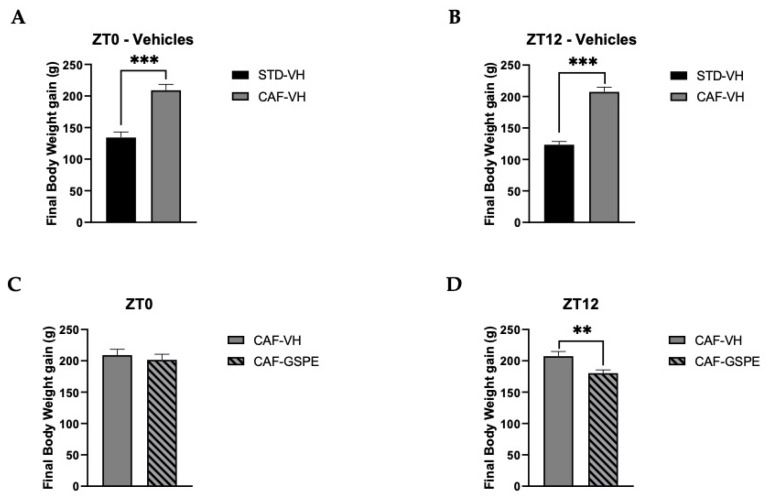
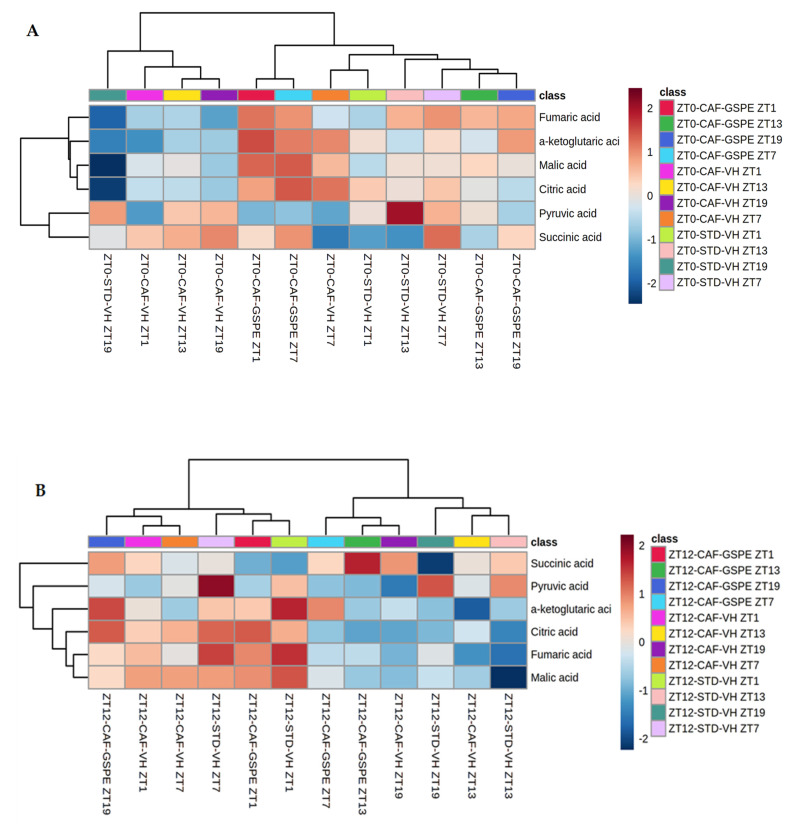
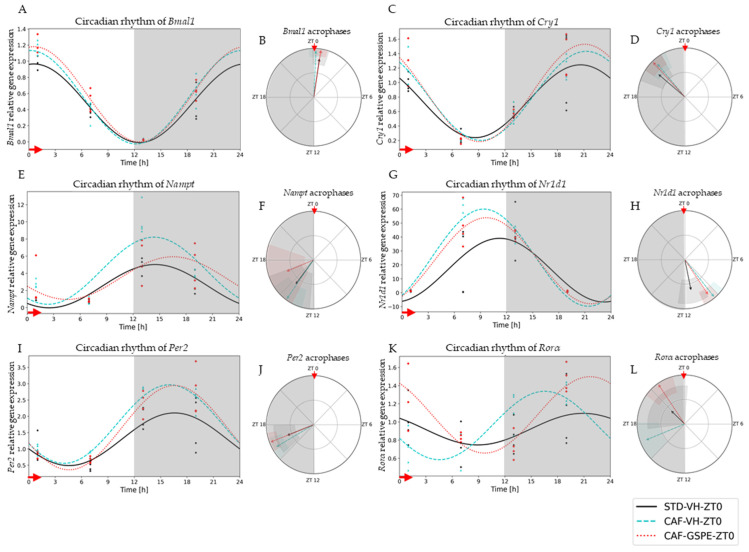
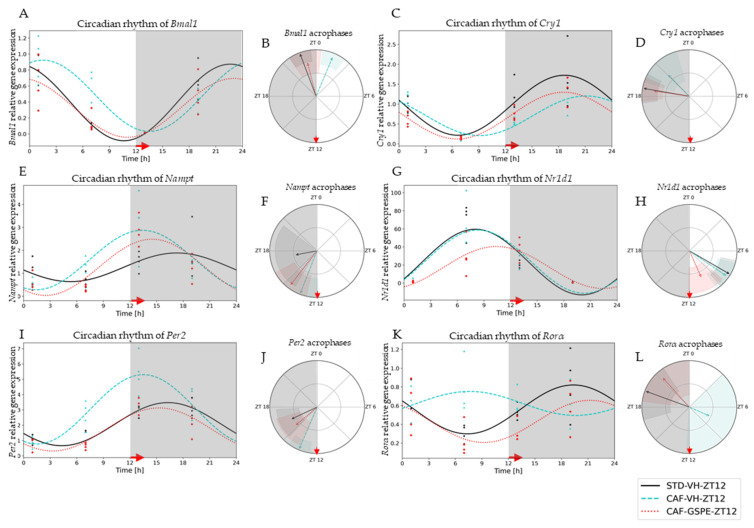
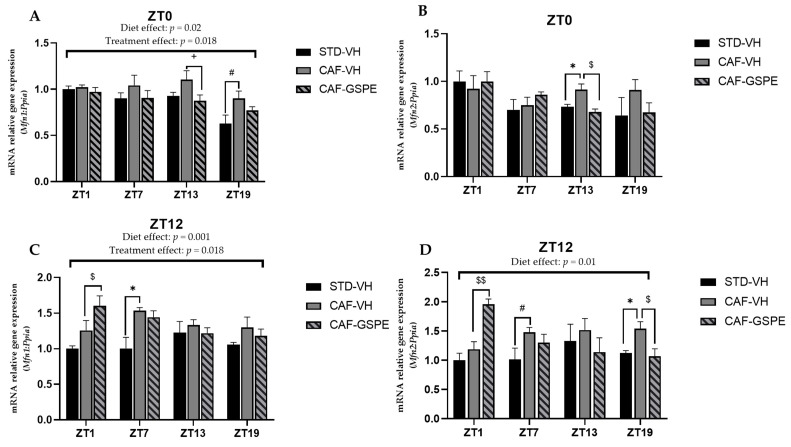
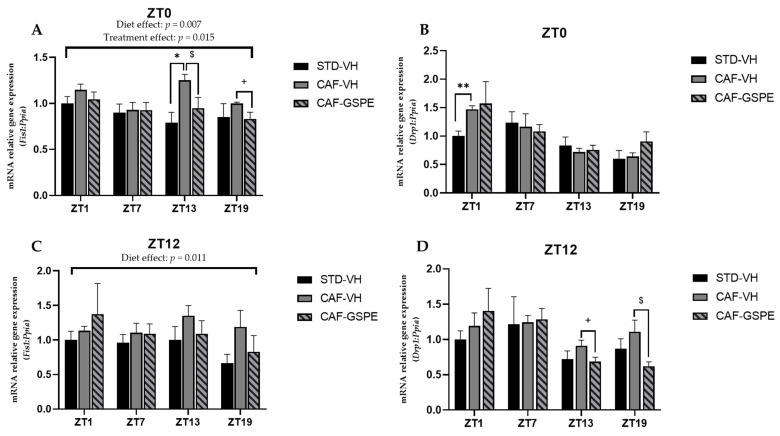
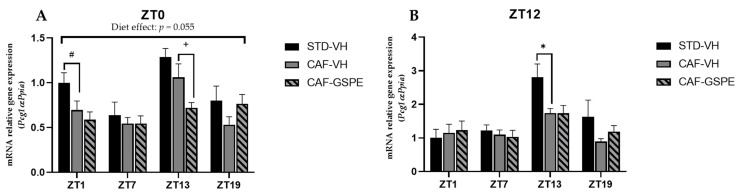
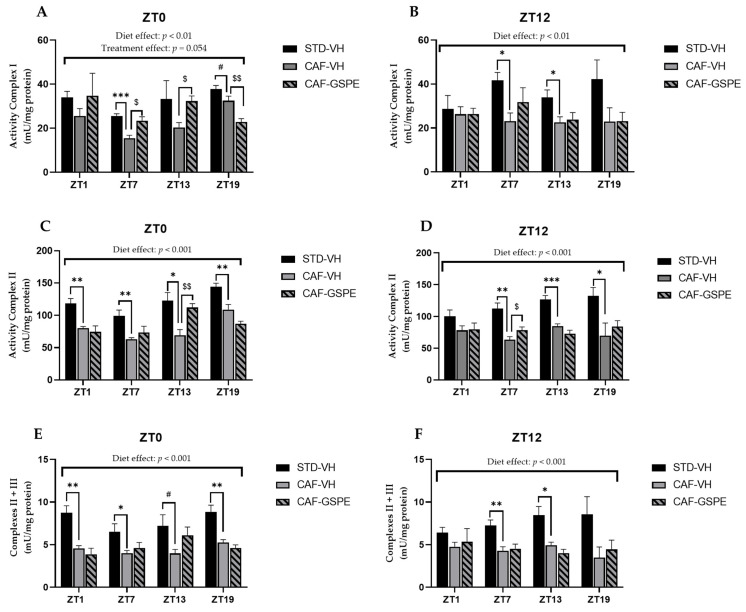
Major susceptibility to alterations in liver function (e.g., hepatic steatosis) in a prone environment due to circadian misalignments represents a common consequence of recent sociobiological behavior (i.e., food excess and sleep deprivation). Natural compounds and, more concisely, polyphenols have been shown as an interesting tool for fighting against metabolic syndrome and related consequences. Furthermore, mitochondria have been identified as an important target for mediation of the health effects of these compounds. Additionally, mitochondrial function and dynamics are strongly regulated in a circadian way. Thus, we wondered whether some of the beneficial effects of grape-seed procyanidin extract (GSPE) on metabolic syndrome could be mediated by a circadian modulation of mitochondrial homeostasis. For this purpose, rats were subjected to "standard", "cafeteria" and "cafeteria diet + GSPE" treatments ( = 4/group) for 9 weeks (the last 4 weeks, GSPE/vehicle) of treatment, administering the extract/vehicle at diurnal or nocturnal times (ZT0 or ZT12). For circadian assessment, one hour after turning the light on (ZT1), animals were sacrificed every 6 h (ZT1, ZT7, ZT13 and ZT19). Interestingly, GSPE was able to restore the rhythm on clock hepatic genes (, , , ), as this correction was more evident in nocturnal treatment. Additionally, during nocturnal treatment, an increase in hepatic fusion genes and a decrease in fission genes were observed. Regarding mitochondrial complex activity, there was a strong effect of cafeteria diet at nearly all ZTs, and GSPE was able to restore activity at discrete ZTs, mainly in the diurnal treatment (ZT0). Furthermore, a differential behavior was observed in tricarboxylic acid (TCA) metabolites between GSPE diurnal and nocturnal administration times. Therefore, GSPE may serve as a nutritional preventive strategy in the recovery of hepatic-related metabolic disease by modulating mitochondrial dynamics, which is concomitant to the restoration of the hepatic circadian machinery.
由于昼夜节律失调,易发生肝功能改变(如肝脂肪变性),这是最近社会生物学行为(即饮食过量和睡眠剥夺)的常见后果。天然化合物,更确切地说是多酚,已被证明是对抗代谢综合征及相关后果的一种有趣工具。此外,线粒体已被确定为介导这些化合物对健康影响的重要靶点。此外,线粒体的功能和动态受到昼夜节律的强烈调节。因此,我们想知道葡萄种子原花青素提取物(GSPE)对代谢综合征的一些有益作用是否可以通过调节线粒体动态平衡的昼夜节律来介导。为此,大鼠接受了“标准”、“自助餐厅”和“自助餐厅饮食+GSPE”(每组 4 只)治疗 9 周(最后 4 周,GSPE/载体),在白天或夜间(ZT0 或 ZT12)给予提取物/载体。为了进行昼夜节律评估,在开灯后 1 小时(ZT1),每隔 6 小时(ZT1、ZT7、ZT13 和 ZT19)处死动物。有趣的是,GSPE 能够恢复肝脏时钟基因(、、、)的节律,这种纠正在夜间治疗中更为明显。此外,在夜间治疗期间,观察到肝融合基因增加和裂变基因减少。关于线粒体复合物的活性,在几乎所有 ZT 时,自助餐厅饮食都有强烈的影响,GSPE 能够在特定的 ZT 恢复活性,主要在白天治疗(ZT0)。此外,在 GSPE 白天和夜间给药时间之间观察到三羧酸(TCA)代谢物的差异行为。因此,GSPE 可作为一种通过调节线粒体动态恢复与肝脏相关的代谢性疾病的营养预防策略,同时恢复肝脏的昼夜节律机制。