Department of Clinical Physiology, Medical University of Lodz, 92-215 Lodz, Poland.
Department of Biostatistics and Translational Medicine, Medical University of Lodz, 92-215 Lodz, Poland.
Viruses. 2022 Feb 4;14(2):321. doi: 10.3390/v14020321.
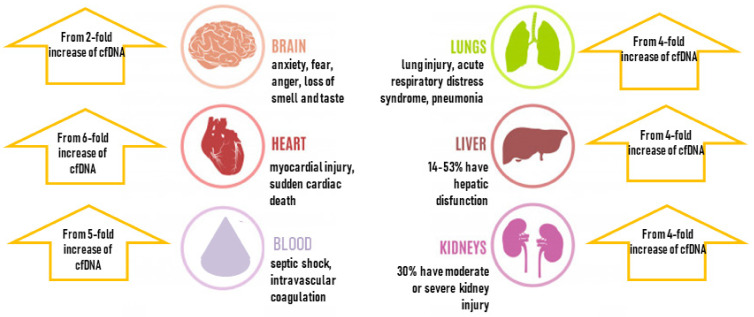
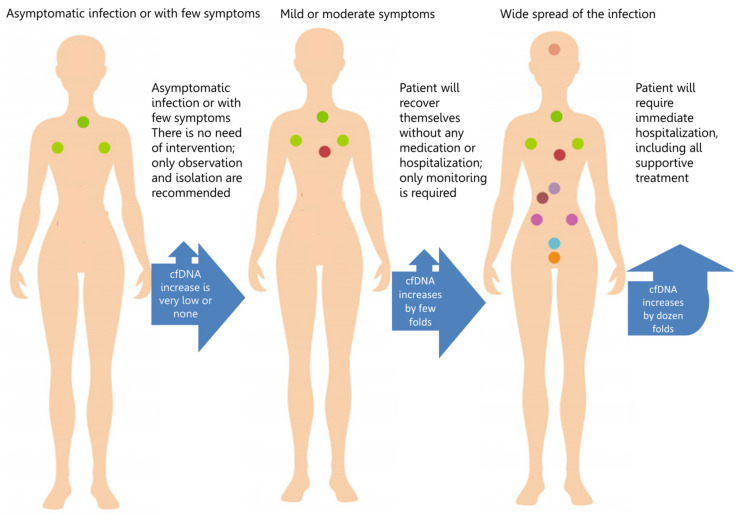
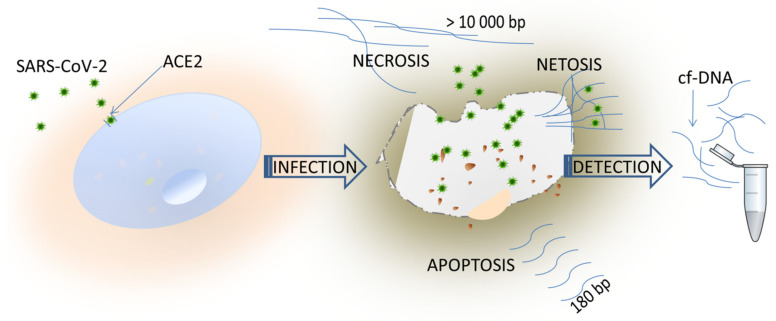
WHO has declared COVID-19 as a worldwide, public health emergency. The elderly, pregnant women, and people with associated co-morbidities, including pulmonary disease, heart failure, diabetes, and cancer are the most predisposed population groups to infection. Cell-free DNA is a very commonly applied marker, which is elevated in various pathological conditions. However, it has a much higher sensitivity than standard biochemical markers. cfDNA appears to be an effective marker of COVID-19 complications, and also serves as a marker of certain underlying health conditions and risk factors of severe illness during COVID-19 infection. We aimed to present the possible mechanisms and sources of cfDNA released during moderate and severe infections. Moreover, we attempt to verify how efficiently cfDNA increase could be applied in COVID-19 risk assessment and how it corresponds with epidemiological data.
世界卫生组织已宣布 COVID-19 为全球公共卫生紧急事件。老年人、孕妇以及患有肺部疾病、心力衰竭、糖尿病和癌症等相关合并症的人群最容易感染。无细胞游离 DNA 是一种非常常用的标志物,在各种病理情况下都会升高。然而,它比标准生化标志物具有更高的灵敏度。cfDNA 似乎是 COVID-19 并发症的有效标志物,也是 COVID-19 感染期间某些潜在健康状况和严重疾病风险因素的标志物。我们旨在介绍在中度和重度感染期间释放 cfDNA 的可能机制和来源。此外,我们试图验证 cfDNA 增加的效率如何应用于 COVID-19 风险评估,以及它与流行病学数据的对应关系。