Sir Peter Mansfield Imaging Centre, School of Physics and Astronomy, University of Nottingham, University Park, Nottingham, NG7 2RD, UK.
QuSpin Inc. 331 South 104(th) Street, Suite 130, Louisville, Colorado, 80027, USA.
Neuroimage. 2022 May 15;252:119027. doi: 10.1016/j.neuroimage.2022.119027. Epub 2022 Feb 22.
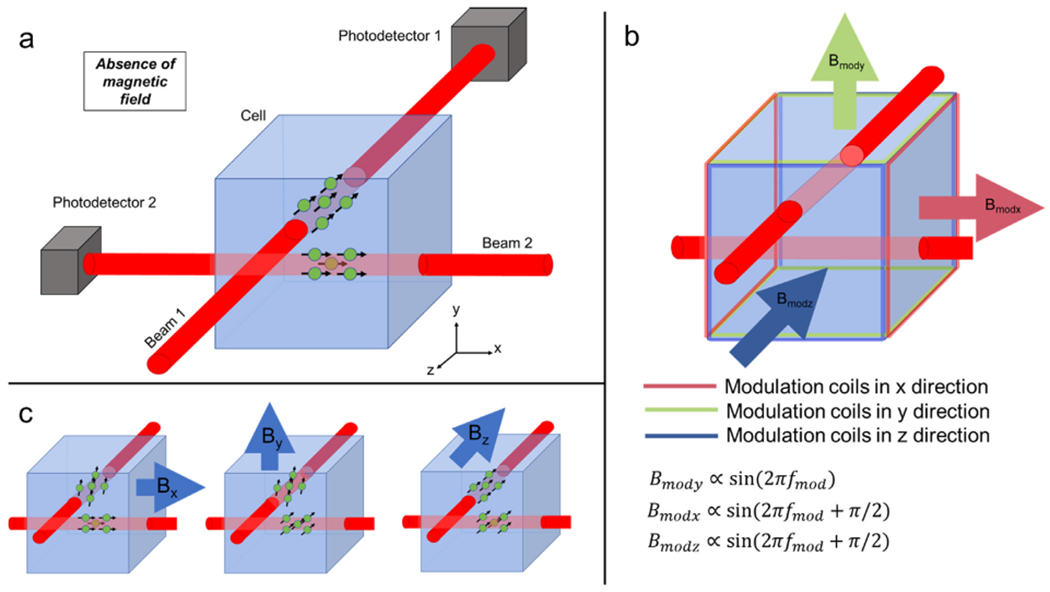
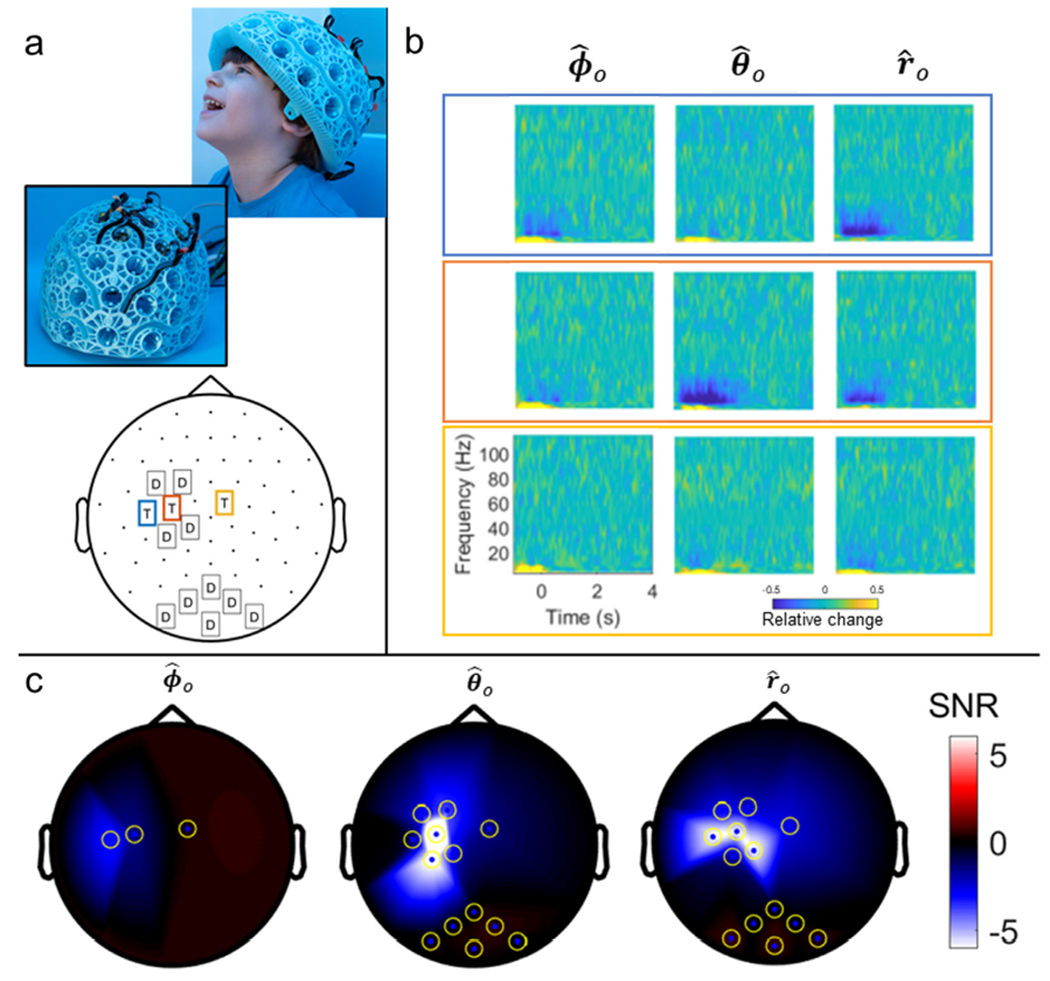
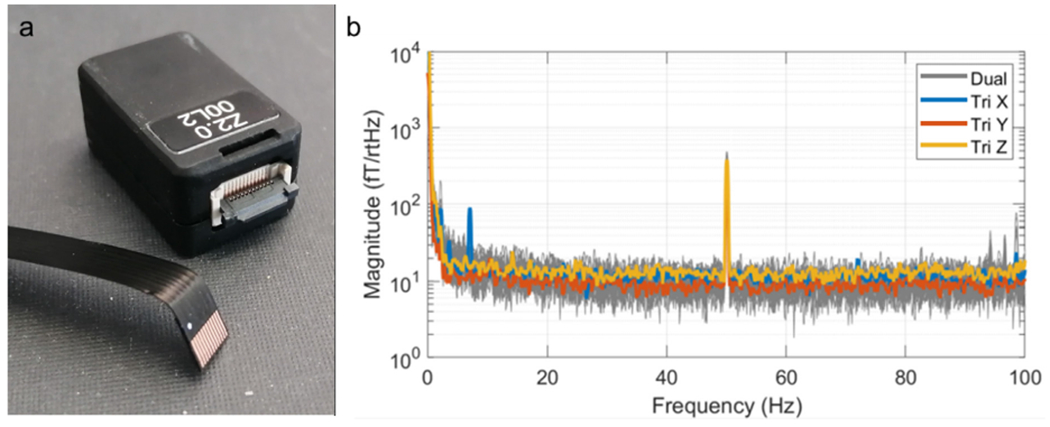
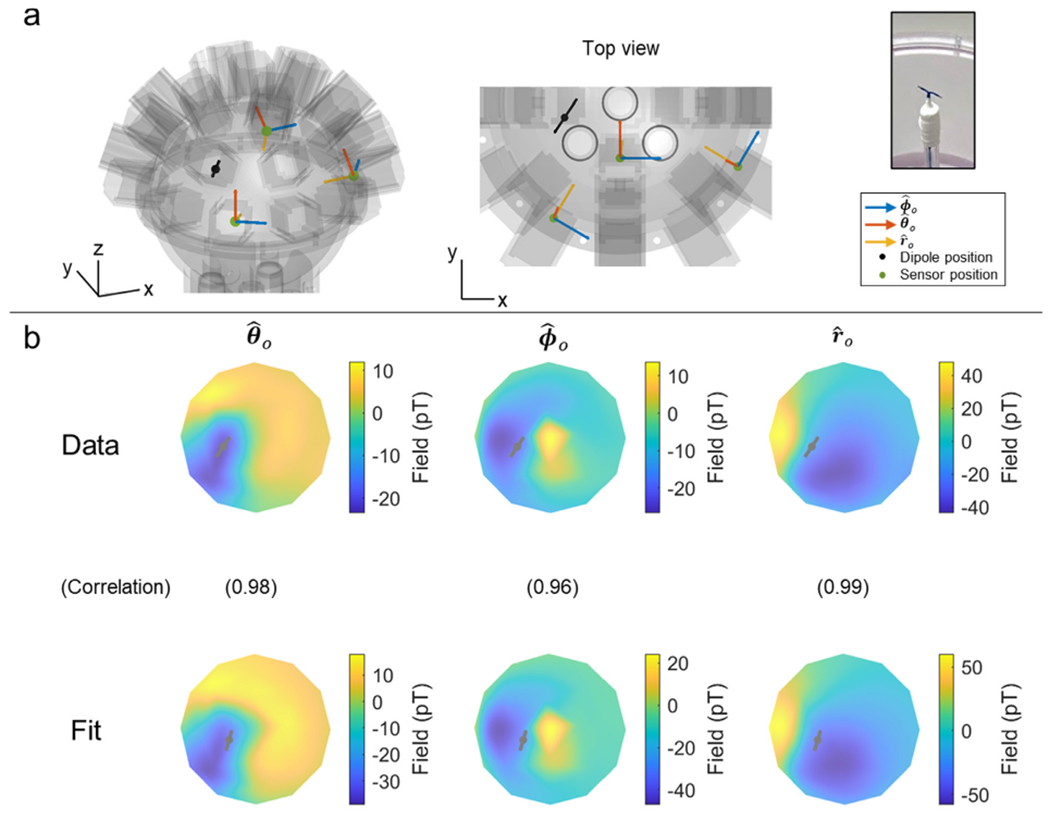
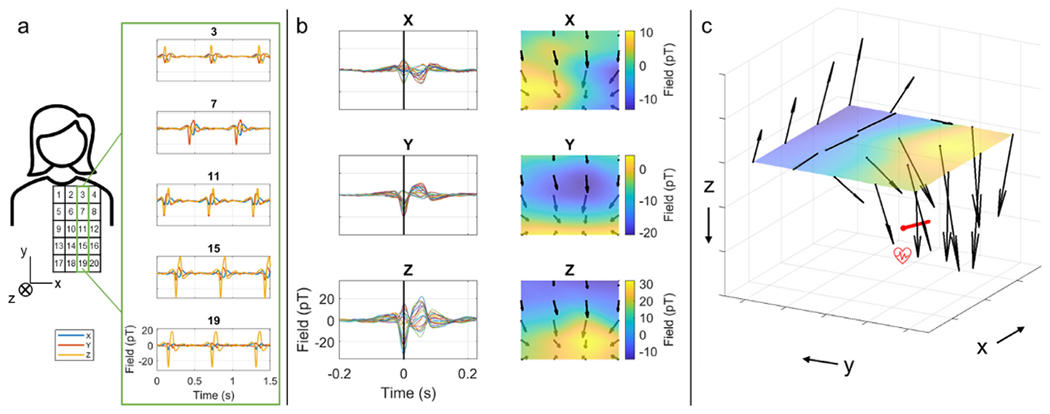
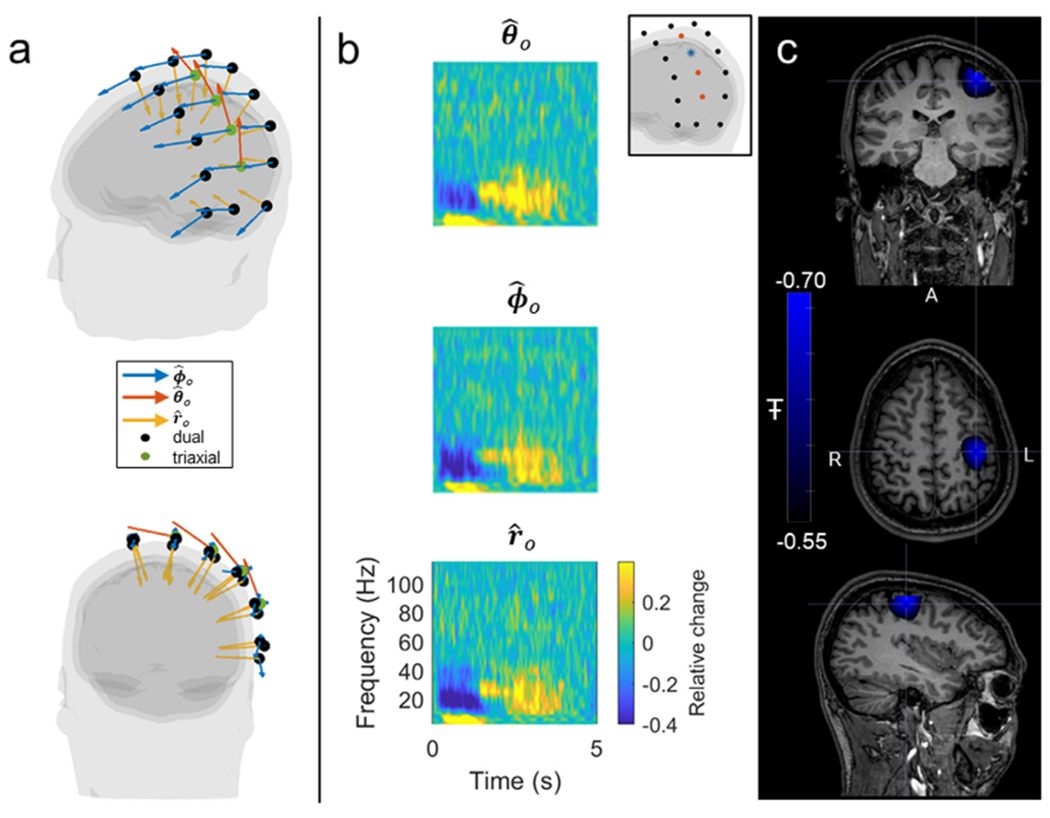
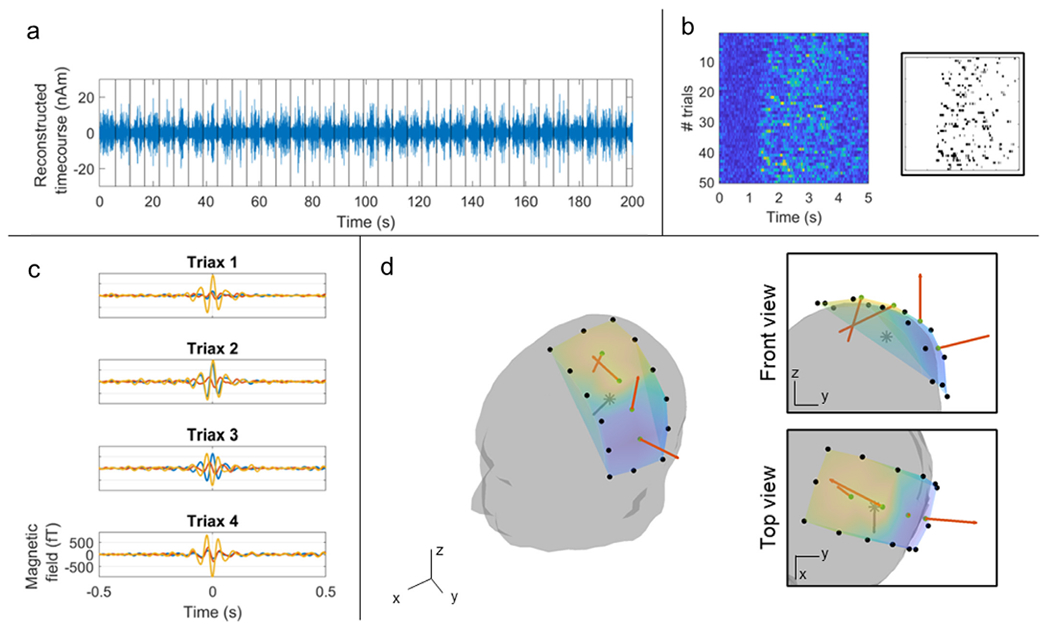
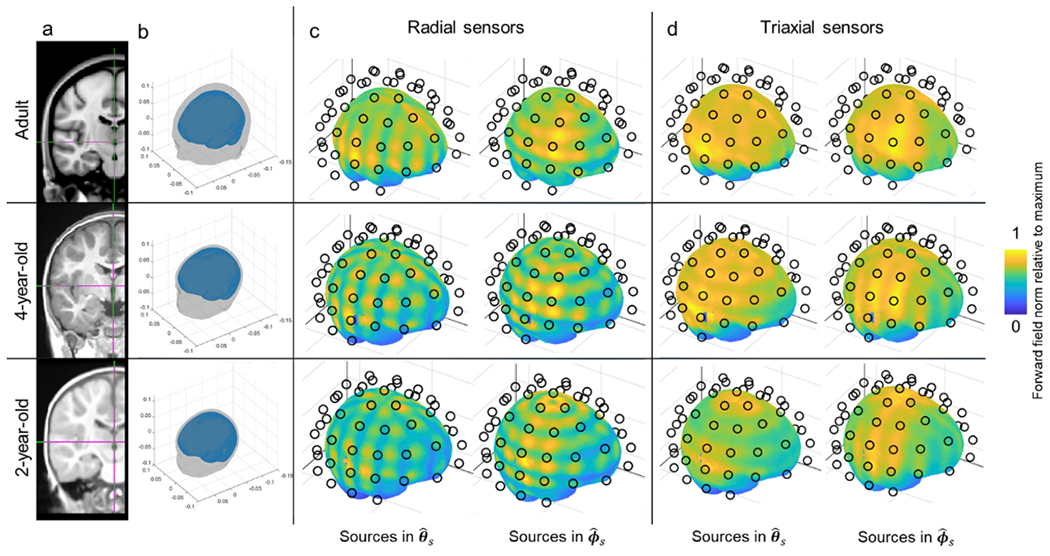
Optically-pumped magnetometers (OPMs) are an established alternative to superconducting sensors for magnetoencephalography (MEG), offering significant advantages including flexibility to accommodate any head size, uniform coverage, free movement during scanning, better data quality and lower cost. However, OPM sensor technology remains under development; there is flexibility regarding OPM design and it is not yet clear which variant will prove most effective for MEG. Most OPM-MEG implementations have either used single-axis (equivalent to conventional MEG) or dual-axis magnetic field measurements. Here we demonstrate use of a triaxial OPM formulation, able to characterise the full 3D neuromagnetic field vector. We show that this novel sensor is able to characterise magnetic fields with high accuracy and sensitivity that matches conventional (dual-axis) OPMs. We show practicality via measurement of biomagnetic fields from both the heart and the brain. Using simulations, we demonstrate how triaxial measurement offers improved cortical coverage, especially in infants. Finally, we introduce a new 3D-printed child-friendly OPM-helmet and demonstrate feasibility of triaxial measurement in a five-year-old. In sum, the data presented demonstrate that triaxial OPMs offer a significant improvement over dual-axis variants and are likely to become the sensor of choice for future MEG systems, particularly for deployment in paediatric populations.
光泵磁强计(OPM)是一种替代超导传感器的成熟技术,可用于脑磁图(MEG),具有显著优势,包括可灵活适应任何头围大小、全覆盖、扫描过程中可自由移动、更高的数据质量和更低的成本。然而,OPM 传感器技术仍在不断发展;OPM 的设计具有灵活性,目前尚不清楚哪种变体对 MEG 最有效。大多数 OPM-MEG 的实现要么使用单轴(相当于传统 MEG)或双轴磁场测量。在这里,我们展示了三轴 OPM 格式的使用,能够描述完整的 3D 神经磁场矢量。我们表明,这种新型传感器能够以与传统(双轴)OPM 相匹配的高精度和灵敏度来描述磁场。我们通过测量心脏和大脑的生物磁场来证明其实用性。通过模拟,我们展示了三轴测量如何提供更好的皮质覆盖,尤其是在婴儿中。最后,我们引入了一种新的 3D 打印的儿童友好型 OPM 头盔,并在一个五岁的孩子中展示了三轴测量的可行性。总之,所呈现的数据表明,三轴 OPM 相对于双轴变体有显著的改进,并且可能成为未来 MEG 系统的首选传感器,特别是在儿科人群中的应用。