Department of Medicine Section of Nephrology, Yale University, New Haven, CT, USA.
Department of Medicine Section of Medical Oncology, Yale University, New Haven, CT, USA.
Eur J Cancer. 2022 Apr;165:81-96. doi: 10.1016/j.ejca.2022.01.002. Epub 2022 Feb 24.
Although programmed cell death protein 1 (PD-1) inhibitors have revolutionised treatment for advanced melanoma, not all patients respond. We previously showed that inhibition of the flavoprotein renalase (RNLS) in preclinical melanoma models decreases tumour growth. We hypothesised that RNLS inhibition promotes tumour rejection by effects on the tumour microenvironment (TME).
We used two distinct murine melanoma models, studied in RNLS knockout (KO) or wild-type (WT) mice. WT mice were treated with the anti-RNLS antibody, m28, with or without anti-PD-1. 10X single-cell RNA-sequencing was used to identify transcriptional differences between treatment groups, and tumour cell content was interrogated by flow cytometry. Samples from patients treated with immunotherapy were examined for RNLS expression by quantitative immunofluorescence.
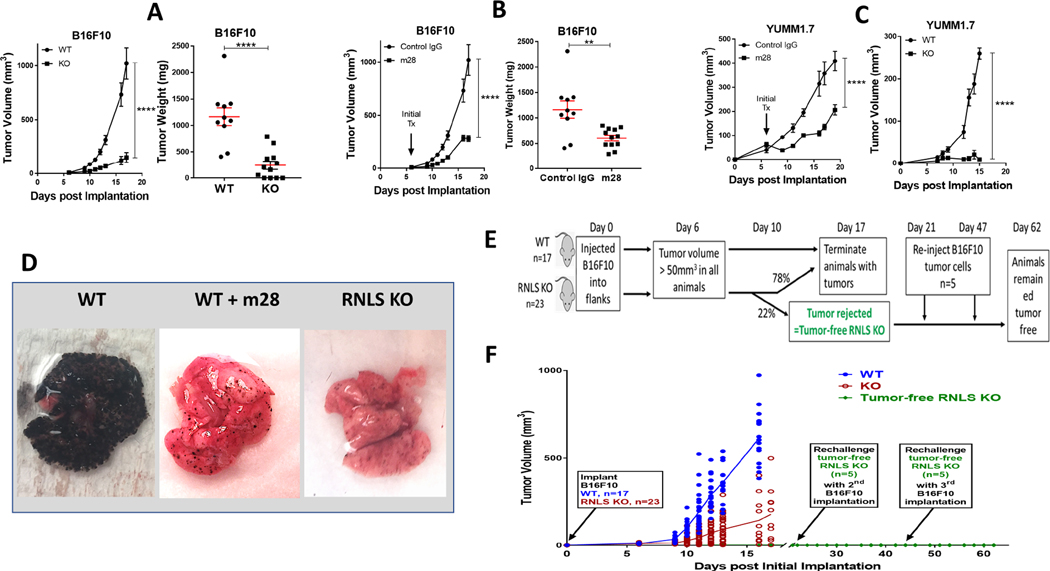
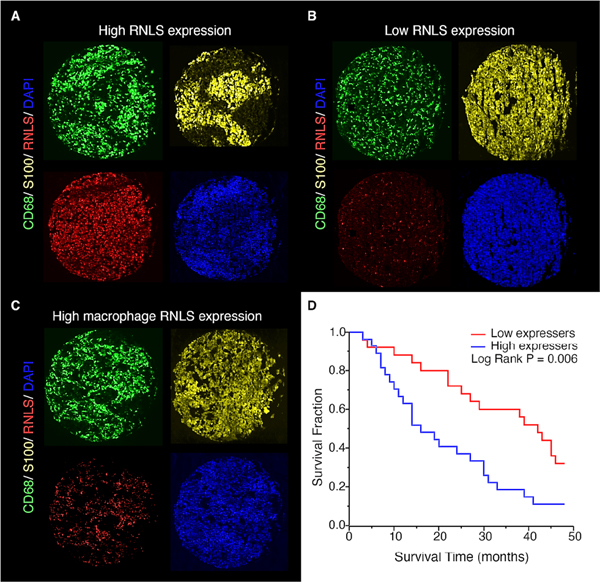
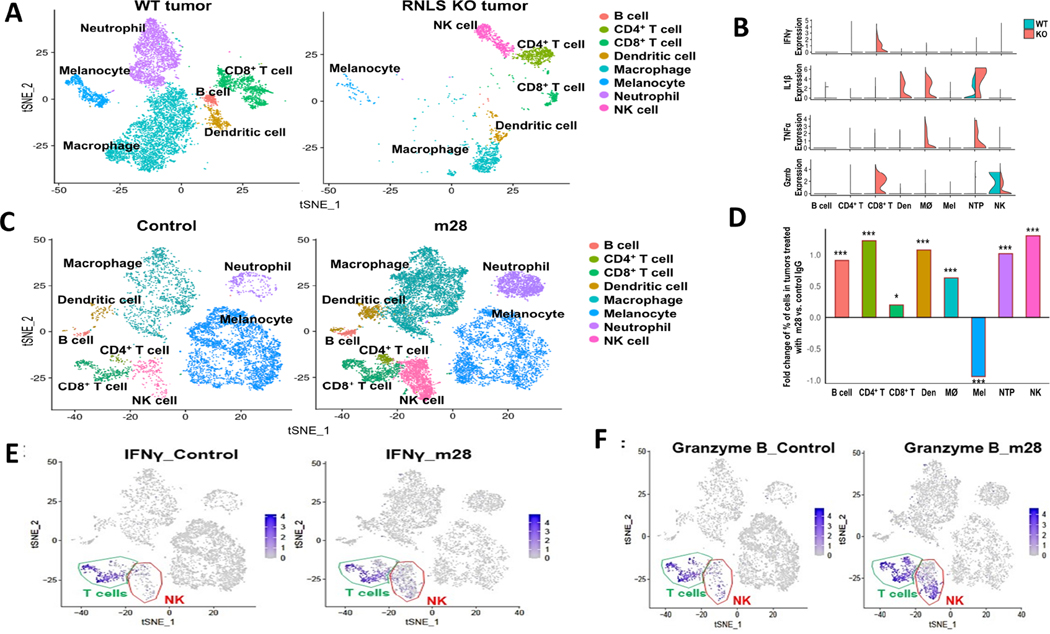
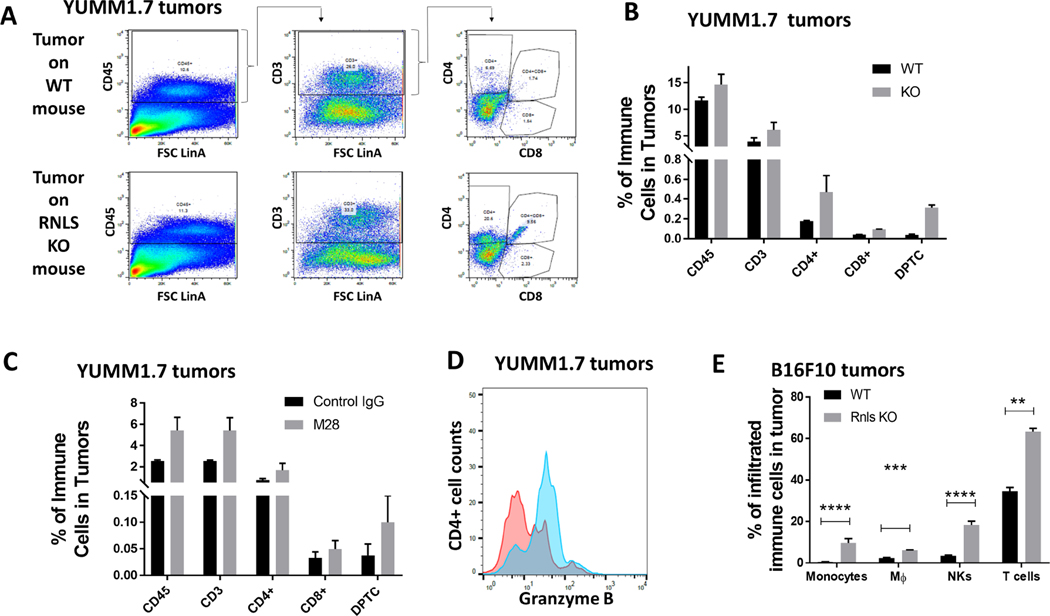
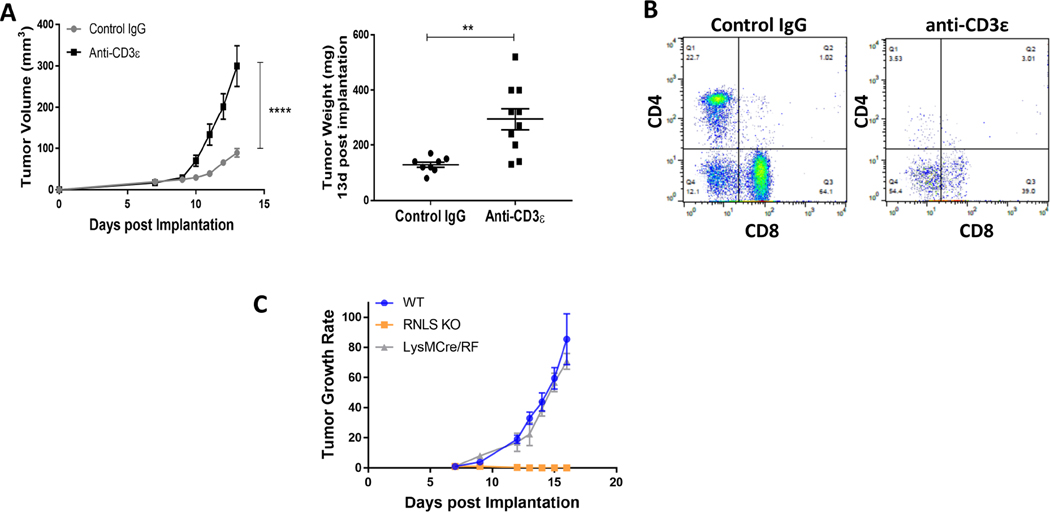
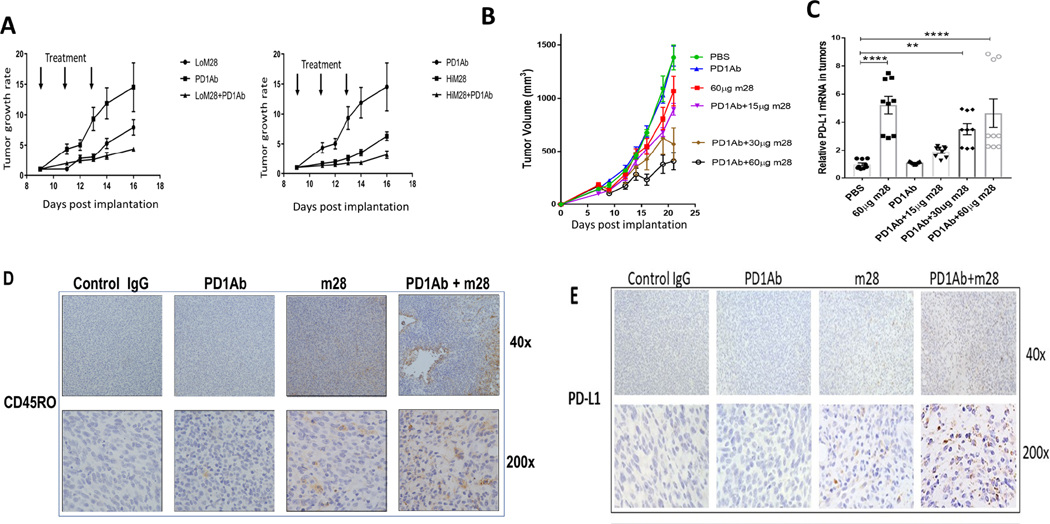
RNLS KO mice injected with wild-type melanoma cells reject their tumours, supporting the importance of RNLS in cells in the TME. This effect was blunted by anti-cluster of differentiation 3. However, MØ-specific RNLS ablation was insufficient to abrogate tumour formation. Anti-RNLS antibody treatment of melanoma-bearing mice resulted in enhanced T cell infiltration and activation and resulted in immune memory on rechallenging mice with injection of melanoma cells. At the single-cell level, treatment with anti-RNLS antibodies resulted in increased tumour density of MØ, neutrophils and lymphocytes and increased expression of IFNγ and granzyme B in natural killer cells and T cells. Intratumoural Forkhead Box P3 + CD4 cells were decreased. In two distinct murine melanoma models, we showed that melanoma-bearing mice treated with anti-RNLS antibodies plus anti-PD-1 had superior tumour shrinkage and survival than with either treatment alone. Importantly, in pretreatment samples from patients treated with PD-1 inhibitors, high RNLS expression was associated with decreased survival (log-rank P = 0.006), independent of other prognostic variables.
RNLS KO results in melanoma tumour regression in a T-cell-dependent fashion. Anti-RNLS antibodies enhance anti-PD-1 activity in two distinct aggressive murine melanoma models resistant to PD-1 inhibitors, supporting the development of anti-RNLS antibodies with PD-1 inhibitors as a novel approach for melanomas poorly responsive to anti-PD-1.
尽管程序性死亡蛋白 1(PD-1)抑制剂彻底改变了晚期黑色素瘤的治疗方法,但并非所有患者都有反应。我们之前表明,在临床前黑色素瘤模型中抑制黄素蛋白肾酶(RNLS)可减少肿瘤生长。我们假设 RNLS 抑制通过对肿瘤微环境(TME)的影响促进肿瘤排斥。
我们使用了两种不同的鼠黑色素瘤模型,在 RNLS 敲除(KO)或野生型(WT)小鼠中进行研究。WT 小鼠用抗 RNLS 抗体 m28 治疗,并用或不用抗 PD-1。使用 10X 单细胞 RNA 测序来鉴定治疗组之间的转录差异,并通过流式细胞术检测肿瘤细胞含量。通过定量免疫荧光法检查接受免疫治疗的患者样本中 RNLS 的表达。
用 WT 黑色素瘤细胞注射的 RNLS KO 小鼠排斥其肿瘤,这支持了 RNLS 在 TME 中的细胞中的重要性。这种作用被抗分化簇 3 削弱。然而,MØ 特异性 RNLS 消融不足以阻止肿瘤形成。用抗 RNLS 抗体治疗荷瘤小鼠导致 T 细胞浸润和激活增强,并在重新用黑色素瘤细胞注射小鼠时产生免疫记忆。在单细胞水平上,用抗 RNLS 抗体治疗导致 MØ、中性粒细胞和淋巴细胞的肿瘤密度增加,并且自然杀伤细胞和 T 细胞中的 IFNγ 和颗粒酶 B 的表达增加。肿瘤内 Forkhead Box P3+CD4 细胞减少。在两种不同的鼠黑色素瘤模型中,我们表明,用抗 RNLS 抗体加抗 PD-1 治疗的荷瘤小鼠比单独用任何一种治疗的小鼠具有更好的肿瘤缩小和生存。重要的是,在接受 PD-1 抑制剂治疗的患者的预处理样本中,高 RNLS 表达与生存时间缩短相关(对数秩 P=0.006),与其他预后变量无关。
RNLS KO 导致 T 细胞依赖性黑色素瘤肿瘤消退。抗 RNLS 抗体增强了两种对 PD-1 抑制剂有抵抗力的侵袭性鼠黑色素瘤模型中的抗 PD-1 活性,支持开发与 PD-1 抑制剂联合使用的抗 RNLS 抗体作为对抗 PD-1 反应不佳的黑色素瘤的新方法。