Department of Cell Biology, Microbiology, and Molecular Biology, University of South Florida, Tampa, FL, USA.
Neuroscience Drug Discovery Unit, Takeda California, San Diego, CA, USA.
J Lipid Res. 2022 Apr;63(4):100187. doi: 10.1016/j.jlr.2022.100187. Epub 2022 Feb 24.
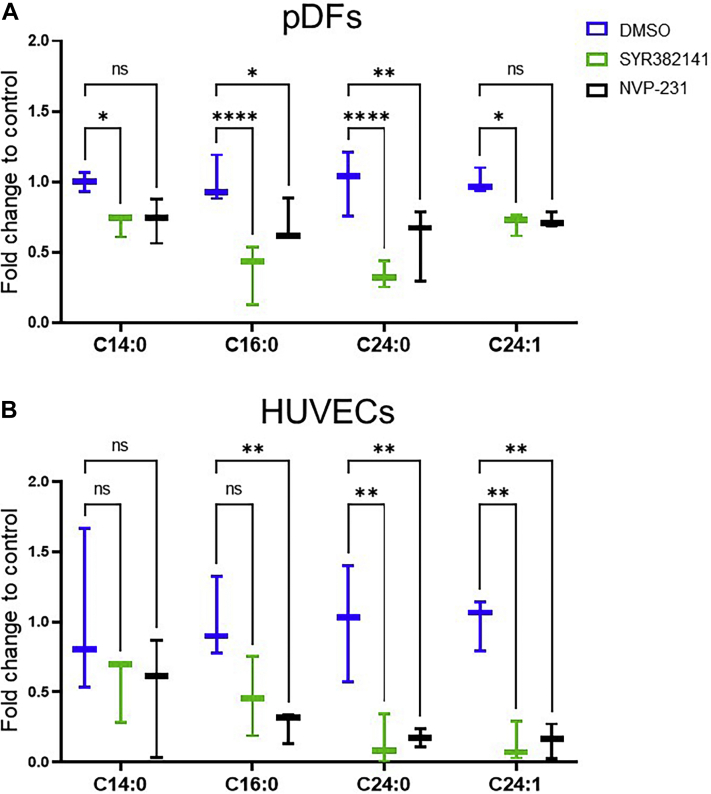
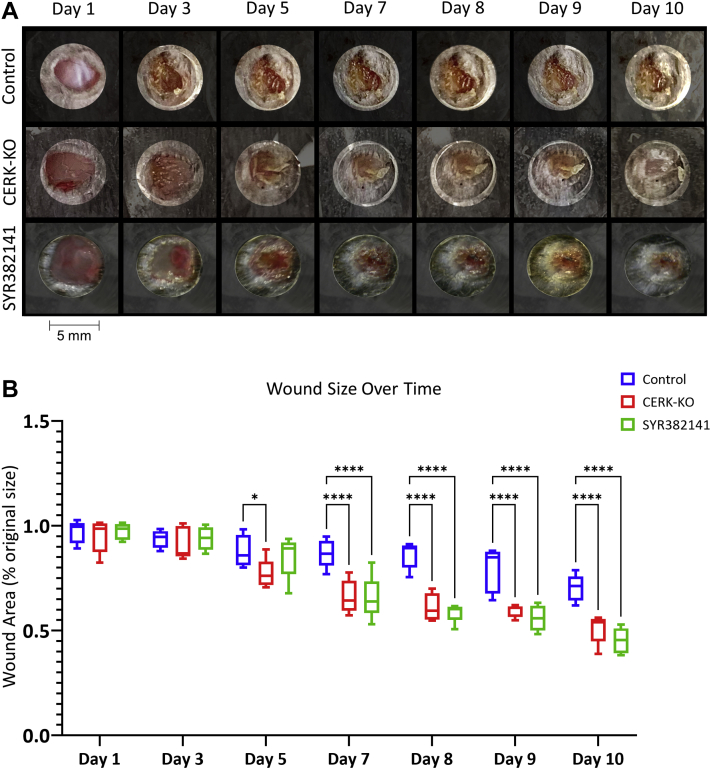
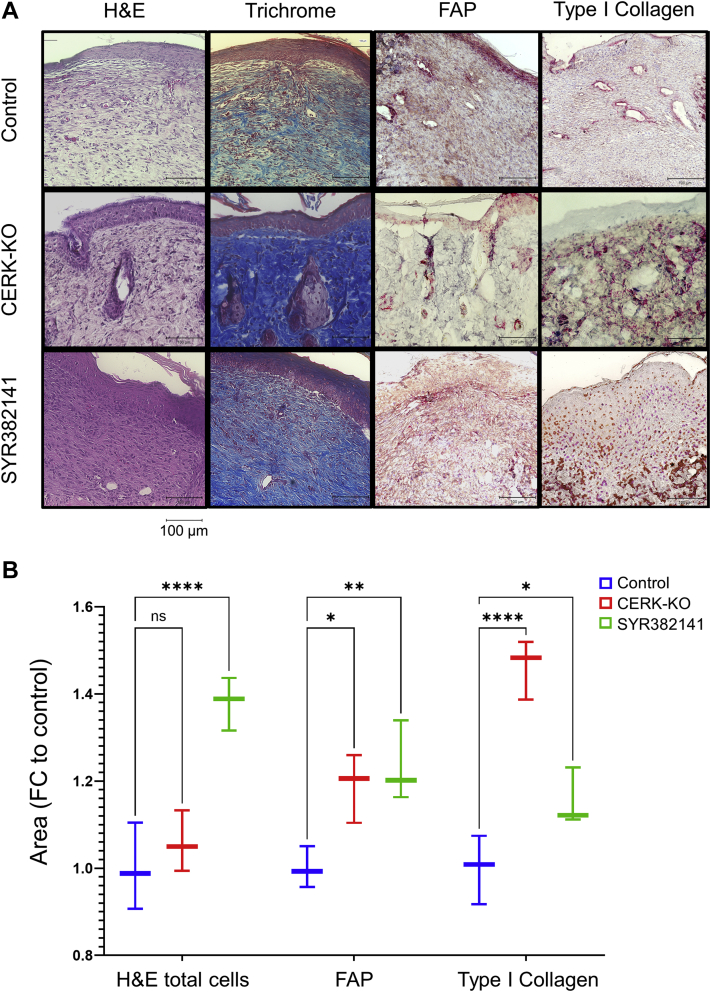
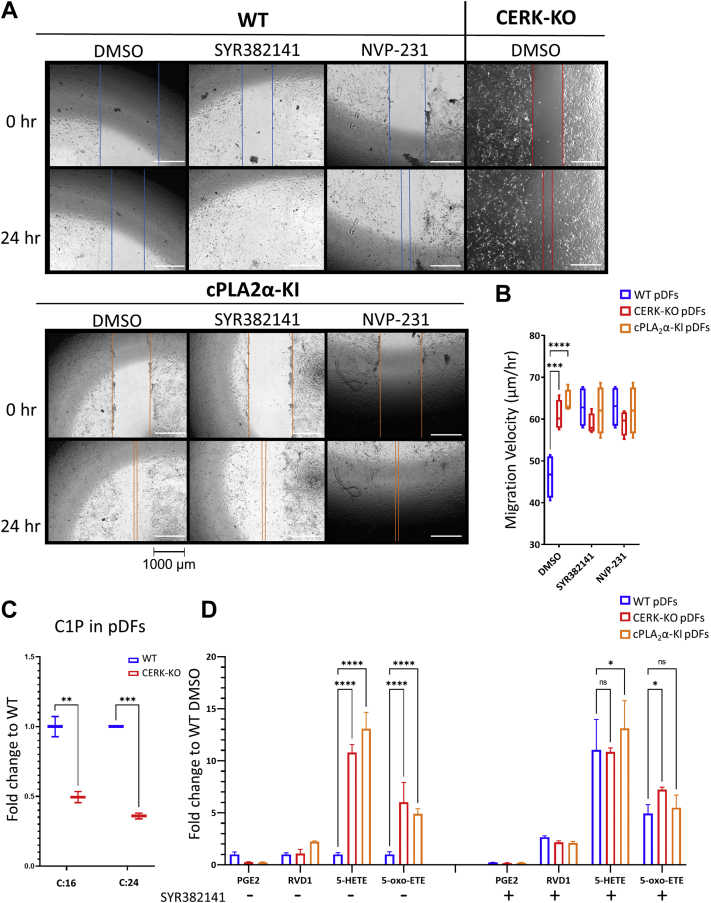
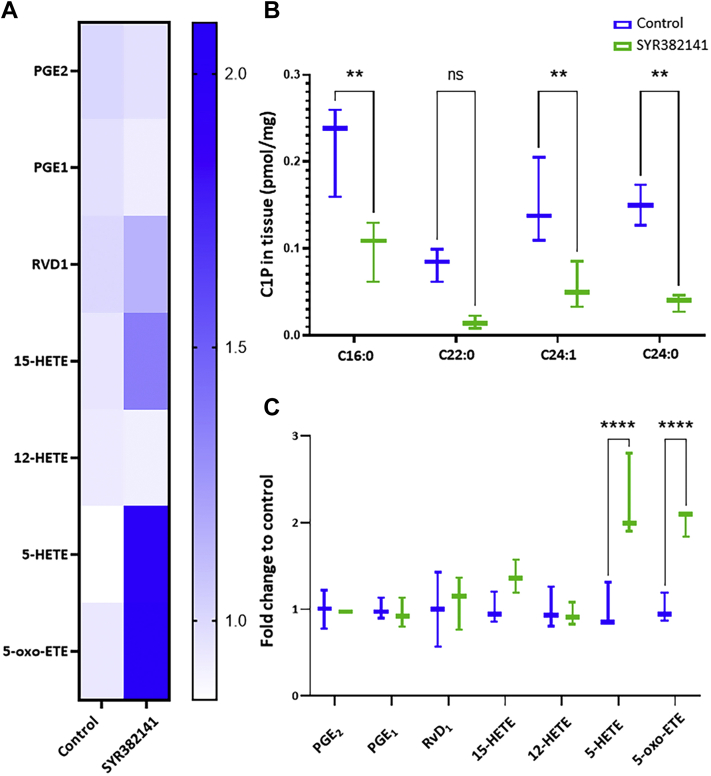
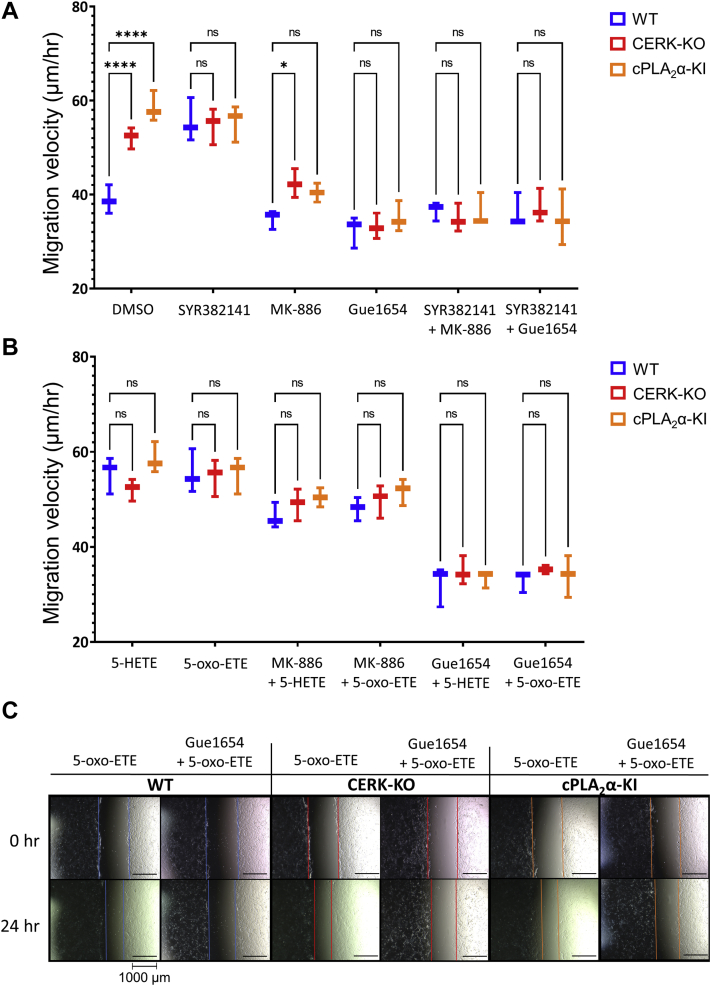
The sphingolipid, ceramide-1-phosphate (C1P), has been shown to promote the inflammatory phase and inhibit the proliferation and remodeling stages of wound repair via direct interaction with group IVA cytosolic phospholipase A, a regulator of eicosanoid biosynthesis that fine-tunes the behaviors of various cell types during wound healing. However, the anabolic enzyme responsible for the production of C1P that suppresses wound healing as well as bioactive eicosanoids and target receptors that drive enhanced wound remodeling have not been characterized. Herein, we determined that decreasing C1P activity via inhibitors or genetic ablation of the anabolic enzyme ceramide kinase (CERK) significantly enhanced wound healing phenotypes. Importantly, postwounding inhibition of CERK enhanced the closure rate of acute wounds, improved the quality of healing, and increased fibroblast migration via a "class switch" in the eicosanoid profile. This switch reduced pro-inflammatory prostaglandins (e.g., prostaglandin E2) and increased levels of 5-hydroxyeicosatetraenoic acid and the downstream metabolite 5-oxo-eicosatetraenoic acid (5-oxo-ETE). Moreover, dermal fibroblasts from mice with genetically ablated CERK showed enhanced wound healing markers, while blockage of the murine 5-oxo-ETE receptor (oxoeicosanoid receptor 1) inhibited the enhanced migration phenotype of these cell models. Together, these studies reinforce the vital roles eicosanoids play in the wound healing process and demonstrate a novel role for CERK-derived C1P as a negative regulator of 5-oxo-ETE biosynthesis and the activation of oxoeicosanoid receptor 1 in wound healing. These findings provide foundational preclinical results for the use of CERK inhibitors to shift the balance from inflammation to resolution and increase the wound healing rate.
鞘氨醇脂质,神经酰胺-1-磷酸(C1P),已被证明通过与细胞溶质磷脂酶 A4 直接相互作用,促进炎症阶段并抑制增殖和重塑阶段的伤口修复,细胞溶质磷脂酶 A4 是一种调节类二十烷酸生物合成的调节剂,可微调各种细胞类型在伤口愈合过程中的行为。然而,负责产生抑制伤口愈合以及生物活性类二十烷酸和驱动增强的伤口重塑的靶受体的合成酶 C1P 尚未得到表征。在此,我们通过抑制剂或合成酶神经酰胺激酶(CERK)的基因缺失来确定,通过抑制剂或基因缺失 C1P 活性可显著增强伤口愈合表型。重要的是,伤口后 CERK 的抑制作用通过“类别转换”增加了类二十烷酸谱,从而显著提高了急性伤口的闭合率、改善了愈合质量并增加了成纤维细胞的迁移。这种转换减少了促炎前列腺素(例如前列腺素 E2),增加了 5-羟二十碳四烯酸和下游代谢物 5-氧代二十碳四烯酸(5-氧代 ETE)的水平。此外,基因敲除 CERK 的小鼠真皮成纤维细胞显示出增强的伤口愈合标志物,而阻断鼠 5-氧代 ETE 受体(oxoeicosanoid receptor 1)抑制了这些细胞模型的增强迁移表型。这些研究共同强调了类二十烷酸在伤口愈合过程中的重要作用,并证明了 CERK 衍生的 C1P 作为 5-氧代 ETE 生物合成和 oxoeicosanoid receptor 1 激活的负调节剂在伤口愈合中的新作用。这些发现为使用 CERK 抑制剂提供了基础的临床前结果,可从炎症向解决方向转变,并提高伤口愈合率。