Xie Xiujie, Macknight H Patrick, Lu Amy L, Chalfant Charles E
Department of Medicine, Division of Hematology & Oncology, University of Virginia, Charlottesville, VA 22903, USA.
Department of Cell Biology, University of Virginia, Charlottesville, VA 22903, USA.
Mol Ther Nucleic Acids. 2024 Dec 5;36(1):102412. doi: 10.1016/j.omtn.2024.102412. eCollection 2025 Mar 11.
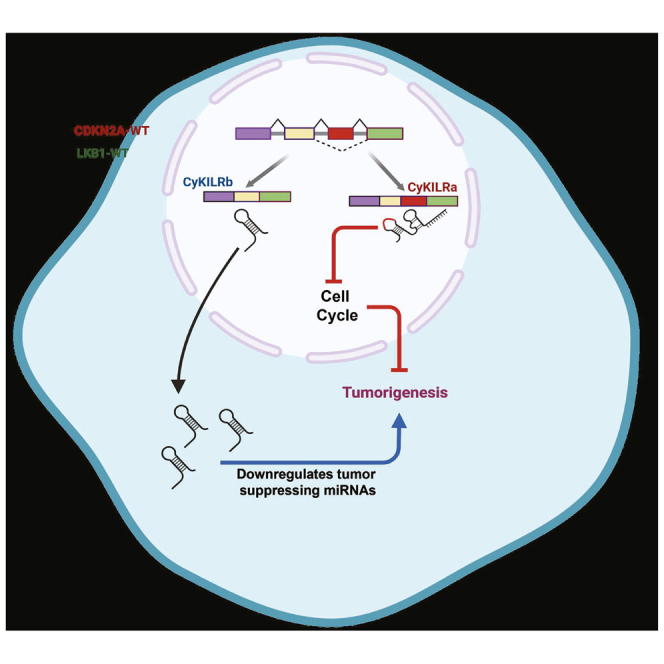
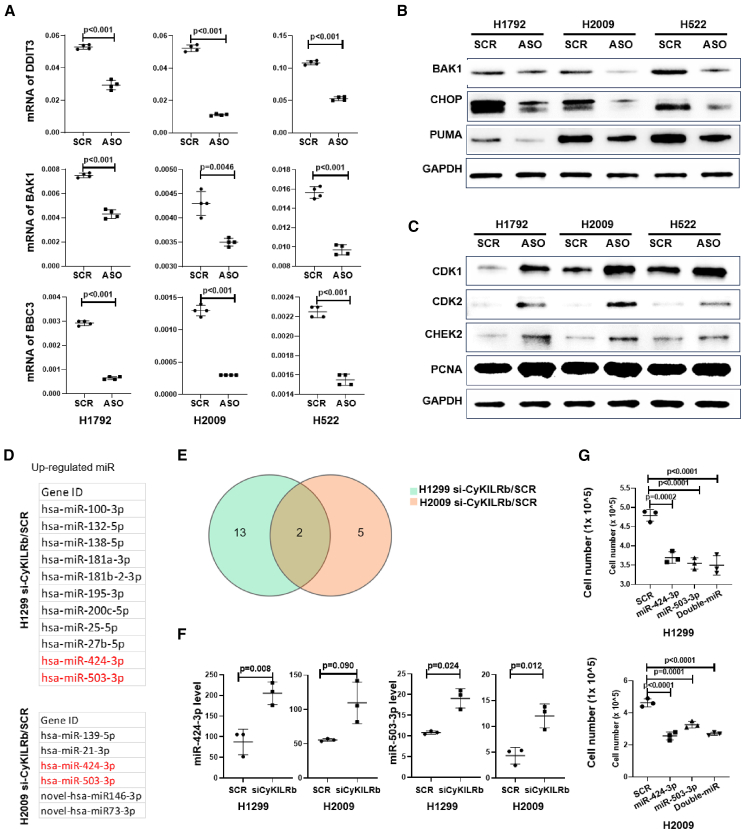
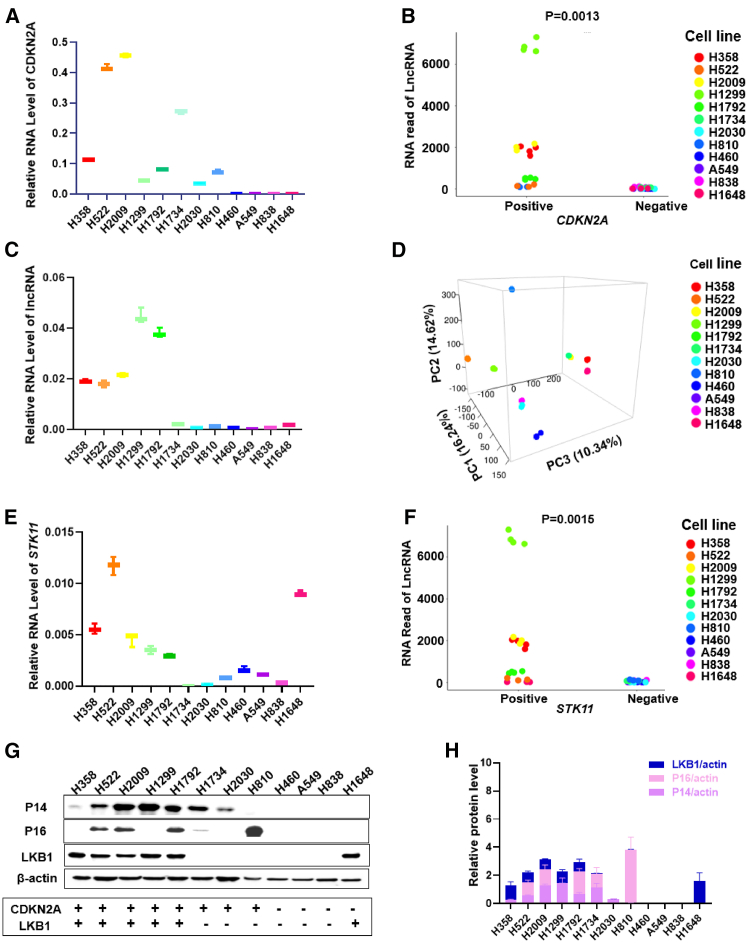
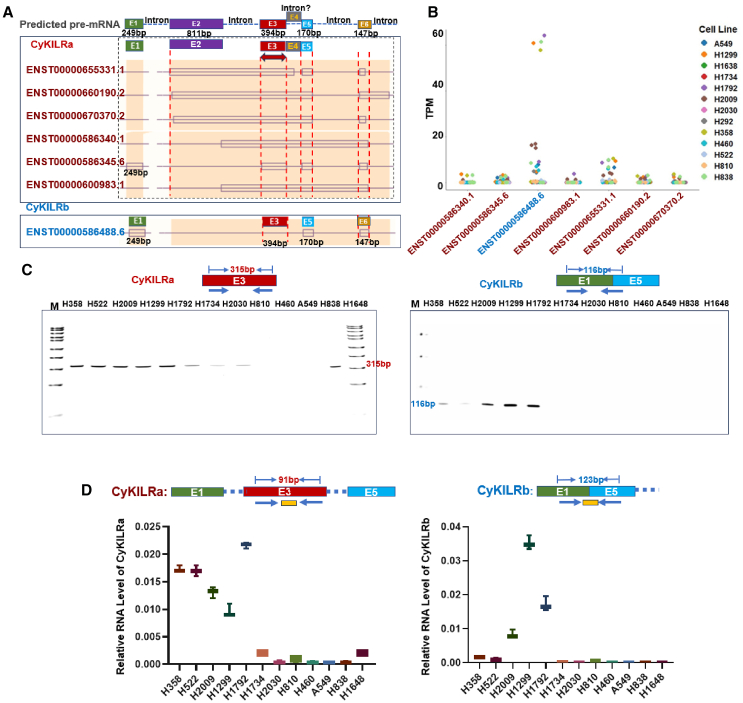
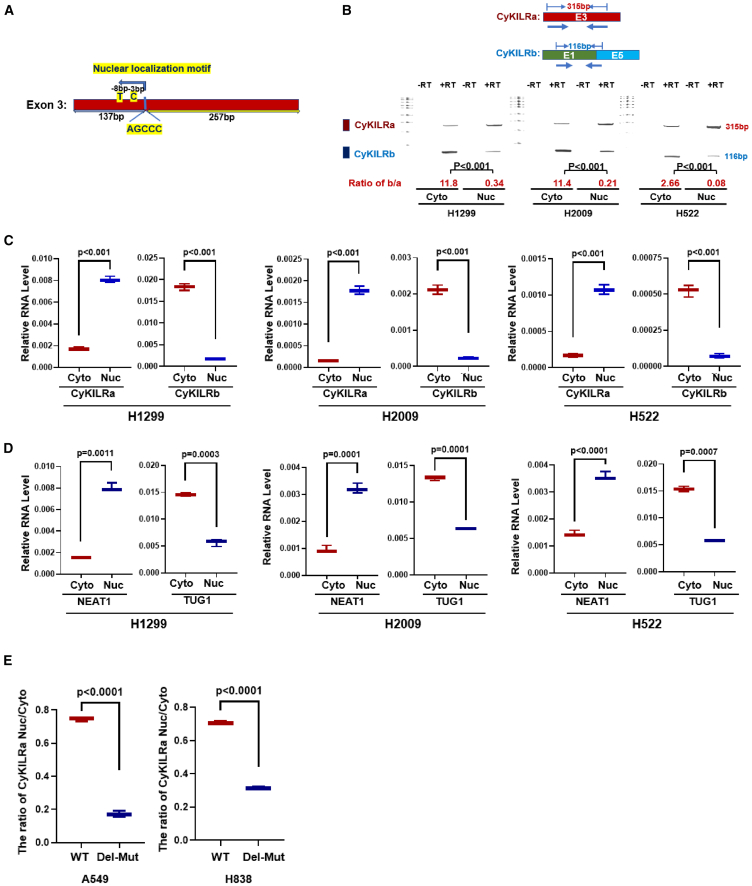
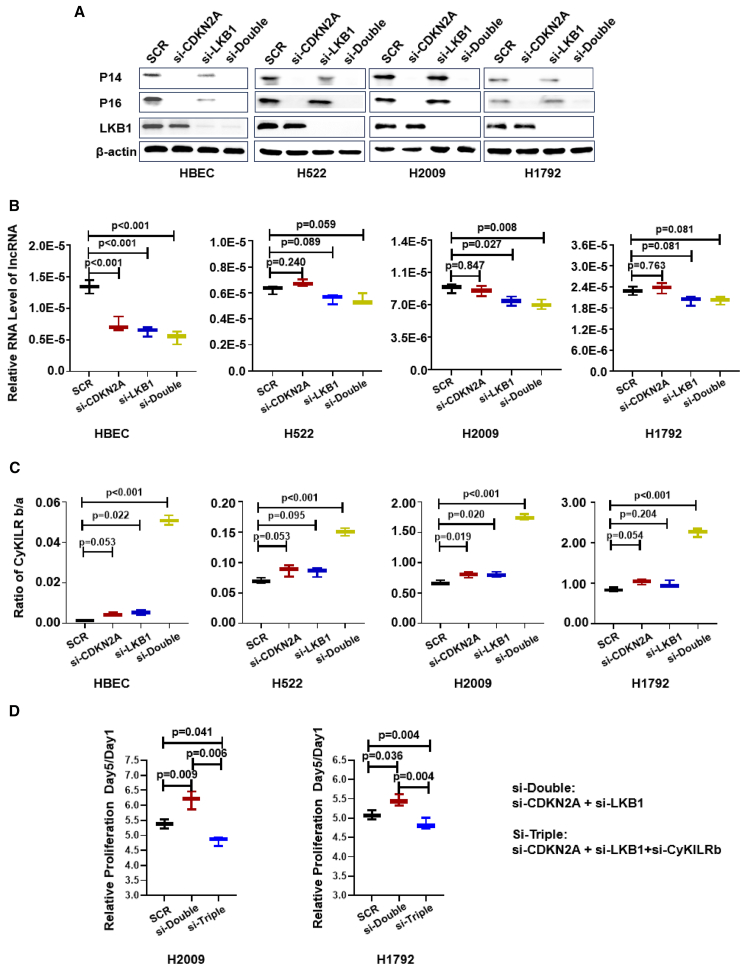
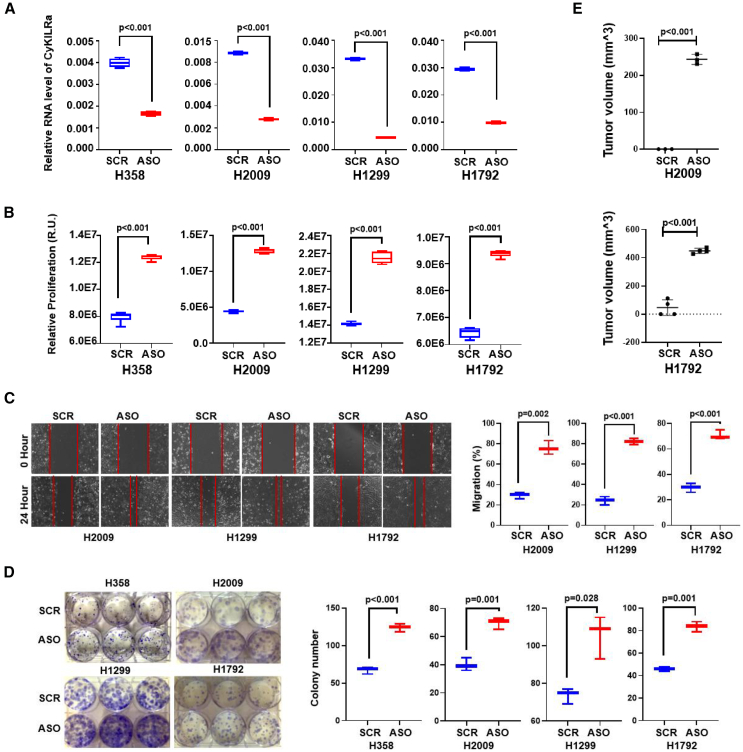
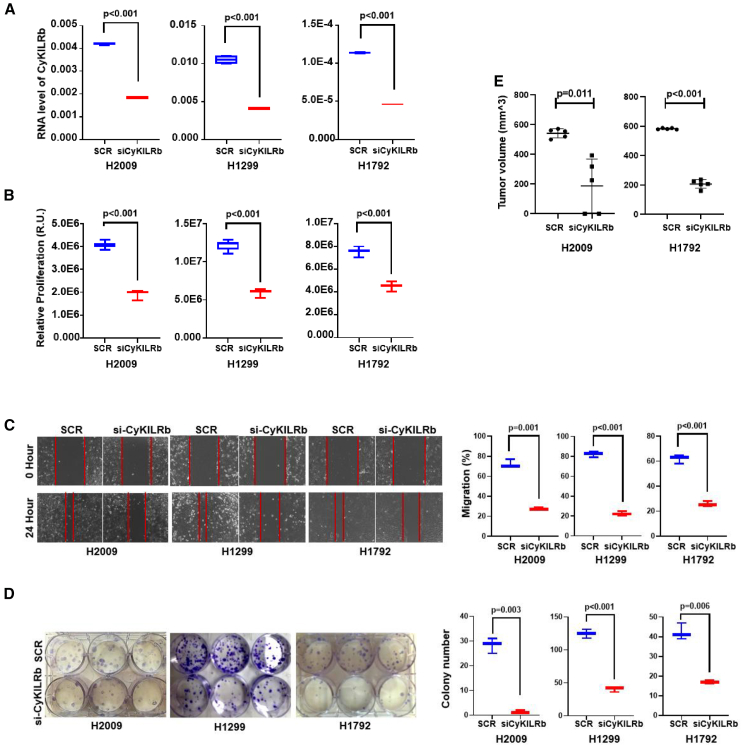
The CDKN2A gene, responsible for encoding the tumor suppressors p16(INK4A) and p14(ARF), is frequently inactivated in non-small cell lung cancer (NSCLC). Herein, an uncharacterized long non-coding RNA (lncRNA) (ENSG00000267053) on chromosome 19p13.12 was found to be overexpressed in NSCLC cells with an active, wild-type CDKN2A gene. This lncRNA, named cyclin-dependent kinase inhibitor 2A-regulated lncRNA (CyKILR), also correlated with an active WT STK11 gene, which encodes the tumor suppressor, liver kinase B1. CyKILR displayed two splice variants, CyKILRa (exon 3 included) and CyKILRb (exon 3 excluded), which are cooperatively regulated by CDKN2A and STK11 as knockdown of both tumor suppressor genes was required to induce a significant loss of exon 3 inclusion in mature CyKILR RNA. CyKILRa localized to the nucleus, and its downregulation using antisense RNA oligonucleotides enhanced cellular proliferation, migration, clonogenic survival, and tumor incidence. In contrast, CyKILRb localized to the cytoplasm, and its downregulation using small interfering RNA reduced cell proliferation, migration, clonogenic survival, and tumor incidence. Transcriptomics analyses revealed the enhancement of apoptotic pathways with concomitant suppression of key cell-cycle pathways by CyKILRa demonstrating its tumor-suppressive role. CyKILRb inhibited tumor suppressor miRNAs indicating an oncogenic nature. These findings elucidate the intricate roles of lncRNAs in cell signaling and tumorigenesis.
负责编码肿瘤抑制因子p16(INK4A)和p14(ARF)的CDKN2A基因在非小细胞肺癌(NSCLC)中经常失活。在此,研究人员发现19号染色体p13.12上一个未被鉴定的长链非编码RNA(lncRNA)(ENSG00000267053)在具有活性野生型CDKN2A基因的NSCLC细胞中过表达。这种lncRNA被命名为细胞周期蛋白依赖性激酶抑制剂2A调节的lncRNA(CyKILR),它也与活性野生型STK11基因相关,该基因编码肿瘤抑制因子肝激酶B1。CyKILR表现出两种剪接变体,即CyKILRa(包含外显子3)和CyKILRb(不包含外显子3),它们由CDKN2A和STK11协同调节,因为两个肿瘤抑制基因的敲低都是诱导成熟CyKILR RNA中外显子3包含的显著缺失所必需的。CyKILRa定位于细胞核,使用反义RNA寡核苷酸下调它可增强细胞增殖、迁移、克隆存活和肿瘤发生率。相反,CyKILRb定位于细胞质,使用小干扰RNA下调它可降低细胞增殖、迁移、克隆存活和肿瘤发生率。转录组学分析显示,CyKILRa增强了凋亡途径,同时抑制了关键的细胞周期途径,证明了其肿瘤抑制作用。CyKILRb抑制肿瘤抑制性miRNA,表明其具有致癌性质。这些发现阐明了lncRNAs在细胞信号传导和肿瘤发生中的复杂作用。