State Key Laboratory of Respiratory Disease, National Clinical Research Center for Respiratory Disease, Guangzhou Institute of Respiratory Health, The First Affiliated Hospital of Guangzhou Medical University, Guangzhou, China.
Department of Thoracic Surgery, Guangzhou Institute of Respiratory Disease, First Affiliated Hospital of Guangzhou Medical University, Guangzhou, China.
Transpl Int. 2022 Feb 10;35:10265. doi: 10.3389/ti.2022.10265. eCollection 2022.
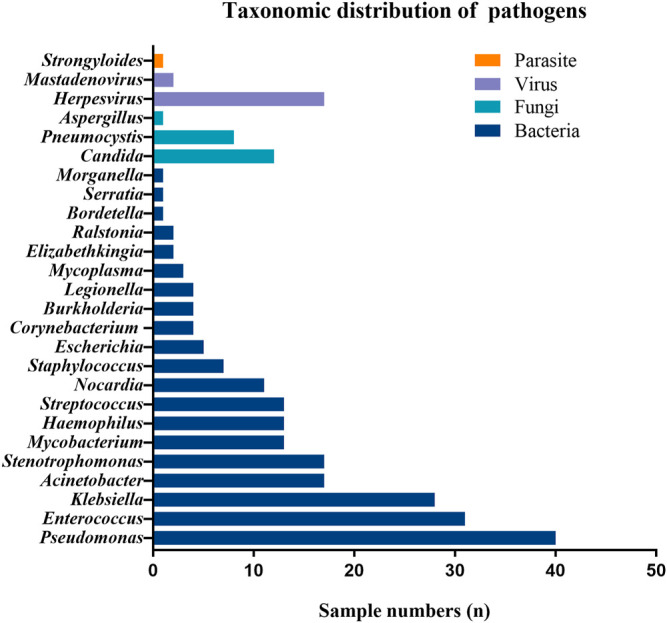
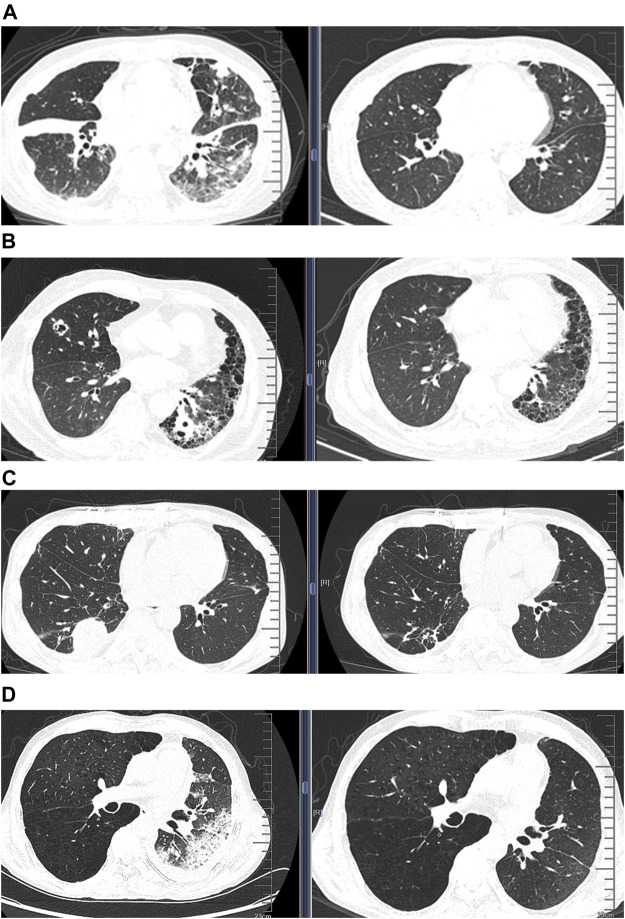
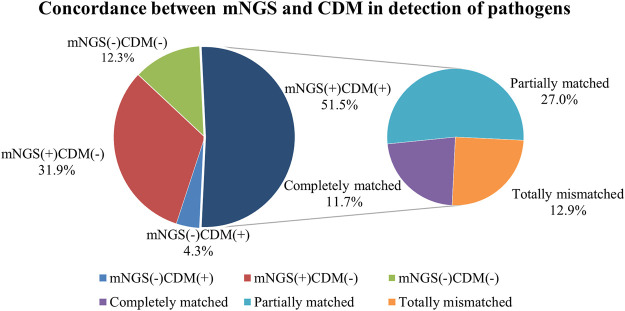
Accurate identification of pathogens is essential for the diagnosis and control of infections. We aimed to compare the diagnostic performance of metagenomic next-generation sequencing (mNGS) and conventional detection methods (CDM) in lung transplant recipients (LTRs). We retrospectively analyzed 107 LTRs with suspected infection of pulmonary, blood, central nervous system or chest wall between March 2018 and November 2020. Bronchoalveolar lavage fluid and other body fluids were subject to pathogen detection by both mNGS and CDM. Of the 163 specimens, 84 (51.5%) tested positive for both mNGS and culture, 19 (11.7%) of which were completely consistent, 44 (27.0%) were partially congruent, and 21 (12.9%) were discordant (kappa = .215; = .001). Compared with CDM, mNGS detected a higher diversity of pathogens. Moreover, the turn-around time was significantly shorter for mNGS compared with culture (2.7 ± .4 vs. 5.5 ± 1.6 days, < .001). As an auxiliary method, treatment strategies were adjusted according to mNGS findings in 31 cases (29.0%), including eight patients with non-infectious diseases, who were finally cured. mNGS can identify pathogens with a shorter turn-around time and therefore provide a more accurate and timely diagnostic information to ascertaining pulmonary infections. mNGS might have a role in differentiating infectious from non-infectious lung diseases in LTRs.
准确识别病原体对于感染的诊断和控制至关重要。我们旨在比较宏基因组下一代测序(mNGS)和常规检测方法(CDM)在肺移植受者(LTR)中的诊断性能。我们回顾性分析了 2018 年 3 月至 2020 年 11 月期间疑似肺部、血液、中枢神经系统或胸壁感染的 107 例 LTR。通过 mNGS 和 CDM 对支气管肺泡灌洗液和其他体液进行病原体检测。在 163 份标本中,84 份(51.5%)mNGS 和培养均为阳性,其中 19 份(11.7%)完全一致,44 份(27.0%)部分一致,21 份(12.9%)不一致(kappa =.215; =.001)。与 CDM 相比,mNGS 检测到的病原体多样性更高。此外,mNGS 的周转时间明显短于培养(2.7 ±.4 与 5.5 ± 1.6 天, <.001)。作为辅助方法,根据 mNGS 结果调整了 31 例(29.0%)的治疗策略,其中包括 8 例非传染性疾病患者,最终治愈。mNGS 可以在更短的周转时间内识别病原体,因此可以提供更准确和及时的诊断信息,以确定肺部感染。mNGS 可能在区分 LTR 中的感染性和非感染性肺部疾病方面具有作用。