Kisel Alena A, Naumova Anna V, Yarnykh Vasily L
Department of Radiology, University of Washington, Seattle, WA, United States.
Laboratory of Neurobiology, Tomsk State University, Tomsk, Russia.
Front Neurosci. 2022 Feb 9;16:819912. doi: 10.3389/fnins.2022.819912. eCollection 2022.
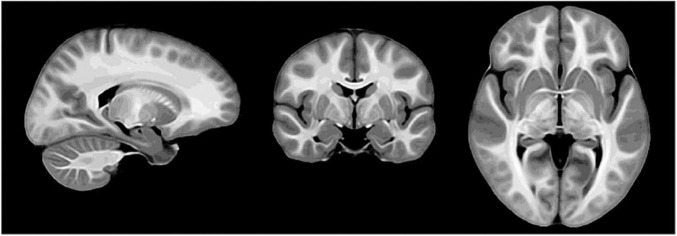
Macromolecular proton fraction (MPF) is a quantitative MRI parameter describing the magnetization transfer (MT) effect and defined as a relative amount of protons bound to biological macromolecules with restricted molecular motion, which participate in magnetic cross-relaxation with water protons. MPF attracted significant interest during past decade as a biomarker of myelin. The purpose of this mini review is to provide a brief but comprehensive summary of MPF mapping methods, histological validation studies, and MPF applications in neuroscience. Technically, MPF maps can be obtained using a variety of quantitative MT methods. Some of them enable clinically reasonable scan time and resolution. Recent studies demonstrated the feasibility of MPF mapping using standard clinical MRI pulse sequences, thus substantially enhancing the method availability. A number of studies in animal models demonstrated strong correlations between MPF and histological markers of myelin with a minor influence of potential confounders. Histological studies validated the capability of MPF to monitor both demyelination and re-myelination. Clinical applications of MPF have been mainly focused on multiple sclerosis where this method provided new insights into both white and gray matter pathology. Besides, several studies used MPF to investigate myelin role in other neurological and psychiatric conditions. Another promising area of MPF applications is the brain development studies. MPF demonstrated the capabilities to quantitatively characterize the earliest stage of myelination during prenatal brain maturation and protracted myelin development in adolescence. In summary, MPF mapping provides a technically mature and comprehensively validated myelin imaging technology for various preclinical and clinical neuroscience applications.
大分子质子分数(MPF)是一种定量MRI参数,用于描述磁化传递(MT)效应,定义为与分子运动受限的生物大分子结合的质子的相对量,这些质子参与与水质子的磁交叉弛豫。在过去十年中,MPF作为髓鞘的生物标志物引起了广泛关注。本综述的目的是简要而全面地总结MPF映射方法、组织学验证研究以及MPF在神经科学中的应用。从技术上讲,可以使用多种定量MT方法获得MPF图。其中一些方法能够在临床上实现合理的扫描时间和分辨率。最近的研究证明了使用标准临床MRI脉冲序列进行MPF映射的可行性,从而大大提高了该方法的可用性。在动物模型中的多项研究表明,MPF与髓鞘的组织学标志物之间存在很强的相关性,潜在混杂因素的影响较小。组织学研究验证了MPF监测脱髓鞘和再髓鞘形成的能力。MPF的临床应用主要集中在多发性硬化症上,该方法为白质和灰质病理学提供了新的见解。此外,一些研究使用MPF来研究髓鞘在其他神经和精神疾病中的作用。MPF应用的另一个有前景的领域是脑发育研究。MPF展示了在产前脑成熟和青春期长期髓鞘发育过程中定量表征髓鞘形成最早阶段的能力。总之,MPF映射为各种临床前和临床神经科学应用提供了一种技术成熟且经过全面验证的髓鞘成像技术。