Department of Obstetrics and Gynecology, The First Affiliated Hospital of Chongqing Medical University, Chongqing, China.
Canada-China-New Zealand Joint Laboratory of Maternal and Fetal Medicine, Chongqing Medical University, Chongqing, China.
Front Immunol. 2022 Feb 10;13:813218. doi: 10.3389/fimmu.2022.813218. eCollection 2022.
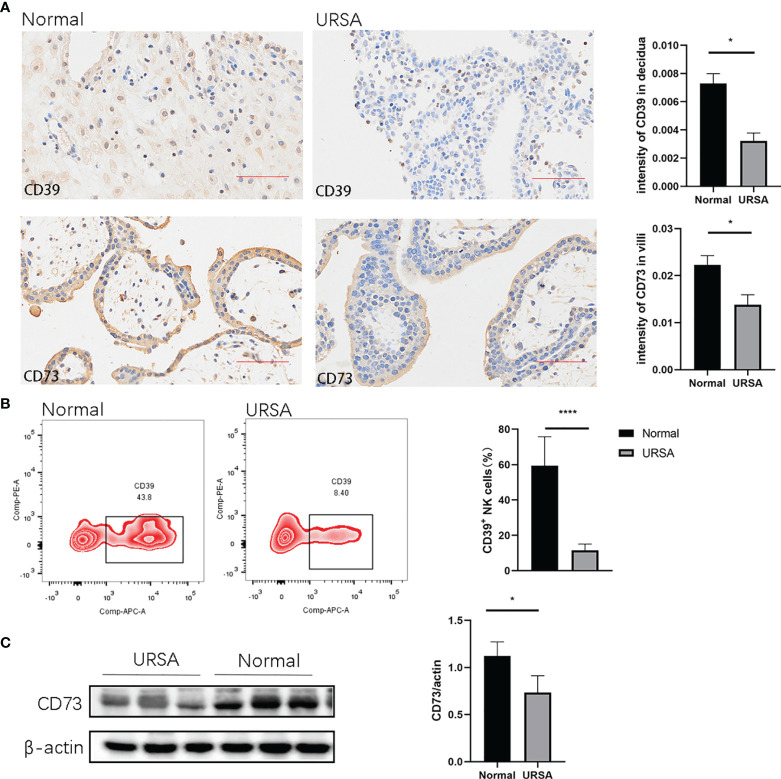
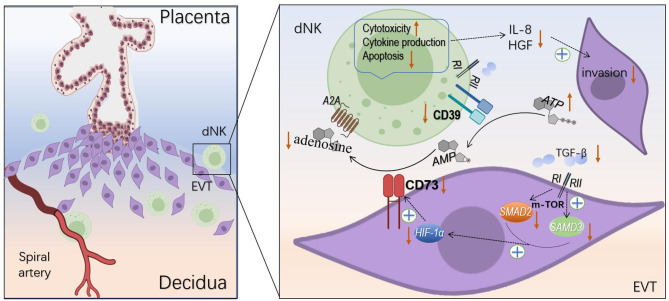
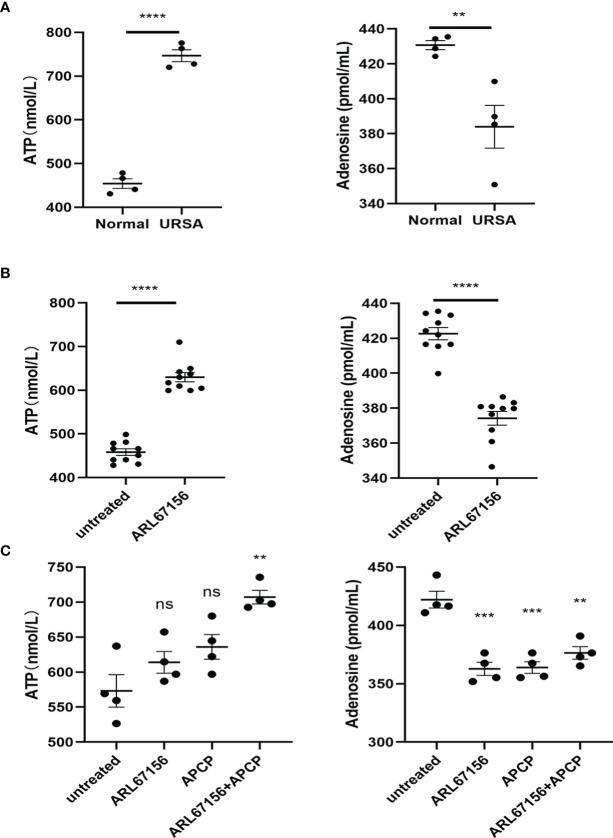
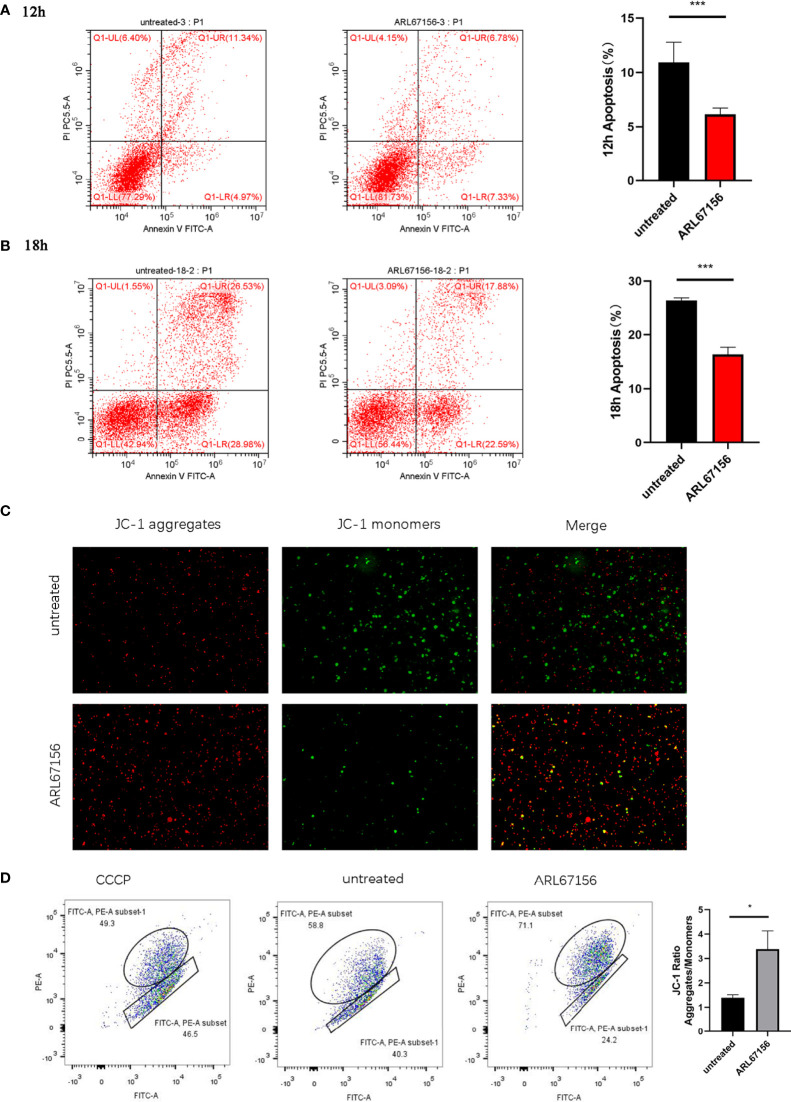
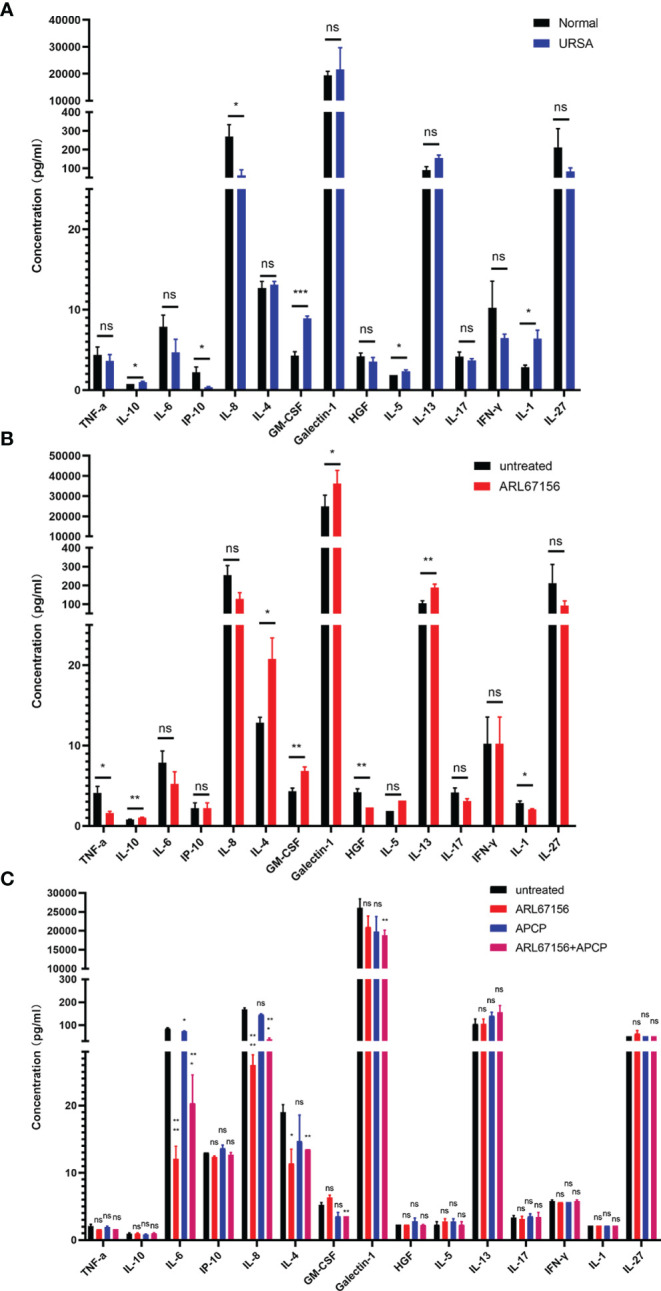
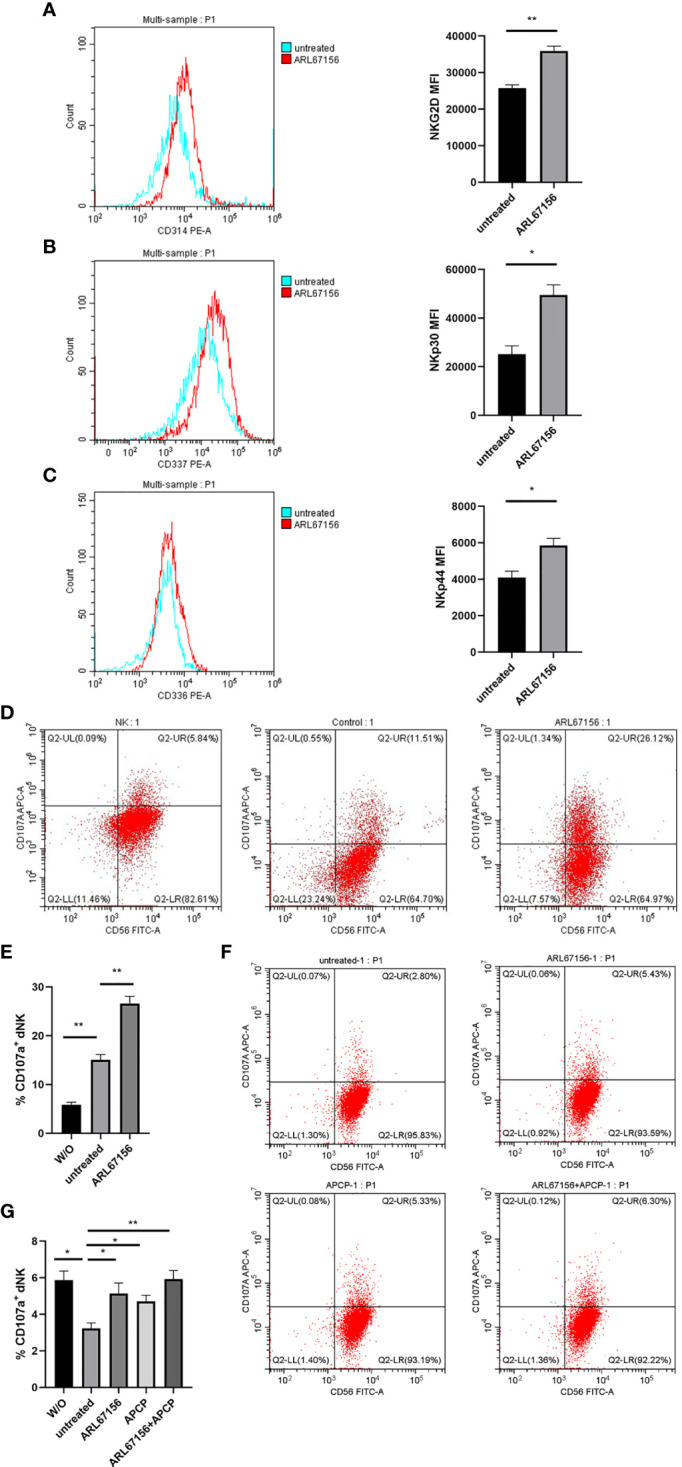
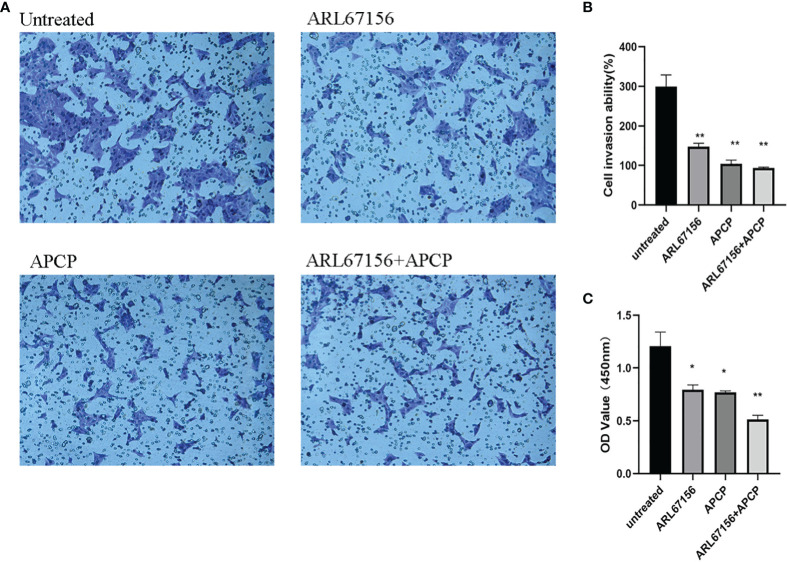
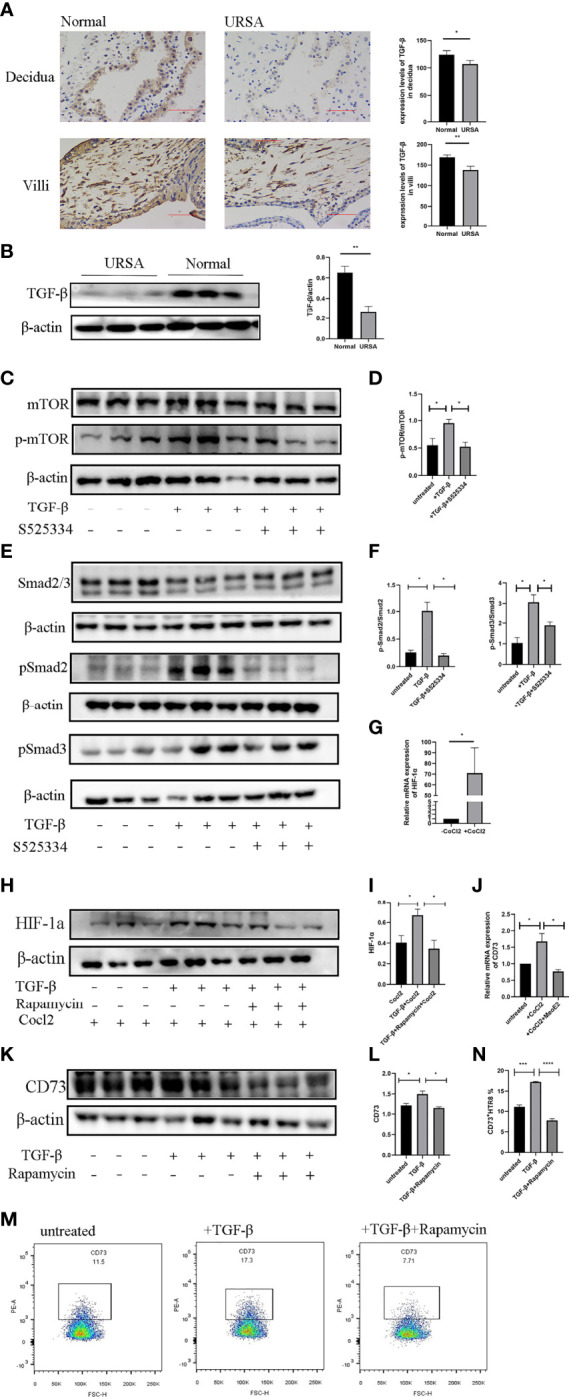
Unexplained recurrent spontaneous abortion (URSA) is believed to be associated with impaired immunosuppression at the maternal-fetal interface, but the detailed molecular mechanism remains unclear. The ATP-adenosine metabolic pathway regulated by CD39/CD73 has recently been recognized to be important in immunosuppression. This study aimed to investigate the regulation of decidual natural killer (dNK) cells and fetal extravillous trophoblast (EVT) cells by CD39 and CD73 in URSA, as well as the possible regulatory mechanism of CD39/CD73 the TGF-β-mTOR-HIF-1α pathway using clinical samples and cell models. Fewer CD39 and CD73 cells were found in the URSA decidual and villous tissue, respectively. Inhibition of CD39 on dNK cells transformed the cells to an activated state with increased toxicity and decreased apoptosis, and changed their cytokine secretion, leading to impaired invasion and proliferation of the co-cultured HTR8/SVneo cells. Similarly, inhibition of CD73 on HTR8/SVneo cells decreased the adenosine concentration in the cell culture media, increased the proportion of CD107a dNK cells, and decreased the invasion and proliferation capabilities of the HTR8/SVneo cells. In addition, transforming growth factor-β (TGF-β) triggered phosphorylation of mammalian target of rapamycin (mTOR) and Smad2/Smad3, which subsequently activated hypoxia-inducible factor-1α (HIF-1α) to induce the CD73 expression on the HTR8/SVneo cells. In summary, reduced numbers of CD39 and CD73 cells at the maternal-fetal interface, which may be due to downregulated TGF-β-mTOR-HIF-1α pathway, results in reduced ATP-adenosine metabolism and increased dNK cytotoxicity, and potentially contributes to URSA occurrences.
不明原因复发性自然流产(URSA)被认为与母体-胎儿界面免疫抑制受损有关,但详细的分子机制尚不清楚。CD39/CD73 调节的三磷酸腺苷-腺苷代谢途径在免疫抑制中具有重要作用。本研究旨在探讨 CD39 和 CD73 在 URSA 中对蜕膜自然杀伤(dNK)细胞和胎儿绒毛外滋养层(EVT)细胞的调节作用,以及使用临床样本和细胞模型研究 CD39/CD73 对 TGF-β-mTOR-HIF-1α 通路的可能调节机制。URSA 蜕膜和绒毛组织中 CD39 和 CD73 细胞减少。抑制 dNK 细胞上的 CD39 将细胞转化为激活状态,毒性增加,凋亡减少,并改变其细胞因子分泌,导致共培养的 HTR8/SVneo 细胞侵袭和增殖受损。同样,抑制 HTR8/SVneo 细胞上的 CD73 会降低细胞培养物中腺苷的浓度,增加 CD107a dNK 细胞的比例,并降低 HTR8/SVneo 细胞的侵袭和增殖能力。此外,转化生长因子-β(TGF-β)触发哺乳动物雷帕霉素靶蛋白(mTOR)和 Smad2/Smad3 的磷酸化,随后激活缺氧诱导因子-1α(HIF-1α),诱导 HTR8/SVneo 细胞上的 CD73 表达。总之,母体-胎儿界面 CD39 和 CD73 细胞数量减少,可能是由于 TGF-β-mTOR-HIF-1α 通路下调,导致三磷酸腺苷-腺苷代谢减少和 dNK 细胞毒性增加,可能导致 URSA 的发生。