Ferreri Lucas M, Geiger Ginger, Seibert Brittany, Obadan Adebimpe, Rajao Daniela, Lowen Anice C, Perez Daniel R
Department of Population Health, Poultry Diagnostic and Research Center, College of Veterinary Medicine, University of Georgia, 953 College Station Rd, Athens, GA 30602, USA.
Amazon.com, Seattle, 1510 Clifton Rd, WA, USA.
Virus Evol. 2022 Jan 8;8(1):veac001. doi: 10.1093/ve/veac001. eCollection 2022.
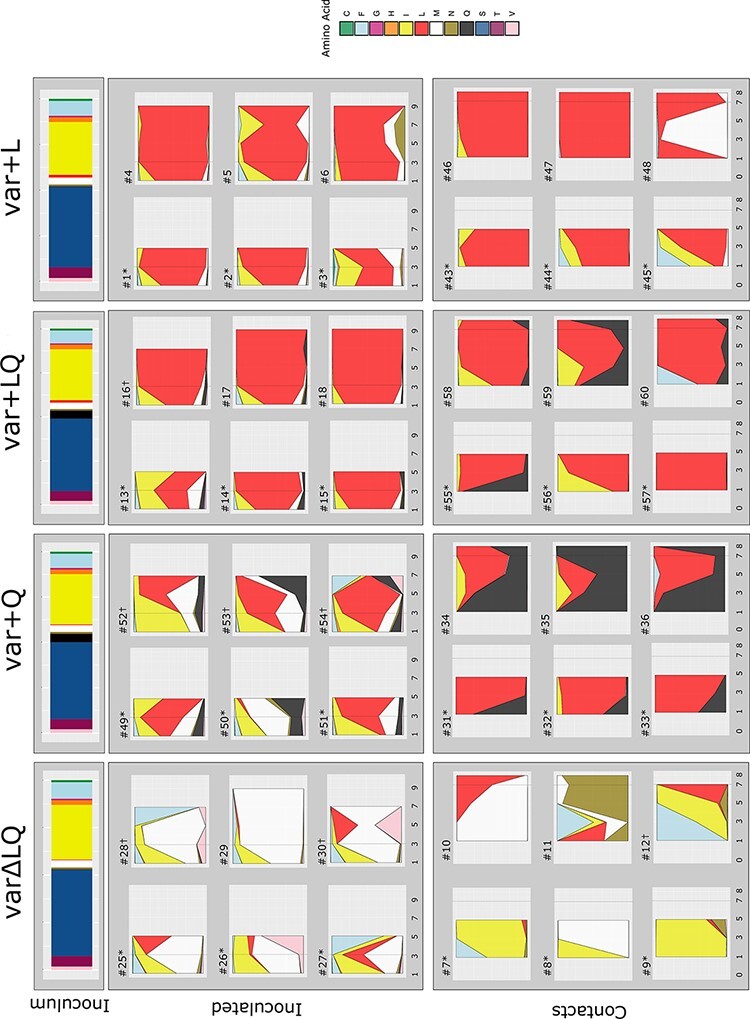
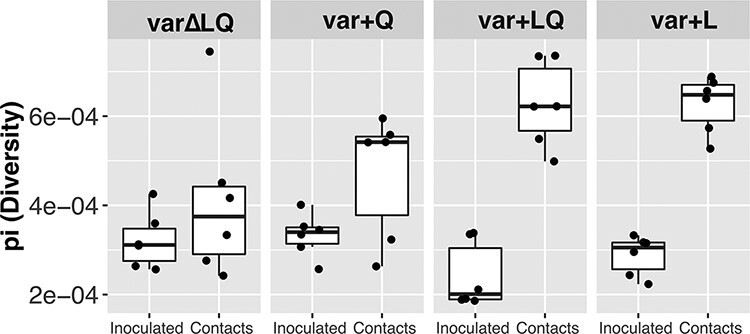
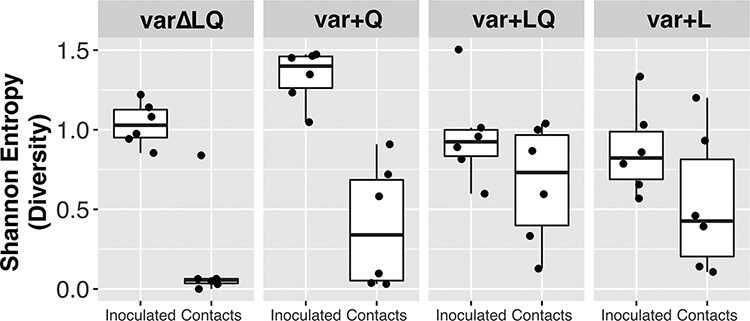
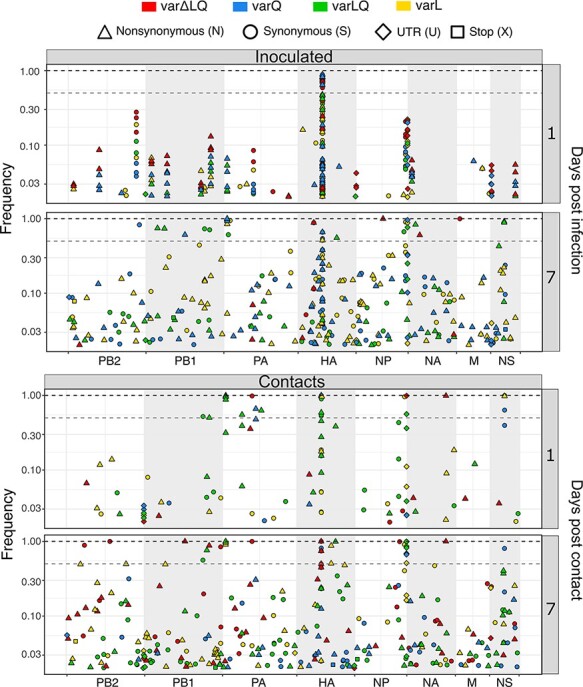
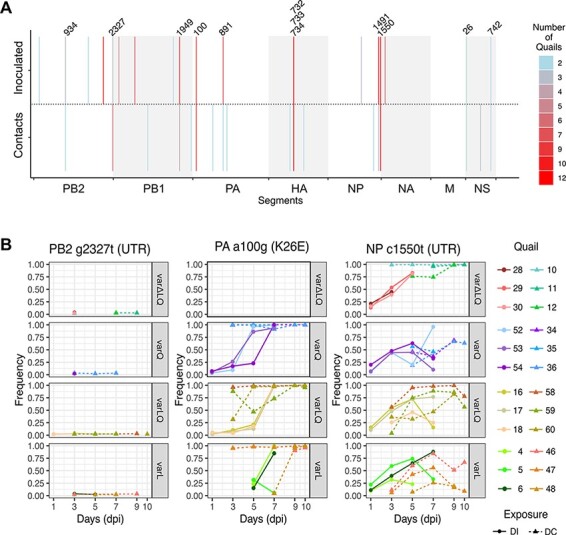
Influenza A viruses (IAVs) are constantly evolving. Crucial steps in the infection cycle, such as sialic acid (SA) receptor binding on the host cell surface, can either promote or hamper the emergence of new variants. We previously assessed the relative fitness in Japanese quail of H9N2 variant viruses differing at a single amino acid position, residue 216 in the hemagglutinin (HA) viral surface protein. This site is known to modulate SA recognition. Our prior study generated a valuable set of longitudinal samples from quail transmission groups where the inoculum comprised different mixed populations of HA 216 variant viruses. Here, we leveraged these samples to examine the evolutionary dynamics of viral populations within and between inoculated and naïve contact quails. We found that positive selection dominated HA gene evolution, but fixation of the fittest variant depended on the competition mixture. Analysis of the whole genome revealed further evidence of positive selection acting both within and between hosts. Positive selection drove fixation of variants in non-HA segments within inoculated and contact quails. Importantly, transmission bottlenecks were modulated by the molecular signature at HA 216, revealing viral receptor usage as a determinant of transmitted diversity. Overall, we show that selection strongly shaped the evolutionary dynamics within and between quails. These findings support the notion that selective processes act effectively on IAV populations in poultry hosts, facilitating rapid viral evolution in this ecological niche.
甲型流感病毒(IAV)不断进化。感染周期中的关键步骤,如宿主细胞表面的唾液酸(SA)受体结合,既可以促进也可以阻碍新变体的出现。我们之前评估了在血凝素(HA)病毒表面蛋白中单个氨基酸位置(第216位残基)不同的H9N2变体病毒在日本鹌鹑中的相对适应性。已知该位点可调节SA识别。我们之前的研究从鹌鹑传播组中生成了一组有价值的纵向样本,其中接种物包含HA 216变体病毒的不同混合群体。在这里,我们利用这些样本研究接种和未接种的接触鹌鹑体内以及它们之间病毒群体的进化动态。我们发现正选择主导了HA基因的进化,但最适合变体的固定取决于竞争混合物。对全基因组的分析揭示了宿主内部和宿主之间存在正选择的进一步证据。正选择推动了接种和接触鹌鹑体内非HA片段中变体的固定。重要的是,传播瓶颈受到HA 216处分子特征的调节,揭示了病毒受体使用情况是传播多样性的一个决定因素。总体而言,我们表明选择强烈塑造了鹌鹑体内以及它们之间的进化动态。这些发现支持了这样一种观点,即选择过程有效地作用于家禽宿主中的IAV群体,促进了这种生态位中病毒的快速进化。